
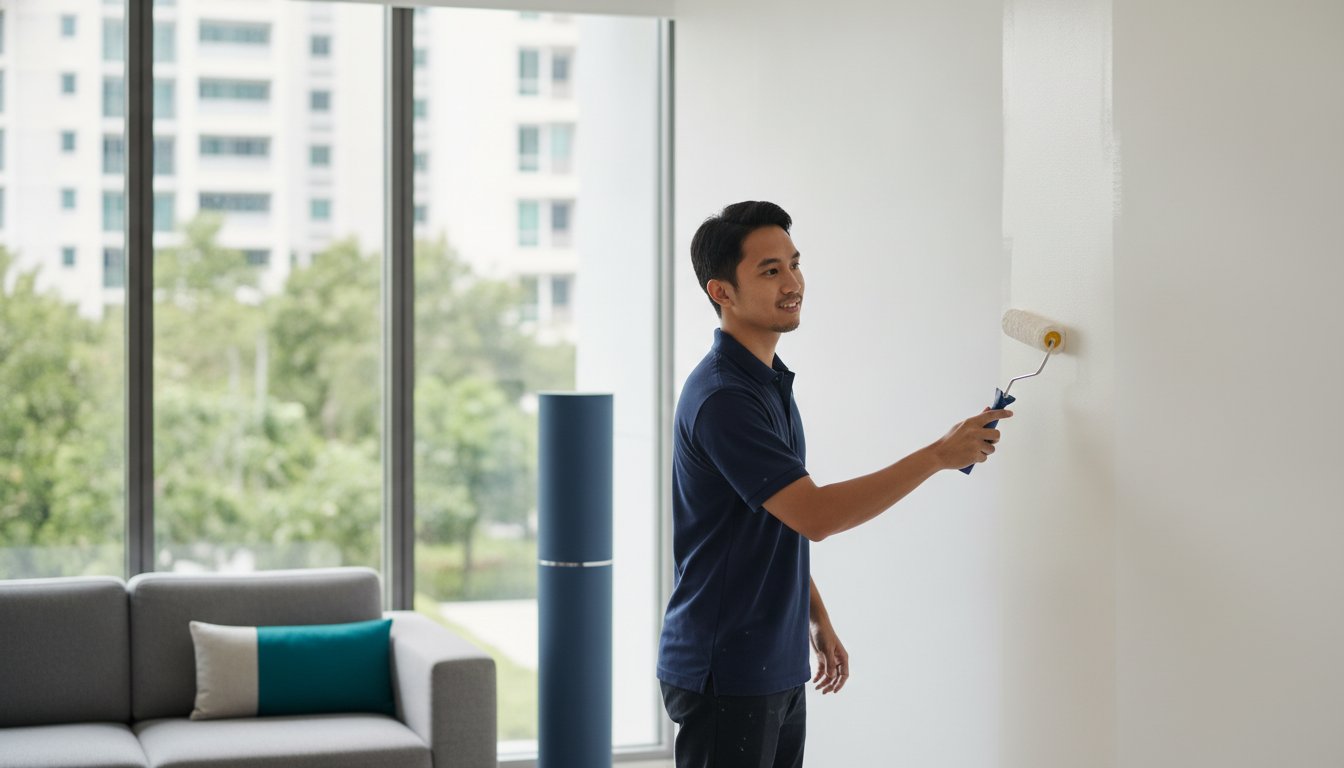
Singapore’s 82% average humidity means your walls are essentially breathing moisture every single day. If you’ve ever scrubbed recurring black mould from your kitchen ceiling or watched a DIY paint job blister after just six months, you know that standard interior finishes often fail our tropical climate. Finding the right paint for humid singapore weather requires more than just picking a beautiful colour; it demands a technical system designed to withstand constant dampness and intense sun exposure. We understand the frustration of seeing a fresh renovation fade into chalky textures or peeling layers, and we believe your home deserves a finish that stays as vibrant as the day it was applied.
You’re likely looking for a solution that stops the cycle of constant repainting and aggressive cleaning. This guide promises to show you exactly how to shield your HDB or condo using the latest moisture-barrier technologies and breathable top coats. We will preview the critical 2026 NEA regulations regarding formaldehyde-free paints, explain the technical necessity of specialized sealers, and help you identify the precise preparation steps a professional contractor should take to ensure your walls remain flawless for years to come.
Key Takeaways
- Learn why choosing the right paint for humid singapore weather is more about the underlying moisture barrier than the final top coat colour.
- Identify the specific differences between acrylic-based systems for HDB units and breathable mineral paints for landed property exteriors.
- Discover the technical importance of alkali-resisting sealers in preventing “efflorescence” and ensuring long-term paint adhesion.
- Understand why professional technique and moisture management are essential for a durable finish, even during Singapore’s unpredictable monsoon seasons.
Understanding the Impact of Singapore’s Humidity on Your Walls
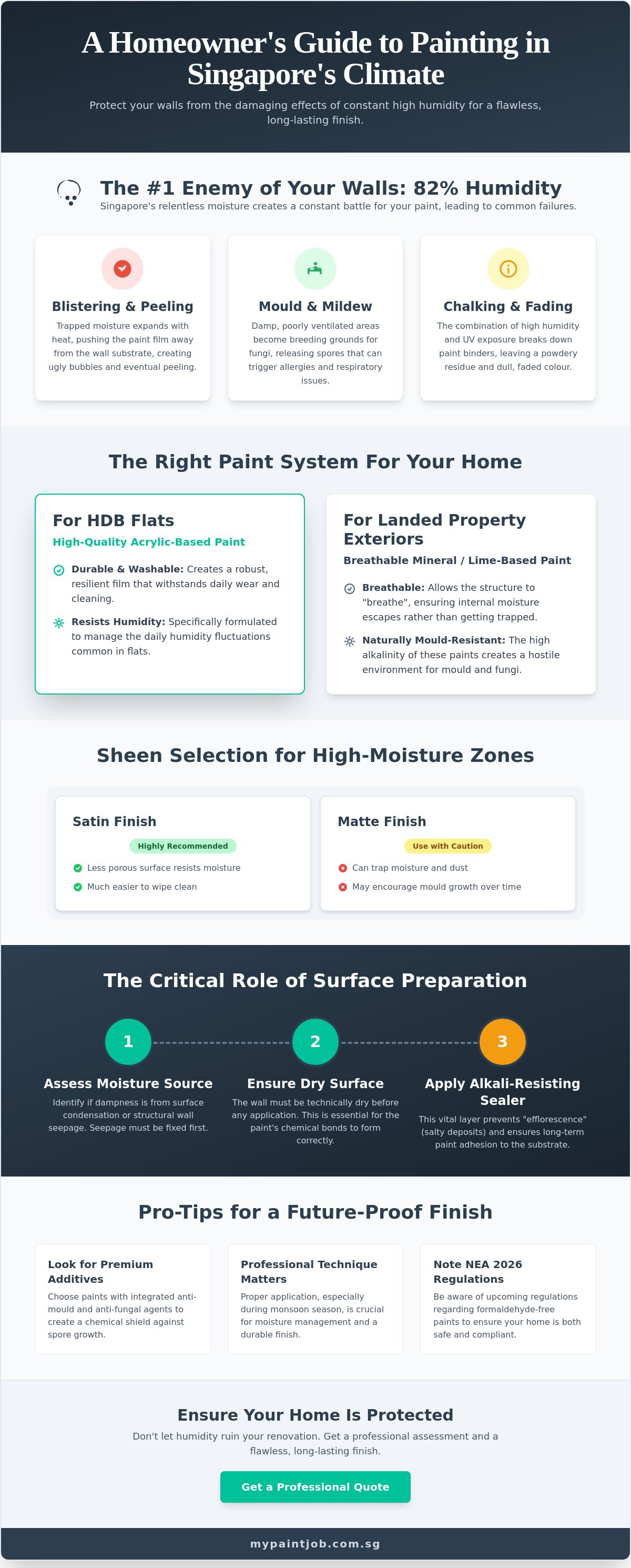
Singapore’s tropical climate presents a unique challenge for any surface finish. With a mean annual relative humidity of approximately 82%, the air is almost always saturated with moisture. This environmental factor directly interferes with how paint dries and adheres to your masonry. When you apply paint for humid singapore weather, the water or solvent in the liquid must evaporate for the resin to form a solid, protective film. In our damp environment, this evaporation slows down significantly. If the paint remains “wet” for too long, the chemical bonds don’t form correctly; this leads to a soft finish that’s prone to scuffing and premature peeling.
Trapped moisture is the primary culprit behind the unsightly bubbles you might see on your walls, a phenomenon known as blistering. This happens when liquid water or vapour is sealed behind the paint film. As temperatures rise in the afternoon sun, this moisture expands and pushes the paint away from the substrate. To prevent this, understanding paint composition is vital. You need a system where the binders are robust enough to resist pressure but breathable enough to allow microscopic amounts of vapour to escape without lifting the entire layer. Standard interior paints often lack these specialized properties, causing them to fail quickly in high-moisture zones like bathrooms and kitchens.
- Surface Degradation: Continuous steam in kitchens causes standard paints to soften and lose their grip on the wall.
- Health Implications: Poorly ventilated corners become breeding grounds for mould and mildew. These fungi release spores that can aggravate respiratory conditions and allergies in your family.
- Aesthetic Failure: High humidity combined with UV exposure can lead to chalking, where the paint binder breaks down into a powdery residue.
The Difference Between Surface Moisture and Wall Seepage
Identify the source of dampness before you invest in a new coat. Surface moisture often appears as fine droplets, or condensation, when warm air hits a cool wall in an air-conditioned room. Wall seepage is different; it involves water entering from the exterior through hairline cracks or porous bricks. While the right paint for humid singapore weather can manage surface humidity, structural seepage might require our specialized plastering services or concrete repair to fix the root cause. High humidity also slows the curing of synthetic resins, so we always ensure the surface is technically dry before the first layer of sealer is applied.
The Best Types of Paint for High-Humidity Environments
Selecting the right paint for humid singapore weather depends heavily on your property type and the specific moisture challenges of your layout. For most HDB flats, high-quality acrylic-based paints are the industry standard. These formulations offer a robust balance of durability and washability. They create a resilient film that resists the daily humidity fluctuations common in our heartlands. If you’re managing a landed property, consider mineral or lime-based paints for your exterior. These materials are naturally alkaline, which makes them inherently resistant to mould. They allow the structure to “breathe,” ensuring that any internal moisture can escape rather than becoming trapped behind a synthetic barrier.
We prioritize the selection of sustainable building materials that align with Singapore’s unique environmental demands. Beyond the base resin, look for premium anti-mould and anti-fungal additives. These chemical shields create a hostile environment for spores, effectively preventing the unsightly black spots that often plague bathroom ceilings and kitchen corners. If you’re unsure which formulation best suits your home’s ventilation, our house painting services provide professional assessments to match the paint technology to your specific wall conditions.
Breathable vs. Waterproof: Choosing the Right Function
Waterproofing isn’t always the best solution for every wall. While elastomeric coatings are excellent for bridging hairline cracks on landed property exteriors, they can trap moisture if the substrate isn’t perfectly dry. Breathable paints are often superior for interior walls because they allow water vapour to evaporate into the room. This prevents the pressure buildup that leads to the blistering and peeling mentioned in our previous section.
UV Resistance and Colour Longevity
Singapore’s intense sun breaks down paint binders just as quickly as humidity does. This degradation leads to chalking, where the paint surface turns into a fine powder. To maintain your home’s aesthetic appeal, opt for paints with high UV resistance. Inorganic pigments typically offer better colour longevity in our harsh afternoon sun, ensuring your chosen palette remains vibrant for years rather than months.
The Critical Role of Sealers and Surface Preparation
Many homeowners focus solely on the final colour. However, a “cheap” quote often hides a critical omission: the sealer. This foundational layer is what actually anchors your paint for humid singapore weather to the masonry. Without it, the top coat sits on a surface that might be chalky or damp, leading to rapid peeling within months. We believe that a high-standard result starts with respect for the substrate. By applying a dedicated sealer, we create a uniform surface that improves paint adhesion and ensures the final finish looks exactly as you envisioned.
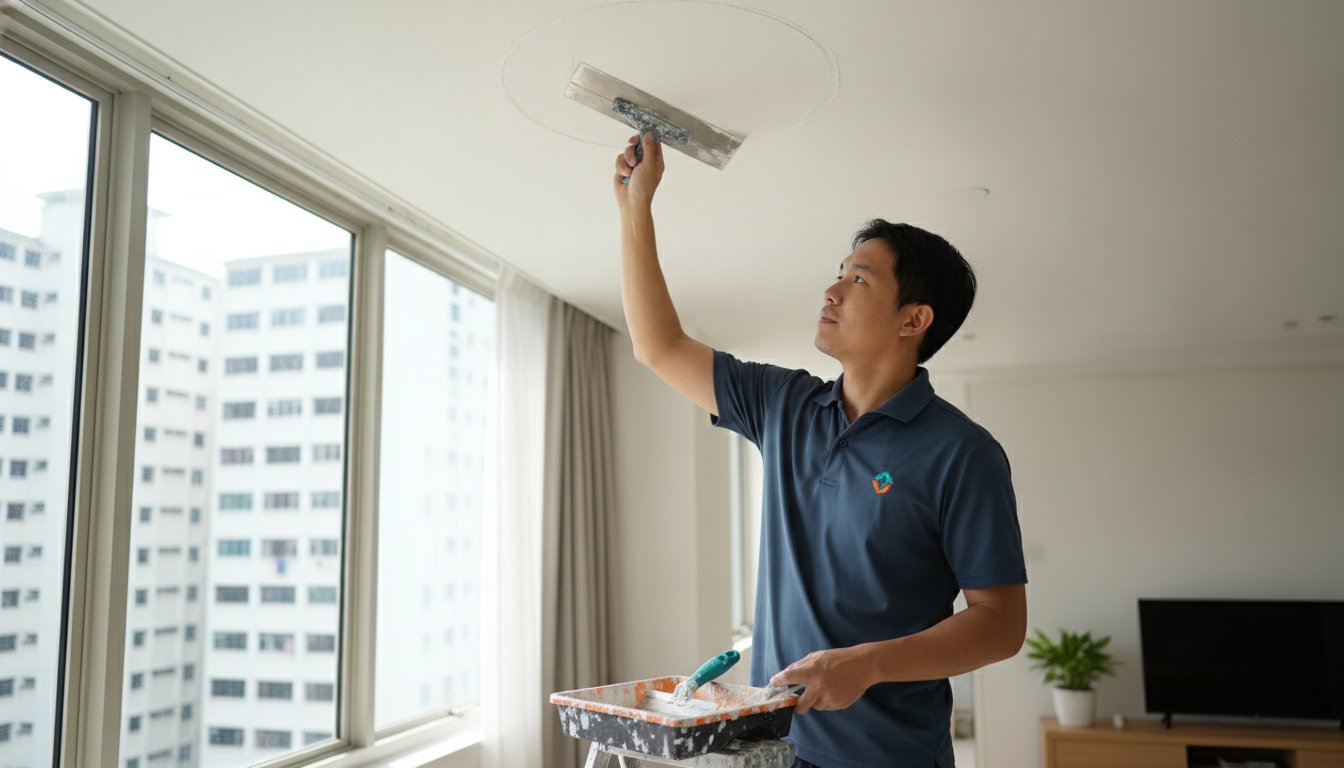
Alkali-resisting sealers are particularly vital in our tropical environment. They act as a chemical barrier against “efflorescence,” which are those white, salty stains that push through the paint when moisture reacts with cement. Before we even consider the first coat of colour, we inspect the walls for structural integrity. If you notice cracks or rusting rebar in your ceiling, it’s essential to address spalling concrete repair singapore before any cosmetic work begins. For a truly smooth, moisture-resistant base, we often recommend professional plaster and skim coating to eliminate the small pockets where dampness likes to settle.
Oil-Based vs. Water-Based Sealers
Use oil-based sealers if you’re dealing with old, heavily chalked walls or stubborn water stains. They penetrate deeper into the surface to bind loose particles. For occupied HDB interiors, low-VOC water-based sealers are the preferred choice. They dry quickly and align with the upcoming 2026 NEA regulations, ensuring your home remains a healthy environment during and after the job.
Treating Existing Mould Before Repainting
Painting over mould is a recipe for disaster. The spores will simply grow through the new layer, causing the paint to bubble and lift. We use professional sterilization techniques to kill the roots of the fungi first. This ensures a clean, sterile substrate that allows the anti-mould properties of your paint for humid singapore weather to work effectively. If you’re tired of seeing recurring stains in your bathroom, consult our specialists for a durable solution today.
Professional Application: Why Timing and Technique Matter
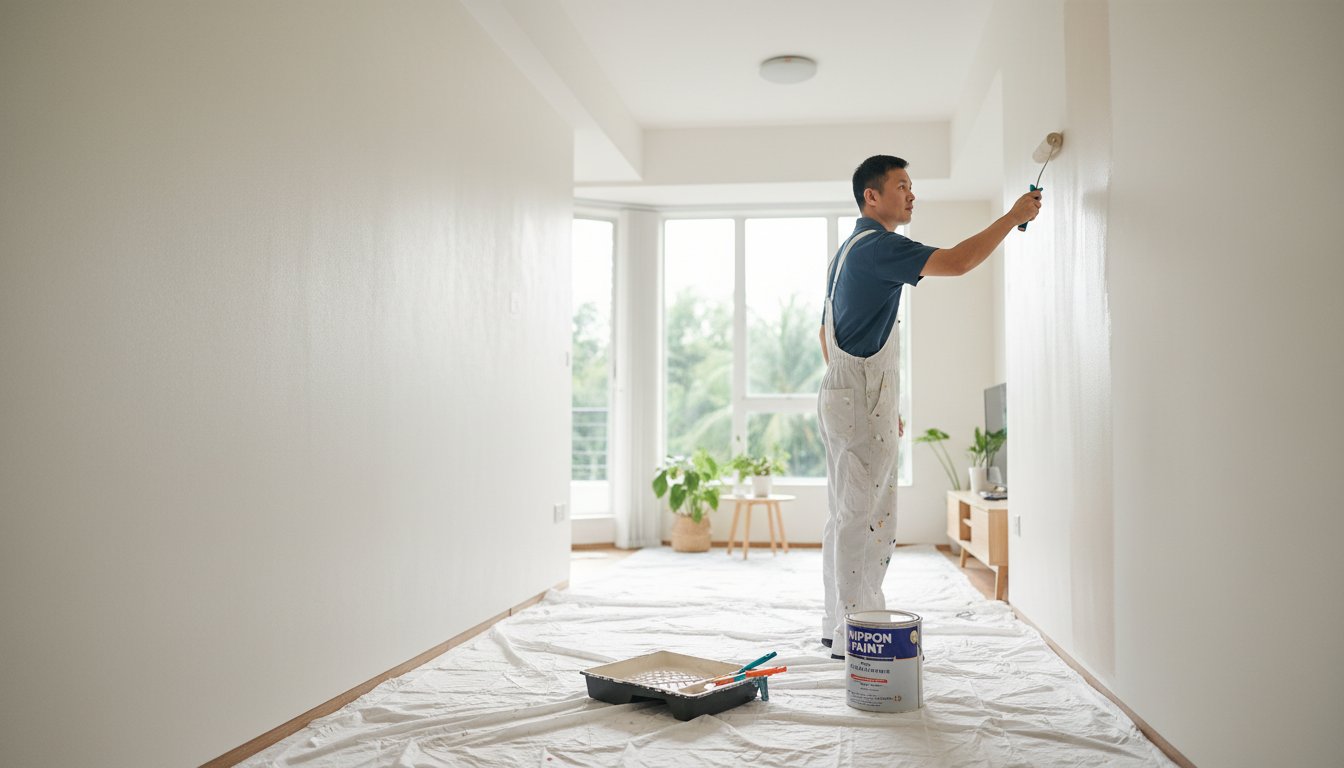
Many homeowners believe that painting during the monsoon season is impossible. While the dry months are technically ideal, professional house painting services can successfully execute a project year-round by carefully managing the indoor micro-climate. We monitor the relative humidity levels inside the unit closely. If the air is too saturated, we utilize industrial fans or dehumidifiers to assist the evaporation process. Choosing the right paint for humid singapore weather is only half the battle; the other half is ensuring the environment allows that paint to cure into a hard, protective shell.
Correct drying times are the most overlooked aspect of a durable finish. In our tropical climate, a coat that feels dry to the touch might still be “wet” at a molecular level. If you apply a second layer too early, you trap residual moisture between the films. This leads to the bubbling and soft textures that eventually cause the surface to fail. DIY projects often struggle here because homeowners are eager to finish the job in a single afternoon. We take a patient, meticulous approach. We allow each layer to cure fully, ensuring the chemical bonds are strong enough to withstand years of environmental stress.
The My Paint Job Singapore Advantage: 10 Years of Local Expertise
Our team brings a decade of hands-on experience to every HDB, condo, and landed property we touch. We understand that your home is your sanctuary, so we prioritize a clean and respectful worksite. This starts with meticulous furniture protection and thorough surface preparation that addresses the root causes of wall decay. We exclusively use premium, eco-friendly paints that comply with the 2026 NEA formaldehyde regulations. These low-VOC options provide a safer environment for your family without compromising on the resilience needed for our climate. We take pride in our craftsmanship and the certainty we provide to every client.
Don’t let mould and moisture dictate the condition of your walls. Ready for a mould-resistant home? Get a quote for our HDB painting services singapore and experience the difference that professional expertise makes.
Achieve a Flawless, Moisture-Resistant Finish for Your Home
Protecting your home from the relentless tropical elements doesn’t have to be a recurring struggle. You’ve seen how the right paint for humid singapore weather relies on more than just a premium brand; it requires a technical system of specialized sealers and meticulous surface preparation. By addressing the root causes of moisture trapped behind your walls and allowing for professional curing times, you can finally break the cycle of recurring mould and peeling paint. A beautiful home starts with a foundation that can breathe and resist the daily 82% humidity levels found in our heartlands.
Our team brings over 10 years of dedicated experience to every HDB and private residence across the island. We specialize in comprehensive wall restoration and spalling concrete repair to ensure your property remains structurally sound beneath its new coat. By utilizing premium, eco-friendly paints that carry anti-mould guarantees, we provide a finish that is both vibrant and safe for your family. Transform your home with our professional painting services and enjoy the certainty of a job done with pride and technical accuracy. We look forward to helping you renew your living space with craftsmanship you can trust.
Frequently Asked Questions
What is the best paint for a humid bathroom in Singapore?
Choose a premium anti-mould acrylic paint specifically formulated for high-moisture environments. These products contain higher concentrations of fungicides that prevent spores from taking root on your ceilings. Opt for a satin finish to ensure the surface is less porous and easier to wipe clean. This combination prevents steam from penetrating the film and keeps your bathroom pristine. Use a specialized paint for humid singapore weather to ensure the finish remains durable against daily steam.
Can I paint my house during the rainy monsoon season?
You can paint your home during the monsoon season if you manage the indoor environment correctly. Professional painters use industrial fans or dehumidifiers to lower the relative humidity inside your HDB or condo. This ensures the paint for humid singapore weather dries and cures properly despite the external rain. We monitor atmospheric conditions to adjust our timing. Don’t wait for the dry season to refresh your space when technical solutions are available to manage moisture effectively.
How long does a professional paint job last in Singapore’s weather?
A high-quality professional paint job typically lasts between five to seven years in Singapore. This longevity depends heavily on the initial surface preparation and the specific environmental exposure of your unit. Walls facing the intense afternoon sun or those in poorly ventilated corners may require maintenance sooner. Invest in a technical painting system today to avoid the stress and cost of premature repainting. Proper maintenance keeps your home’s aesthetic vibrant and clean for years.
Why is my wall paint peeling even though I used expensive paint?
Peeling usually occurs because of trapped moisture or poor adhesion to the substrate rather than the quality of the top coat. Even the most expensive paint will fail if applied over a chalky surface or a wall with structural seepage. Ensure your contractor addresses any underlying spalling concrete or organic growth before application. For exterior surfaces, Blue Water Exterior Power Washing demonstrates how professional soft washing can remove contaminants that compromise paint bonds. Proper preparation creates the necessary bond that prevents the paint film from lifting when temperatures and humidity fluctuate. Focus on the prep to protect your investment.
Do I really need to use a sealer before painting?
Always use a sealer to ensure your new paint job stands the test of time. A sealer acts as a bridge between the masonry and the top coat. It provides alkali resistance and ensures uniform suction across the wall. Skipping this step often leads to white salty stains or patchy colour results. Apply one coat of a high-quality sealer to lock in the substrate. This step provides a perfect canvas for your chosen aesthetic and ensures the top coat adheres properly.

Pingback: Paint Smell Removal After Repainting That Works - My Paint Job Singapore