Singapore’s mean annual relative humidity is around 82%, according to Meteorological Service Singapore, so a fresh-looking finish is only part of the test. The questions to ask a painting contractor in Singapore should establish who you’re hiring, what licensing or approvals apply to the work, what the warranty covers, and how surfaces will be prepared for durability in humid conditions. Useful questions to ask a painting contractor in Singapore also cover paint selection and aftercare.
It’s sensible to want clear answers before letting anyone work in your HDB flat, condo or landed home. The questions to ask a painting contractor in Singapore can help you clarify the scope, preparation and how concerns will be handled after completion. This guide explores legitimacy, licensing, warranties and paint durability, helping you make your decision with greater confidence.
Key Takeaways
- Ask how the contractor handles the final inspection, touch-ups and concerns that surface after the painting is complete.
- Look for a clear explanation of cleaning, patching and priming, since careful surface preparation supports paint adhesion and durability.
- Clarify the contractor’s experience, which licences apply to the work, and whether liability insurance and workers’ compensation coverage are in place.
- Account for Singapore’s humidity when discussing paint selection and durability: the mean annual relative humidity is around 82%, according to Meteorological Service Singapore.
1. Do you offer a warranty on your work?
Ask whether the contractor provides a written warranty for the completed paintwork. At the final walkthrough, inspect walls, ceilings, corners and edges under good lighting. Note missed patches, uneven coverage or paint on fixtures. Ask the contractor to record agreed touch-ups and complete them before treating the job as finished. A clear inspection step makes it easier to resolve visible defects before payment and handover.
Clarify the warranty’s duration, start date and coverage before work begins. A common warranty period for a painter’s work is one to two years. Ask whether it covers workmanship issues, such as peeling caused by poor application, and how claims are handled. Request the exclusions in writing too. For example, ask how the terms treat damage caused by leaks or later repairs. Clear boundaries prevent confusion if a concern appears.
Ask how the contractor handles a flaw that appears after the walkthrough. Hairline cracks can show through fresh paint if the surface was not properly prepared. Ask how the cause will be assessed and whether a touch-up is appropriate. Clarify how to report an issue and who will respond. Straightforward aftercare arrangements mean you know what to do if a concern arises.
Follow up after completion, even if the finish looks smooth on handover day. Ask whether the contractor remains contactable a month after payment, and keep the written warranty and job details together. If a small blemish emerges, send a clear description and identify its location, such as a crack above the bedroom door. This gives the contractor a practical starting point for assessing the concern.
Ask what remedy applies if you raise a concern, whether an inspection is needed and how any agreed touch-up will be arranged. Do not assume every paint defect is automatically covered. A documented final inspection and clear written terms make the process easier to understand.
2. How do I check if a painting contractor is legitimate?
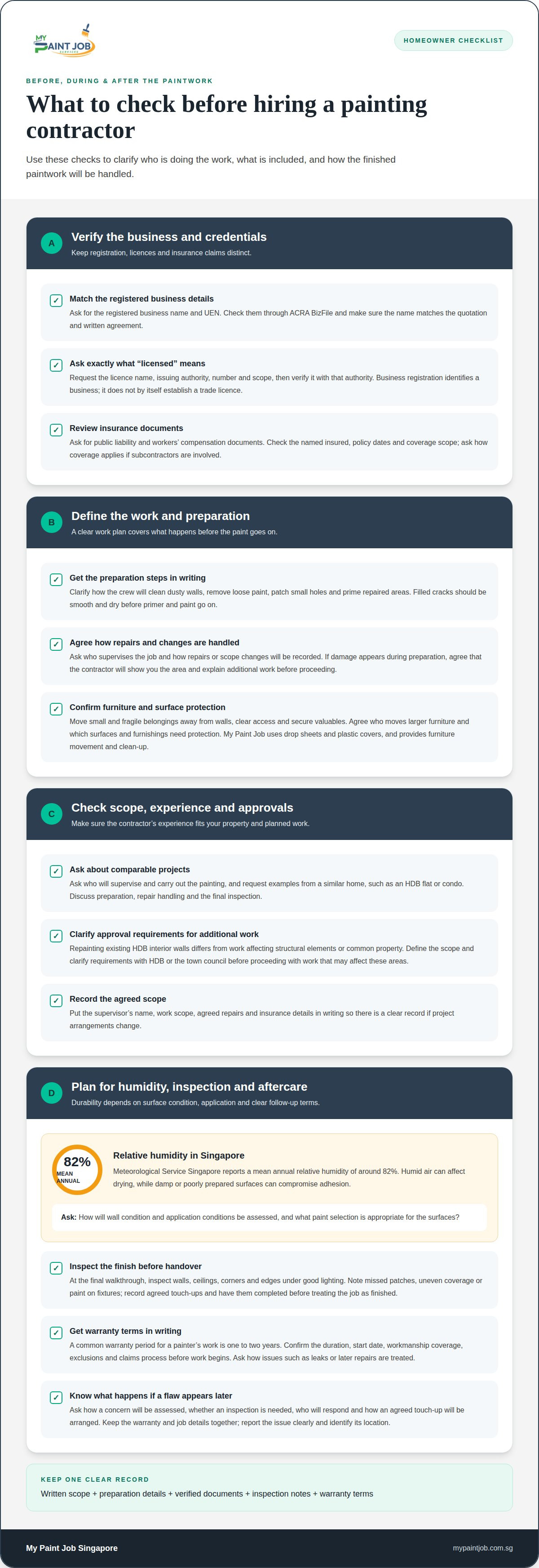
Ask for the contractor’s registered business name and UEN, then check the details through ACRA’s BizFile portal. Make sure the name matches the quotation and written agreement. Also ask who will oversee the job and how preparation, repairs and any changes to the agreed scope will be recorded.
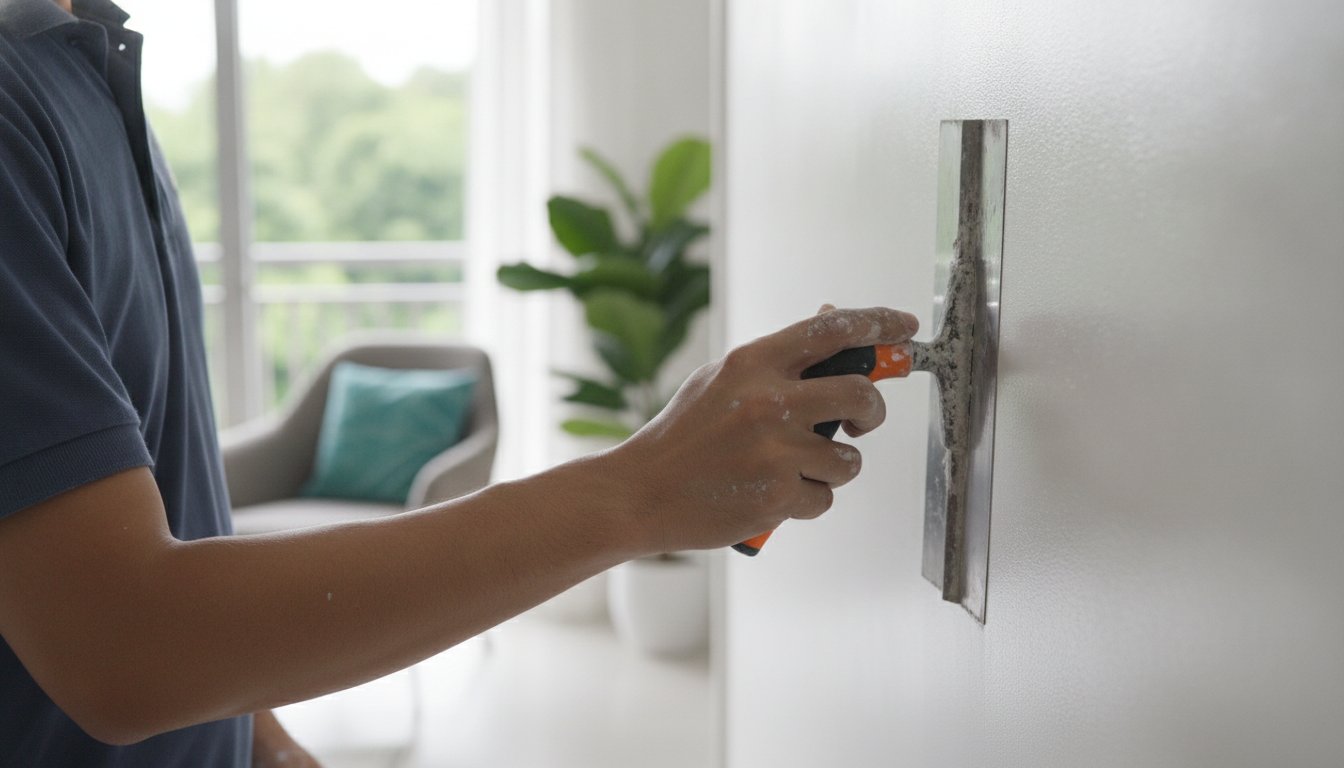
A credible work plan explains each preparation step, not just the final paint colour. Ask how the crew will clean dusty walls, remove loose paint, patch small holes and prime repaired areas. These steps help paint adhere to the surface. For example, a filled crack should be smooth and dry before primer and paint go on—a fundamental practice shared by property maintenance providers such as platprop.co.uk when prepping surfaces for long-term durability.
Does repainting a Singapore HDB flat require HDB or town council approval? Repainting existing interior walls is different from work that affects structural elements or common property. Define the scope clearly and clarify approval requirements with HDB or the town council before proceeding with additional work that may affect these areas.
How should you prepare your home and protect furniture before painters arrive? Move small and fragile belongings away from the walls, clear access to work areas and secure valuables. Agree who will move larger furniture. My Paint Job uses surface protection, including drop sheets and plastic covers, and provides furniture movement and clean-up. Confirm which surfaces and furnishings need protection, then keep work areas accessible for preparation and inspection.
3. Are you a licensed contractor?
“Licensed” can refer to different credentials, so ask which licence the contractor means. Request its name, issuing authority, number and scope, then verify the details with that authority. For business registration, compare the contractor’s registered name and UEN with ACRA BizFile. Registration identifies a business, but does not by itself establish a trade licence. Keep these claims distinct.
How do you verify a painting contractor’s licence, registration and insurance in Singapore? Check the business name and UEN through ACRA BizFile, then verify any claimed licence with its issuing authority. Ask for insurance documents and review the named insured, policy dates and coverage scope.
Experience matters when it relates to your property and the work involved. Ask who will supervise the project and who will carry out the painting. Request examples from a similar home, such as an HDB flat or condo. Discuss the project scope, surface preparation, repair handling and final inspection. A useful explanation connects the team’s experience to practical details, such as treating peeling paint or working around built-in furniture.
Ask to see documents for public liability insurance and workers’ compensation coverage. These forms of coverage can help protect homeowners from financial responsibility if an accident occurs during the project. Check which business entity the documents name, their policy dates and the work covered. If subcontractors will be involved, ask how the stated coverage applies to their work. Record the answers with your project documents.
Before agreeing, ask the contractor to put the supervisor’s name, work scope and insurance details in writing. This gives you a clear record if project arrangements change. For a painting project that calls for careful preparation and workmanship, explore painting project support.
4. Humidity and paint durability in Singapore
Singapore’s climate makes paint selection and application conditions worth discussing. The mean annual relative humidity is around 82%, according to Meteorological Service Singapore. Humid air can affect drying, while damp or poorly prepared surfaces can compromise adhesion. Ask how the contractor assesses wall condition and plans the painting timeline around preparation, application and drying. Questions to ask a painting contractor in Singapore should include how the team accounts for these conditions.
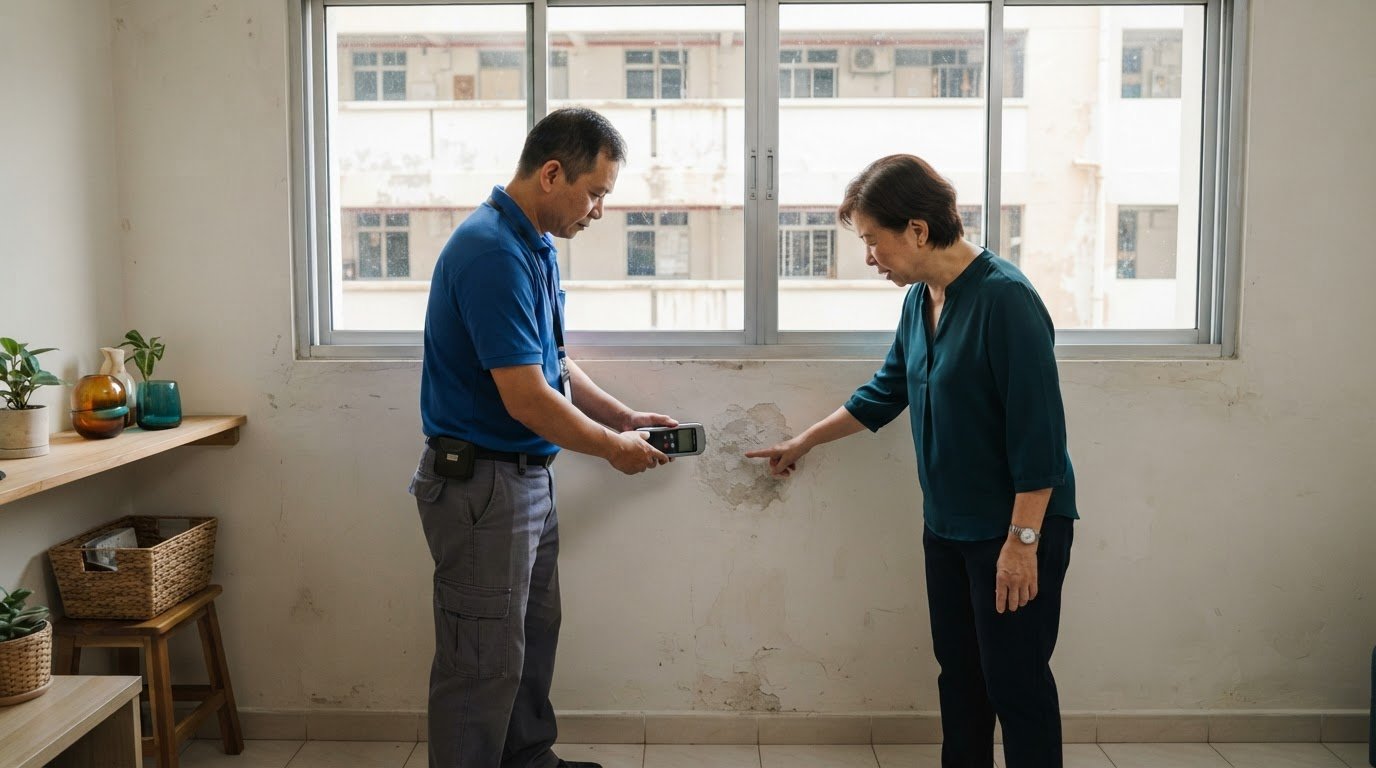
Durability depends on the surface, preparation, application and exposure, not just the paint label. Ask what paint is proposed for each area and why it suits that surface. A bathroom wall, for example, may face different moisture exposure from a bedroom wall. Ask how the team will identify dampness, peeling or cracks before painting and which repairs are included. Paint should not conceal an underlying surface problem. My Paint Job offers low-odour, zero-VOC paint options.
What should a Singapore painting quotation include, and how do you compare quotes? Look for a clear description of labour, materials, preparation and clean-up, then compare the same surfaces and tasks across estimates. A lower total may reflect a different scope or level of preparation, so clarify what is included before deciding. My Paint Job provides free, non-obligatory quotes.
How long does interior or exterior painting take in Singapore? The timeline depends on preparation, the area, drying time and final inspection. Most exterior painting jobs take from a few days to two weeks, while interior schedules depend on project scope and drying conditions.
A quality paint job should last about 10 years, while a good exterior paint job lasts 7-10 years. Treat these as useful expectations, not a substitute for sound preparation or care. Another of the questions to ask a painting contractor in Singapore is how the proposed paint system suits each surface and its exposure. Ask how ventilation and drying conditions shape the work sequence, rather than relying on paint choice alone. Discuss your painting project with Singapore’s humid conditions in mind.
My Paint Job Singapore
My Paint Job Singapore helps property owners plan painting work with careful surface preparation and a considered finish. If you’re weighing warranty terms, contractor credentials or how Singapore’s humidity may affect your project, bring those questions into the conversation before work begins. Clear scope and expectations help you understand the proposed approach for your home or business.
My Paint Job paints HDB flats, condos, landed homes and commercial properties. Share the property type, areas to be painted and any visible concerns, such as peeling paint or cracks. This gives the team useful context for discussing preparation and the work involved.
For a straightforward next step, contact My Paint Job Singapore to discuss your painting project.
Turn your painting plans into a clear brief
Before discussing your project, decide what you want the refreshed space to feel like. Note the rooms or surfaces involved, the finish you prefer and any practical concerns. These details help focus the conversation on your priorities, not just colour.
The questions to ask a painting contractor in Singapore can also guide what you share: explain your expectations for the finished space, and discuss how the proposed work fits the property. My Paint Job Singapore provides painting services for HDB flats, condos and landed homes. Share your project scope and the details you’d like considered, then take time to understand the proposed approach.
A considered brief gives your painting plans a useful starting point. Contact My Paint Job Singapore to discuss your project and take the next step with confidence.
Frequently Asked Questions
Are you a licensed contractor?
My Paint Job is a Singapore-registered painting company. Business registration and a trade licence are different, so one should not be treated as proof of the other. Whether a licence applies depends on the work involved. Clarify the project scope and distinguish painting from any separate regulated work included in a wider renovation.
Can you provide references from recent customers?
References can help you understand how a contractor communicates and manages work in a home. For a useful comparison, consider a project similar to yours, such as repainting an occupied HDB flat rather than an empty commercial unit. Ask what the reference can tell you about coordination, care around belongings and the finished space.
Do you carry Workman’s Compensation Insurance for your employees?
My Paint Job Singapore is a Singapore-registered painting company, but registration alone doesn’t establish whether a particular insurance policy covers employees on your project. Ask for the insurer’s documentation and check that the insured business, policy dates and coverage scope match the work. This helps distinguish workers’ compensation coverage from public liability insurance, which addresses a different risk.
Do you offer a warranty on your work?
My Paint Job Singapore states a 100% Satisfaction Guarantee. A satisfaction guarantee and a written workmanship warranty are not automatically the same commitment. Before work starts, clarify what the guarantee covers, how concerns are assessed and what remedy may apply. Keep the written terms with your project documents so you can refer to the agreed process if a finish concern arises.
How do I check if a painting contractor is legitimate?
Check that the business name and UEN on the written quotation match the registered business record. Then review whether the quotation clearly describes the work, materials and preparation. For example, a quote for a cracked wall should clarify whether patching is included or treated separately. Consistent business details and a specific written scope give you a clearer basis for assessing the arrangement.