Fresh paint can make a room look completely renewed, but a lingering chemical odor can make that same space feel uncomfortable to use. Effective paint smell removal after repainting starts with knowing that odor is usually part of the paint drying and curing process, not a sign that the job was done poorly. With the right ventilation, sensible timing, and quality materials, most homes can be made comfortable again without turning cleanup into another major project.
For households with children, pets, older adults, allergies, or respiratory sensitivities, the goal should not be to simply cover the smell with fragrance. The better approach is to help fresh air move through the space and allow the paint to cure under the right conditions.
Why Fresh Paint Smells Linger
Paint odor comes from compounds released as the coating dries. These are often referred to as volatile organic compounds, or VOCs. Water-based interior paints generally release fewer VOCs than traditional oil-based products, but even low-VOC and zero-VOC paint can have a noticeable smell immediately after application.
The length of time the odor lasts depends on several factors. Darker colors, multiple coats, high humidity, poor airflow, and a heavily furnished room can all slow drying. In humid climates, this matters even more because moisture in the air can keep paint from curing as quickly as expected.
A room may feel dry to the touch within a few hours, yet the paint can continue curing for days or weeks. That does not mean the odor will remain strong for weeks. In a well-ventilated room using quality low-VOC paint, the noticeable smell often improves significantly within 24 to 72 hours.
Paint Smell Removal After Repainting: Start With Airflow
Ventilation is the most reliable solution because it removes odor from the room instead of masking it. Open windows on opposite sides of the space where possible to create cross-ventilation. If the room has only one window, place a fan facing outward so it pushes indoor air outside rather than circulating the same air around the room.
Keep interior doors open when doing so will not spread the odor into bedrooms, closets, or occupied work areas. For a freshly painted bedroom, it can be better to keep the door mostly closed and direct air out through the window. For a living room or open office, opening nearby windows and creating a clear path for air movement usually works well.
Air conditioning can improve comfort, but it is not a substitute for fresh-air ventilation. A typical HVAC system recirculates indoor air. If outdoor conditions permit, use fresh air first, then run the air conditioning once the strongest smell has cleared.
Use Fans the Right Way
Fans are useful, but placement makes a difference. A fan pointed directly at a painted wall may help the surface dry, yet it will not necessarily remove odor from the room. One fan exhausting air out of an open window is usually more effective. A second fan near another opening can draw fresh air inward.
Avoid blasting a newly painted surface with intense heat. High heat can cause paint to dry unevenly, especially if walls were repaired, patched, or freshly plastered before painting. Steady airflow and normal room temperatures are the safer choice.
Choose Absorbers as Support, Not the Main Fix
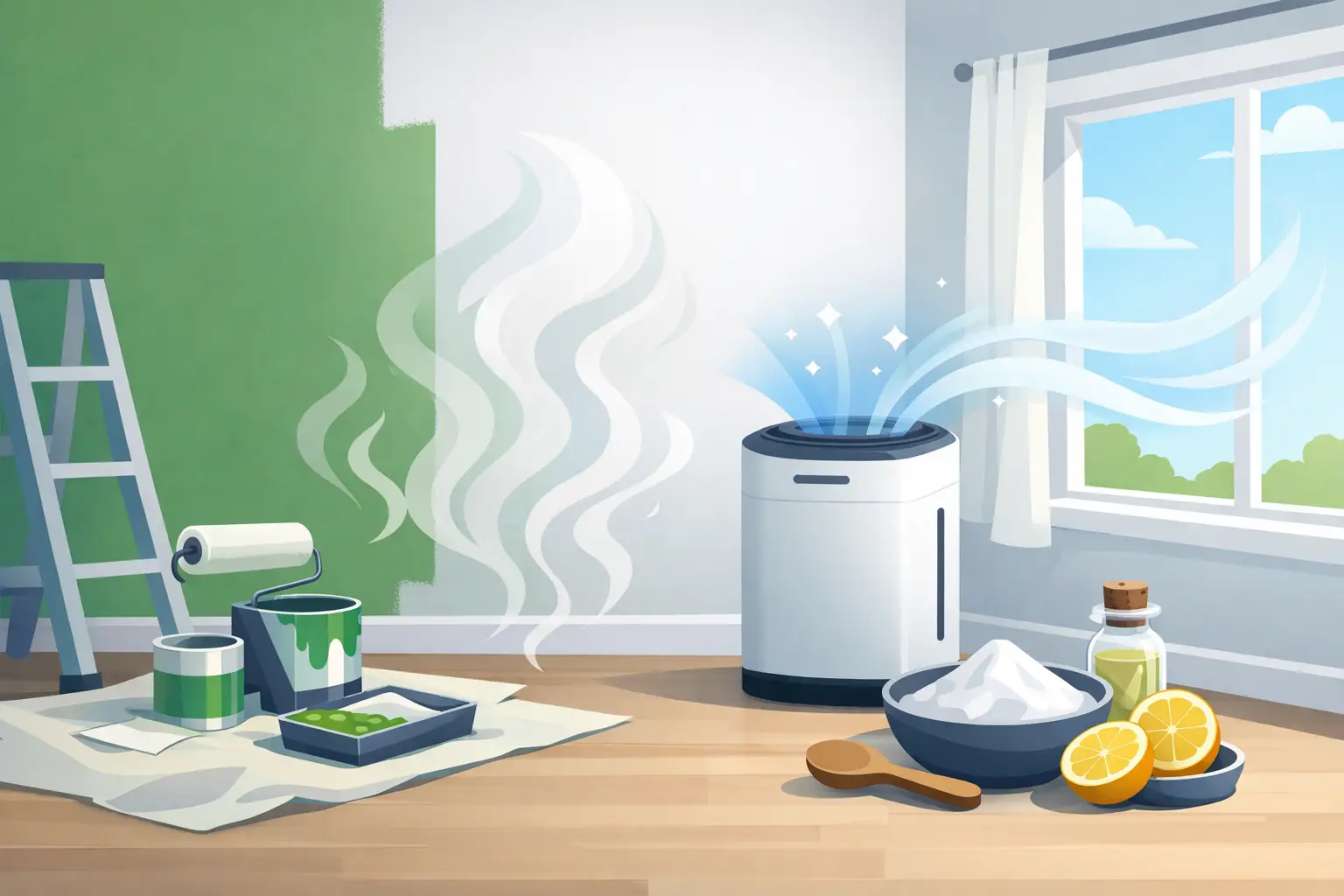
Odor absorbers can be helpful in smaller rooms or spaces with limited ventilation, but they should support airflow rather than replace it. Activated charcoal is one of the more practical options because it can absorb some airborne odors without introducing another strong scent.
Place shallow trays of activated charcoal around the room, keeping them out of reach of children and pets. Replace or refresh them as directed by the product instructions. Baking soda may help with mild lingering odors, particularly in closets or small enclosed rooms, but it is less effective than proper ventilation for a whole freshly painted area.
Some homeowners use bowls of vinegar, coffee grounds, onions, or strongly scented candles. These methods may change what the room smells like, but they do not reliably remove paint-related compounds from the air. Candles, incense, and aerosol air fresheners can also add particles and fragrance that make sensitive occupants feel worse.
An air purifier with an activated carbon filter can be a worthwhile option for people who are especially odor-sensitive. Check that the unit is sized for the room and that its filter includes carbon. HEPA filters are excellent for dust and fine particles, but carbon is the component that helps with odors and gases.
Reduce Humidity to Help Paint Cure Properly
Humidity can be the hidden reason a paint smell seems to hang around. When the air is damp, water-based paint takes longer to release moisture and cure. A dehumidifier can help in a closed room when outdoor air is humid or when opening windows is not practical.
Aim for a comfortable indoor humidity level rather than trying to make the room excessively dry. Moderate humidity and stable temperatures help paint cure evenly. If you notice condensation on windows, a damp feeling in the room, or slow drying after several hours, improving moisture control is often more useful than adding another odor absorber.
Bathrooms, laundry rooms, kitchens, and rooms with limited windows deserve extra attention. Exhaust fans should be used where available, but avoid exposing the freshly painted surface to steam from long showers or cooking immediately after the job is completed.
What to Do Before Moving Back Into the Room
A freshly painted room may look ready before it is ready for normal use. Give the paint enough time to dry based on the product instructions, then assess the room for comfort rather than relying only on the clock. If the smell is faint and there is no irritation, the space may be fine for most adults to use.
For nurseries, children’s rooms, bedrooms, and rooms used by people with asthma or chemical sensitivities, allow additional ventilation time whenever scheduling permits. This is especially sensible after using oil-based paint, solvent-based primers, specialty coatings, or multiple coats in a small room.
It is also wise to wait before pushing furniture tightly against freshly painted walls. Crowding the wall can slow curing and leave marks in the finish. Leave a small gap at first, particularly behind large cabinets, headboards, or shelving.
When the Smell May Point to a Bigger Issue
Most paint odors fade steadily. If the smell remains strong after a week of regular ventilation, investigate the conditions rather than assuming more air freshener will solve it. The room may have high humidity, poor ventilation, paint applied too thickly, or a coating that was not suitable for the surface.
A musty odor is different from a normal fresh-paint smell and may suggest moisture behind a wall, mold growth, or an issue with prior surface preparation. Bubbling, peeling, sticky paint, uneven sheen, or visible damp patches also deserve professional attention. Painting over a moisture problem can improve appearance temporarily while allowing the underlying damage to continue.
For commercial spaces, a persistent odor can affect employees, customers, and business operations. Scheduling work around occupancy, selecting lower-odor products, and using controlled ventilation are often more effective than trying to fix the problem after reopening.
Prevent Strong Odors on Your Next Paint Project
The easiest odor problem to manage is the one reduced before the first coat goes on. Discuss low-VOC or zero-VOC paint options when planning an interior project, especially for occupied homes, offices, clinics, retail spaces, and rental turnovers. Premium paint products may cost more upfront, but better coverage, dependable curing, and a more comfortable indoor environment can make the difference worthwhile.
Preparation also matters. Proper wall repair, clean surfaces, suitable primers, and correct application methods help paint dry as intended. Rushing coats, applying paint in poor conditions, or using the wrong product for a damp surface can create more than a lingering smell – it can compromise the finish itself.
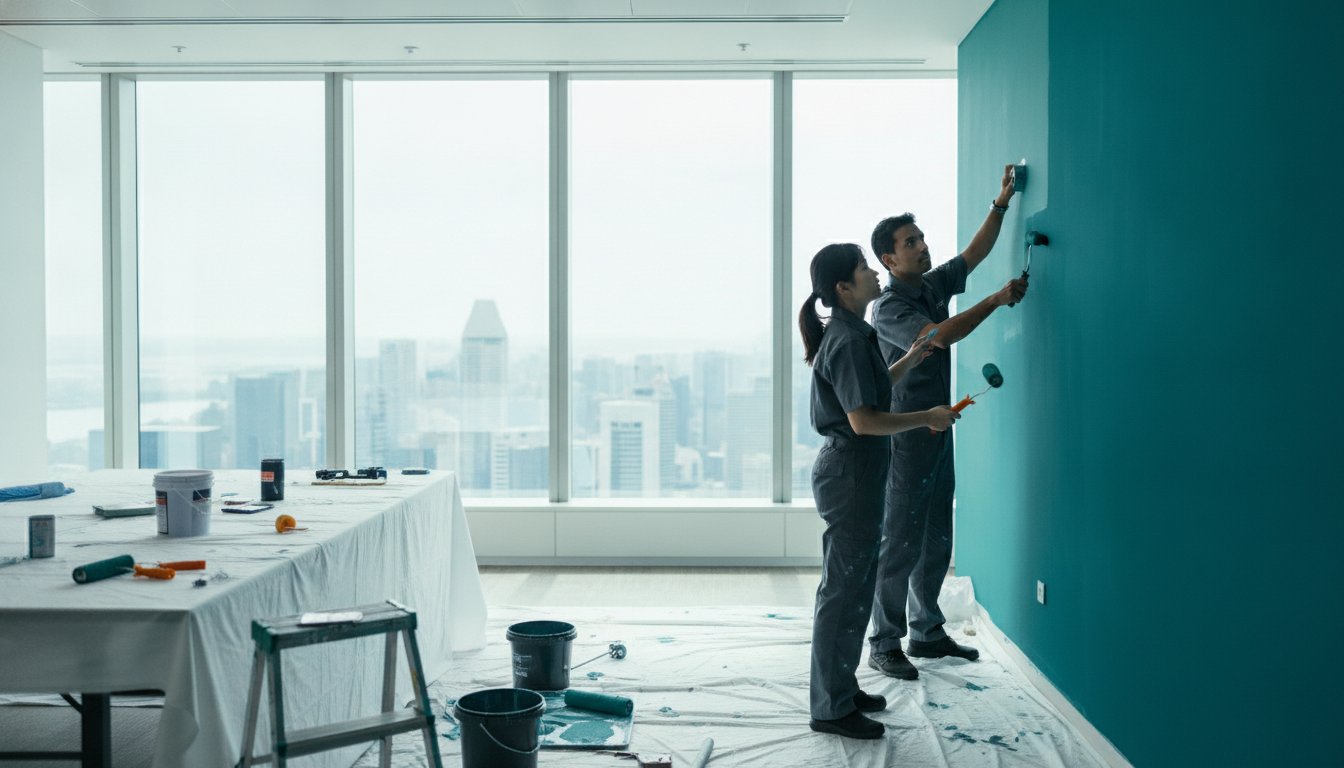
A professional painting team can plan ventilation, protect furnishings, select appropriate materials, and complete the work with less disruption to your home or business. That level of preparation is especially valuable when a room needs to be occupied quickly.
Fresh paint should leave behind a clean, polished space, not an odor you have to live with. Give the room fresh air, control humidity, and allow the coating time to cure. If the smell does not improve or the finish shows signs of trouble, addressing the cause early protects both your comfort and the quality of the work.