
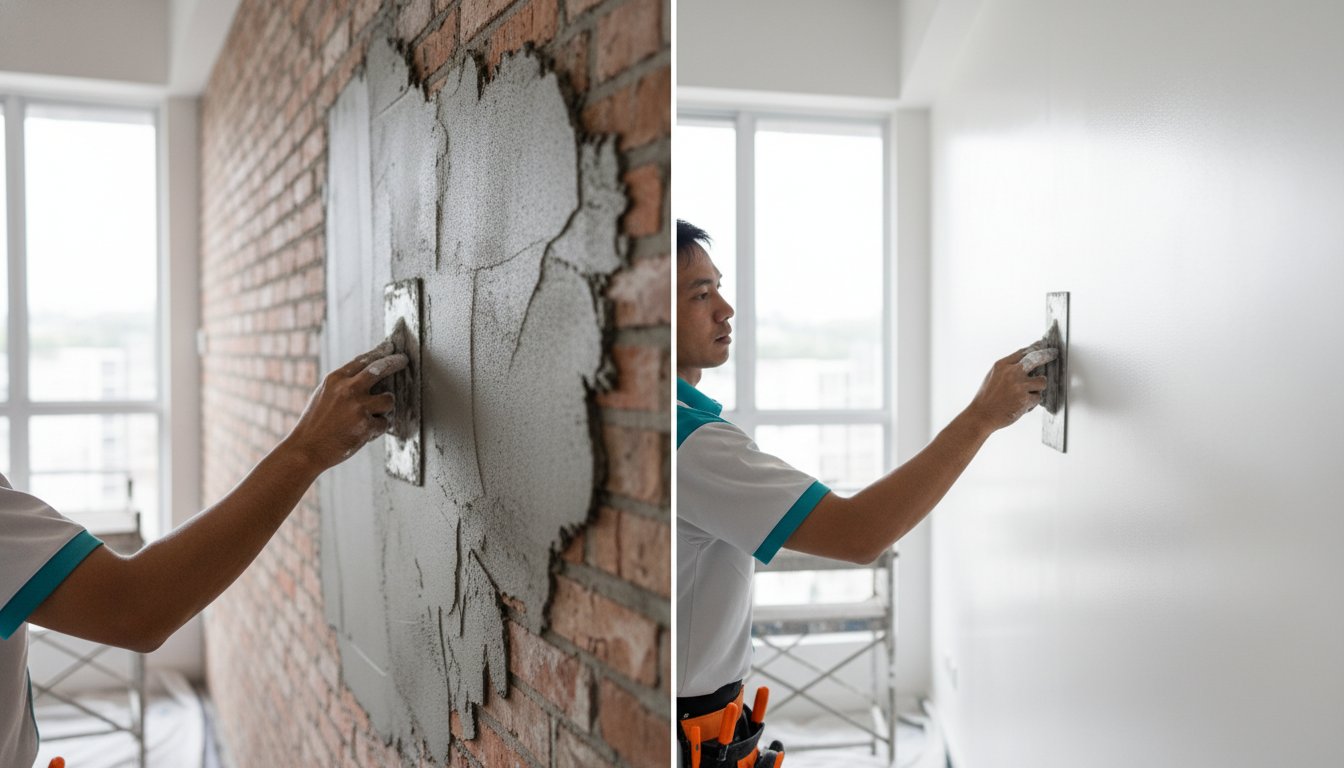
Spending thousands on premium designer paint is a wasted investment if you haven’t first addressed the structural integrity of your plaster walls. You likely want that “brand new” showroom feel, but instead, you’re staring at rough patches, unsightly bumps, or paint that started peeling just months after you moved in. It’s frustrating to see your vision for a beautiful home ruined by poor surface preparation, especially when you aren’t sure if you need a heavy-duty plastering job or a simple aesthetic touch-up.
We’ll help you master the technical differences between structural plastering and aesthetic skim coating so you can achieve a flawless, durable finish that lasts for years. You’ll discover why HDB regulations limit wall finishes to a 25mm thickness and how to budget for costs ranging from S$8 to S$15 per square meter. From understanding the 3-year BTO waterproofing rule to choosing the right pre-packed materials for your 4-room flat or landed property, this guide ensures your next renovation is built on a foundation of precision and confidence.
Key Takeaways
- Differentiate between structural plastering for masonry and thin-layer skim coating to select the most effective treatment for your specific HDB or condo layout.
- Master the “hollow sound” test to identify debonded sections and address safety risks before they compromise your home’s aesthetic finish.
- Discover why meticulous surface preparation and specialized sealers are the secret to creating flawless plaster walls that stand the test of time.
- Compare traditional plastering for heavy repairs against the 1-3mm precision of skim coating to achieve a smooth, professional-grade surface ready for painting.
- Learn to distinguish between minor hairline cracks and deeper structural issues to avoid costly mistakes during your wall restoration process.
Understanding Plaster Walls in the Singapore Context
In Singapore, plastering isn’t just a cosmetic choice; it’s a structural necessity. Unlike the timber-framed homes often seen in Western media, our HDB flats and condominiums rely on solid masonry and concrete construction. Plaster serves as the essential bonding layer that bridges the gap between raw, porous brickwork and your final decorative paint coat. By Understanding Plaster Walls, you’ll better appreciate how this material protects your property from the inside out. High-quality plaster walls are your first line of defense against Singapore’s intense humidity, which averages 84% year-round. Without a dense, professionally applied layer, moisture can easily seep into masonry, causing paint to bubble and peel within months of application.
The Role of Plaster in Modern Masonry
Plaster acts as a protective shield for internal bricks, preventing surface crumbling and environmental degradation. A thick, well-executed layer provides significant fire resistance and enhances acoustic insulation between rooms, making your home quieter and safer. If you have recently completed spalling concrete repair Singapore, you know that a solid plaster finish is the final step in restoring your ceiling’s strength. It transforms a repaired structural patch into a smooth, seamless surface you can be proud of.
Plaster vs. Render: A Local Distinction
In the local renovation industry, we distinguish between “rendering” and “plastering” based on where the material is applied. Rendering typically refers to the coarser, weather-resistant cement coatings used on the exterior of landed properties or commercial buildings. Conversely, interior plaster walls require a much finer finish to accommodate premium paints like Nippon or Dulux. This precision ensures your walls aren’t just durable, but also serve as a perfectly smooth canvas. We treat every surface as a potential masterpiece, ensuring your vision is backed by technical excellence and long-lasting confidence.
Plastering vs. Skim Coating vs. Drywall: Which is Best?
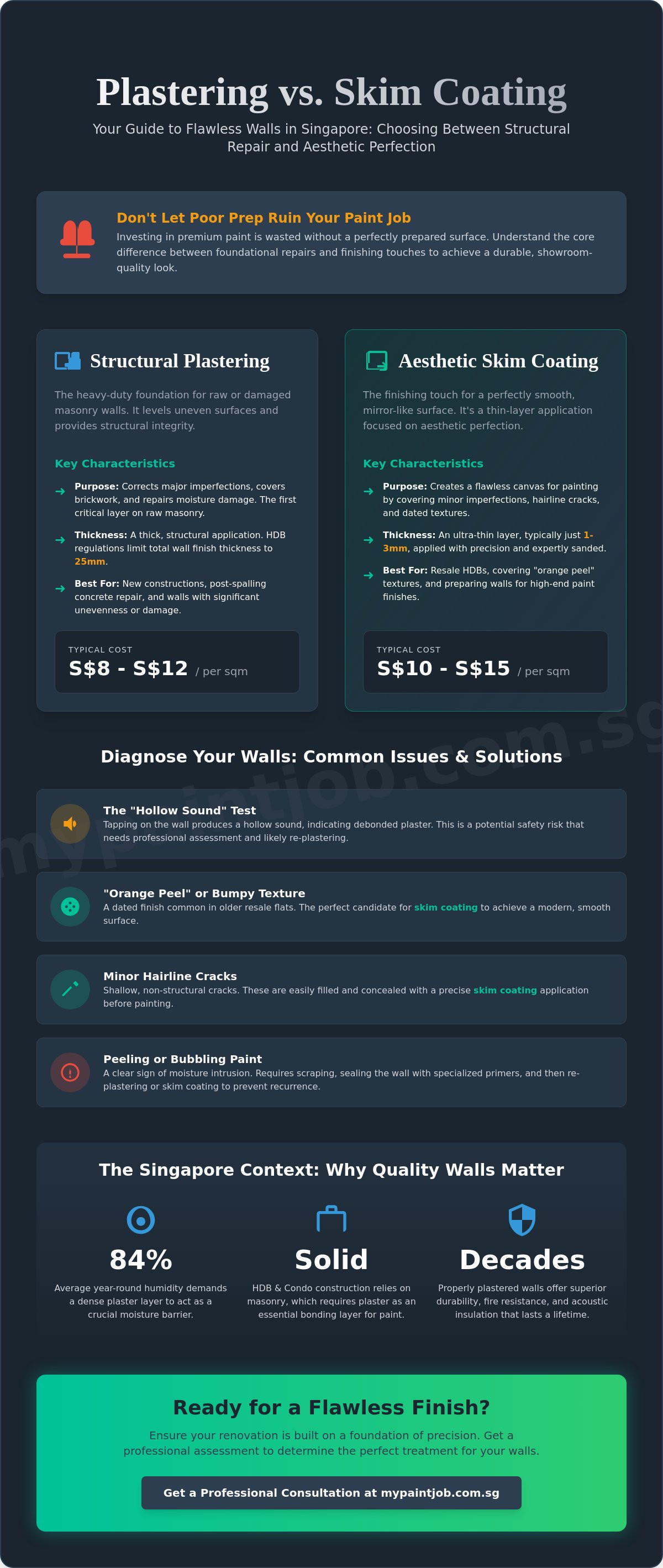
Many homeowners use these terms interchangeably, but they serve distinct purposes in the life cycle of your home. Traditional plastering is a thick, structural application used to level out significant unevenness or to restore surfaces after spalling concrete repair Singapore. It’s the heavy-duty solution for masonry that has suffered from moisture damage or structural shifts. In contrast, skim coating is a finishing technique. It involves applying a thin layer, typically 1 to 3mm, to create a mirror-like surface ready for a fresh coat of confidence. Understanding the Professional Wall Restoration Process helps you decide if you need a deep structural fix or just an aesthetic refresh.
- Durability: Solid masonry with plaster remains the gold standard for Singaporean homes, lasting decades with proper care.
- Cost-Effectiveness: Basic wall plastering currently costs between S$8 and S$12 per square meter. Skim coating, which requires more meticulous labor for a smooth finish, averages S$10 to S$15 per square meter.
- Drywall: While common in office reinstatements for quick room divisions, drywall lacks the impact resistance and acoustic insulation of solid plaster walls.
When to Choose Skim Coating
Skim coating is the ideal choice for resale HDB flats that have inherited the dated “orange peel” texture or minor hairline cracks from previous owners. The process involves applying multiple paper-thin layers of compound, followed by expert sanding. This technique transforms a tired, bumpy surface into a high-end, professional canvas. If you want your walls to look brand new without a full-scale renovation, our specialized skim coating services can provide that flawless finish.
The Limitations of Drywall in Residential Spaces
Singaporean homeowners overwhelmingly prefer solid plaster walls for landed properties and condos because of their long-term value. Drywall often struggles with the weight of heavy fixtures, such as large television mounts or custom kitchen cabinetry, which can lead to sagging or damage over time. Masonry provides a sense of permanence and reliability that lightweight partitions simply cannot match. We focus on building that reliability into every square inch of your space.
Identifying Common Wall Issues: When Do You Need Professional Plastering?
Your walls often signal trouble long before a major failure occurs. Recognizing these symptoms early saves you from the stress of a full-scale reconstruction. While hairline cracks are often cosmetic, deep diagonal or horizontal fissures suggest structural movement that requires more than a simple touch-up. One of the most effective diagnostic tools is the “hollow sound” test. Simply tap various sections of your plaster walls with your knuckles. A hollow, drum-like echo indicates debonding, where the plaster has detached from the masonry substrate. This poses a significant safety risk, as large sections of heavy material can fall without warning.
If you notice peeling or flaking paint, don’t assume it’s just a cheap product. This is frequently a sign of underlying moisture trapped within the plaster. To ensure a long-lasting finish, it’s vital to apply a high-quality paint sealer after any plastering work. This creates a barrier that prevents future seepage and helps your masterpiece stay vibrant for years. If you’re seeing these signs in your home, get a free quote for our professional wall restoration today and let us restore your confidence in your space.
Humidity and Wall Seepage
Singapore’s 84% average humidity is a constant challenge for masonry. When moisture penetrates the surface, it carries minerals that crystallize into a white, powdery deposit known as efflorescence. If left untreated, this moisture eventually reaches the steel reinforcement bars inside your concrete, leading to spalling concrete. This transition from a surface issue to a structural one is why we emphasize meticulous surface preparation for every HDB flat and condo we handle. Neglecting your plaster walls today can lead to much more expensive repairs tomorrow. In some cases, persistent dampness also creates the ideal conditions for fungal growth, making it essential to understand the full process of removing mold from walls before any plastering or repainting work begins.
The Danger of DIY Plastering
Achieving a perfectly flat surface requires professional-grade tools and years of muscle memory. DIY attempts often fail because of improper mixing ratios or poor trowel technique, leading to “mapping” cracks that appear within 3 to 6 months. Without the precision of a seasoned expert, you risk creating an uneven texture that premium paints will only highlight. We take pride in our master craftsmanship, ensuring your home gets the dedicated care it deserves without the frustration of a botched DIY job.
The Professional Wall Restoration Process: Precision and Craftsmanship
Restoring your home to its peak condition requires more than a quick fix; it demands a disciplined, four-step process rooted in master craftsmanship. We begin with meticulous surface preparation, where we remove every flake of loose paint and clean the underlying masonry to ensure a stable foundation. Next, we apply specialized sealers. These act as a bridge, ensuring the new material bonds perfectly to the substrate so your plaster walls don’t crack or peel prematurely. The third phase involves the precision application of plaster or skim coat layers. We focus on achieving perfectly level surfaces across large spans, which is especially critical in the open-plan layouts of modern condos. Finally, we perform expert sanding and finishing. This creates a “fresh coat of confidence” that makes the final painting phase a success.
Why Surface Preparation is 70% of the Job
We believe surface preparation is 70% of the job. Our “Vision-Action” approach means we first see the final masterpiece you desire, then we work backwards to prepare the foundation accordingly. We understand that a renovation can be disruptive, so we handle all furniture protection and post-project clean-up. You get a beautiful result without the stress of a messy home. Our team takes pride in being hardworking and meticulous, ensuring every corner of your property is treated with respect and care.
Integrating Plastering with Professional Painting
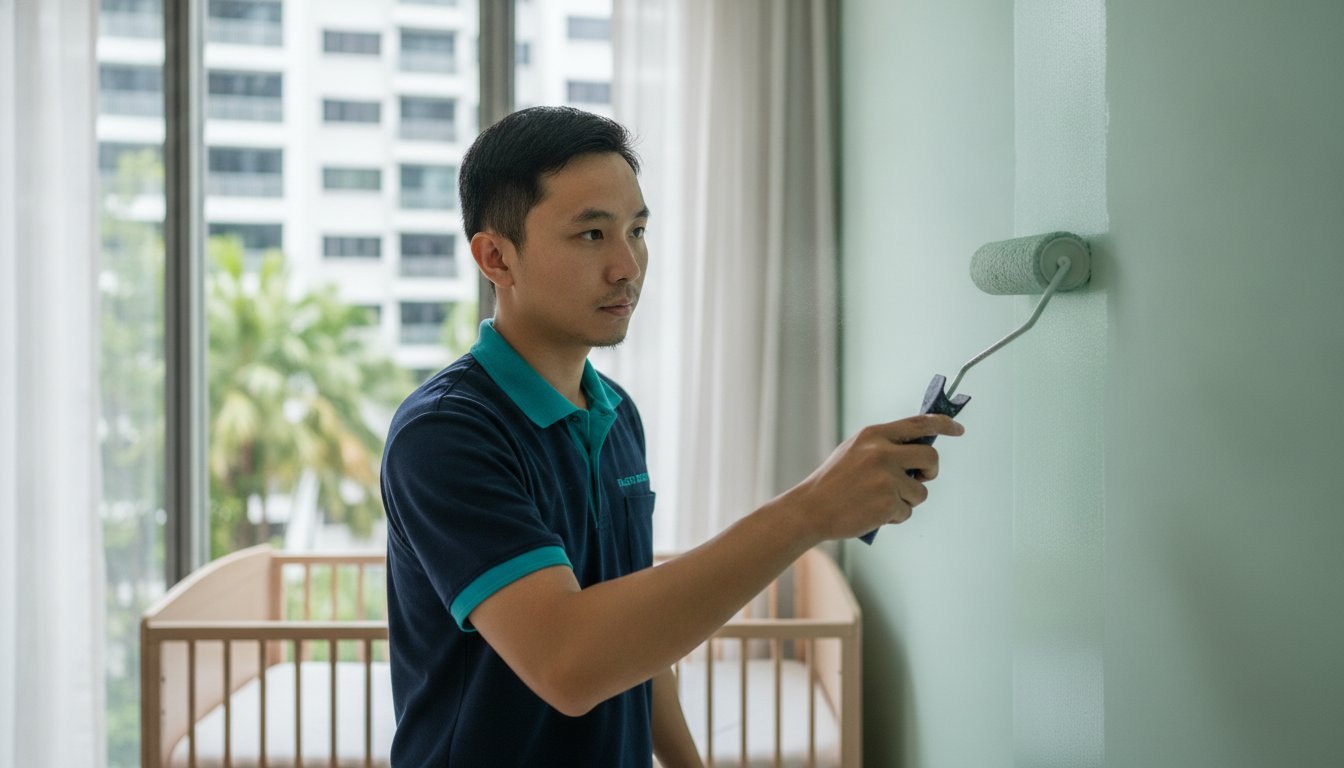
A flawless plastering job deserves the best finish. We recommend premium paints like Nippon Vinilex 5000 for newly plastered surfaces because of their superior coverage and durability. Using high-quality plaster walls as a canvas ensures these paints perform exactly as the manufacturer intended. For a deeper dive into the specific materials we use, read The Ultimate Guide to Wall Plastering and Skim Coating in Singapore (2026). When you’re ready to see the difference that precision makes, transform your space with a professional plastering quote today.
Build Your Masterpiece on a Flawless Foundation
Choosing between structural repair and aesthetic smoothing is the first step toward a home you’ll love for years. You now understand that while skim coating provides that mirror-like finish, traditional plastering is the essential fix for masonry damaged by humidity or structural shifts. Achieving durable plaster walls requires more than just the right materials; it demands a partner who values precision and understands the unique needs of Singaporean property types.
With over 10 years of experience restoring HDB flats and luxury condos, we take pride in transforming tired spaces into vibrant masterpieces. We handle the heavy lifting, from meticulous surface preparation to thorough post-project clean-up and furniture protection, ensuring your daily routine remains undisturbed. Don’t settle for uneven textures or peeling paint when a professional touch is just a click away. Get a Free Quote for Professional Plastering Services and let our dedicated team bring your vision to life with the quality and care your home deserves. We look forward to giving your space the fresh coat of confidence it needs to truly shine.
Frequently Asked Questions
Can I plaster over existing paint in my HDB flat?
You shouldn’t apply plaster directly over existing paint without extensive surface preparation. For HDB flats, we must first scrape off any peeling or loose layers and apply a specialized bonding agent or sealer to ensure the new material adheres correctly. Skipping this step often leads to the new layer debonding within 6 months, causing the hollow sound and safety risks mentioned earlier in this guide.
How long does it take for new plaster walls to dry before painting?
New plaster walls typically require 7 to 14 days to cure fully before you can begin the final painting phase. This timeframe varies based on the thickness of the application and Singapore’s 84% average humidity levels. Painting too early traps moisture inside, which inevitably leads to bubbling and the premature failure of your chosen paint masterpiece.
Is skim coating the same as plastering?
Skim coating and plastering are distinct techniques used for different stages of wall restoration. Plastering involves applying a thicker base layer to level uneven masonry or repair structural damage after spalling concrete work. Skim coating is a finishing process where we apply a 1 to 3mm thin layer to create a smooth, “brand new” texture ready for premium decorative paints.
What is the average cost of wall plastering in Singapore for 2026?
For 2026, the estimated cost for basic wall plastering in Singapore ranges from S$8 to S$12 per square meter. If you’re renovating an entire HDB flat, prices typically fall between S$1,700 for a 2-room unit and S$4,100 for a 5-room unit. These figures reflect the use of required pre-packed materials and the professional labor needed to ensure a durable, high-quality finish.
How do I fix a large crack in my plaster wall?
Fixing a large crack requires a professional “V-cut” approach to ensure the repair stands the test of time. We widen the crack slightly to remove loose debris, apply a high-strength filler or fiberglass mesh for reinforcement, and then finish with a fresh layer of plaster. This meticulous process prevents the crack from reappearing through your new paint coat just a few months after the project is finished.

Pingback: Spalling Concrete Repair Singapore: The Homeowner’s 2026 Guide to Fixing Ceilings