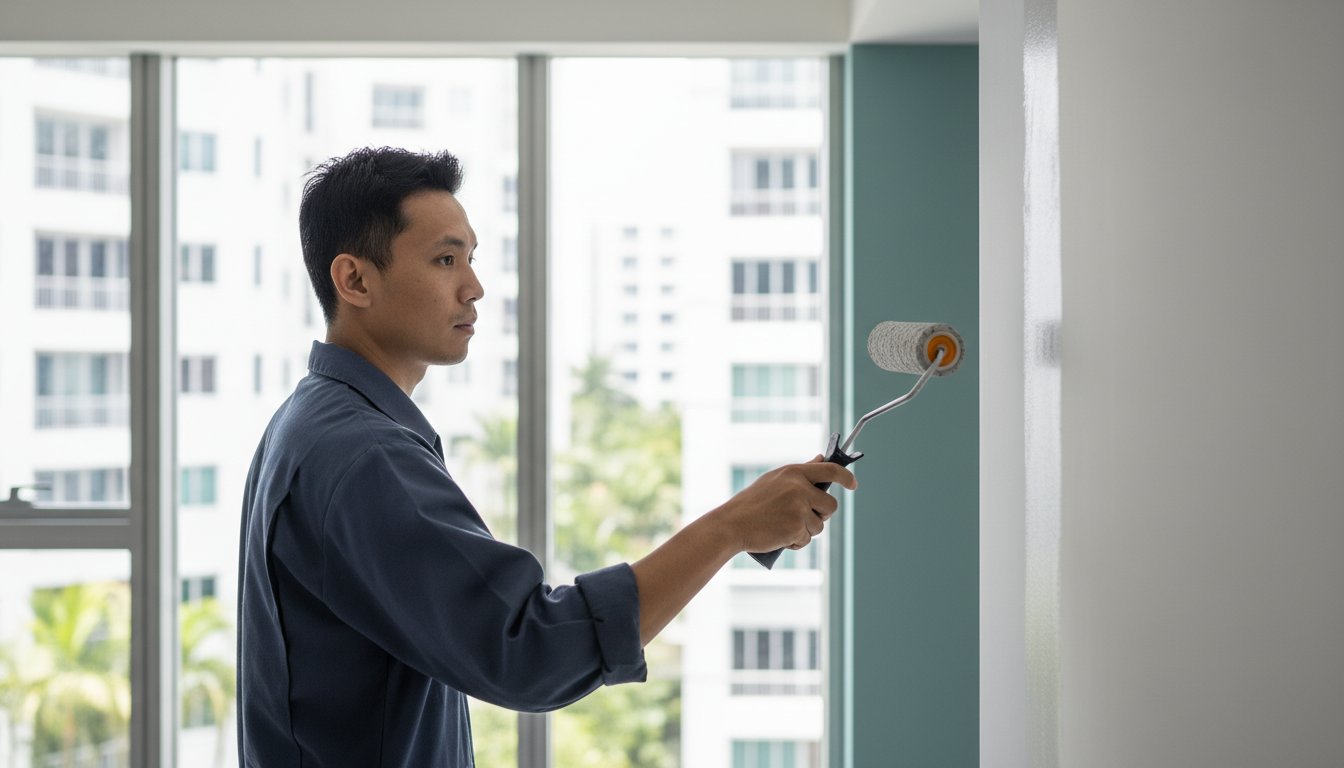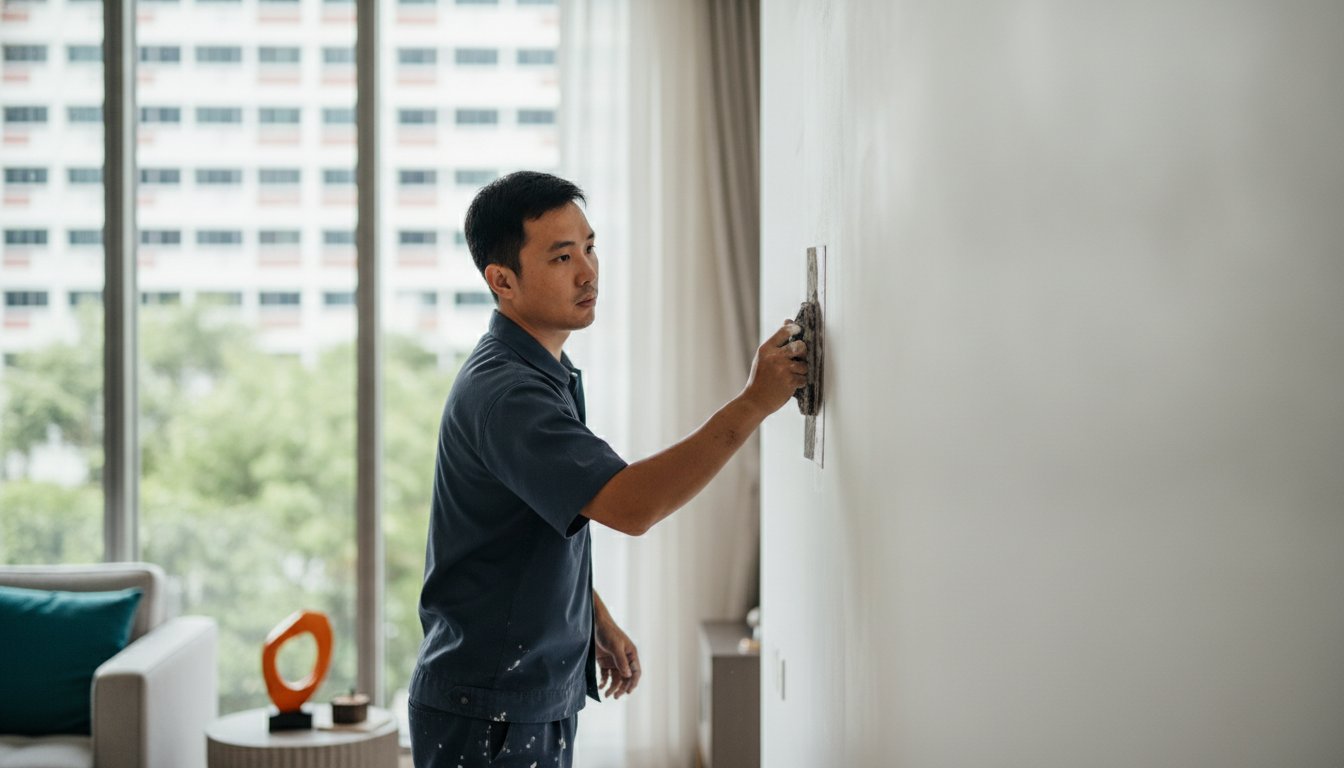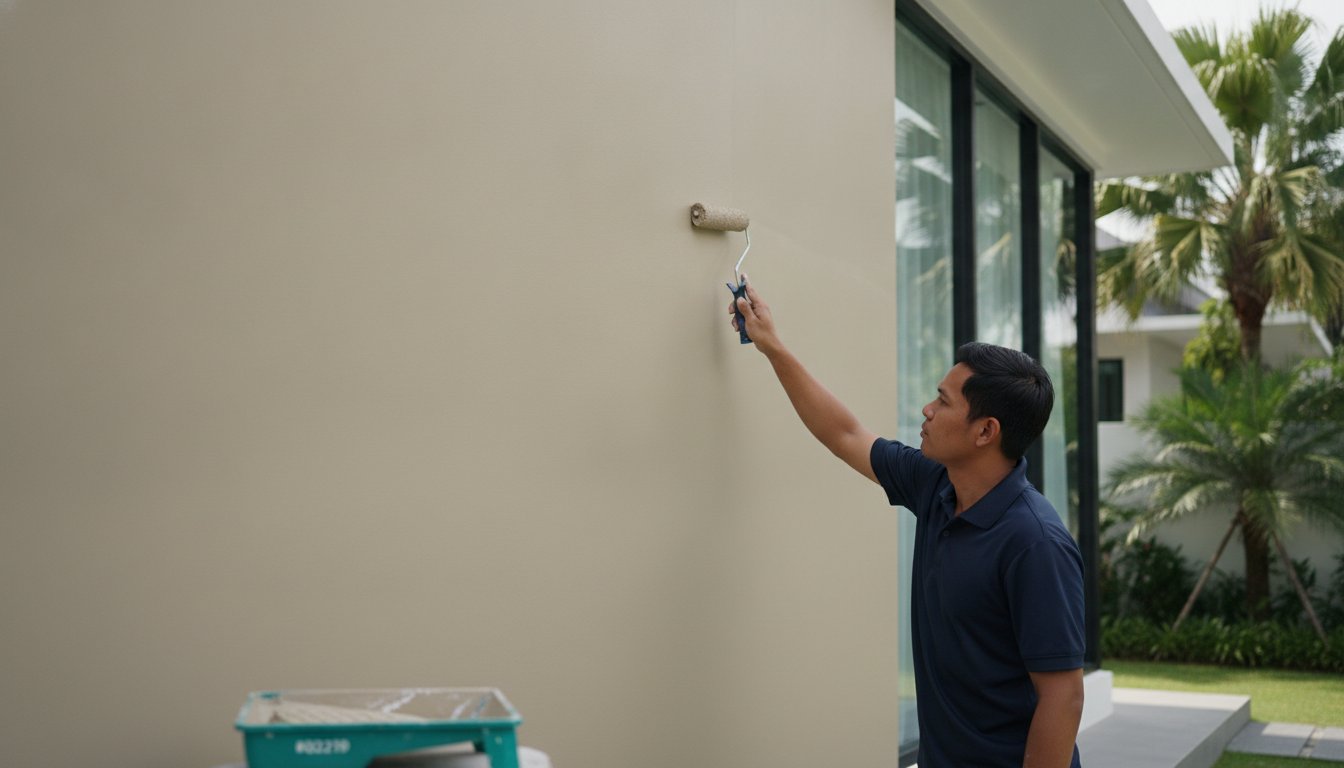
Have you ever tried to touch up a small scuff on your living room wall, only to end up with a glaring “patch” that looks worse than the original mark? It is a common frustration for many HDB and condo owners in Singapore who want to maintain a pristine home without the high expense of a full-room repaint. You likely worry that the original paint brand is long gone or that the new application will never blend with your existing matte or silk finish. We understand that your home is a point of pride, and a mismatched wall can feel like a permanent blemish on your sanctuary.
This guide reveals the professional secrets on how to match existing paint color with surgical precision, ensuring an invisible transition between the old and the new. You will discover how to navigate the 2026 NEA formaldehyde regulations and use local spectrophotometer technology to find your exact shade. We will walk you through the technical steps of surface preparation and sheen identification so you can achieve a seamless result that saves you both time and money.
Key Takeaways
- Learn how to safely extract a 1-inch paint sample from behind a light switch to obtain an accurate laboratory match at local hardware shops.
- Discover the professional secrets on how to match existing paint color by accounting for years of environmental fading and specific sheen levels.
- Master the four-hour “dry down” rule to ensure your test patch perfectly replicates the final cured shade before you commit to a larger area.
- Identify the technical “point of no return” where a DIY touch-up should transition to a professional full-room repaint for a truly seamless finish.
Why Matching Existing Paint Color is Harder Than It Looks
Understanding how to match existing paint color involves more than just picking a similar shade from a fan deck. It is a meticulous process of replicating both the precise hue and the specific sheen on a surface that has likely weathered over time. Achieving a seamless blend requires an eye for detail and an understanding of how materials interact with the environment.
Many homeowners encounter the color metamerism phenomenon, where a sample looks perfect under the bright fluorescent lights of a hardware store but appears “off” once applied in an HDB living room. This happens because different light sources emphasize different wavelengths in the paint’s pigment. Without accounting for this, your touch-up will likely stand out as a visible patch.
In our tropical climate, high humidity and intense UV rays cause “chalking,” a process where the paint binder degrades and creates a fine white powder on the surface. This shifts the color’s appearance over just two to three years. Additionally, the sheen drastically changes how light reflects off the wall. A matte touch-up on a silk-finish wall will look like a dark stain, even if the color is a 100% match. You must identify whether your wall is Matte, Low Sheen, or Gloss to ensure the texture matches the pigment.
The Impact of Singaporean Lighting on Color
HDB interiors often feature a mix of cool-toned fluorescent tubes and warm evening sun streaming through the windows. These shifting conditions alter your perception of the wall throughout the day. Always view your match during different times of the day, from the harsh midday glare to the soft glow of your evening LED cove lighting, before you commit to the full application.
Weathering and the Original Code Trap
Relying on a paint code from five years ago is a common mistake because that original formula will likely be darker than your current, faded wall. Paint is a chemical compound that oxidizes and fades over time. To get it right, you must match the wall as it looks today, not how it looked when you first moved in.
3 Proven Methods to Identify Your Current Paint Shade
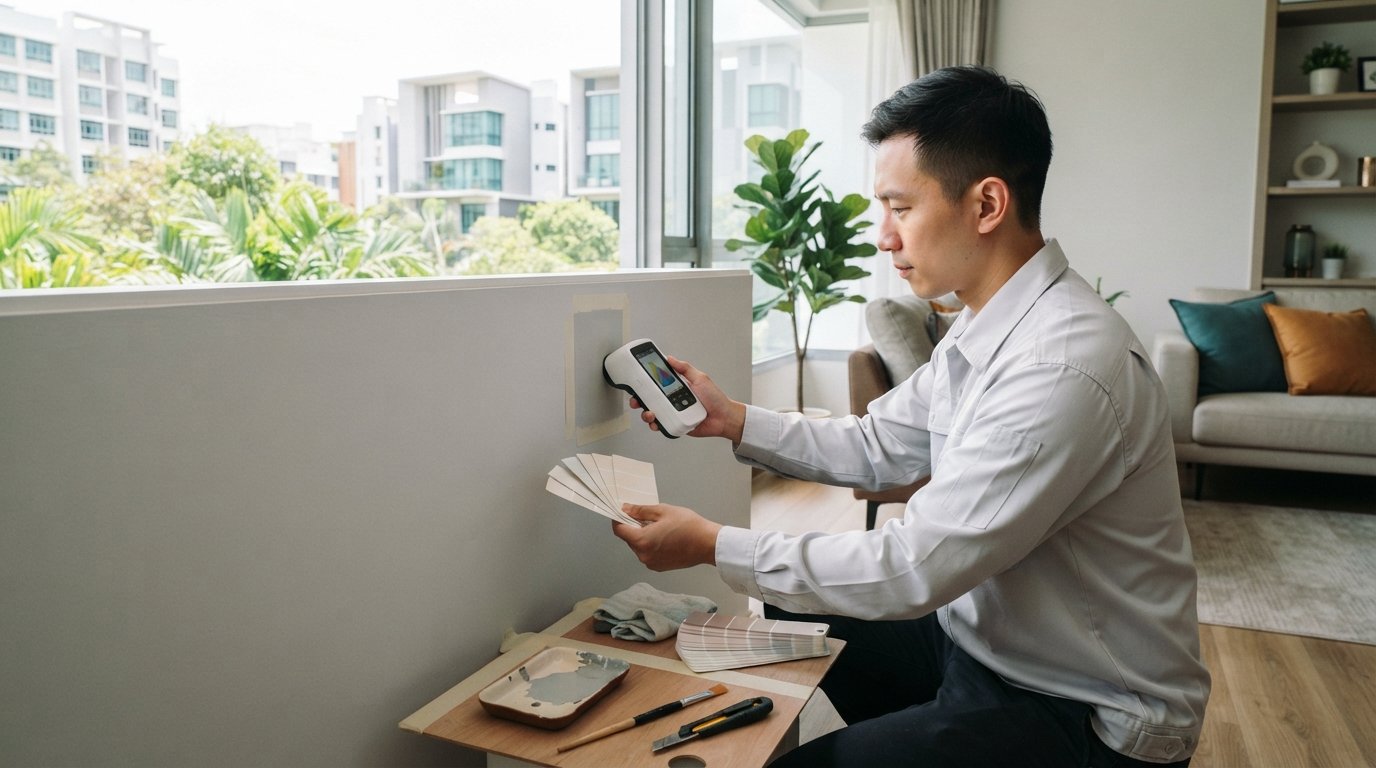
Finding the right shade requires a systematic approach. Before you try how to match existing paint color, clean the sample area with a damp cloth to remove surface contaminants. Dust, oils, and grime can distort a digital sensor’s reading or your own visual comparison. While there are several methods for matching wall paint, the success of your touch-up depends on the precision of the tool you choose to use.
How to Safely Remove a Paint Chip
The most accurate way to get a match is to provide a physical sample for laboratory analysis. Using a sharp utility knife, score a 1-inch square in an inconspicuous spot, such as behind a door or a light switch plate. Gently pry the chip away from the drywall, ensuring you don’t damage the underlying structure. This process leaves a small depression that will need repair, so consult the ultimate guide to wall plastering to ensure you can restore the surface to its original smoothness before repainting.
Leveraging Local Paint Centers
Take your physical sample to a local hardware store equipped with a computerized tinting machine. Ensure the chip is at least the size of a 50-cent coin so the spectrophotometer can register a clean reading without border interference. If you cannot remove a chip, digital scanners like the Nix Mini or brand-specific apps from Nippon and Dulux can provide a close starting point. However, digital tools often struggle with the unique ambient light in Singapore apartments. Cross-referencing these results with staples like Nippon Vinilex 5000 or Dulux Pentalite catalogs is essential for success. If the process feels overwhelming, our HDB painting services include professional color matching to take the guesswork out of your home restoration.

Step-by-Step Guide to Testing and Applying Your Match
Application is where technical precision meets patience. Before applying a single stroke, wipe the wall surface with a damp cloth to remove dust and oils. This ensures your match bonds directly to the wall rather than surface grime. While paint-matching apps and digital tools provide a strong starting point, the physical application reveals the true result.
Learning how to match existing paint color requires following the “Dry Down” rule religiously. Most water-based emulsions used in Singapore darken by 10% to 20% as they cure. Wait at least 4 hours before judging the final color. If you are spot-repairing, use a feathering technique. Work from the center of the patch outward with decreasing pressure to avoid creating a hard, visible line.
Professionals often skip spot-patching in favor of the “Corner to Corner” method. By repainting the entire wall plane from one corner to the next, you use the natural shadows of the room to hide tiny color discrepancies. This creates a flawless finish that a center patch rarely achieves. It is the most reliable way to ensure your restoration looks like creative achievement rather than a quick fix.
The Importance of a Primer/Sealer
A high-quality paint sealer is mandatory when matching light shades over darker ones or on porous plaster. It prevents the original pigment from “bleeding” through and ensures the new match reflects light accurately. Skipping this step often leads to multiple coats that still don’t look quite right.
Evaluating the Match in Real-World Conditions
Check your work under both natural daylight and your evening LED fixtures. You may notice a “Flash” effect, where a slight sheen difference makes the patch visible only when viewed from a specific angle. If the match isn’t perfect or the project feels too large, book a professional condo painting service to ensure a high-standard, invisible restoration.
When to Hire Professional Painters for a Seamless Finish
Even with a clear plan on how to match existing paint color, you might reach a “Point of No Return.” This occurs when the number of scuffs or the size of the faded area makes spot-patching impractical. If you find yourself chasing a perfect match across multiple walls without success, it’s time to transition to a full-room restoration. A professional contractor’s eye is often more accurate than a smartphone app because we account for the subtle interplay of shadow and texture that digital sensors miss.
Choosing professional house painting services ensures a high-quality finish while removing the logistical stress of a DIY project. We handle the heavy lifting, from moving bulky furniture to meticulous floor protection and post-job cleanup. My Paint Job Singapore brings over 10 years of industry experience to every project, delivering the precision required for an invisible transition that DIY efforts often lack.
Dealing with Complex Wall Issues
Sometimes, the difficulty in learning how to match existing paint color stems from underlying damage rather than just pigment. Color matching won’t fix structural problems like spalling concrete, deep cracks, or bubbling plaster. If your walls show signs of moisture damage or structural wear, check our complete guide to HDB painting services. We provide comprehensive wall restoration that goes beyond simple aesthetics to ensure your home remains safe and durable.
The Value of Expert Color Consultation
My Paint Job Singapore acts as a partner in your design process rather than just a service provider. Our team offers bespoke advice to ensure color harmony across your entire HDB or condo. Investing in expert help is a cost-effective way to get it right the first time, avoiding the wasted expense of multiple test tins and failed patches. With a decade of local experience, we ensure your property is in safe, capable hands.
Achieving a Flawless Finish with Technical Precision
Restoring your walls to their original glory requires more than a lucky guess at the hardware store. You now understand how tropical fading and lighting metamerism can derail a simple touch-up. By utilizing physical paint chips and adopting the corner-to-corner application method, you’ll avoid the frustration of patchy, mismatched results. Mastering how to match existing paint color is truly about respecting both the chemistry of the paint and the specific environment of your HDB or condo.
If the project feels overwhelming or you’re dealing with structural wall damage, don’t settle for a subpar DIY attempt. With over 10 years of industry experience, we specialize in high-standard finishes using premium, eco-friendly materials. We take pride in our meticulous craftsmanship, offering complete furniture protection and post-job cleanup so you can enjoy a renewed space without the logistical headache. Get a Professional Paint Match and Hassle-Free Quote from My Paint Job Singapore Today. Your home is your sanctuary, and we’re here to ensure it looks its absolute best.
Frequently Asked Questions
Can I use a photo on my phone to match paint color?
Smartphone photos are generally unreliable for an accurate match because camera sensors and screen profiles significantly distort colors. Ambient lighting in your HDB flat also creates shadows that a lens cannot interpret correctly. While apps provide a broad starting point, they lack the technical accuracy of a physical scan. For a seamless result, always use a physical sample or a dedicated handheld colorimeter to pinpoint the correct shade.
Why does my matched paint look darker than the wall?
Your matched paint often looks darker because water-based emulsions typically darken by 10% to 20% during the curing process. Additionally, your existing wall has likely suffered from UV fading and oxidation over the last few years. This chemical shift means even the original formula will appear deeper than the current weathered surface. Always test a small patch and wait four hours to see the true dry-down result.
How big of a paint sample do I need for a store to match it?
Providing a flat, clean paint chip measuring at least 1 inch by 1 inch is the standard requirement. This size, roughly equal to a Singaporean 50-cent coin, allows computerized spectrophotometers at local hardware shops to register a reading without edge interference. Ensure the sample is thick enough to be opaque. If the chip is too small or translucent, the sensor might pick up background colors and produce an inaccurate tint.
What is the best way to match paint if I don’t have a sample?
The best way to identify how to match existing paint color without a chip is to use a physical brand fan deck from Nippon or Dulux. Compare the swatches directly against your wall in both natural and artificial light. Alternatively, look inside your utility room or electrical distribution board cabinet for leftover tins. If these options fail, our professional painters use commercial-grade scanners to identify the closest manufacturer code for you.
Does the brand of paint matter when matching colors?
The brand matters significantly because every manufacturer uses unique pigment formulations and base resins. A “Sail White” from one brand will have different undertones than a similar shade from another. More importantly, sheen levels like matte or low-sheen are not standardized across the industry. Using the same brand ensures the chemical composition and light reflection remain consistent, which is vital for achieving an invisible transition during a touch-up.