A fresh coat is not a cure for mould. Don’t paint over it: address the moisture and mould first, then let the surface dry fully before repainting. Effective troubleshooting common paint problems starts with fixing the cause, not covering the symptom.
It’s tempting to reach for a brush when mould, bubbling, cracks or wrinkles spoil a wall’s finish. But paint applied over dampness, a poorly prepared surface or an incompatible coating can fail again, leaving the same problem to repair.
This guide explains what causes these defects and how to remedy them, including why compatible paint products and proper drying time matter. You’ll learn how to prepare affected surfaces, when mould needs attention before painting, and how to achieve a smoother, more durable finish in your Singapore home.
Key Takeaways
- Trace cracks to movement, ageing or moisture, then prepare the damaged area before repainting.
- Don’t paint over mould or bubbling. Address the moisture source and let the surface dry before applying a new coat.
- Prevent wrinkles by applying thin layers and allowing each coat to dry as directed.
- Match paint and primer to the surface and existing coating to help avoid adhesion and finish problems.
1. Stress cracking from movement and moisture
Stress cracks can form as surfaces move, age, absorb moisture or dry out. Heat and repeated temperature changes can also strain paint, especially when the coating lacks flexibility. Thick paint films are more prone to cracking. On metal, cracks may appear around welds or changes in shape that are difficult to coat evenly.
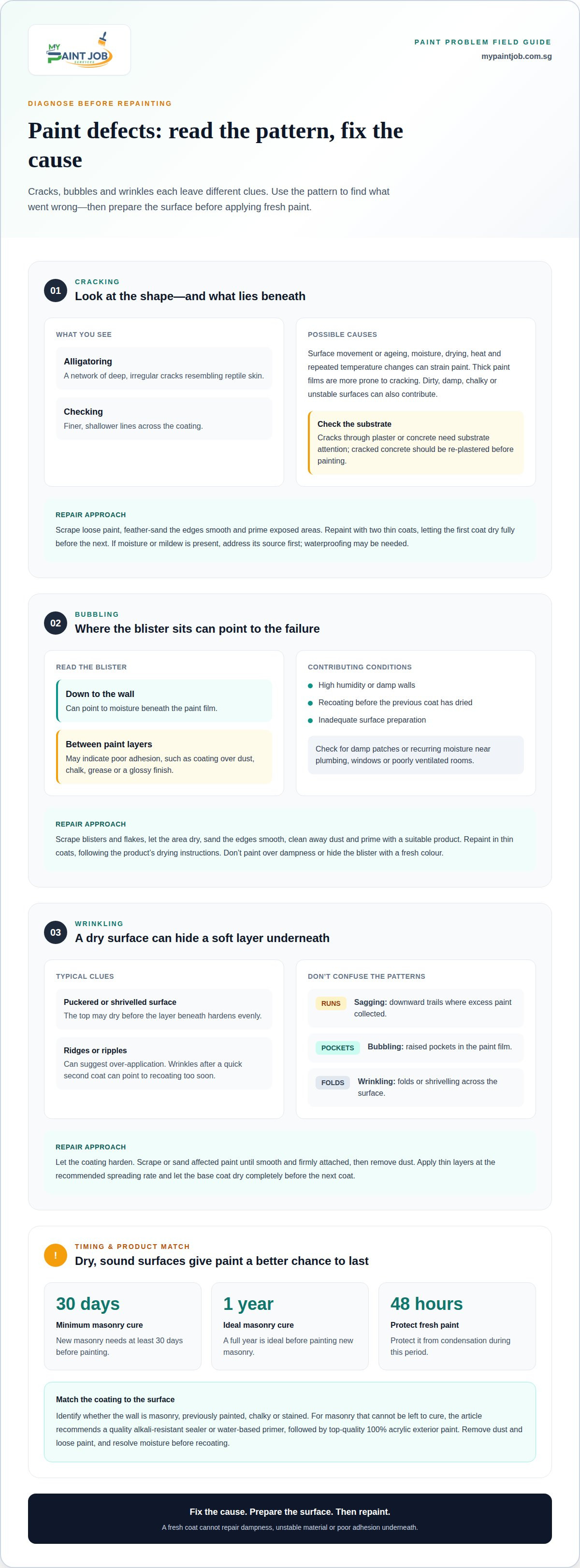
Look closely at the pattern. Alligatoring creates a network of deep, irregular cracks resembling reptile skin, while checking usually appears as finer, shallower lines. Cracking can lead to peeling or flaking when paint loses its grip. A dirty, damp, chalky or unstable wall can contribute, so don’t treat every crack as a paint-only defect.
Check the wall before you repaint. If cracks run through plaster or concrete, the substrate needs attention; cracked concrete should be re-plastered before painting. New masonry needs time to cure: allow at least 30 days, with a full year ideal before painting. If moisture or mildew is present, address its source first. Waterproofing may be needed before a fresh coat can last.
For cracked or crazed paint, scrape away loose material, then feather-sand the edges until the transition feels smooth. Prime exposed areas before repainting, and apply two thin coats rather than one heavy coat. Let the first coat dry fully before adding the next. This preparation helps prevent the old crack pattern from showing through the new finish.
To remove brush marks, roller marks and uneven coverage, let the paint dry, then lightly sand raised ridges and remove the dust. Repaint evenly, keeping a wet edge and using a suitable brush or roller for the surface.
For spalling or damaged concrete, repair the substrate before painting. Coating over loose material won’t fix the underlying surface problem. A sound, dry, properly prepared wall gives new paint a better chance of adhering evenly.
2. Why is my paint bubbling after drying?
Prevent bubbling by painting on a clean, dry surface, addressing moisture first and allowing each coat to dry fully. To repair blisters, scrape away loose paint, let the area dry, prepare it, then apply suitable primer and repaint. Troubleshooting common paint problems starts with identifying why the coating failed, rather than covering the visible defect.
Inspect where each blister sits. Bubbles that extend down to the wall can point to moisture beneath the paint film. Blisters between paint layers may indicate poor adhesion, such as paint applied over dust, chalk, grease or a glossy finish. High humidity, damp walls, recoating too soon and inadequate preparation can also contribute.
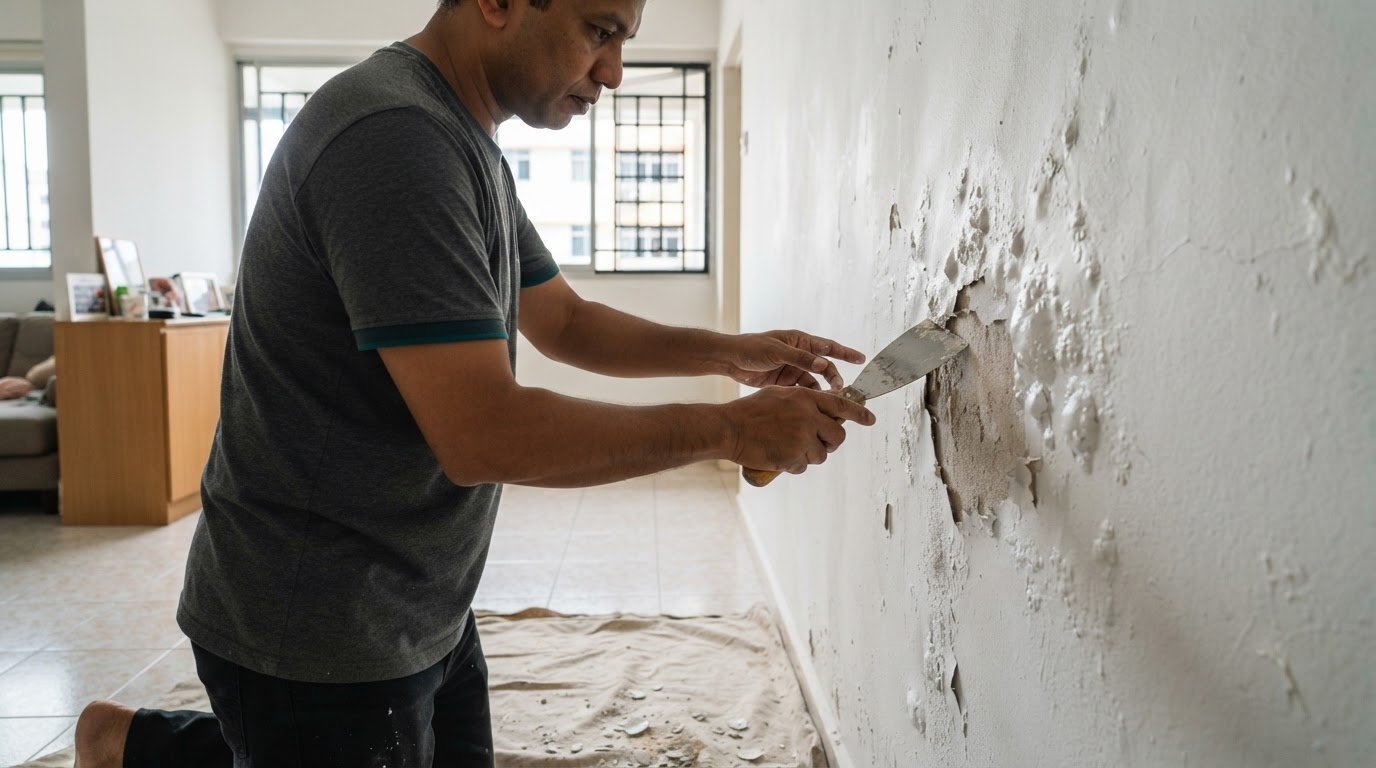
On a wall, raised patches may eventually pop and leave peeling flakes. Don’t press them flat or hide them with a fresh colour. Check for damp patches and recurring moisture near plumbing, windows or in poorly ventilated rooms. If the wall feels damp, address the moisture source and let the surface dry completely before coating it.
For repairs, scrape off loose blisters and flakes, then sand the edges smooth. Clean away dust and prime the prepared area with a suitable product. Repaint in thin coats, following the product’s drying instructions. Water-based paint won’t adhere reliably to a dirty or damp surface simply because its colour matches. For troubleshooting common paint problems, use the defect’s location and pattern to guide the repair, not guesswork.
New masonry needs at least 30 days to cure before painting; a full year is ideal. Protect fresh paint from condensation for 48 hours. In humid Singapore rooms, airflow can help surfaces dry. If bubbling appears with crumbling or spalling concrete, spalling concrete repair addresses damaged substrate before repainting.
3. Wrinkling from heavy application or insufficient drying
Wrinkling happens when the paint surface dries before the layer underneath can harden evenly. Applying paint too heavily can leave a soft, wet film beneath a dry skin. Recoating before the previous coat has adequately dried or cured can create a similar defect. Instead of a smooth finish, the surface puckers or shrivels.
Check the pattern and conditions around the affected area. Raised ridges or ripples suggest over-application, while wrinkles appearing after a quick second coat point to premature recoating. Rain, dew or high humidity can also affect uncured paint. On a wall, assess whether the substrate is sound and clean, since poor adhesion can compound the coating failure.
Sagging and bubbling can appear alongside wrinkles, but each has different clues. Sagging forms downward runs where excess paint has collected. It can result from over-application, excessive thinner, or an incorrect or missing curing agent. Bubbles are raised pockets, while wrinkles fold or shrivel across the surface. These patterns help identify whether the application or drying process needs correction.
To repair wrinkles, let the coating harden, then scrape or sand away the affected paint until the surface is smooth and firmly attached. Remove dust before repainting. Apply thin layers at the recommended spreading rate, and allow the base coat to dry completely before adding a final coat. Follow the paint manufacturer’s directions for drying and environmental conditions.
Yellowing is a separate appearance change, not the same defect as wrinkling. In low-sunlight areas, acrylic paints are recommended to help avoid yellowing. A shift in pigment colour won’t be corrected by sanding wrinkles alone. Prepare the surface, then choose a compatible coating for the intended conditions. If the wall beneath the paint is cracked concrete, repair the substrate before repainting because a new film cannot fix damaged material.
4. Choosing compatible paint products
A sound finish depends on matching the coating to both the surface and existing paint. Before buying, identify whether the wall is masonry, previously painted, chalky or stained. Cleaning and surface preparation matter as much as paint quality: a new coating can fail if dust, loose paint or moisture remains underneath.
For masonry that can’t be left to cure before painting, the recommended system is a quality alkali-resistant sealer or water-based primer, followed by top-quality 100 per cent acrylic exterior paint. The primer or sealer helps prepare the substrate for its finish coat. Follow the product directions, and don’t assume one coating suits every surface.
Compatibility matters during repainting, too. Solvent lifting can occur when a topcoat’s solvent reacts with an incompatible previous coating. If you’re unsure what type of paint is already on the surface, avoid layering products casually. A sealer can help improve a repainting result, but the surface still needs cleaning and sound preparation first.
Match the product to visible defects. Low-quality paint with high levels of pigment extenders can cause chalking, while low-quality paint or paint stored too long can crack as it dries. In a low-sunlight room, acrylic paint can help avoid yellowing. For a dark wall, a tinted primer can help cover the existing colour before repainting.
Even the right coating can look uneven if the application tools don’t suit the surface. Use a short-nap roller on smooth walls and a longer-nap roller on textured walls. For touch-ups, choose paint with the same code as the existing wall colour; a close-looking shade may still leave a visible patch. Allow each coat to dry as directed before applying another.
Choose products as a system: surface, primer or sealer, topcoat, and application method should work together. For a considered finish and careful surface preparation, plan your painting project.
My Paint Job Singapore: HDB painting services
My Paint Job Singapore provides HDB painting services for homeowners planning a refresh or addressing worn, uneven finishes. If cracks, peeling or bubbling keep returning, painting works best after the surface is properly prepared and underlying wall damage is addressed. Plastering services can help prepare damaged walls before repainting.
For other property types, My Paint Job Singapore also offers condo, landed and commercial painting services. The right next step depends on the surface condition and the finish you want. Share the paint problem and the areas needing attention so the work can be considered in context.
Contact My Paint Job Singapore to discuss painting your property.
Take the next step towards a lasting finish
Before starting another paint job, make a simple record of what you’re seeing. Note which rooms are affected, where defects appear and whether they return after repainting. A few clear photos can help show the pattern and make it easier to discuss the work. This preparation turns troubleshooting common paint problems into a focused conversation about your walls and the finish you want.
Think beyond the visible patch. A refreshed wall should suit the way you use the space, complement its existing colours, and begin with sound preparation. If you’d prefer support planning the painting work, talk with My Paint Job Singapore about your property and goals. Contact My Paint Job Singapore today to take the next step towards a considered, renewed space.
Frequently Asked Questions
Can I paint over mould?
No. Painting over mould isn’t a lasting fix because growth can remain beneath the new coating if dampness persists. Remove affected growth and address the moisture source; improve airflow in a poorly ventilated room. For severe or recurrent infestations, remediation specialists like My Pure Environment SF emphasize the importance of thorough mold testing and removal before any cosmetic fixes. Let the wall dry fully before applying suitable primer and paint. If the marks return, investigate ongoing moisture instead of adding another coat.
How do I fix peeling paint on a wall?
Remove paint that has lost its grip before applying a fresh finish. For example, peeling near a window may signal moisture affecting the wall, so check the surface and surrounding area first. Scrape away loose flakes, smooth rough edges and clear away dust. Prime exposed patches, then repaint only after the wall is dry and stable.
Why is my paint bubbling after drying?
Bubbles often form when paint can’t adhere properly, commonly because the wall was damp or dirty during application. High humidity or recoating too soon can also contribute. Check whether blisters sit on the surface or extend down to the wall, and look for damp areas nearby. Once the cause is addressed, remove loose coating and prepare the area before repainting.
Why is my paint not covering properly?
Poor coverage can result from an uneven mix, an unsuitable application method or a strong colour beneath the new paint. Stir the paint thoroughly and follow the product’s specified water-to-paint ratio; too much water can weaken coverage. For a dark wall, a tinted primer can help hide the existing colour. Apply paint at the recommended spreading rate.
What are the most common paint problems and their causes?
Cracking can reflect movement, ageing or moisture; bubbling often points to dampness or poor adhesion. Wrinkles may follow heavy application or premature recoating, while peeling can develop over a dusty or unstable surface. Chalking may be linked to low-quality paint with pigment extenders. The pattern and location of a defect help narrow down its likely cause.
How do you fix peeling or flaking paint?
Start by removing every loose flake, not just the pieces that come away easily. If the exposed wall is powdery, glossy or damaged, prepare the area so the next coat has a sound base. Sand rough edges, remove dust, prime bare patches, then repaint in thin coats. If the substrate itself is crumbling, repair the damage before coating it.