That fine web of lines across your living room wall isn’t just an eyesore; it’s often a sign that your home is naturally reacting to Singapore’s intense heat and humidity. You might think a thick layer of paint will hide the problem, but simply covering them up is a recipe for frustration when they inevitably reappear a few months later. To achieve a gallery-standard finish, you need to learn exactly how to fix hairline cracks in walls before painting by treating the wall’s surface with the same respect as the final color.
It’s completely normal to feel a pang of worry that these cracks indicate structural failure or to feel confused by the endless aisles of fillers at the hardware store. We’ve spent over a decade refining the art of wall restoration, and we’re here to share that professional expertise with you. This guide provides a clear roadmap to identify, prep, and permanently seal those imperfections so your home stays pristine. You’ll learn how to confidently distinguish cosmetic flaws from serious issues and master the specific techniques we use to ensure a smooth, crack-free surface that stands up to the local climate.
Key Takeaways
- Identify whether your wall issues are merely cosmetic or structural by measuring crack width and observing their direction near door frames.
- Learn how to fix hairline cracks in walls before painting using the professional V-notch method to ensure your filler grips the surface permanently.
- Understand the impact of Singapore’s high humidity and thermal movement to better protect your home’s interior surfaces from recurring fissures.
- Determine when to transition from simple DIY patching to professional plastering and skim coating for a more cost-effective, long-term restoration.
- Gain confidence in selecting specialized materials designed to withstand the local climate for a paint finish that stays smooth and pristine.
Hairline Cracks vs. Structural Damage: How to Tell the Difference
Before you start researching how to fix hairline cracks in walls before painting, you must be certain you aren’t dealing with a deeper structural issue. Hairline cracks are typically fine, shallow fissures that measure less than 1mm in width. These are incredibly common in Singaporean homes. By Understanding Plaster Properties, we know that as materials set and dry, they naturally undergo minor shrinkage. This results in the surface-level lines often found in HDB flats and condominiums. According to BCA guidelines, surface imperfections that aren’t visible from a distance of 1.5m are generally considered acceptable, which should offer some peace of mind to worried homeowners.
Knowing how to fix hairline cracks in walls before painting starts with a simple assessment. Perform a “Tap Test” to check the health of your walls. Lightly knock on the area around the crack with your knuckles. If you hear a solid, dull thud, the plaster is still firmly attached to the masonry. If you hear a hollow, drum-like sound, it indicates that the plaster layer has separated from the wall. While this isn’t usually a structural threat to the building, it means the plastering has failed and needs professional attention before any paint is applied.
Common Signs of Non-Structural Cracks
Most cracks in local residential units are purely aesthetic. Look for these specific traits to confirm your issues are cosmetic and safe for a standard repair:
- Web-like patterns that resemble a dried-out lake bed on the surface of the plaster.
- Vertical or horizontal lines that remain the same size for months without growing.
- Fissures that only appear to affect the top paint layer rather than the underlying masonry.
When to Call a Professional Immediately
Some cracks require more than a simple DIY patch. Contact an expert if you notice any of the following serious indicators that suggest building movement or moisture damage:
- Cracks wider than 5mm or those that show a visible “step” where one side of the wall sits higher than the other.
- Signs of spalling concrete, including falling chunks of cement or exposed, rusty steel reinforcement bars.
- Diagonal cracks that start at the corners of door frames or windows, especially if those doors are becoming difficult to open or close.
Why Walls Crack in Singapore: Humidity and Thermal Movement
Understanding the root cause of surface fissures is the first step in ensuring a long-lasting finish. In Singapore, our walls are constantly under environmental stress. During the day, the intense afternoon sun beats down on external-facing walls, causing the masonry to expand. As temperatures drop at night, these materials contract. This relentless cycle of thermal movement puts immense pressure on your plaster. If you are researching how to fix hairline cracks in walls before painting, it’s vital to recognize that your repair materials must be flexible enough to withstand this daily expansion and contraction.
Humidity plays an equally significant role. Our local air is often saturated with moisture, which directly interferes with how original plaster and patch fillers cure. When the drying process is uneven or too slow, the bond between the wall and the finish weakens. Using low-quality, brittle paints only worsens the problem. These paints lack the elasticity needed to bridge micro-movements, leading to visible cracks in the paint film itself. For a durable result, we often recommend professional HDB painting services that utilize high-performance, elastomeric coatings designed for tropical climates.
The Impact of the Tropical Climate
Moisture seepage is a silent enemy of wall integrity. High humidity levels can lead to condensation within the plaster layers, eventually causing the paint to lose its grip. Walls facing the direct western sun are particularly vulnerable. The rapid temperature shifts on these surfaces create thermal shock, which is why you’ll often see more hairline fractures in bedrooms or living areas that catch the afternoon heat.
Masonry Curing and Settlement
Newer HDB flats and condominiums are prone to settlement cracks during their first five years. As the massive concrete structure settles into its foundation, minor shifts occur. These movements are perfectly normal but often manifest as cracks at the joints where internal partition walls meet the ceiling. While the HDB Defect Liability Period (DLP) covers the first year, settlement can continue long after, making it essential to know how to fix hairline cracks in walls before painting to maintain your home’s aesthetic value over time.

The Correct Way to Repair Wall Cracks Before Painting
Achieving a flawless finish requires more than just a quick dab of putty. If you want to know how to fix hairline cracks in walls before painting so they stay invisible, you must follow a systematic preparation process. First, clear the area of any loose paint flakes or dust using a stiff brush or vacuum. Adhesion is impossible on a dirty surface. Once clean, you’ll move to the most critical professional step: the V-notch.
The V-Notch Technique Explained
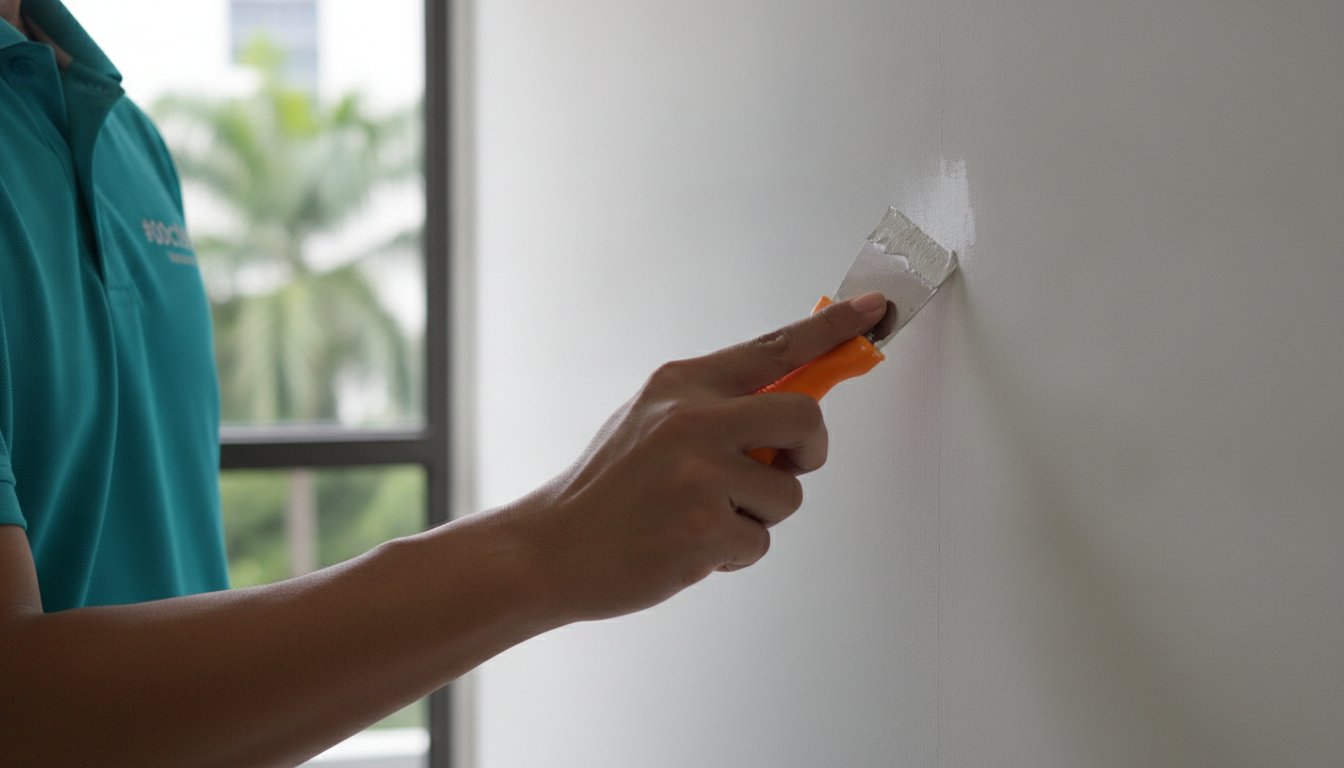
Most DIY attempts fail because the crack is too narrow for the filler to penetrate deeply. Take a sharp utility knife or a triangular scraper and carefully widen the crack into a small “V” shape. This technique increases the surface area for the filler to bond. Brush out all remaining debris immediately after carving to ensure a pristine foundation for the patching compound. This extra effort ensures the filler grips the masonry rather than just sitting on top of the old paint.
Choosing the Right Filler and Sealer
Rigid putties often crack again the moment the wall experiences thermal movement. Opt for a flexible, acrylic-based wall filler instead. These materials are engineered to move with the wall, making them superior for the long-term management of hairline fissures. Once the filler is dry, sand it flush with the surrounding surface using fine-grit sandpaper to create a seamless transition.
Apply a high-quality paint sealer over the repaired area before your final topcoat. Without a sealer, the porous patch will absorb more paint than the rest of the wall, causing a distracting “flashing” effect where the repair remains visible under the light. If the sheer number of cracks feels overwhelming, consider our expert plastering services to achieve a perfectly smooth, professional result without the DIY mess.
Professional Wall Restoration: Ensuring a Flawless Finish
While mastering how to fix hairline cracks in walls before painting can save you time on minor touch-ups, spot patching has its limits. If your living room wall looks like a roadmap of micro-cracks, individual repairs often lead to a patchy, uneven appearance. Professional restoration provides a comprehensive solution that addresses the entire surface rather than just chasing individual lines. We’ve seen many homeowners spend weekends on DIY patches only to find the cracks returning because the underlying plaster had lost its integrity. In these cases, a full-surface treatment is the most cost-effective way to ensure a permanent fix.
What is Skim Coating?
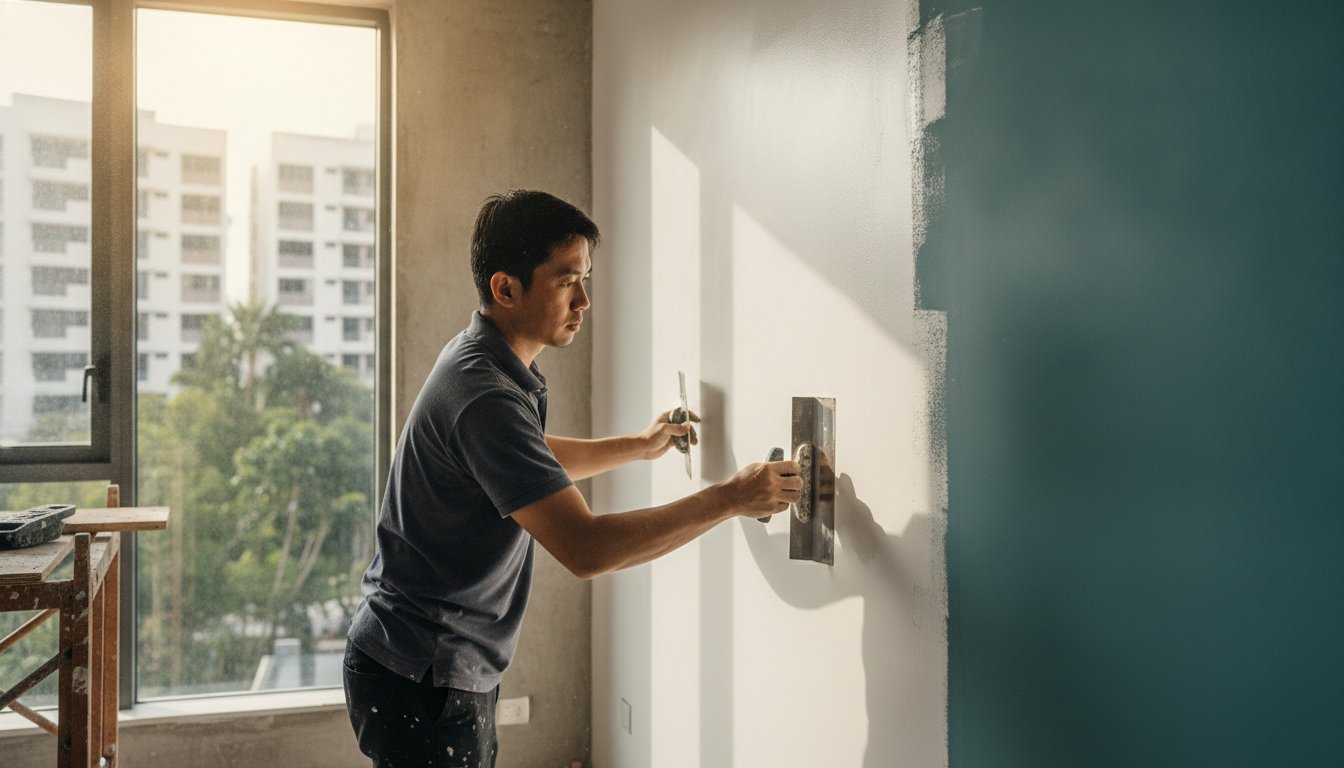
Skim coating is essentially the ultimate reset for your interior surfaces. By applying a paper-thin, consistent layer of specialized plaster over the entire area, we can eliminate the “ghosting” effects of previous repairs and hide every micro-imperfection. This technique is the industry standard for our condo painting services, where smooth, light-reflective walls are essential for a modern look. It turns a tired, cracked surface into a pristine, perfectly flat canvas that makes any paint color look its absolute best.
The My Paint Job Advantage
Choosing a professional partner means you’re investing in certainty and craftsmanship. At My Paint Job Singapore, our approach is built on over 10 years of local experience and a deep understanding of tropical building materials. We know that the mess of renovation is a major concern for families, so we implement rigorous furniture protection and dust management systems to keep your home clean throughout the process. Every project we undertake utilizes premium, eco-friendly sealers and paints that are specifically chosen for their durability in high-humidity environments.
We believe in the quality of our work, which is why we provide a professional warranty on both materials and workmanship. This gives you the peace of mind that your investment is protected and your walls will remain smooth long after the paint has dried. If you want a result that stays crack-free without the stress of logistical headaches, we are here to help. Ready for a flawless home transformation? Get a professional quote from My Paint Job today and let us handle the meticulous preparation your home deserves.
Achieve a Lasting, Gallery-Standard Surface
Your walls are the foundation of your home’s aesthetic. By distinguishing between minor cosmetic fissures and structural concerns, you can approach your renovation with complete confidence. Successful repairs in Singapore’s humid climate rely on meticulous preparation, specifically the V-notch technique and the use of high-quality flexible fillers. Mastering how to fix hairline cracks in walls before painting ensures that your new color remains smooth and vibrant for years to come. It’s about more than just aesthetics; it’s about protecting the integrity of your living space.
If the scale of the restoration feels overwhelming, our team is ready to step in as your professional partner. We bring over 10 years of experience in Singapore masonry repair to every project, offering comprehensive HDB and Condo painting packages that prioritize surface integrity. We specialize in expert skim coating to provide a mirror-smooth finish that DIY methods often can’t replicate. Request a Free Wall Assessment and Painting Quote today to start your hassle-free home transformation. You deserve a beautiful space that reflects your individual style without the frustration of recurring cracks. Let’s work together to make your vision a reality.
Frequently Asked Questions
Can I just paint over hairline cracks without filling them?
No, you shouldn’t simply paint over a crack, as the paint film is too thin to bridge the gap permanently. Even high-quality paint will eventually stretch and tear as the building naturally moves, causing the crack to reappear within weeks. Proper surface preparation is the only way to ensure a seamless and durable finish for your home.
What is the best filler for hairline cracks in Singapore walls?
Flexible acrylic-based fillers are the most effective choice for our local climate. These products are specifically designed to expand and contract alongside your walls during the intense heat of the afternoon sun. Avoid rigid powder-based putties, which tend to be too brittle and will likely fail when the wall undergoes thermal movement.
Why do hairline cracks keep coming back after I fix them?
Cracks often return because the filler was only applied to the surface rather than deep into the fissure. Learning how to fix hairline cracks in walls before painting requires using the V-notch technique to widen the crack slightly. This gives the filler a larger surface area to grip, preventing it from popping out when the wall shifts.
Is it normal for new HDB flats to have hairline cracks?
Yes, it’s very common for new HDB flats to develop fine lines during the first few years as the building settles. These are usually cosmetic and result from the natural drying and shrinkage of building materials. While they don’t affect structural safety, they should be professionally treated before you apply a fresh coat of paint.
How much does it cost to have a professional fix wall cracks in Singapore?
Professional repair costs depend on whether you need simple spot patching or a full-wall skim coating. Most reputable contractors will include minor crack repairs as part of their standard painting packages. For homes with extensive micro-cracking, a full restoration is often the most cost-effective long-term solution to prevent repeated DIY failures.