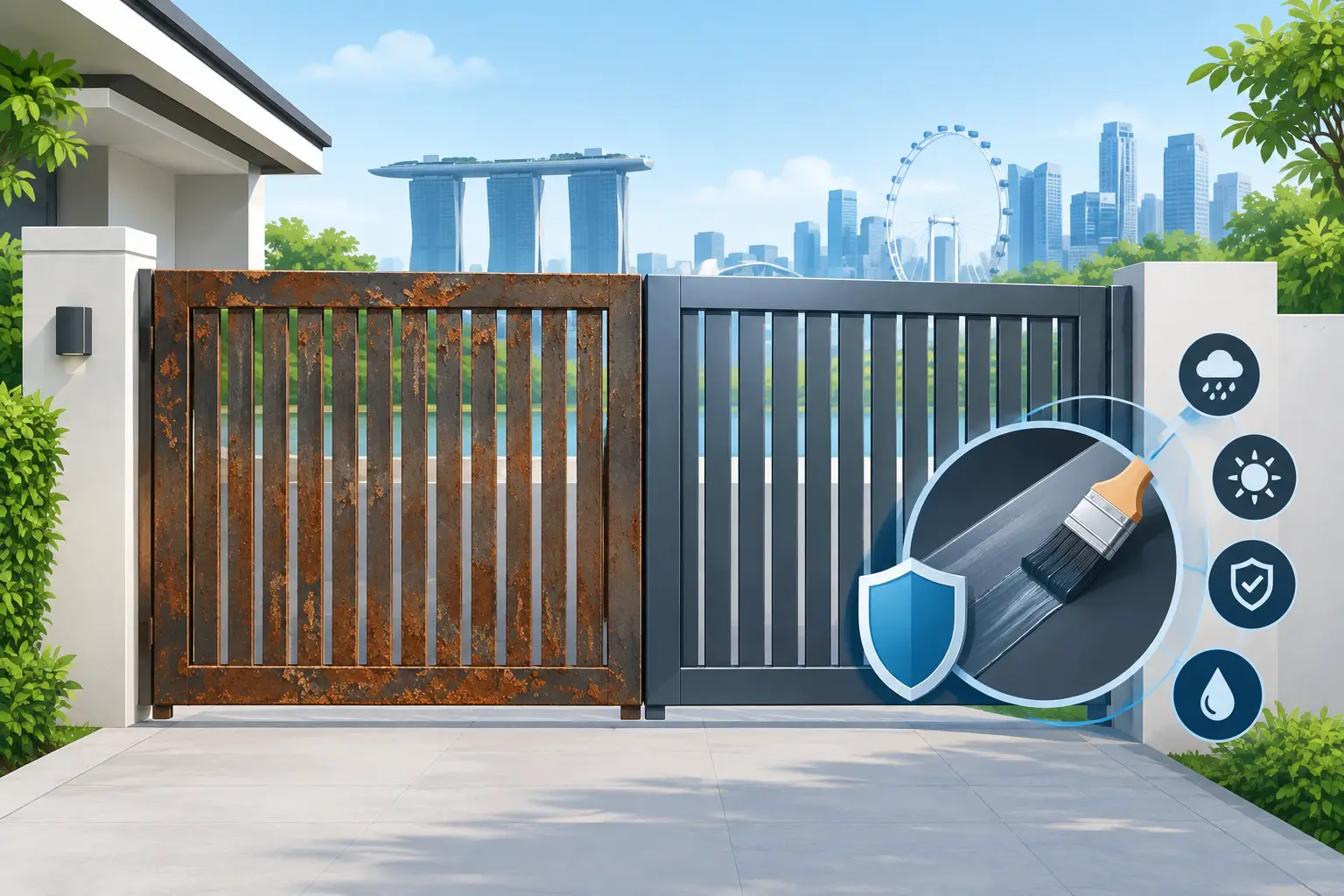
A metal gate can look perfectly fine from the street while corrosion is already spreading beneath the paint. In Singapore, frequent rain, high humidity, strong sun, and airborne moisture put exterior steel and wrought-iron gates under constant pressure. The right rustproof gate coatings do more than improve curb appeal. They create a protective system that helps your gate stay strong, clean, and presentable for years.
For homeowners, landlords, and property managers, the goal is not simply to apply a fresh color. It is to stop small rust spots from becoming peeling paint, weakened joints, stained walls, or an expensive gate replacement. A professional coating process addresses the metal, the existing damage, and the final finish together.
Why Metal Gates Rust So Quickly
Rust forms when iron or steel is exposed to oxygen and moisture. Singapore’s climate makes that process difficult to avoid. Rainwater can settle in decorative details, welded corners, hinges, and the lower sections of a gate. Even after a shower, humidity slows drying and allows moisture to remain on the surface.
Gates near busy roads, coastal areas, or open car porches may face extra exposure to dust, salt-laden air, and pollutants. These contaminants can weaken old paint films and trap moisture against the metal. A small chip caused by a bicycle, delivery trolley, or moving furniture can become the starting point for corrosion.
Paint also fails when the original surface was poorly prepared. If a new coat is painted over loose paint or active rust, it may look smooth for a short time but will eventually bubble and peel. The problem is underneath, not on top.
Rustproof Gate Coatings Start With Surface Preparation
The quality of a gate coating is decided before the first finish coat goes on. Preparation is the step that determines whether paint bonds properly to the metal or lifts off after a few wet months.
A professional assessment begins by checking the condition of the gate. Surface rust may only require careful cleaning and spot treatment. Deep pitting, flaking layers, loose welds, or corrosion around hinges may need more extensive repair before painting can begin. This is why a one-size-fits-all paint job is rarely the best value.
The working surface should be cleaned to remove dirt, grease, chalky old paint, and residue. Loose or peeling paint is scraped away, while rusted areas are sanded or wire-brushed back to a stable surface. For severely corroded metal, more intensive mechanical removal may be needed to expose clean steel.
This stage can feel disruptive if it is not managed properly. Skilled painters protect nearby walls, flooring, landscaping, vehicles, and furniture before work begins. They also contain dust and clear the area after preparation, so the gate is restored without creating a larger cleanup task for the property owner.
Treating Rust Before It Spreads
Once the surface is stable, rusted sections need attention before primer is applied. Depending on the condition, a rust converter or compatible corrosion-treatment product may be used. These products help neutralize residual corrosion and prepare the metal for the next coating layer.
However, rust converter is not a shortcut for loose, flaky metal. If the corrosion has created unstable layers, those layers still need to be removed. Proper treatment works best on a clean, sound surface, followed by the right primer and topcoat system.
The Coating System Matters More Than One Paint Can
The strongest results usually come from a layered approach rather than a single all-in-one product. Each layer has a specific purpose: adhesion, corrosion protection, and resistance to weather and daily use.
A metal primer is the foundation. It is formulated to bond to steel or iron and reduce the chance of moisture reaching the substrate. For exterior gates, an anti-corrosive primer is usually the practical choice, especially where bare metal has been exposed during rust removal.
The topcoat provides the visible color and the outer protective barrier. Quality exterior metal paints are designed to tolerate sun exposure, rain, and temperature changes while maintaining a cleaner finish. Semi-gloss and gloss finishes are common for gates because they are easier to wipe down and tend to highlight decorative metalwork. A satin finish can offer a more understated look, though it may show dirt differently depending on the gate design.
The best finish depends on the gate’s material, its current condition, the amount of direct weather exposure, and the appearance you want for the property. A simple powder-coated metal gate in good condition may only need localized repairs and repainting. An older wrought-iron gate with ornate bars and multiple rust points requires more detailed hand preparation and careful coverage around every edge.
Common Mistakes That Shorten a Gate Paint Job
Painting on a damp surface is one of the most common causes of early coating failure. Metal can look dry while moisture remains in joints and crevices. Applying primer or paint before the surface is fully dry can trap water under the coating.
Another problem is applying thick coats to hide rust texture. Heavy paint may sag, take longer to cure, and fail to adhere evenly. Multiple controlled coats, with proper drying time between them, generally produce a stronger and neater result.
Using interior wall paint on a gate is also a costly mistake. Wall paint is not designed for metal movement, frequent handling, abrasion, or outdoor moisture. It may look acceptable at first, but it cannot provide the same protection as a suitable metal coating system.
Color choice deserves practical thought as well. Black, charcoal, white, and dark bronze remain popular because they complement most exterior façades. Very dark colors can become noticeably hot in direct sun, while bright colors may show dust or scuffs more easily. A good color consultation balances the look of the home or business with the gate’s maintenance needs.
Protecting Hinges, Corners, and High-Touch Areas
The most vulnerable parts of a gate are rarely the wide, flat sections. Rust often begins at welds, sharp corners, drainage points, bottom rails, hinges, latches, and areas where two metal pieces meet. These details should receive close inspection and full coating coverage.
Hinges and moving mechanisms need additional care. Paint should not be allowed to clog parts that need to move freely. After the coating work is complete, hinges may require suitable lubrication to keep the gate operating smoothly and prevent metal-on-metal wear from damaging the finish.
For sliding gates, it is also worth checking lower tracks and contact points. Standing water, trapped leaves, and accumulated dust can create a damp environment that speeds up corrosion. Painting helps, but good drainage and routine cleaning are part of long-term protection.
How Long Do Rustproof Gate Coatings Last?
There is no honest fixed lifespan for every gate. A well-prepared and professionally applied coating system can provide years of protection, but the outcome depends on exposure, gate condition, paint quality, and maintenance. A sheltered gate at a condominium entrance will age differently from a landed-property gate exposed to rain and afternoon sun every day.
Inspect the gate every few months, especially after prolonged rainy periods. Look for paint chips, bubbling, orange staining, scratches, or water collecting near the base. Small issues are far easier and more affordable to repair before rust spreads beneath a larger area of paint.
Gentle cleaning also makes a difference. Wash away dust and grime with mild soap and water, then dry accessible areas where moisture tends to sit. Avoid harsh abrasive cleaners that can scratch the finish. If you notice a damaged spot, arrange a touch-up promptly instead of waiting for a full repaint.
A Professional Finish Without the Hassle
Gate painting involves more than selecting a color and opening a paint can. It requires the right preparation, products, timing, and attention to the details where corrosion usually begins. For homes, offices, retail spaces, and managed properties, professional handling also means less disruption and a cleaner work area from start to finish.
My Paint Job can assess your gate’s condition, recommend a practical coating system, protect surrounding areas, and deliver a polished finish that fits your property and budget. Whether the gate needs a targeted rust repair or a full refresh, the work should be planned around durability, not a temporary cosmetic fix.
A gate is one of the first features people see and one of the hardest-working metal surfaces on a property. Addressing early rust with the right coating system keeps that first impression clean, protects the structure beneath, and gives you one less maintenance concern to manage.