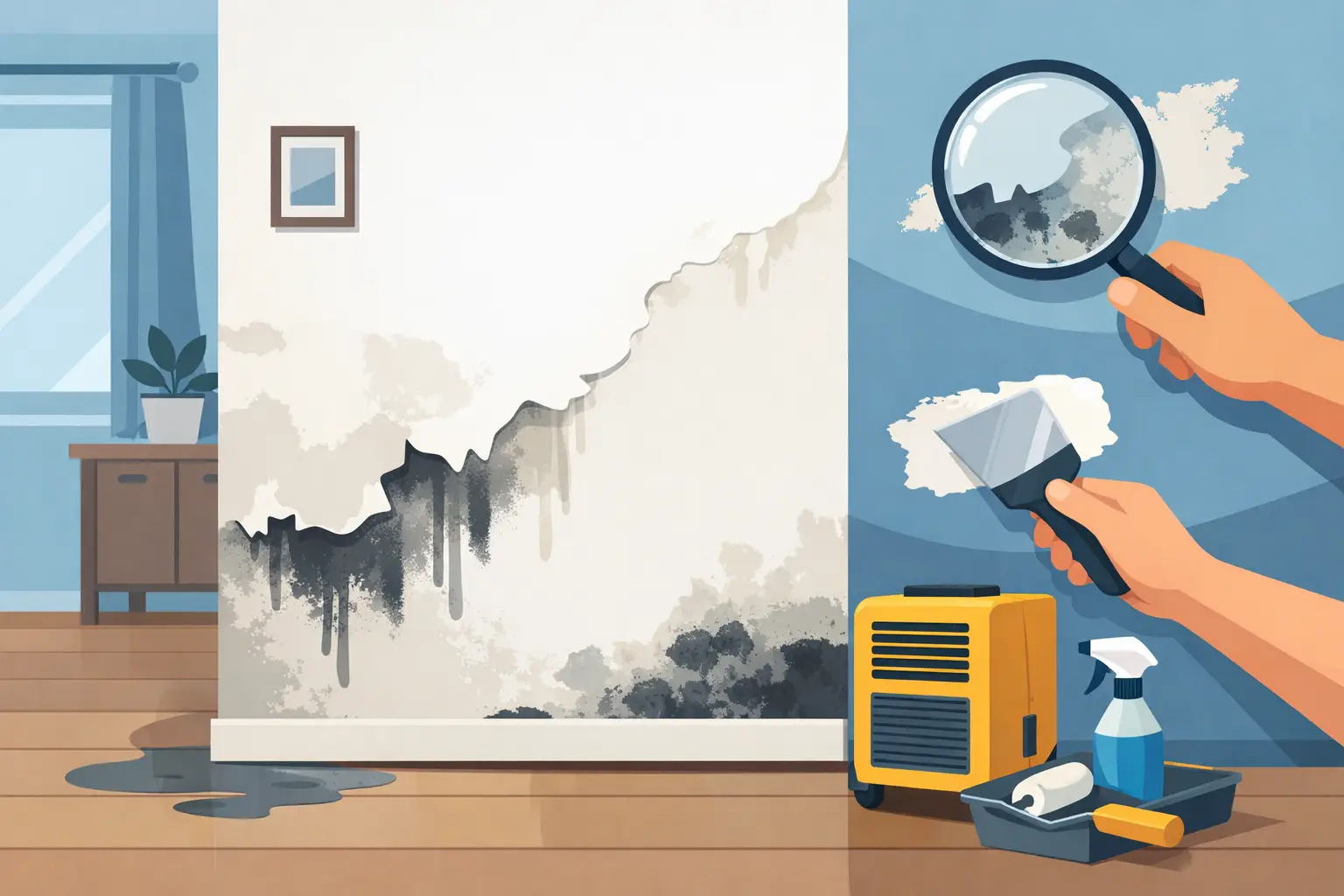
A fresh coat won’t fix paint that’s already lifting. In general, plan to repaint your house exterior every five to 10 years, though siding type, weather exposure and the quality of the previous paint job can shorten or extend that interval. If you’re deciding how often you should repaint your house exterior in Singapore, look for signs of wear as well as the calendar. You can paint over old paint when it’s firmly attached, but peeling areas need to be removed first so the new coating can adhere properly.
It makes sense to want to refresh the colour without stripping every surface back. The key is to check whether the existing paint is sound and the wall beneath it is dry and in good condition. This guide explains how wood, stucco, fibre cement and brick affect repainting intervals, why coastal exposure and strong sun can wear paint faster, and how cleaning, repairs and priming influence the finish. You’ll also learn which warning signs mean it may be time to repaint and when painting over old paint is suitable.
Key Takeaways
- Use your siding material as a starting point for planning, then adjust for visible wear and exposure to sun, rain, and salt air.
- In Singapore’s humid, coastal conditions, look for fading, peeling, and moisture-related damage rather than relying on a calendar alone.
- Old paint can be covered when it’s firmly attached; peeling areas and underlying surface problems need attention first.
- Choose an exterior paint and finish suited to the surface and local weather, with proper preparation helping the new coating perform well.
Exterior paint lifespan by siding material
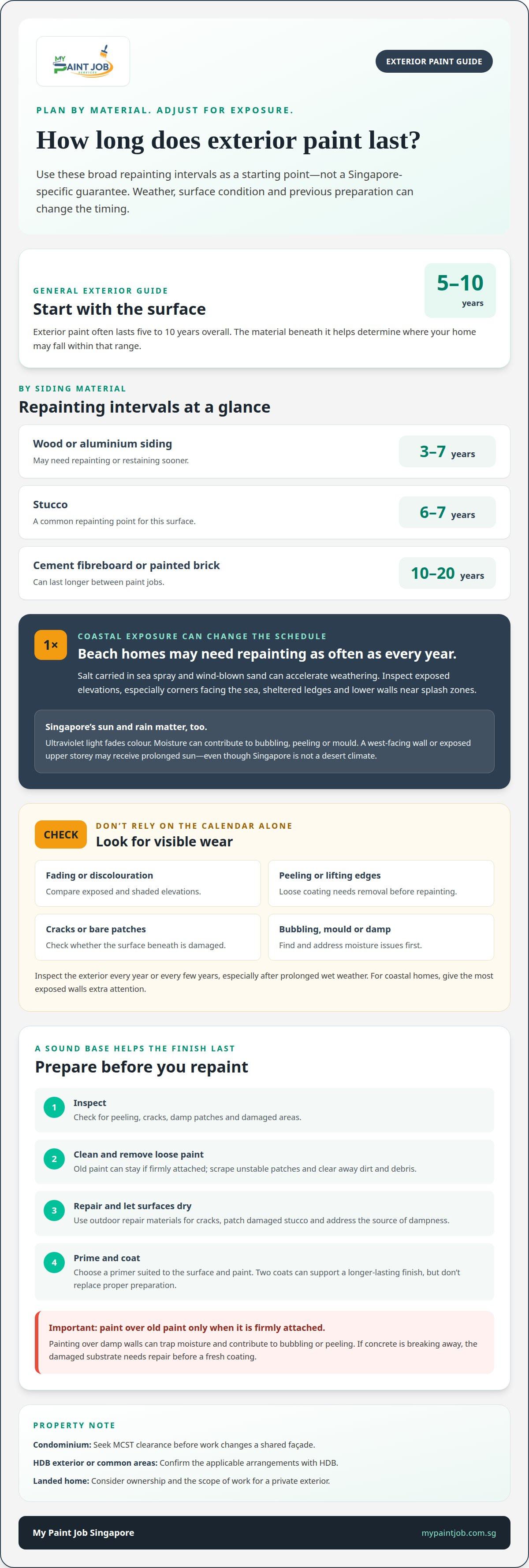
For a useful starting point, exterior paint often lasts five to 10 years, depending on the surface, weather and previous preparation. Wood or aluminium siding may need repainting or restaining every three to seven years. Stucco commonly reaches its repainting point after six to seven years. Cement fibreboard and painted brick can last ten to twenty years between paint jobs. These are broad ranges, not a Singapore-specific guarantee; strong sun, frequent rain and moisture can shorten the interval.
Singapore’s tropical weather exposes exterior paint to repeated sun and rain. Ultraviolet light fades colour, while moisture can cause bubbling, peeling or mould. Paint quality matters, but so does the surface beneath it: two coats can support a longer-lasting finish, while poor preparation can undermine even a quality coating. Look for fading, cracks, peeling edges or bare patches. Inspect the exterior every year or every few years, especially after prolonged wet weather.
Approval depends on the property and the area being painted. For a condominium, seek MCST clearance before work changes a shared façade. For HDB exterior or common-area work, confirm the applicable arrangements with HDB. A landed home’s private exterior is a different case, so consider ownership and the scope of work before arranging painting.
After painting, follow the coating manufacturer’s cleaning guidance and avoid abrasive tools that could damage the finish. A twice-yearly wash can remove grime from exterior surfaces, but use a method suited to the paint and substrate. For warranty coverage, read the written terms before work begins: check which surfaces and defects are covered, how long coverage lasts, and whether maintenance conditions apply. Keep the warranty and paint details with your property records.
Coastal and desert conditions
Homes beside Singapore’s coast face different paint challenges from properties in sheltered inland settings. Salt carried in sea spray can settle on exterior walls, while wind-blown sand may wear exposed surfaces. These conditions can accelerate weathering, dull the colour and leave paint more vulnerable to damage. Beach homes may need repainting as often as every year, so inspect the most exposed elevations rather than relying on a standard schedule.
Regular cleaning helps remove deposits before they build up. Use a gentle wash suited to the coating and wall material, then check for chalky residue, fading, blistering and peeling. Pay particular attention to corners facing the sea, sheltered ledges where salt can collect, and lower walls near splash zones. If a coating has begun lifting, washing alone won’t restore adhesion. The loose paint and any underlying surface issue need attention before repainting.
Desert conditions create a different combination of stress. Strong, direct sunlight exposes paint to ultraviolet rays, which can fade or discolour the finish. Dry air doesn’t eliminate the effects of heat and sunlight, while wind-blown dust can settle on walls and make the surface look tired. Singapore isn’t a desert climate, but a west-facing wall or exposed upper storey can still receive prolonged sun. Compare exposed and shaded elevations to spot uneven fading early.
Choose maintenance according to exposure. For a coastal home, prioritise salt removal and inspect areas facing prevailing sea conditions. For a sun-exposed wall, monitor colour changes and coating condition, especially around window edges and projecting features. Record where fading or peeling appears, then use those patterns to guide repairs. If concrete is breaking away rather than merely showing worn paint, spalling concrete repair addresses the damaged substrate before a fresh coating is applied.
Exterior surface preparation and repairs
A fresh coat lasts only as well as the surface beneath it. In Singapore’s humid conditions, moisture can make paint bubble or peel and encourage mould growth. Peeling may also signal water damage in the underlying wall, not simply an ageing topcoat. Identify the source of dampness and address damaged areas before painting. Covering them can hide a problem without fixing it.
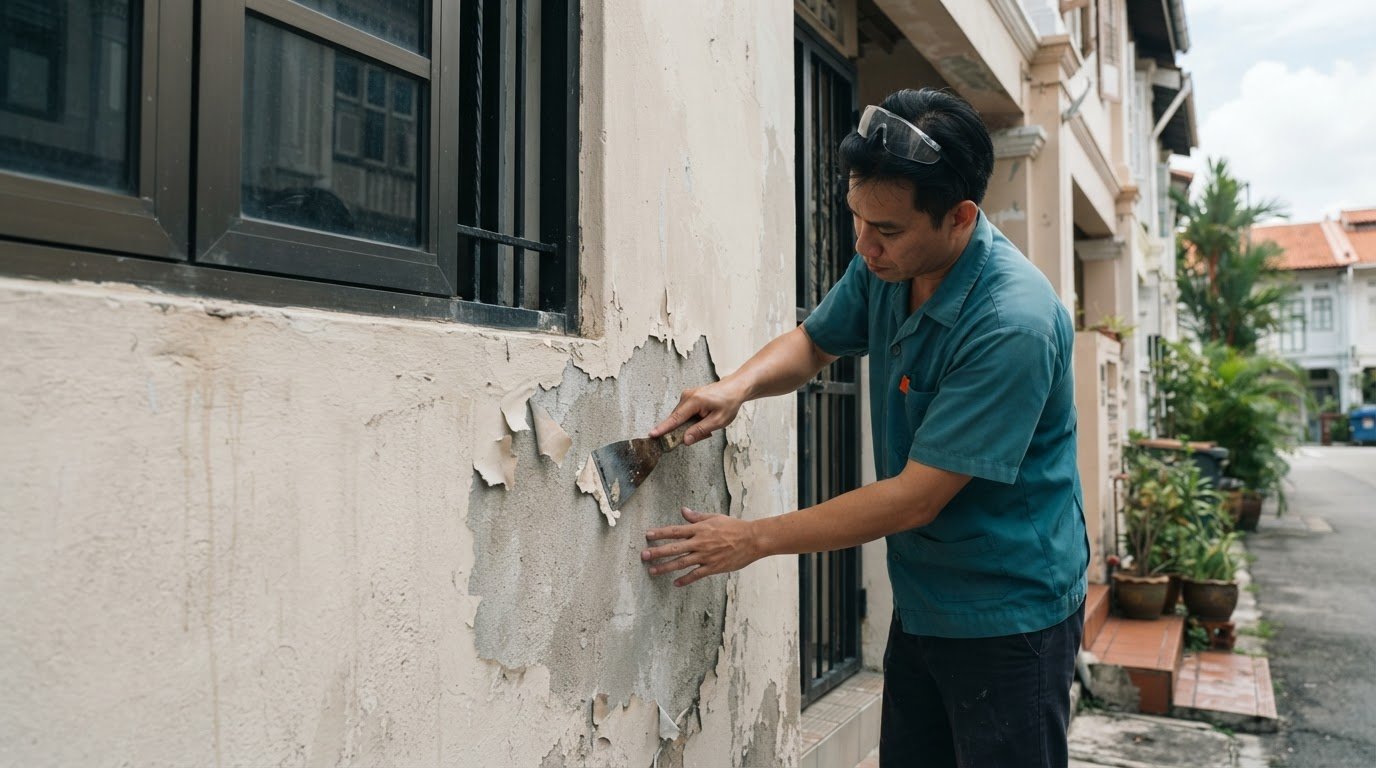
Painting over old exterior paint is possible when the existing coating is firmly attached. Remove loose or peeling patches first, or the new paint may lose adhesion and peel prematurely. Clean away dirt and debris, scrape off unstable paint, then prepare a smooth surface. Take extra care at exposed edges, corners and around window frames, where lifting paint can leave the substrate uncovered.
Preparation follows a practical sequence:
- Inspect walls for peeling, cracks, damp patches and damaged areas.
- Remove loose paint and surface debris, then clean the substrate.
- Repair cracks with materials designed for outdoor use, and patch damaged stucco where needed.
- Apply a primer suited to both the surface material and the chosen paint.
Allow cleaned and repaired surfaces to dry before coating them. Painting over damp walls can trap moisture and contribute to bubbling or peeling. For example, a crack in a rendered wall needs an appropriate outdoor repair before primer and paint are applied. If a wall shows mould alongside peeling, address the moisture condition instead of treating the visible paint as the only problem.
Coat selection and application also matter. Two coats can increase a paint job’s longevity, but they don’t replace cleaning, repairs or suitable primer. Follow the paint’s application instructions and allow each coat the required drying time. After painting, keep the finish clean using gentle methods suited to its surface. Careful preparation takes effort upfront, but creates a sound base for a more even, durable exterior finish.
What exterior paint types and finishes are best for Singapore weather?
No single paint type suits every Singapore exterior. Start with the wall material, existing coating and exposure, then select paint labelled for exterior use and compatible with that substrate. A rendered wall, timber feature and previously painted surface may need different preparation or primer. The product instructions should identify suitable surfaces and application conditions. Match the primer to both the wall material and selected paint, rather than choosing either in isolation.
Singapore’s heat, strong sunlight and frequent rain make the coating’s intended use important. Check the manufacturer’s technical information for exterior suitability, surface compatibility and application guidance. Follow instructions for drying between coats and weather conditions during application. Don’t assume a product is appropriate simply because it is labelled for walls. Interior paint is not a substitute for a coating intended for outdoor exposure.
The finish affects the façade’s appearance and how clearly surface irregularities show. A smoother-looking coating can emphasise uneven patches, while a more textured appearance may suit a rendered wall. View samples on the actual exterior, because sunlight and shade can change how a colour looks. Check a sunlit wall and a sheltered area before settling on the final shade.
- Identify the substrate, such as rendered masonry or timber, before selecting paint.
- Check the product label for exterior use and compatibility with that surface.
- Choose a primer suited to the substrate and coating system.
- Compare colour samples in direct sun and shade, then follow the product’s application instructions.
For an HDB block, condominium or landed home, the façade material and exposure help guide product selection. The right choice also depends on the condition of the existing coating; paint cannot compensate for a failing or damp surface. For help planning an exterior painting project, connect the surface condition and desired finish with a suitable preparation and coating plan.
My Paint Job Singapore
My Paint Job Singapore helps property owners plan exterior repainting around the surface condition, exposure and preparation the finish needs. For HDB, condominium, landed and commercial properties, careful preparation and a suitable coating support a considered repaint instead of simply covering worn paint. Turn to the team when fading, peeling or weather exposure makes it difficult to judge whether the exterior needs attention or what preparation should come first.
Share what you’re seeing on the façade and the type of property, then discuss an appropriate painting plan. If peeling accompanies cracks or damaged concrete, those conditions need attention before painting can provide a sound finish.
Contact My Paint Job Singapore to discuss your exterior repainting needs.
Plan your next exterior refresh with confidence
Use your next inspection to turn signs of wear into a clear maintenance plan. Note which walls fade first, where paint peels, and whether cracks or damp patches appear nearby. These observations help distinguish a cosmetic refresh from surface damage that needs repair before painting. They also make it easier to explain your priorities and desired finish.
If you’re still weighing how often you should repaint your house exterior, focus on the condition of the coating and the surface beneath it, not the calendar alone. My Paint Job Singapore provides painting services for HDB flats, condominiums and landed homes, with preparation tailored to the property and its exterior condition.
Start planning a considered refresh for your home. Contact My Paint Job Singapore today to discuss your exterior painting needs.
Frequently Asked Questions
Can you paint over old exterior paint?
Yes, you can paint over old exterior paint if the coating is firmly bonded and the wall is dry. Test an inconspicuous edge for lifting, then remove loose sections rather than sealing them beneath fresh paint. For example, peeling around a window after rain may point to moisture behind the coating. Address the dampness and any damaged surface before repainting.
Repaint My House: How Often Should I Do It?
A five-to-10-year interval is a useful starting point, but visible wear may call for earlier work. If you’re deciding how often you should repaint your house exterior, consider the siding, weather exposure and condition of the previous paint job together. A sheltered brick wall may age differently from an exposed timber feature, so assess each part of the home instead of relying only on one date.
How often should you repaint a house exterior in Singapore?
In Singapore, use five to 10 years as a broad planning range, not a fixed deadline. Frequent rain, humidity and strong sunlight can wear exposed paint sooner, while sheltered areas may retain their finish longer. Inspect the façade periodically and respond to its condition. Peeling, bubbling or exposed substrate needs attention before a small coating problem develops into more extensive surface damage.
What factors affect exterior paint lifespan in Singapore’s hot, humid climate?
Sunlight, rain, moisture, siding material and preparation all influence how long exterior paint lasts in Singapore. Direct sun can fade colour, while moisture can contribute to bubbling, peeling and mould. Coastal salt and wind-blown sand add wear near the sea. Paint quality and application matter too: a suitable primer and two well-applied coats support durability, but cannot compensate for a damp or poorly prepared surface.
How long does exterior paint last on wood, stucco, brick, and concrete?
Wood generally needs repainting or restaining every three to seven years; stucco commonly needs a new coat after six to seven years. Painted brick can last ten to twenty years. Concrete varies with its condition, exposure and coating system, so assess the surface instead of assigning it a single interval. Cracks, peeling or concrete damage may need repair before repainting.
What signs indicate a house exterior needs repainting?
Look for fading or discolouration, peeling edges, bubbling, cracks and bare patches. Mould or recurring damp marks can signal moisture affecting the surface, not just an ageing finish. Inspect exposed walls, corners and window surrounds, where weathering or paint failure may be easiest to spot. If peeling returns after rain, investigate the underlying wall before applying another coat.