A retail wall can look perfect on opening day and tired only weeks later. Shopping bags scrape corners, display racks leave marks, customers brush against surfaces, and cleaning crews work quickly between operating hours. Choosing the best durable finishes for retail walls means looking beyond color. The right finish should protect your investment, support your brand image, and remain easy to maintain through daily traffic.
For retail operators, durability is not simply about selecting the most expensive material. It is about matching the finish to the location, the level of contact, the cleaning routine, and the desired customer experience. A boutique, a busy convenience store, and a beauty counter may all need different solutions.
Start With How the Wall Will Be Used
Before choosing a paint or wallcovering, look at what happens around each wall. High-contact areas near entrances, fitting rooms, checkout counters, stockrooms, and narrow aisles need more protection than feature walls behind a display. Walls exposed to carts, strollers, deliveries, or frequent furniture movement need a finish that can handle impact as well as wiping.
Lighting also matters. A glossy surface may be highly washable, but it can reveal dents, patch marks, and uneven plaster under bright retail lighting. A flatter finish can look more refined on a large feature wall, yet may be less forgiving when it comes to stains. The best choice is often a planned combination of finishes rather than one product used throughout the store.
Proper surface preparation makes every option perform better. Cracks, peeling coatings, water stains, and uneven walls should be repaired before painting or installing a covering. Otherwise, even premium materials may fail early or look unfinished.
Best Durable Finishes for Retail Walls
Washable acrylic paint for most sales floors
High-quality washable acrylic paint is a practical choice for many retail interiors. It provides a clean, consistent appearance, comes in a wide range of brand colors, and can be touched up more easily than most specialty finishes. For general sales areas, a washable eggshell or satin finish usually provides a good balance between a polished look and day-to-day cleanability.
Satin paint is especially suitable for walls near merchandise displays, waiting areas, and fitting rooms. It resists marks better than flat paint while avoiding the strong shine of semi-gloss. Eggshell works well where the wall is less likely to receive direct contact but still needs occasional cleaning.
The trade-off is that painted walls can still chip at corners and along lower wall sections when subjected to repeated impact. In a store with carts, product deliveries, or heavy customer flow, paint may need added protection at vulnerable points.
Semi-gloss paint for service and utility zones
Semi-gloss paint is one of the most washable and moisture-resistant paint finishes available for interior retail use. It is a smart option for backrooms, pantry areas, staff corridors, restrooms, and walls around service counters. It stands up well to frequent wiping and helps keep practical spaces looking clean.
Because semi-gloss reflects more light, it can make minor surface flaws more visible. It is not always the preferred finish for a premium showroom or a broad front-facing wall. Still, where hygiene and easy maintenance are the priority, its performance makes sense.
Commercial wallcoverings for high-contact interiors
Vinyl commercial wallcoverings are worth considering in retail spaces that need stronger scuff resistance than paint can provide. They work particularly well in fitting room corridors, beauty and wellness stores, hospitality-inspired retail spaces, and areas where a textured or patterned finish supports the brand concept.
A quality wallcovering can hide minor wall imperfections better than paint and withstand regular cleaning when properly installed. It also offers design flexibility, including linen-like textures, subtle patterns, and finishes that create a more upscale atmosphere without the cost of full wall paneling.
The main consideration is repair. A painted wall can often be spot-touched, while damaged wallcovering may require a replacement section. Matching the original batch and pattern later can also be difficult. It is wise to keep extra material after installation for future repairs.
Wall panels and protective cladding for impact zones
For walls that receive regular knocks, protective panels or cladding are often the most durable answer. These materials are useful around checkout lines, lower wall sections, delivery areas, kids’ retail zones, and tight corridors. Depending on the design, panels can be installed only where needed, with paint above them to maintain a cohesive look.
Paneling costs more upfront than paint, but it may reduce maintenance expenses in busy locations. It can also create a deliberate architectural detail rather than making a store feel overly industrial. Choose finishes that are easy to wipe and specify trim details that prevent dirt from collecting along edges.
Decorative plaster for feature walls
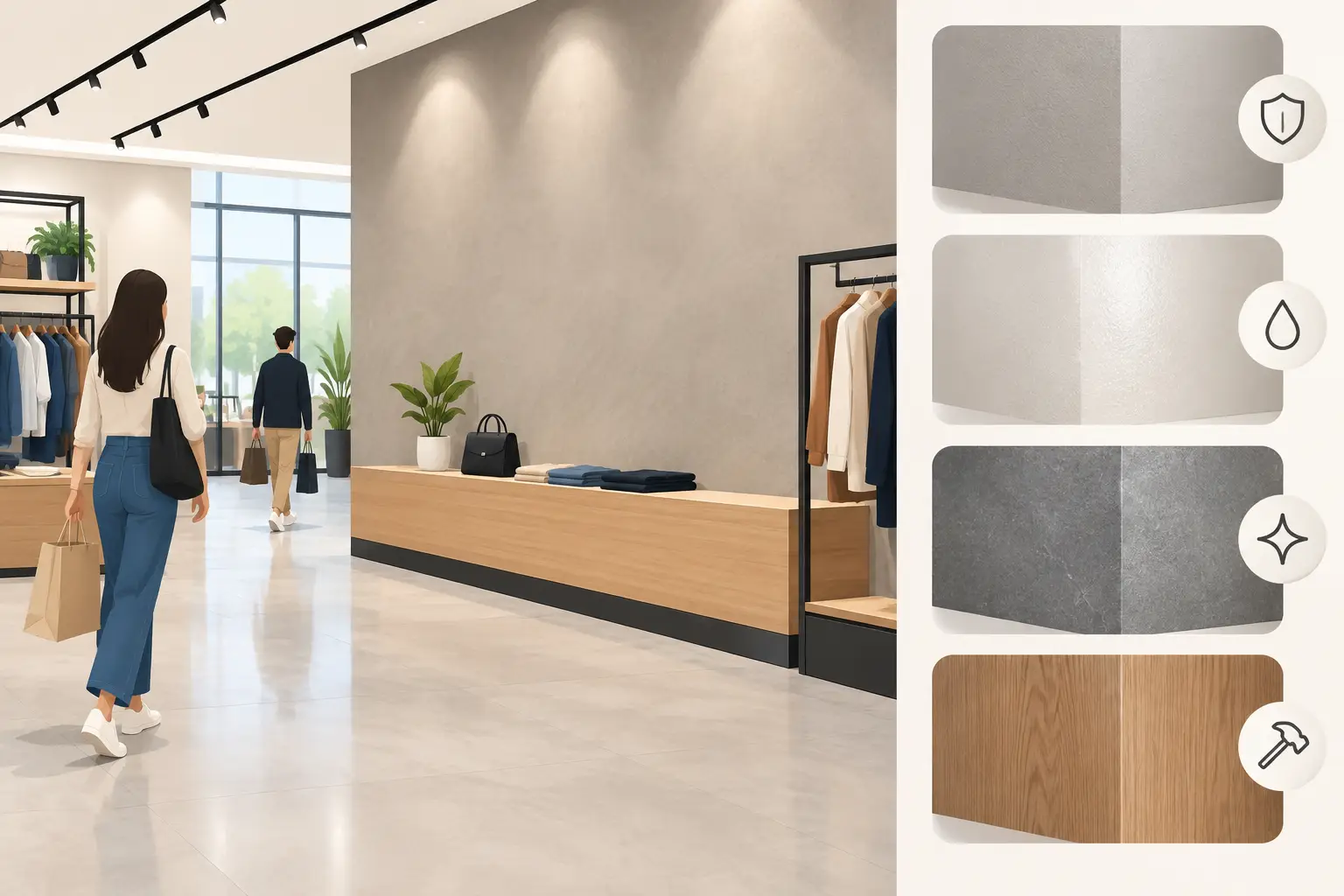
Decorative plaster, textured coatings, and cement-inspired finishes can create a memorable focal point behind a cash wrap, display niche, or logo wall. They bring depth to a space and can make a small store feel more considered and premium.
These finishes should be reserved for lower-contact areas unless a protective topcoat is included. Textured surfaces can be harder to clean, and repairs may require a skilled hand to blend the pattern successfully. For a feature wall that customers will photograph, the visual impact can justify the extra care.
Choose a Sheen That Fits the Store
Paint sheen affects both appearance and maintenance. Flat and matte finishes absorb light, helping walls look soft and refined. They are ideal for ceilings and low-contact feature walls, but they can be difficult to clean without leaving visible rub marks.
Eggshell offers a modest sheen and is suitable for general retail walls with moderate use. Satin provides stronger washability and is often the most versatile choice for customer-facing spaces. Semi-gloss delivers the greatest resistance to moisture and stains, making it better for functional areas rather than large decorative surfaces.
When a store has strong overhead lighting or large glass storefronts, avoid choosing sheen based on a small color card alone. Test the selected finish on the actual wall. Light can change the way both color and surface texture appear throughout the day.
Do Not Skip Wall Preparation
A durable finish starts before the first coat is applied. Walls should be checked for loose paint, hairline cracks, stains, dampness, and uneven patches. Fresh plaster repairs need adequate curing time, and surfaces should be cleaned of dust, grease, and adhesive residue before coating.
Primer is especially valuable when changing from dark colors to light colors, painting over repaired sections, or coating a porous surface. It helps the finish coat adhere evenly and reduces the risk of flashing, where repaired areas show through differently under lighting.
For wallpaper removal or old retail renovations, the wall may need additional skim coating before repainting. Rushing this step often creates visible seams, bumps, or peeling later. A professional inspection helps identify these issues before they become expensive disruptions after reopening.
Plan for Cleaning and Future Touch-Ups
The most durable finish is one your team can maintain correctly. Ask what cleaning products are safe for the selected paint or wallcovering. Harsh chemicals and abrasive pads can dull paint, damage protective coatings, or leave shiny patches on matte surfaces.
Keep a labeled record of paint brand, color name, sheen, and batch details. Store a small amount of leftover paint for touch-ups, but remember that paint can change slightly over time. In prominent areas, repainting a full wall may produce a better result than patching several visible spots.
It also helps to use darker or more forgiving shades along lower wall sections, near entrances, and behind service counters. Light colors can still work beautifully, but they may require more regular attention in areas with frequent contact.
Build Durability Into the Project Schedule
Retail painting should be organized around your operating hours, merchandising plan, and reopening deadline. The fastest option is not always the best if coatings do not have enough time to dry and cure before fixtures, shelving, or displays are moved back into place.
A professional contractor can help stage the work, protect inventory and furniture, complete surface repairs, and use low-odor paint options where appropriate. My Paint Job manages these details from color consultation through final cleanup, helping retail operators achieve a polished result with minimal disruption.
Your walls are part of the customer experience long after the signage goes up. Choose finishes that suit the way your store actually operates, protect high-contact areas before damage begins, and give the project enough preparation time to deliver a finish you can feel confident showing every day.