A tired lobby wall, scuffed retail frontage, or uneven office paintwork can affect how customers, tenants, and employees see your business before a conversation even begins. This commercial repainting project guide helps you plan the work properly, protect day-to-day operations, and achieve a clean, lasting finish without leaving key decisions to the last minute.
Commercial painting is not simply a larger version of painting a home. The surface conditions may be more demanding, access can be more complex, and the work often needs to happen around staff, customers, equipment, and opening hours. A well-managed project accounts for all of it from the start.
Start With the Business Outcome
Before choosing a paint color, decide what the repaint is meant to accomplish. An office may need a brighter, more professional environment that supports employee comfort. A retail store may be updating its look to match new branding. A landlord may be preparing a unit for new tenants, while a restaurant may need washable finishes that stand up to daily cleaning.
This purpose should guide the scope. Painting only visible walls may be enough for a short-term refresh, but it may not solve water stains, peeling paint, cracks, or worn trim. For a property that needs to make a strong impression over several years, surface repair and higher-performance coatings are often worth the additional investment.
A professional site inspection is the right place to identify these needs. Ask for the quote to separate preparation, repair, paint systems, access requirements, and cleanup. Clear scope details make it easier to compare proposals fairly and avoid unexpected changes once work begins.
Build a Commercial Repainting Project Plan
The best time to protect your schedule and budget is before painters arrive. Your contractor should understand how the space operates, including high-traffic areas, customer-facing zones, delivery times, security procedures, and any rooms that cannot be closed.
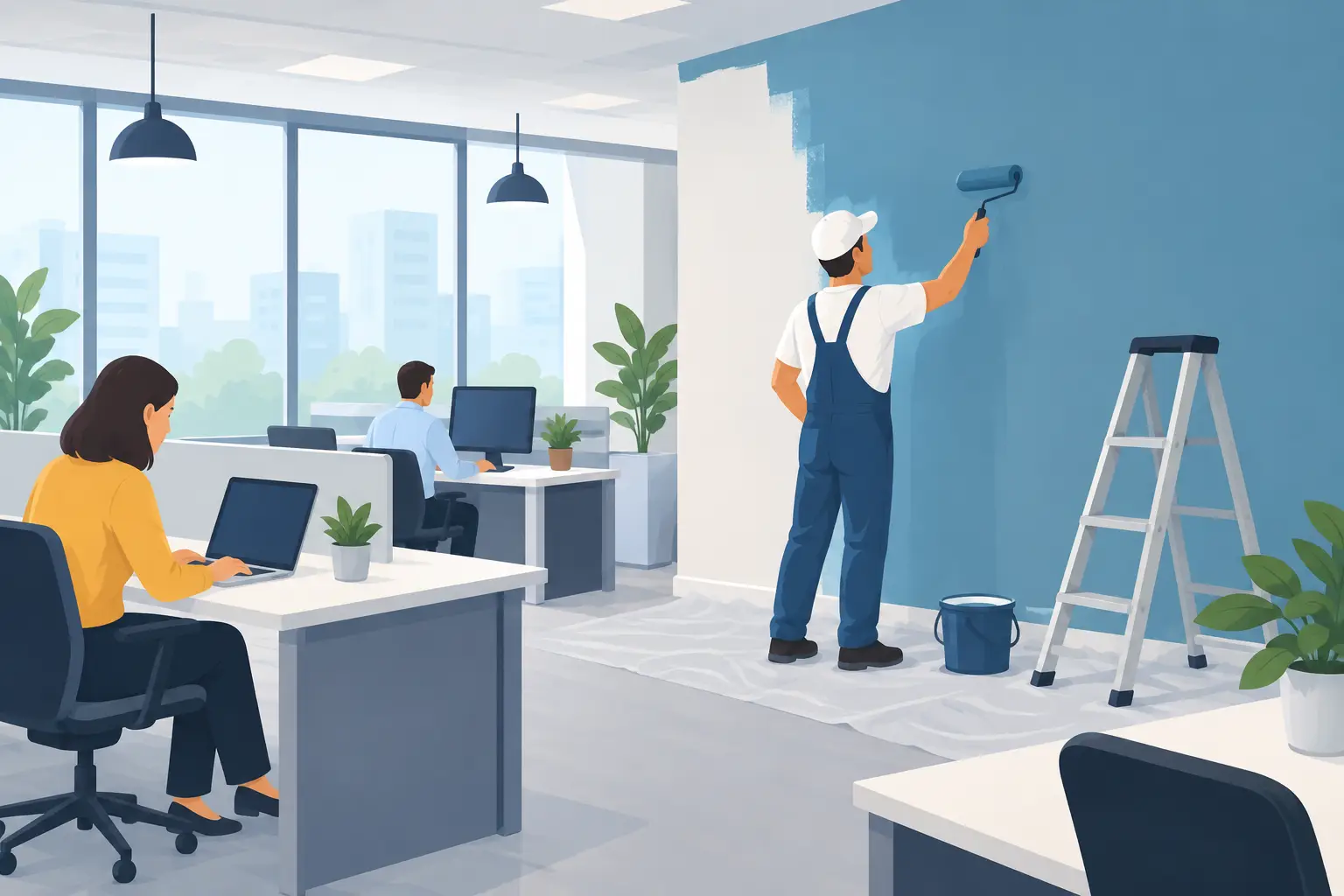
For offices, this may mean scheduling work by floor, department, or meeting room so teams can continue working elsewhere. For retail spaces, it may mean painting after closing, before opening, or in carefully isolated sections. Empty units generally offer more flexibility, but access coordination, building rules, and lift reservations can still affect the timeline.
A practical plan should confirm the project start date, working hours, expected duration, curing time, and handover date. It should also clarify who will provide access, where materials can be stored, and how furniture, inventory, and electronics will be protected.
Plan for disruption, not just paint time
A wall may take only a few hours to coat, but preparation and drying time determine whether the area can be used safely. Freshly painted corridors, stairwells, and entrance areas may need temporary routing. Strong odors may be a concern in clinics, food-related businesses, schools, or occupied offices.
Low-VOC and eco-friendly paint options can reduce odor and improve indoor comfort, though the best product depends on the surface, desired finish, and required durability. Faster drying coatings can also help in urgent projects, but they are not a substitute for proper surface preparation.
Inspect and Repair the Surface First
Paint can improve a space dramatically, but it cannot hide every defect for long. Peeling paint, powdery walls, water damage, hairline cracks, loose plaster, and spalling concrete need attention before the finishing coats are applied.
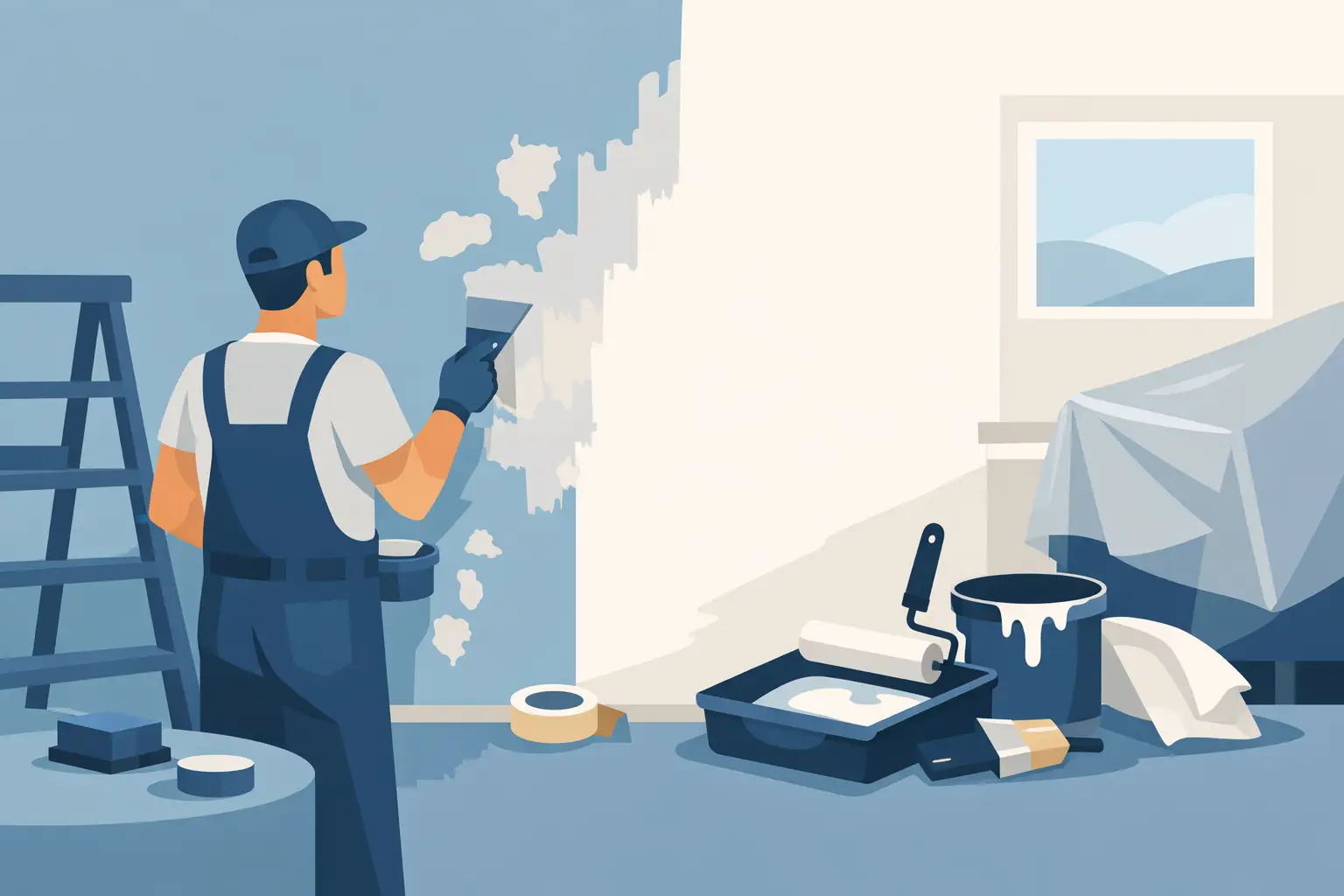
Preparation typically includes protecting floors and fixtures, moving or covering furniture, cleaning surfaces, removing loose paint, patching imperfections, sanding repaired areas, and applying the right primer where needed. Exterior or semi-exposed areas may require additional treatment because of rain, heat, humidity, and algae growth.
In Singapore’s humid conditions, moisture is a major consideration. If a stain keeps returning, simply painting over it may provide a temporary improvement rather than a durable solution. The underlying source, such as a leak, condensation issue, or damaged exterior surface, should be assessed first. This is where experienced painters add value: they can distinguish a cosmetic issue from a repair issue that needs to be resolved before repainting.
Choose Colors and Finishes That Work Hard
Color selection should support the way people use the space. Light neutrals can make compact offices feel more open. Brand colors can add energy to a retail feature wall or reception area. Softer tones may suit healthcare, education, and wellness settings where a calm atmosphere matters.
However, color is only one part of the decision. Sheen affects both appearance and maintenance. Flat or matte finishes can minimize the appearance of minor wall imperfections, making them suitable for many office walls. Eggshell and satin finishes are easier to wipe down and are often practical in busier corridors, waiting areas, and retail spaces. Semi-gloss is commonly used on doors, frames, and trim because it is more durable and easier to clean.
Higher sheen can reveal uneven patches if the wall has not been prepared carefully. That trade-off is worth discussing before work starts, especially under bright retail lighting or in areas with large windows. Paint samples viewed on the actual wall are more reliable than choosing solely from a small color card.
Protect People, Property, and Daily Operations
A commercial repainting project should feel organized from the first day. Painters should protect flooring, furniture, workstations, shelving, displays, and fixed equipment before preparation begins. In occupied spaces, dust control and clean work zones matter as much as the final paint finish.
Communication also keeps disruption low. Employees and tenants should know which areas are affected, when access is limited, and whether work will take place after hours. If your business receives customers throughout the day, clear signage and tidy site management protect the professional image you are trying to improve.
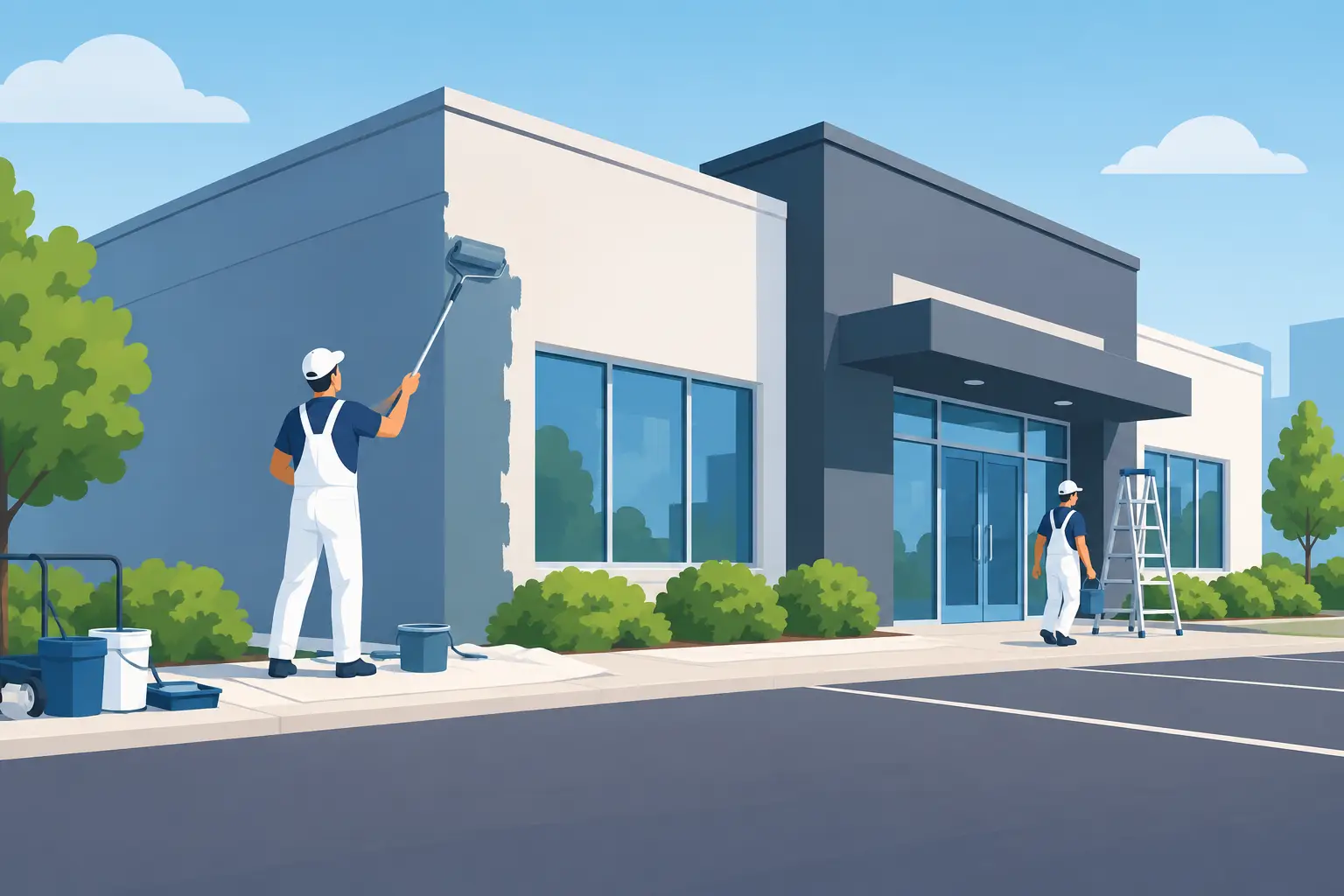
For projects involving high ceilings, exterior facades, or hard-to-reach sections, access equipment and safety measures must be arranged in advance. Building management may require permits, insurance documents, approved work hours, or lift protection. These details are routine for a capable commercial painting contractor, but they should never be assumed.
Review the Quote Beyond the Bottom Line
The lowest quote is not always the most affordable choice. A lower price may exclude repairs, primers, furniture protection, paint quality, extra coats, disposal, or final touch-ups. Those omissions can lead to delays, additional charges, or a finish that wears out sooner than expected.
Instead, look for a proposal that explains what is included. You should know the paint brand or product range, number of coats, areas covered, preparation method, repair allowance, work schedule, and cleanup process. If the project must be completed on a tight deadline, confirm whether the contractor has the manpower and scheduling flexibility to meet it.
It also helps to ask how touch-ups will be handled after handover. Even careful work can require minor corrections once protective coverings are removed and the space is viewed under normal lighting. A dependable contractor treats this final check as part of delivering a polished result, not as an extra favor.
Conduct a Final Walk-Through Before Handover
Do not wait weeks to inspect the work. Walk through the site with the contractor once the paint has dried and the area has been cleaned. Check walls from different angles and under the lighting normally used in the space. Look at cut-in lines around ceilings, doors, switches, and fixtures, as well as repaired sections that may need one more touch-up.
Also confirm that furniture is returned as agreed, masking materials are removed, floors are clean, and no paint has transferred onto glass, hardware, or fittings. Keep a record of the paint colors and finishes used. This makes future touch-ups, extensions, or phased repainting much easier to manage.
A commercial repaint is an investment in presentation, comfort, and property value. With clear planning and skilled execution, it does more than make a space look fresh – it gives customers and staff confidence that the business behind the walls pays attention to details. If you need a managed solution from inspection and color consultation through protection, painting, and cleanup, My Paint Job can help you plan the work around your business rather than the other way around.