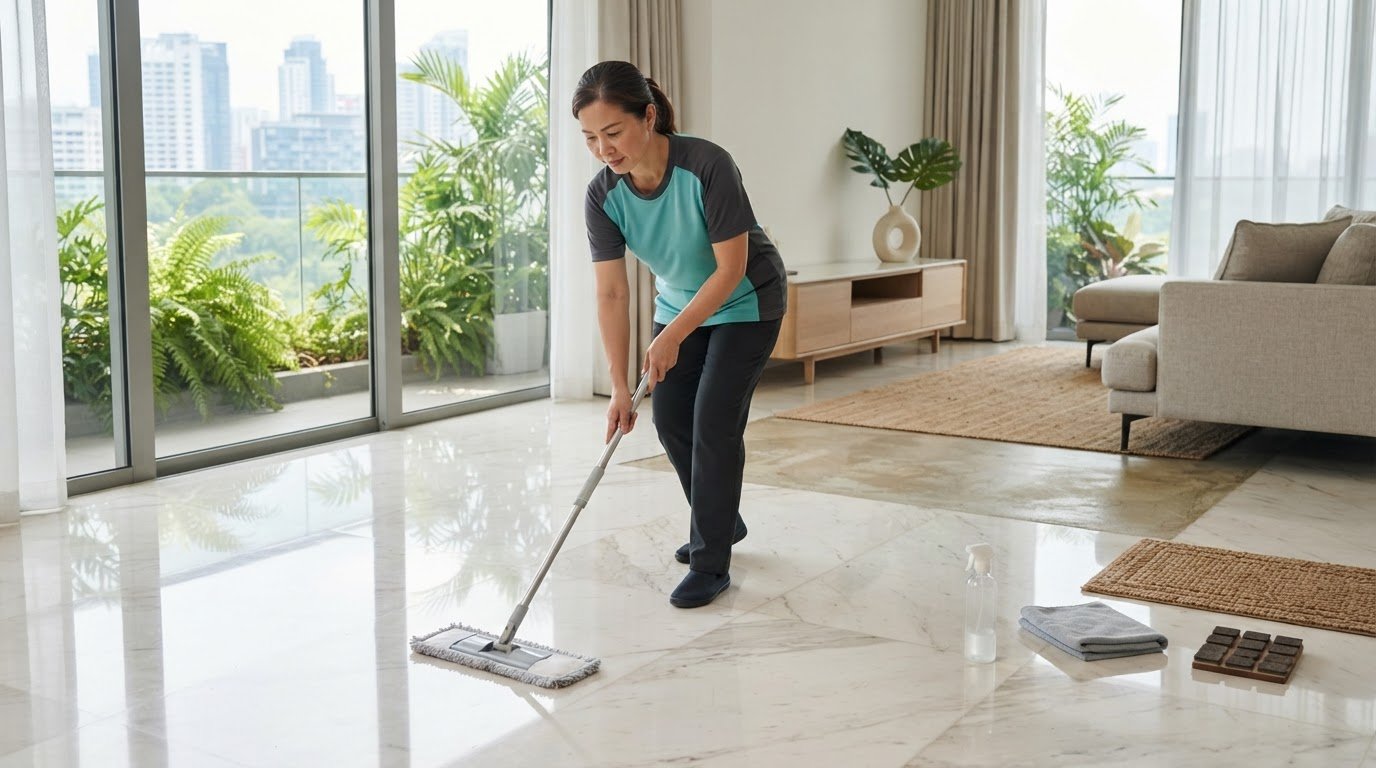
What keeps polished marble glossy often has less to do with polishing and more to do with everyday care. If you’re wondering how to maintain polished marble floors, use a gentle, consistent routine rather than aggressive scrubbing or frequent treatment. The wrong cleaner can etch the stone or leave dull marks, but looking after marble need not be complicated.
Use a soft mop and a pH-neutral cleaner labelled for natural stone. Blot spills promptly and remove grit before it gets walked across the floor. Avoid acidic products such as vinegar and lemon juice, which can etch marble. This guide covers a practical cleaning routine, ways to reduce stains and scratches, and signs that persistent dullness or wear may call for professional marble floor polishing. Polishing is a restoration service, not a substitute for routine care.
Key Takeaways
- Learn how to maintain polished marble floors with a straightforward routine that helps preserve the finish without over-cleaning.
- Use simple protective habits around entrances and furniture to reduce avoidable marks and surface wear.
- Understand why prevention can limit damage but won’t restore marble that’s already etched or scratched.
- Recognise when persistent dullness may signal that professional marble floor polishing is a better next step than more home cleaning.
What polished marble floors need to stay clean and glossy
Polished-marble maintenance means regularly removing dust, grit, spills and residue from a finished natural-stone floor to help preserve its appearance. This care can reduce avoidable damage, but it cannot reverse every etch, scratch or worn finish.
That distinction matters when deciding how to maintain polished marble floors. Marble is vulnerable to acids, which can react with the stone and leave dull marks. Read about the properties of marble to understand why careful product choices matter. Prevention can limit some everyday wear, but it cannot make marble immune to damage.
Why polished marble needs a gentle routine
Unsuitable cleaners can chemically dull marble, while grit tracked across the floor can scratch it underfoot. A gentle routine helps limit both risks. Set a realistic goal: reduce preventable marks and residue, rather than expecting a permanently flawless surface. If damage has already changed the finish, cleaning more often will not necessarily restore its shine.
Cleaning, polishing, and sealing are different tasks
Cleaning removes everyday dust, spills and residue. It is routine care, not a repair for a dulled finish. Use a soft, non-abrasive cloth or mop with a pH-neutral cleaner intended for natural stone. Avoid acidic products that can etch marble.
Polishing addresses surface dullness and wear through restoration work. If the floor remains patchy or lacklustre after gentle cleaning, the problem may be in the stone’s finish rather than on it. Professional marble floor polishing can help restore the surface when routine care is no longer enough.
Sealing is a separate protective treatment. A sealer can slow liquid absorption and help reduce staining, but it does not prevent acid etching or repair scratches. Cleaning, polishing and sealing are not interchangeable, and floors do not all follow the same resealing schedule.
How to clean polished marble floors without dulling the finish
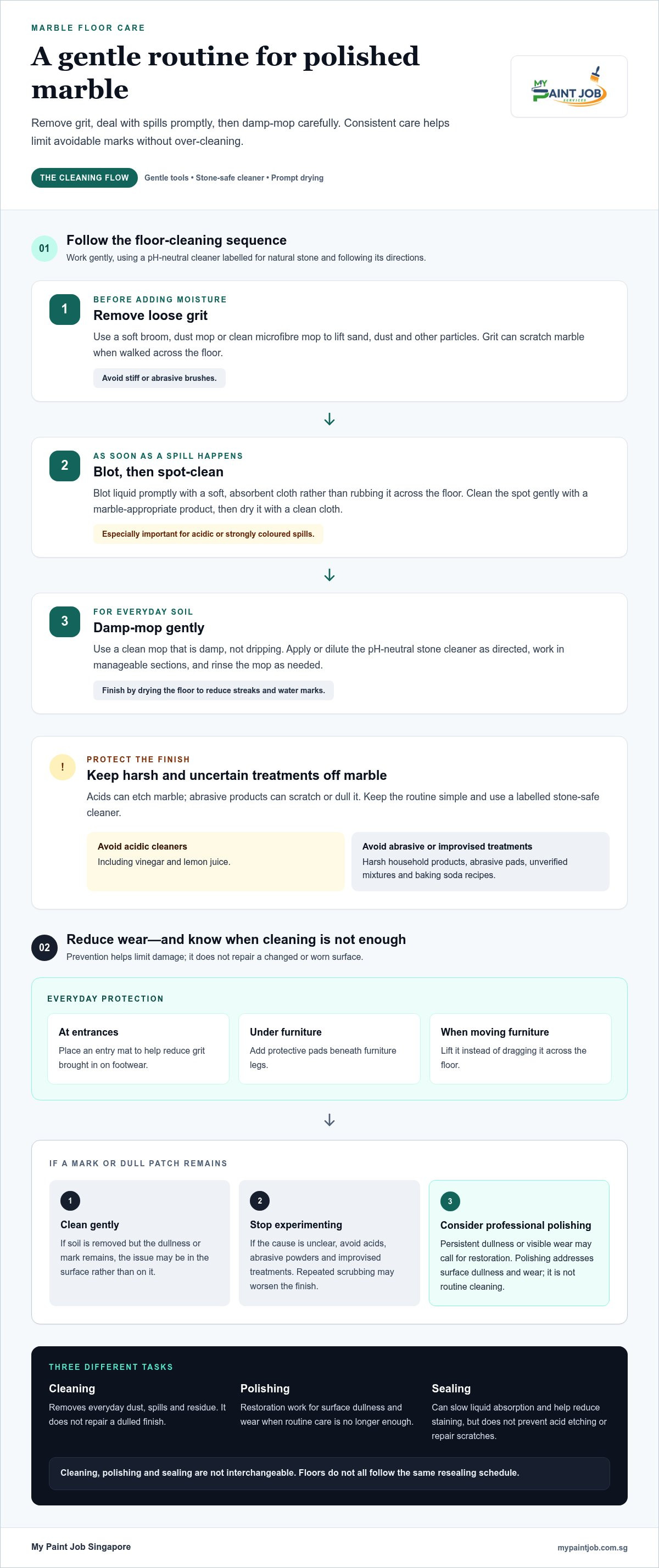
A short, consistent routine lifts everyday dirt without grinding grit into the stone or leaving cleaner residue behind. When deciding how to maintain polished marble floors, focus on gentle tools, a suitable cleaner and prompt spill care rather than stronger scrubbing.
A pH-neutral stone cleaner is a suitable general cleaner for polished marble. Choose one labelled for natural stone and follow its directions. The Natural Stone Institute care recommendations also emphasise choosing appropriate products for stone surfaces.
- Remove loose grit. Use a soft broom or dust mop to collect sand, dust and other particles before adding moisture. A clean microfibre mop can also lift debris gently. Avoid stiff or abrasive brushes.
- Spot-clean spills. Blot liquid promptly with a soft, absorbent cloth. Rubbing can spread the spill across the floor. Clean the spot gently with a marble-appropriate product, then dry it with a clean cloth.
- Damp-mop gently. Use a clean mop that is damp, not dripping. Dilute or apply the stone cleaner as directed on its label. Work in manageable sections, rinse the mop as needed, and dry the floor to reduce streaks and water marks.
Choose tools and products carefully
Avoid acidic cleaners such as vinegar or lemon juice, harsh household products, abrasive pads and unverified home mixtures. They can etch, scratch or dull marble instead of simply removing soil. Baking soda recipes may sound convenient, but do not improvise with mixtures whose suitability for your floor is uncertain. Keep the routine simple: soft tools and a labelled stone-safe cleaner.
Respond to spills promptly
Blot rather than scrub, especially if a spill is acidic or strongly coloured. Once the liquid is absorbed, clean gently and dry the area. If a mark remains or the surface looks dull, repeated scrubbing may worsen the finish. Professional marble floor polishing may be appropriate when routine cleaning cannot resolve surface wear.
How to prevent stains, scratches, and dull patches on marble
Small habits can help protect polished marble from everyday wear. Grit carried in on footwear can act like an abrasive underfoot, while spills left sitting may penetrate the stone or react with its surface. Unsuitable cleaners can also etch or dull the finish. Prevention will not stop every mark, but it can reduce avoidable damage.
Place an entry mat where people come in, and add protective pads beneath furniture legs. Lift furniture when moving it instead of dragging it across the floor. These steps help reduce the grit and friction that can leave scratches. Make them part of your regular home routine to help care for polished marble floors.
When should you avoid treating a stain yourself?
A mark on marble may be residue sitting on the surface, a stain absorbed into the stone, or etching that has changed the finish. Appearance alone may not show which one it is. Do not experiment with acids, abrasive powders or improvised poultices to find out. The wrong treatment can worsen the mark or damage the surrounding polish.
If you’re unsure what caused a stain or surface change, stop DIY treatment after gentle cleaning and have it assessed before trying anything stronger. Persistent or unidentified marks may need a considered treatment rather than repeated scrubbing.
When is routine cleaning no longer enough?
If gentle cleaning removes the soil but a dull patch, visible wear or mark remains, the issue may be in the marble’s surface rather than on it. Mopping removes dirt; it does not restore a worn or damaged polished finish. Persistent dullness or surface wear can be a reason to consider professional marble floor polishing.
If routine care leaves the floor looking dull, explore professional marble floor polishing as a next step. The floor’s condition helps determine whether a mark is removable or the surface itself has changed.
When professional marble floor polishing is the right next step
Let the floor’s condition guide your decision rather than following a fixed timetable. If gentle cleaning removes the dirt and the marble looks consistent, continue with routine care. If dull patches, visible wear or marks remain after cleaning, the change may be in the surface itself. More mopping will not restore a worn finish.
What professional polishing can address
Professional marble floor polishing is a restoration service for floors affected by persistent dullness or wear. It differs from everyday cleaning, which removes surface soil, and does not replace regular gentle care. The work depends on the floor’s condition, so polishing should not be expected to remove every stain, scratch or defect. If you are unsure what caused a mark, avoid stronger DIY treatment.
How to take the next step with My Paint Job Singapore
My Paint Job Singapore provides marble floor polishing and brings more than 10 years of industry experience. If home care no longer improves the appearance of your floor, request a free, non-obligatory quote for the polishing work. The company offers a 100% Satisfaction Guarantee.
Before requesting a quote, note where the dullness or wear appears and what gentle cleaning you have tried. This helps explain why you are considering restoration without testing the surface with harsher products. Professional polishing is a practical next step when the floor needs more than routine maintenance.
For painting projects, low-odour, zero-VOC paint options are also available, including Nippon Odour-less All-in-1. These are paint options, not marble-care products.
Give your marble floor the care it needs next
Let the floor’s condition guide your next move. Continue gentle home care while it keeps the surface clean and looking consistent. If a patch stays dull or worn, do not keep escalating DIY treatments in pursuit of shine. A suitable restoration plan starts with understanding what the surface needs.
Knowing how to maintain polished marble floors also means recognising when routine care has reached its limit. My Paint Job provides marble floor polishing for floors that may benefit from professional attention. Share what you are noticing with a team with more than 10 years of industry experience and a 100% Satisfaction Guarantee.
Request a free, non-obligatory marble floor polishing quote to discuss a suitable next step for your floor. Use gentle care at home and consider professional help when the floor’s condition calls for it.
Frequently Asked Questions
Can I use vinegar to clean polished marble floors?
No. Vinegar is acidic and can etch marble, leaving a dull area even when used for routine mopping. Choose a pH-neutral cleaner labelled for marble or natural stone, and follow its directions. If vinegar has already touched the floor and the finish looks different, do not try another household remedy to counteract it. Stop experimenting and seek appropriate stone-care advice.
Is baking soda safe for polished marble floors?
Do not assume baking soda is safe for polished marble. A homemade mixture may be abrasive or unsuitable for your floor’s particular finish, even if it is commonly suggested for household cleaning. Use a product labelled for marble and follow its instructions. If a mark remains, avoid applying more powder or scrubbing harder. Repeated attempts can affect the surrounding polished surface as well as the spot.
How often should I mop polished marble floors?
Mop when the floor needs it rather than following a strict timetable. In a low-traffic room, removing loose dust may be enough between damp mops. A busy kitchen may need attention sooner if crumbs or footprints build up. Use a lightly damp, soft mop and a marble-appropriate cleaner. Avoid leaving pooled water or cleaner residue, which can make the floor look streaky.
What should I do if a stain remains after cleaning marble?
Stop after gently cleaning the spot with a product intended for marble. A remaining mark could be a stain, an etched area or a change in the finish, and appearance alone may not identify the cause. Do not try acids, abrasive powders or an improvised poultice. If the area looks persistently dull or altered, seek specialist assessment before treating it again.
When should marble floors be professionally polished?
Consider professional polishing if gentle care no longer improves persistent dullness or visible wear. Mopping can remove dirt, but it cannot restore every worn finish, and polishing may not remove every stain or scratch. The right approach depends on the floor’s condition. My Paint Job offers marble floor polishing and free, non-obligatory quotes if you’re considering restoration.