
What if the goal isn’t to win the wall-color debate, but to find a shade you’ll both be glad to live with? If you’re wondering how to convince my spouse on a wall color, start with curiosity, not a sales pitch. A shared room should feel like home to both of you.
It’s understandable to hesitate over a bold choice, especially when an inspiration photo can’t show how a shade will look in your room. Light, furnishings and the time of day can all change how paint appears, so a colour that looks perfect online may feel different on your walls.
This guide offers a practical way to discuss what you like and what concerns you, narrow the options and compare samples in the actual room. You’ll also find ways to choose a manageable next step, whether that means testing a softer version of a favourite shade or considering low-odour, zero-VOC paint options for your shared home. Make the decision together, then plan the painting with confidence.
Key Takeaways
- For how to convince my spouse on a wall color, discuss the room’s purpose and mood before proposing a particular shade.
- Compare a shortlist that includes each partner’s preferred direction and a potential middle option.
- View paint samples in the room, beside its furnishings and under its usual lighting, before deciding.
- Once you agree on a colour direction, make the painting plan manageable: Inspection → Preparation → Painting → Cleanup.
How to Talk About a Wall Color When You and Your Spouse Disagree
Different colour preferences don’t mean one of you has poor taste. A shade that feels inviting to one partner may seem too intense or gloomy to the other. Treat the choice as a shared decision, not a contest with one winner and one reluctant yes.
If you’re searching for how to convince my spouse on a wall color, pause the pitch and talk about what the room needs to do and how you want it to feel. Color psychology explores how different hues impact human emotions and behavior. That can help explain why preferences differ, but your own comfort in the room matters too.
Start with what each person wants the room to feel like
Take turns describing the room’s intended mood in everyday words. Ask, “Should this feel calm, cosy, bright, welcoming, or lively?” Then consider how you use the space. A bedroom where you unwind may call for a different feeling than a dining area where you host friends.
Listen for overlap. You might both want a welcoming room, even if one of you imagines a soft neutral and the other prefers a stronger colour. Shared priorities give you a useful starting point. Write down the words you agree on, then use them to judge each shade instead of debating personal taste alone.
Understand the concern behind a color objection
“I don’t like that shade” can mean several things. Ask what feels uncomfortable about it, then reflect the answer before suggesting another option. The concern might be brightness, intensity, permanence, or simply personal taste.
- Non-negotiables: One partner may want the room to stay bright or want to avoid a highly saturated shade.
- Preferences: You may differ on the exact hue or on whether the colour should cover every wall.
For example, respond with, “You’re worried it’ll feel too bold across the whole room. Have I understood?” Once both people feel heard, you can explore a softer shade or a smaller area without dismissing either preference.
Listening first makes it easier to discuss a color without turning it into a contest.
Why a Wall Color Can Look Different Than You Expect
A paint shade doesn’t appear in isolation. The same colour can look different as the light, nearby colours and finishes around it change. A warm-looking sample beside pale curtains may feel quite different next to dark furniture or a contrasting floor.
Room lighting also affects the impression. Daylight shifts as the day goes on, while your usual lamps create a different evening setting. A small chip shows only a limited area, not how the colour will feel across a wall. Treat online images and chips as starting points, not promises of the finished look.
Consider the room’s light and existing finishes
Look at each candidate colour in the room at different times, with the lights you normally use. Notice how it looks beside the floor, furniture, curtains and adjacent surfaces. A shade that feels soft beside light furnishings might seem stronger next to a dark sofa. These details help you assess the room as it is, rather than imagining it from a screen.
Use samples to make the discussion concrete
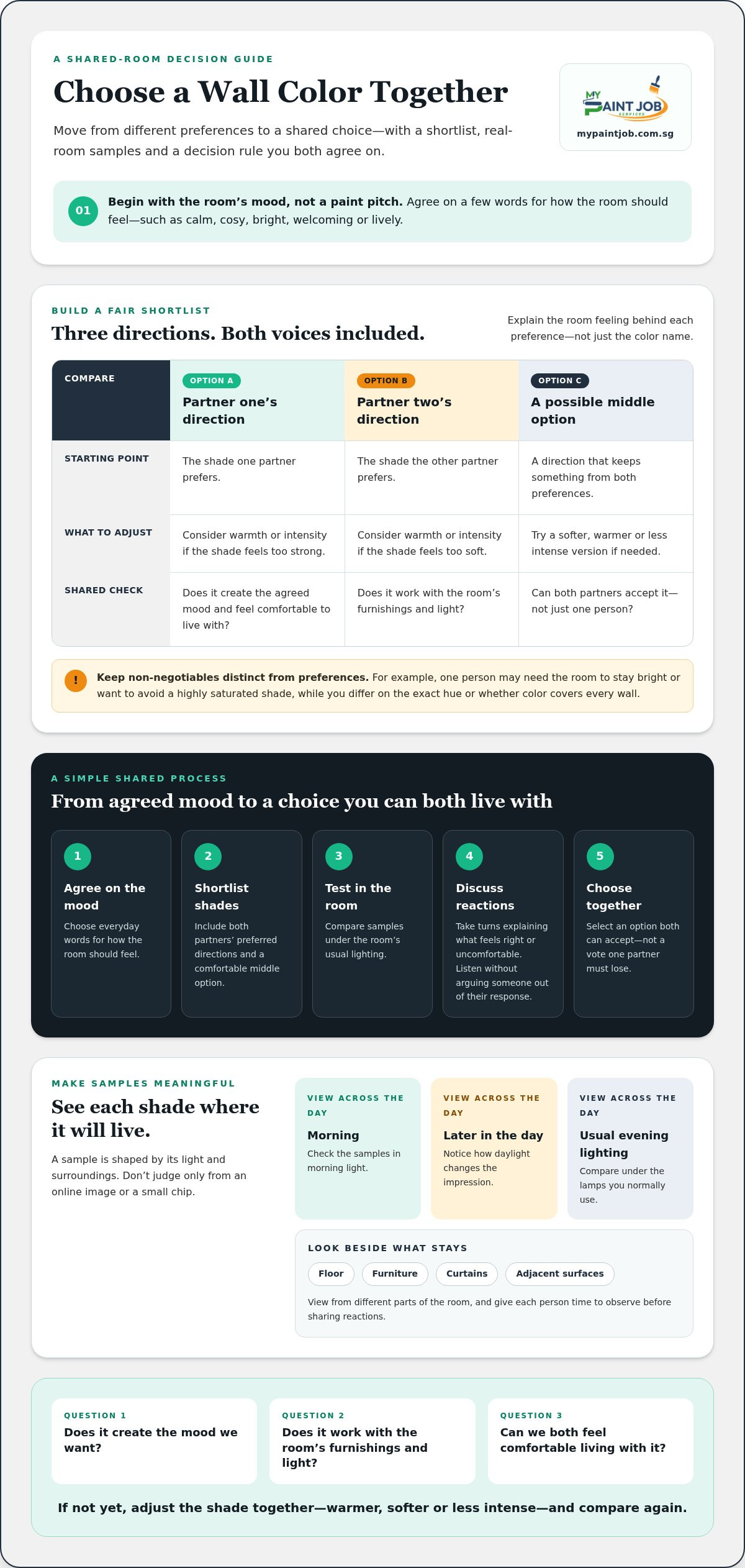
Bring a manageable shortlist into the room and compare samples on the wall. Include both partners’ preferred directions and, if helpful, a middle option. View them in the morning, later in the day and under your usual evening lighting. Look at each sample from different parts of the room and beside the furnishings that will stay. Give each person time to observe before sharing reactions, rather than choosing on a first glance.
Judge a paint sample in the room you’ll live in, because its light and surroundings shape how the color feels. If you’ve agreed on a direction and are ready to plan the painting, residential painting services from My Paint Job Singapore can help put your shared choice into practice.
How to Choose a Wall Color Together: A Simple Step-by-Step Method
A clear process gives both partners a voice and keeps the choice moving forward. If you’re asking how to convince my spouse on a wall color, shift the focus from persuasion to testing options against needs you’ve agreed on together.
Build a shortlist neither partner feels forced into
Start with three directions: one shade each partner prefers, plus a possible middle option. Each person should explain the room feeling they hope to create, not just name a colour. If one partner wants a lively look and the other wants something softer, explore shades that preserve some energy without feeling overpowering. Adjust warmth or intensity rather than dismissing either person’s preference.
Compare samples with a shared decision rule
Before testing, agree that neither person will make a final call until you’ve both seen the samples in the room. Use the same questions for each option: Does it create the mood we want? Does it work with the room’s furnishings and light? Can we both feel comfortable living with it?
- Agree on the mood. Choose a few everyday words that describe how the room should feel.
- Shortlist shades. Include each person’s preferred direction and a comfortable middle option.
- Test samples. Look at each candidate in the room under its usual lighting.
- Discuss reactions. Take turns explaining what feels right or uncomfortable, without arguing someone out of their response.
- Choose together. Select an option both can accept, rather than treating the decision as a vote one partner must lose.
If neither person feels ready to choose, identify what still needs adjusting. Perhaps the middle option needs to be warmer, softer or less intense. Compare the revised option with the same criteria, so the discussion stays focused. Once you’ve agreed on a direction, explore residential painting for your home. Low-odour, zero-VOC paint options are available.
Once You Agree on a Wall Color, Make the Painting Plan Feel Manageable
Once you’ve settled on a colour direction, turn the decision into a practical plan together. Professional painting can put that choice into practice while accounting for the room’s needs. Discuss the agreed shade, the work involved and how to prepare the space, without reopening the colour debate at every step.
Make the agreed choice easier to put into practice
My Paint Job’s residential painting service can be planned around the room and the direction you’ve chosen. The work process is Inspection → Preparation → Painting → Cleanup. Surface protection with drop sheets and plastic covers, furniture movement and clean-up can help make the project more manageable at home. Low-odour, zero-VOC paint options are also available for a shared living space.
Before moving ahead, make sure you and your spouse are aligned on the selected colour and the room to be painted. Keep the agreed sample or shade details handy so you’re both referring to the same choice when discussing the project.
Take a low-pressure next step together
You don’t have to commit to a painting plan the moment you agree on a shade. When you’re ready, a free, non-obligatory quote is a straightforward way to discuss the project. My Paint Job brings more than 10 years of experience to residential painting and offers a 100% Satisfaction Guarantee.
If you’re still learning about the practical side of painting a home, the guide Professional House Painting Services in Singapore: The 2026 Homeowner’s Guide is a useful next read. Then, when you’re both comfortable with the direction, discuss your painting project with My Paint Job.
Take Your Shared Choice Into the Room
A wall colour can be more than a design decision. Choosing it together is a chance to make a shared space reflect both of you. If you’re still thinking about how to convince my spouse on a wall color, try replacing “How do I get them to agree?” with “What would help us feel good about this choice?” That small shift keeps the focus on a home you’re creating together.
Once you’re both comfortable with the direction, keep the next step simple. Agree on which room to paint and what you’d like to discuss about the project. You can move forward at a pace that feels right for both of you, with a clear decision to build on rather than another debate to settle.
Ready to put your shared choice into practice? Explore professional house painting services and request a free, non-obligatory quote, or call +65 8032 1755 to discuss your project.
Frequently Asked Questions
How do I convince my spouse to choose the wall color I want?
Start by asking what each of you wants the room to support, such as relaxing, working or hosting friends. If you’re figuring out how to convince my spouse on a wall color, listen for the concern behind their hesitation before suggesting a compromise. Agree on shared criteria, such as comfort and fit with the furnishings, then compare a few samples in the actual room. Aim for mutual comfort, not a win.
What if my spouse and I have completely different color preferences?
Look for what each preference represents before deciding the choices are incompatible. One of you may want a sense of calm, while the other is drawn to warmth or energy. Keep those shared intentions in view as you explore shades that adjust the intensity or tone. Test a shortlist, then give yourselves time to think. Neither partner should have to abandon their preference without being heard.
Can paint samples help us agree on a wall color?
Yes, samples make the discussion more grounded than comparing a screen or relying on memory. Place the options where you can see them alongside the room’s furnishings and existing surfaces, then check them under the lighting you normally use. Each partner can note a first impression and whether the shade still feels comfortable later. Samples support a more informed conversation, but they can’t guarantee the finished appearance.
Should we choose a neutral wall color if we cannot agree?
Neutral paint can be a good option, but it shouldn’t be the automatic answer to disagreement. First decide what you want the room to feel like, then consider whether a neutral shade meets that aim or simply avoids choosing. You might compare a few neutrals with a more expressive option. The right choice is the one you can both live with, not necessarily the least noticeable shade.
How can we make choosing a wall color less stressful as a couple?
Choose a calm moment to talk, rather than squeezing the decision into a busy day or making it during a disagreement about something else. Let each person explain their preference without interruption, and agree how you’ll compare the options before deciding. If you’re ready to plan the painting, a free, non-obligatory quote can give you a practical way to discuss the project together without committing on the spot.