
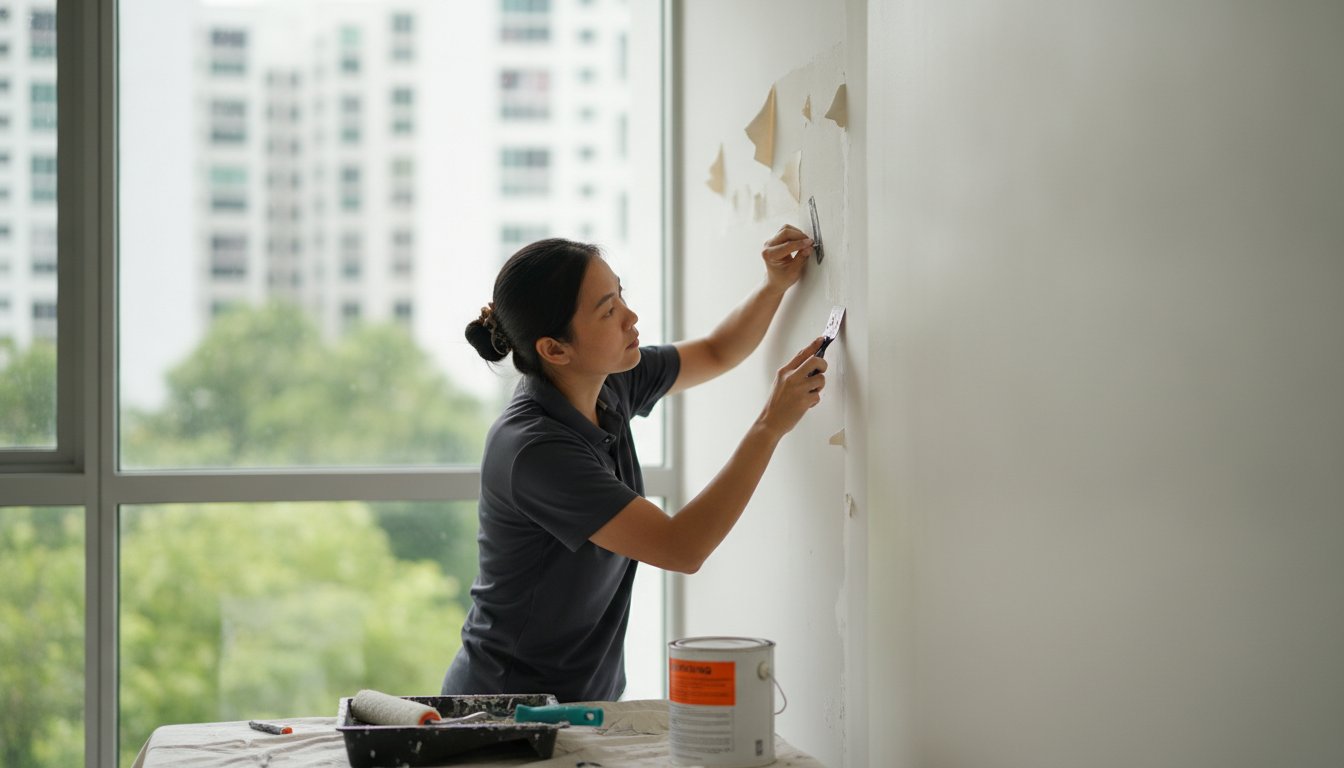
That unsightly flake of paint on your living room floor isn’t just a cosmetic annoyance. It’s a distress signal from your home’s structure. You’re likely asking, “why is my wall paint peeling?” after noticing bubbles or cracks that seem to reappear no matter how many times you scrape them away. In Singapore’s intense humidity, these imperfections often point to deeper environmental stress rather than just a poor brush stroke. We understand the frustration of seeing your sanctuary look neglected, and we recognize the fear that recurring repair costs or mold growth might impact your family’s air quality.
You deserve a home that reflects your pride in craftsmanship through flawless, durable finishes. Discover the hidden reasons behind peeling paint and learn how to restore your walls permanently in Singapore’s humid climate. We will identify whether your issue stems from improper surface preparation or structural moisture ingress. You’ll also learn exactly when to call in a specialist to ensure a high-standard result that survives the harshest monsoon season. Let’s move beyond temporary fixes and focus on technical accuracy for a beautiful, healthy living environment.
Key Takeaways
- Identify why poor surface preparation and paint layer incompatibility are the most common culprits behind early paint failure.
- Understand why is my wall paint peeling by examining the impact of Singapore’s 80% humidity and monsoon-driven moisture on your masonry.
- Learn why you must address the root cause of moisture seepage before attempting any aesthetic restoration or DIY fixes.
- Discover the critical role of high-quality sealers and professional-grade primers in creating a permanent, climate-resistant finish.
- Differentiate between simple surface flaking and serious structural concerns like spalling concrete to protect your property’s value.
The Science of Adhesion: Why Wall Paint Starts Peeling
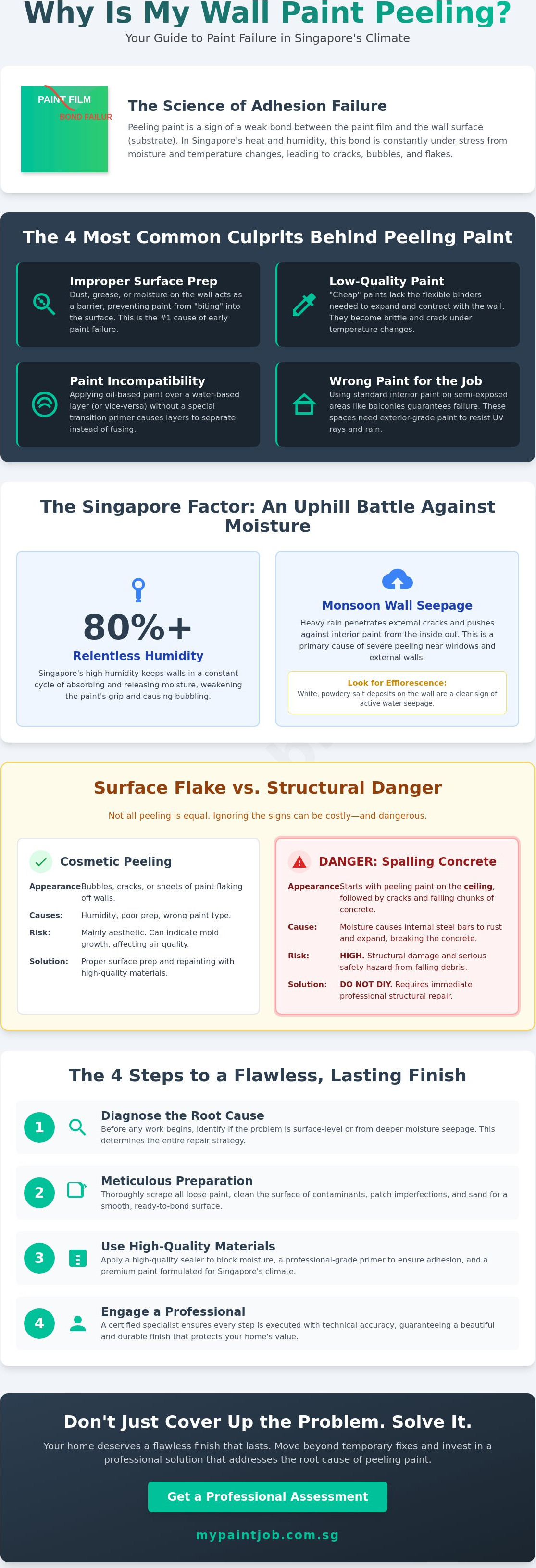
A flawless wall starts with a perfect bond. When you ask yourself, “why is my wall paint peeling?”, the answer usually lies in a breakdown of chemical adhesion. Paint isn’t just a color; it’s a complex liquid that must cure into a solid, flexible film. If the bond between that film and your wall is weak, gravity and humidity will eventually pull it away. This failure often occurs when oil-based paints are applied directly over older water-based layers without a proper transition primer. Without that bridge, the layers simply sit on top of each other rather than fusing together.
Technical accuracy is the foundation of our work. Understanding The Science of Paint Failure reveals that “cheap” paints often lack the necessary binders to maintain elasticity. In Singapore’s heat, walls expand and contract. Low-grade paints are brittle; they crack under this stress while premium options stretch to accommodate the movement. Achieve a lasting transformation by investing in materials that respect the physics of your home.
The Dangers of Improper Surface Preparation
Residual dust, grease, and even microscopic skin oils act as a physical barrier. They prevent the paint from “biting” into the substrate. We often see flaking in kitchens or near light switches where invisible oils have accumulated over years. Skip the professional cleaning step, and you’re essentially painting onto a layer of dirt. This leads to “chalking,” where the paint turns into a powdery residue that eventually falls off in sheets. Secure your investment by demanding a meticulously cleaned surface before any brush touches the wall.
Using the Wrong Paint for the Environment
Interior paints are designed for stable, climate-controlled rooms. Use them on a semi-exposed balcony or near a drafty window, and they will fail rapidly. These areas face UV exposure and wind-driven rain that interior formulas cannot handle. Opt for premium, eco-friendly exterior-grade paints for these transition spaces to ensure color retention and moisture resistance. High-standard results require matching the specific chemical properties of the paint to the unique environmental demands of your Singapore property.
The Singapore Factor: Humidity, Seepage, and Spalling Concrete
When you ask yourself, “why is my wall paint peeling?”, the answer is often found in the sky. Singapore’s relentless humidity, which frequently exceeds 80%, places your masonry under constant moisture stress. This environmental pressure prevents paint from ever fully “resting.” Instead, the wall remains in a cycle of absorbing and releasing water vapor. Over time, this movement weakens the bond between the substrate and the coating, leading to the unsightly bubbling you see in your living room or bedrooms.
The “Monsoon Effect” further complicates this struggle. During heavy rainfall, water can be driven deep into porous external walls through microscopic cracks. This moisture then travels through the structure and pushes against your interior paint from the inside out. Understanding the Common Causes of Peeling Paint is essential for any homeowner in the tropics. It’s vital to distinguish between simple surface condensation in high-moisture areas like bathrooms and actual wall seepage. While steam from a shower causes surface-level flaking, peeling near window frames or external corners usually signals a breach in your building’s facade.
Spalling Concrete: When Peeling Paint Means Structural Damage
Peeling paint on a ceiling is often a precursor to more serious issues. In older HDB flats and private apartments, this flaking can be an early warning sign of spalling concrete. This occurs when the steel reinforcement bars inside the concrete slab begin to rust due to carbonation or moisture ingress. As the steel corrodes, it expands, causing the surrounding concrete and paint to crack and fall away. Don’t ignore these “small” peels; they can quickly escalate into falling debris. Read our detailed guide on Is Your Ceiling Peeling? Signs of HDB Spalling Concrete to understand how to protect your family’s safety.
Wall Seepage from External Facades
Cracks in a building’s exterior allow water to bypass your home’s defenses. If you notice white, powdery deposits accompanying your peeling paint, you’re likely dealing with efflorescence. These are salt crystals left behind as water evaporates from your walls. It’s a clear sign of active seepage that requires more than just a fresh coat of paint. Identify the source of the dampness and engage a specialist for HDB painting services that include proper surface treatment to ensure a permanent, high-standard result.
How to Fix Peeling Paint: DIY vs. Professional Restoration
Restoring a wall requires more than a quick cover-up. If you’ve been wondering why is my wall paint peeling, the solution starts with a systematic approach to repair. Before picking up a brush, you must identify and stop the moisture source. Any repair made over a damp substrate will fail within months. Once the wall is dry, thoroughly scrape away all loose flakes. Go beyond the visible damage area to ensure you reach sound paint that still has a strong bond. Follow this guide on How to Fix Peeling Paint to understand the basic mechanics of surface repair.
Precision in the middle stages defines the final look. Sand the edges of the scraped area to create a smooth transition. This prevents “ghosting” lines where the old paint meets the new patch. Finally, apply a high-quality alkali-resistant sealer. This layer locks the surface and protects the new topcoat from the natural alkalinity of the concrete. Without this barrier, the new paint may react with the wall and peel again. Technical accuracy at this stage is what separates a temporary patch from a permanent fix.
When a DIY Patch Isn’t Enough
A small spot is manageable, but large-scale peeling across multiple walls suggests a systemic failure. Matching existing paint colors and textures is notoriously difficult without professional color-matching tools. There are also safety risks to consider. Older Singaporean homes may contain lead-based paint in their original layers. Disturbing these through sanding creates toxic dust that lingers in your living space. If you’re unsure why is my wall paint peeling in such large sections, it’s safer to consult a specialist who can handle the debris and surface preparation professionally.
The Professional Advantage in Wall Restoration
We bring technical accuracy to every project through specialized equipment. Our team uses moisture meters to verify that the wall is dry enough to accept new coatings. This data-driven approach eliminates guesswork and prevents future bubbles. For walls with extensive damage, our plastering and skim coating services provide a perfectly flat canvas. This level of restoration transforms a distressed surface into a work of art. Reach out for our HDB painting services to restore your home’s beauty with a finish that lasts.
Preventing Future Peeling with Premium Sealers and Expert Care
A permanent fix requires more than just a new coat of color. While you might still be wondering why is my wall paint peeling, the secret to longevity always lies in the sealer. This foundation layer acts as a chemical shield between the raw masonry and your decorative topcoat. By using premium, eco-friendly, low-VOC paints, you ensure excellent adhesion while maintaining high indoor air quality for your family. These modern formulas provide the elasticity needed to survive Singapore’s temperature shifts without cracking. Invest in quality materials today to avoid the frustration of recurring repairs tomorrow.
The Importance of Specialized Sealers
Achieve a lasting aesthetic by applying an alkali-resistant sealer that prevents saponification. This technical failure happens when alkaline salts in the concrete slab react with moisture, breaking down the paint’s binder into a soap-like mush. It’s a common reason why is my wall paint peeling in newer buildings where the concrete hasn’t fully cured. Bathrooms and kitchens demand even more attention. Use specific moisture-blocking undercoats in these high-humidity zones to create an impenetrable barrier against steam and condensation. Secure your home’s beauty with a foundation that resists chemical breakdown.
Long-term Maintenance for Singaporean Homes
- Window Seals: Check for cracked sealant that allows rain to seep into the surrounding plaster.
- Air-con Trunking: Ensure condensation isn’t dripping behind the casing and soaking the wall.
- Skirting Boards: Look for bubbling or discoloration that suggests rising dampness.
We recommend a professional refresh every 5 to 7 years to protect the underlying masonry and maintain your property’s value. Choose a professional house painting service that offers a warranty to ensure your peace of mind. Our team brings technical accuracy to every project, ensuring your home remains a sanctuary of style and safety. Don’t let your walls crumble. Get a free professional wall assessment from My Paint Job today.
Secure a Flawless Foundation for Your Home
Your home is a sanctuary, and its walls should reflect that sense of peace and pride. We’ve explored how Singapore’s humidity and structural factors like spalling concrete turn a simple aesthetic issue into a technical challenge. Understanding why is my wall paint peeling is the first step toward a permanent resolution. You now know that skipping the sealer or ignoring external seepage leads to recurring frustration. Achieve a lasting transformation by prioritizing technical accuracy and moisture-resistant materials from the very start.
Trust your property to specialists who value integrity and meticulous craftsmanship. With over 10 years of industry experience in Singapore, we are dedicated to restoring HDB, Condo, and Landed properties to their original glory. We use only premium, eco-friendly paints and high-grade sealers to ensure a result that survives the monsoon season. Restore your walls with My Paint Job’s professional painting services and enjoy the certainty of a job done right. Let’s work together to create an environment that feels as good as it looks.
Frequently Asked Questions
Can I just paint over peeling paint?
No, you shouldn’t simply paint over the damage because the new layer will fail as soon as the underlying flakes pull away. The new coat requires a stable, sound surface to form a proper chemical bond. You must scrape away all loose material and sand the edges smooth before applying a sealer. Skipping these steps ensures the bubbles will reappear within months, leading to wasted time and resources.
How do I know if my peeling paint is caused by a water leak?
Identify a water leak by checking for active dampness, yellowish-brown staining, or white powdery salt deposits known as efflorescence. If you’re asking why is my wall paint peeling specifically near window frames or ceiling corners, it’s likely a sign of external seepage. Use a moisture meter for technical accuracy. Persistent dampness that doesn’t dry out after a rainstorm usually indicates a structural breach rather than simple condensation.
Is peeling paint dangerous to my health?
Peeling paint can indirectly impact your health by allowing moisture to become trapped, which creates a breeding ground for mold and mildew. These spores significantly reduce indoor air quality and can trigger respiratory issues for sensitive individuals. In older Singaporean properties, flaking layers may also contain lead-based pigments. Meticulous removal and proper sealing are essential to maintain a safe and healthy living environment for your family.
What is the difference between a primer and a sealer for Singapore walls?
A primer is used to improve paint adhesion on new or porous surfaces, while a sealer acts as a specialized barrier against moisture and alkalinity. In Singapore’s humid climate, a high-grade sealer is the more critical layer. It prevents the natural salts in concrete from reacting with the paint, a process that often explains why is my wall paint peeling. Always choose a sealer specifically formulated for tropical environments to ensure long-term durability.
How much does it cost to fix peeling paint professionally in an HDB flat?
Professional restoration costs vary based on the extent of the damage and whether underlying issues like spalling concrete are present. Most specialists include basic surface preparation in their standard painting packages, but extensive scraping and plastering may incur additional fees. Factors like the type of premium paint selected and the number of rooms also influence the final investment. Request a bespoke assessment to get an accurate quote tailored to your property’s specific needs.



Pingback: Oil Based Versus Water Based Paint: Which Wins? - My Paint Job Singapore