A ceiling tells on poor workmanship fast. Miss the prep, use the wrong roller, or rush the drying time, and every patch mark, drip, and uneven sheen ends up right above your head.
If you are figuring out how to paint HDB ceiling surfaces properly, the job is less about putting paint overhead and more about getting the surface ready, choosing the right materials, and working in a way that keeps the finish even. In HDB flats, ceilings often show hairline cracks, old moisture marks, chalky paint, or uneven patches from past touch-ups. That is why a clean, durable result depends on process, not guesswork.
How to paint HDB ceiling for a smooth finish
The first decision is whether the ceiling is in paint-ready condition. A ceiling that looks “mostly fine” from the floor can still have peeling edges, powdery residue, mild water staining, or small settlement cracks that will show through fresh paint. White paint does not hide surface issues nearly as well as many homeowners expect.
Start by clearing as much of the room as possible. Cover flooring, light fixtures, and any remaining furniture. Good protection matters because ceiling work creates more splatter than wall painting. This is also the stage to switch off power if you are removing or masking around ceiling lights, fans, or smoke detectors.
Next, inspect the surface closely. Look for flaking paint, signs of dampness, uneven skim coat areas, and cracks around corners or near beam lines. If there is active moisture, painting should wait until the source is resolved. Fresh paint over a damp ceiling usually leads to bubbling, staining, or peeling sooner than expected.
Clean before you paint
Even when a ceiling does not look dirty, it often holds dust, cooking residue, and fine grime. In kitchens and near windows, that buildup can affect adhesion. Wipe the ceiling with a dry microfiber pad or soft broom first, then spot-clean if needed with a mild solution. The goal is not to soak the surface. Too much water can soften weak paint layers or highlight hidden defects.
If the existing finish is chalky, it needs extra attention. Rub your hand across the ceiling. If white powder transfers easily, the surface may need scraping, sanding, and a suitable primer before any topcoat goes on.
Repair defects properly
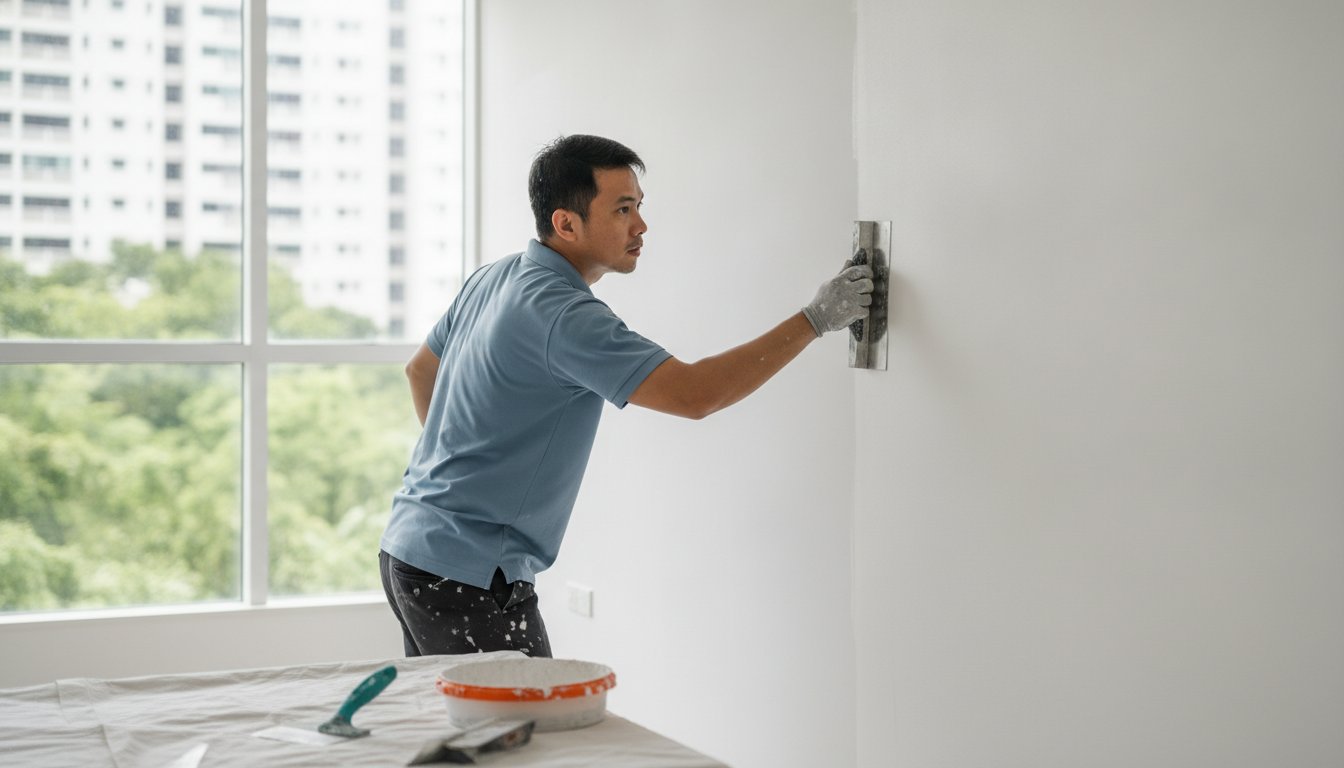
Hairline cracks are common in older flats and can be cosmetic, but they still need treatment if you want a neat final appearance. Open up loose edges gently, remove unstable material, and apply a suitable filler or skim coat compound. Once dry, sand smooth so the patched area blends into the surrounding ceiling.
This step is where many DIY jobs fall short. A filled crack that is not leveled well will remain visible after painting, especially under side lighting from windows. If the ceiling has widespread defects, patch-by-patch repair may not be enough. In those cases, a broader skim coat or professional surface correction can produce a far more uniform finish.
Choosing the right paint for an HDB ceiling
For most HDB interiors, a flat or matte ceiling paint is the safest choice. It reduces visible roller marks, softens minor imperfections, and gives the clean white look most homeowners want. Higher-sheen paints are easier to wipe, but they also highlight unevenness and application lines.
You should also think room by room. Bathrooms, kitchens, and service yards may benefit from paint with better moisture and mold resistance. Bedrooms and living rooms usually prioritize a smooth, non-reflective finish. There is no single paint that is perfect for every ceiling condition, so product choice depends on the room and the current surface state.
A primer is not always optional. If the ceiling has stains, repaired areas, bare patches, or a porous skim-coated surface, primer helps lock things down and creates a more even base. Without it, you may end up using extra coats and still see patchiness.
Tools that make a difference
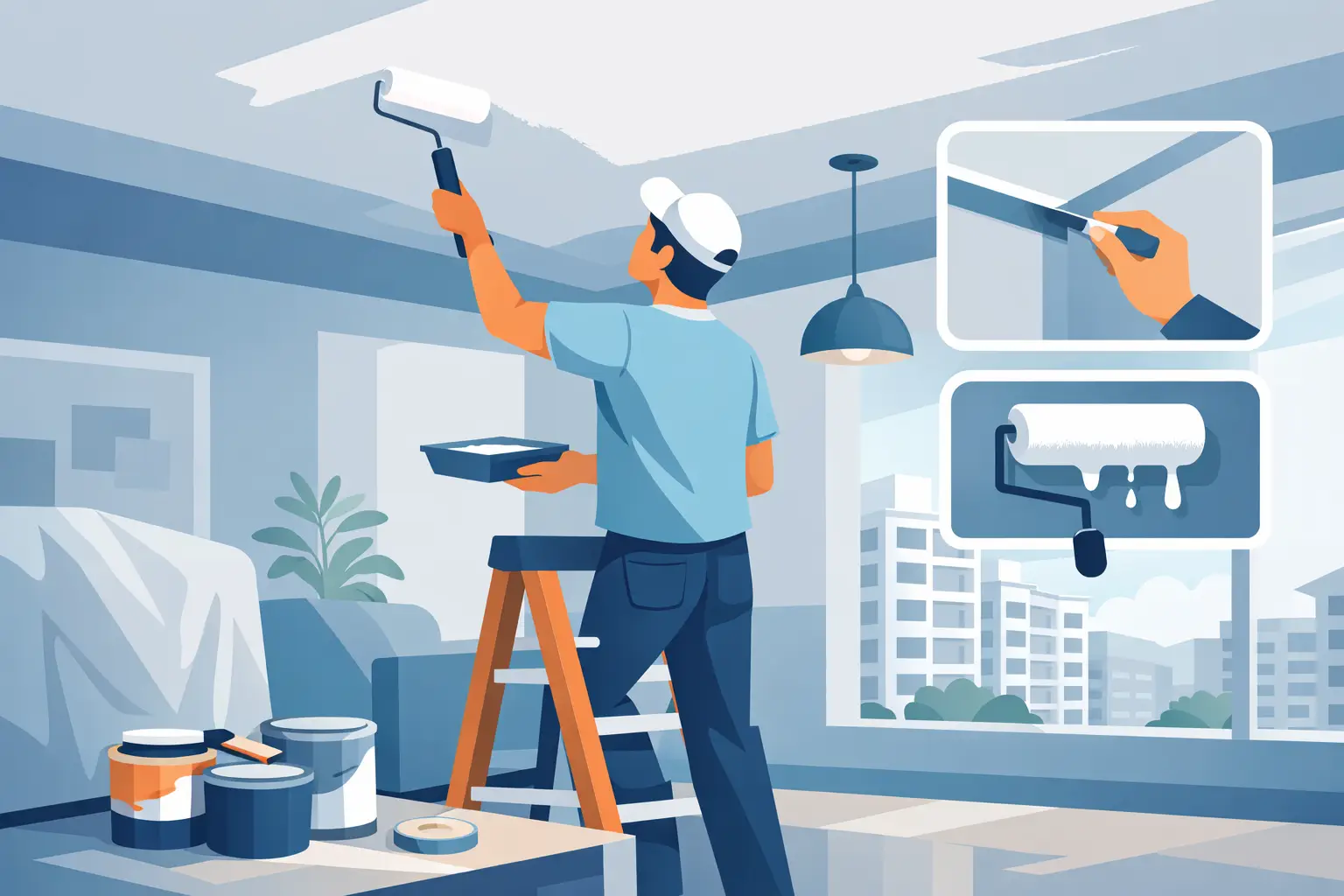
A quality roller with the correct nap matters more than many people realize. For typical interior ceilings, a medium nap roller covers well without creating excessive texture. Use an extension pole to maintain consistent pressure and reduce fatigue. A brush is useful only for cutting in around edges, corners, and fixtures.
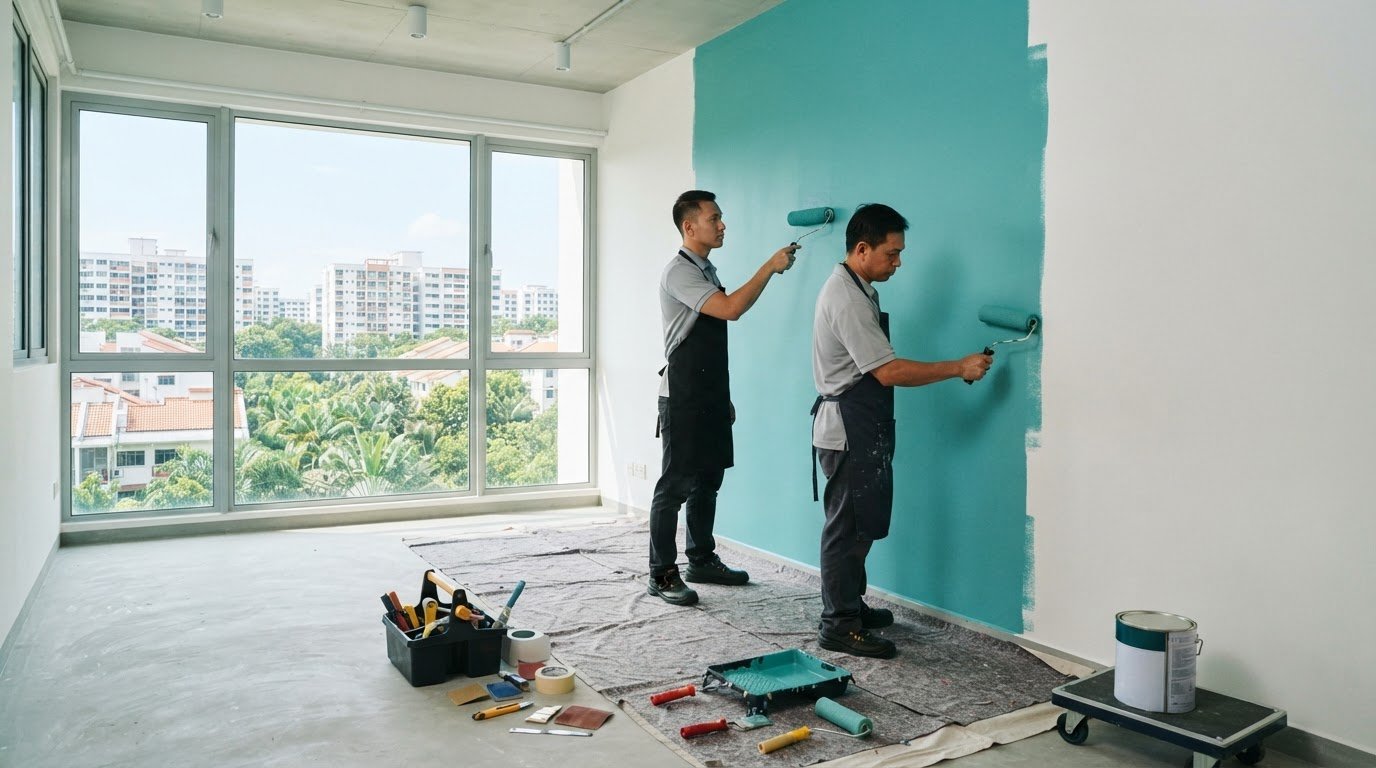
Cheap rollers often shed fibers or leave inconsistent coverage. That is frustrating on walls, but on ceilings it is worse because fixing overhead flaws is slower and messier. Painter’s tape, drop sheets, a sturdy ladder, sanding tools, filler, and proper lighting should all be ready before the first coat begins.
The best way to apply paint overhead
When people ask how to paint HDB ceiling neatly, the biggest issue is usually application technique. Ceilings need a wet edge and consistent movement. If one section dries before the next overlaps, lap marks can form.
Begin by cutting in the perimeter where the ceiling meets the walls. Do not cut too far ahead of the roller. Work in manageable sections so the brushed edge and rolled area blend together while still wet. Then roll in straight, overlapping passes, keeping pressure even from start to finish.
It helps to work with the main source of natural light. That makes it easier to spot missed spots, thick edges, or flashing as you go. On the final coat, many painters keep the roller direction consistent across the room for a more uniform appearance.
Do not overload the roller
One common mistake is loading too much paint in an effort to finish faster. That usually leads to splatter, drips, and uneven buildup. A properly loaded roller should feel full but controlled. Roll off excess before lifting it overhead.
Another mistake is overworking the paint after it starts to set. If you keep going back into partly dried sections, the finish can look patchy or dragged. Apply, level, and move on.
How many coats does an HDB ceiling need?
Two coats are standard for most ceiling repainting jobs. One coat may freshen a ceiling temporarily, but it rarely gives the depth, coverage, and consistency needed for a professional-looking result. If you are covering stains, darker patches, or extensive repairs, primer plus two finish coats is often the better route.
Drying time matters just as much as coat count. A second coat applied too early can lift the first coat or create uneven sheen. Follow the paint’s recommended drying window and allow more time if the room has limited airflow or higher humidity.
When DIY works and when it does not
A small ceiling in good condition can be manageable if you have the time, tools, and patience to prep properly. But ceilings are one of the more demanding surfaces in any home. They are physically tiring, less forgiving of poor lighting, and quick to reveal shortcuts.
If the ceiling has water stains, recurring cracks, peeling layers, or signs of spalling concrete nearby, the job shifts from painting to surface restoration. That is where experienced handling makes a visible difference. Proper inspection, repair, priming, and clean finishing save time and avoid the cycle of repainting too soon.
For occupied homes, convenience matters too. Most homeowners are not just trying to learn how to paint HDB ceiling areas. They want the room protected, the work completed cleanly, and the final result to last. That is why many choose a managed service instead of taking on the risk overhead.
At My Paint Job, that process is handled from surface assessment to protection, painting, and cleanup, with attention to the details that decide whether a ceiling looks freshly renewed or simply repainted.
Common problems after painting an HDB ceiling
If you notice roller marks, the cause is usually uneven pressure, low-quality tools, or paint drying too fast between sections. If patchiness appears over repaired areas, the ceiling may have needed primer or better sanding. If stains return, the underlying moisture issue was likely never solved.
Peeling is a bigger warning sign. It can happen when new paint is applied over loose or chalky old paint, or when damp surfaces are coated too early. In these cases, another coat is not the fix. The failed section usually needs to be scraped back, stabilized, and repainted correctly.
That is the real value of doing ceiling work properly the first time. A good finish is not just bright and white on day one. It stays even, clean-looking, and firmly bonded long after the room is back in use.
A well-painted HDB ceiling should disappear into the room in the best way possible. If you are seeing the ceiling, it should be because the space feels cleaner, brighter, and better finished – not because the flaws are catching your eye.