
A parquet floor can look worn without its blocks being damaged. Dullness, scratches or dark marks may leave you wondering whether the varnish has worn away or moisture has affected the wood beneath it. Recognising signs your parquet floor needs revarnishing helps you distinguish everyday surface wear from symptoms that deserve a closer look.
This guide covers seven clues, from persistent dullness to peeling finish, and explains why movement or recurring moisture marks should not be treated as varnish problems alone. A surface recoat may suit a floor with an intact but lacklustre finish, while more extensive wear can call for additional preparation. My Paint Job Singapore provides parquet floor varnishing to renew worn surface protection. Use the checks below to understand what your floor may need and choose a sensible next step.
Key Takeaways
- Use the signs your parquet floor needs revarnishing checklist to spot changes in sheen, colour and surface texture.
- Separate finish wear from loose or damaged blocks and recurring dampness, which need closer assessment.
- Inspect gently in natural light and compare busy areas with less-used spots before deciding what to do next.
- When the concern is worn surface protection, professional parquet floor varnishing can help renew the finish. The right work depends on the floor’s condition.
Signs your parquet floor needs revarnishing: what to look for first
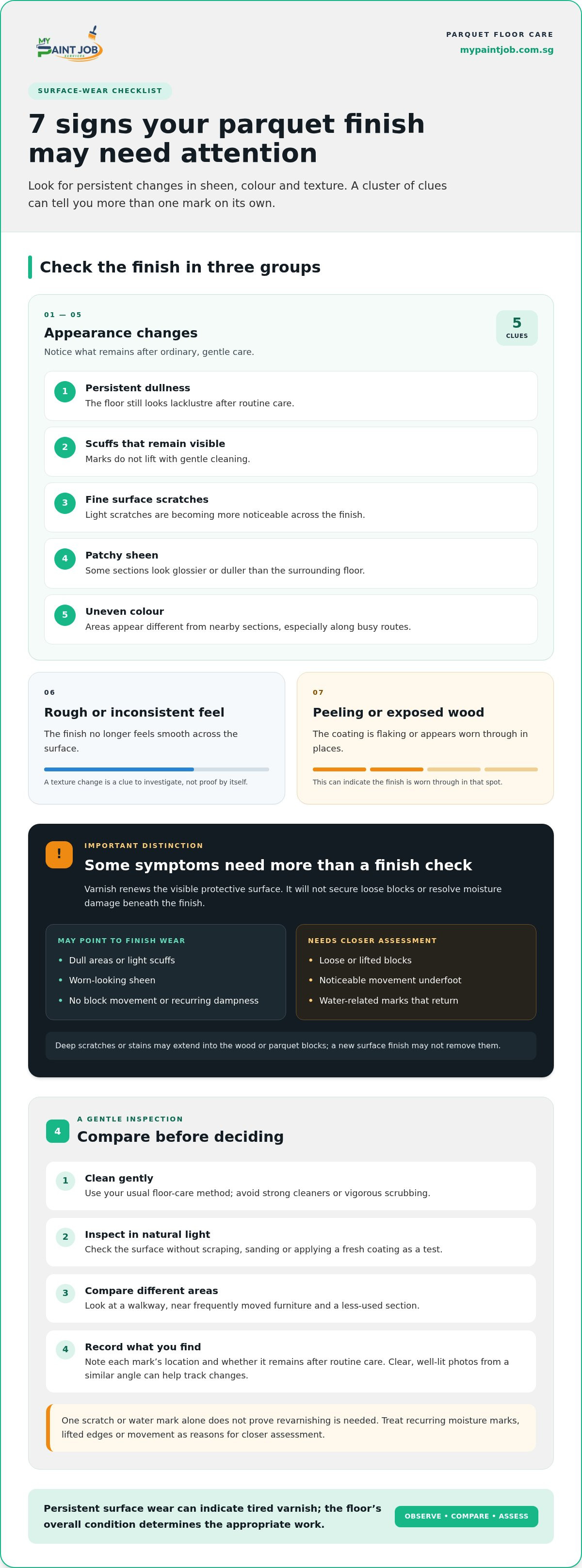
Changes in sheen, texture and surface condition can indicate that parquet’s protective finish is wearing. Look for these seven clues:
- Persistent dullness: the floor still looks lacklustre after routine care.
- Scuffs that remain visible: marks do not lift with gentle cleaning.
- Fine surface scratches: light scratches are becoming more noticeable across the finish.
- Patchy sheen: some sections look glossier or duller than the surrounding floor.
- Uneven colour: areas appear different from nearby sections, especially along busy routes.
- A rough or inconsistent feel: the finish no longer feels smooth across the surface.
- Peeling or exposed wood: the coating is flaking or appears worn through in places.
These clues often appear first in walkways or around frequently used furniture, although the pattern depends on traffic and care. Parquet is made from small pieces of wood arranged in a pattern; for an overview, see What is parquet flooring? Revarnishing renews the protective surface finish, but it does not repair every floor defect.
Does a dull, scuffed surface point to worn varnish?
A floor that simply needs cleaning may look brighter once ordinary dust or residue is removed. Signs of a worn finish tend to persist: a dull patch remains, or scuffs are still visible after gentle routine care. Compare several spots rather than judging one mark on its own. Foot traffic, furniture movement and everyday care all shape wear patterns, so different sections of the same floor may age differently.
What do patchy colour and a rough feel tell you?
Uneven colour or texture is a reason to investigate, not proof on its own that varnish has failed. Sunlight and everyday conditions can affect how wood flooring looks, while roughness may have more than one explanation. Look for a pattern: do the changes follow a busy route, cluster in one area, or appear alongside dullness and scuffs? Several persistent clues together give a clearer picture than a single mark.
Worn varnish or parquet damage? How to tell the difference
Dullness and light scuffs can point to a tired surface finish. Movement or recurring damp marks deserve a different kind of attention. The distinction matters: varnish renews the visible protective surface, but it will not secure loose blocks or resolve moisture damage beneath it. Surface appearance can suggest finish wear, while movement or moisture calls for closer assessment.
Surface-level finish wear: Dull areas, light scuffs and a worn-looking sheen, without block movement or recurring dampness. These may indicate that the varnish needs attention.
Possible underlying issue: Loose or lifted blocks, noticeable movement underfoot, or water-related marks that return. These symptoms need closer assessment before deciding on surface work.
Which symptoms suggest more than a worn finish?
Notice whether a block shifts or an edge appears lifted, rather than relying on a change in shine alone. A mark that repeatedly appears after moisture exposure is also different from ordinary surface dullness. Note where and when these signs occur, but do not diagnose the cause from a photograph or one isolated symptom. Recurring moisture marks, lifted edges or movement are reasons to arrange a professional assessment.
Can revarnishing hide deep scratches or stains?
A new surface finish may improve the appearance of surface wear, but it may not remove a deep scratch or stain that extends into the wood or parquet blocks. Applying varnish over damage does not necessarily correct what lies beneath. The floor’s condition determines the appropriate restoration approach, so consider signs your parquet floor needs revarnishing alongside any deeper marks or movement.
If the main concern is worn surface protection and the blocks appear stable, professional parquet floor varnishing can renew the finish. If moisture or movement is also present, have the floor assessed before treating varnishing as the complete solution.
How to assess parquet varnish wear before arranging work
A consistent inspection can help you describe what has changed without risking further wear. Follow a simple sequence: clean gently using your usual floor-care method, inspect in natural light, compare different areas, then record what you find. Avoid strong cleaners or vigorous scrubbing, which can affect the surface and make it harder to judge the finish.
What should you observe across the floor?
Check a walkway, the area near frequently moved furniture and a less-used section. Look for the same clues in each place, such as persistent dullness, scuffs, patchy appearance or rough texture. Comparing a busy area with a more sheltered one can show whether changes are localised or widespread. Take clear, well-lit photos from a similar angle and note each mark’s location so you can track whether it changes.
What should you avoid while checking the finish?
Do not scrape, sand or apply a fresh coating as a test. These actions can alter the floor and will not reliably show whether the varnish is the only issue. One scratch or water mark alone does not prove revarnishing is needed. Note spills, damp conditions and any recurring moisture marks as useful context, not proof of a particular cause. Record whether marks remain after routine care.
Keep your notes practical: where the change appears, whether it remains after gentle cleaning, and whether it seems to be spreading. This gives you a clearer basis for describing the signs your parquet floor needs revarnishing and distinguishing finish wear from symptoms that may need closer assessment.
If your observations point mainly to a worn surface finish, explore professional parquet floor varnishing as a practical next step. Include any concerns about recurring moisture marks or movement when describing what you have noticed.
When professional parquet revarnishing is the sensible next step
Professional parquet floor varnishing is worth considering when the main concern is a tired surface finish, rather than movement or signs of moisture beneath it. If the floor looks consistently lacklustre, shows widespread scuffing, or has an uneven finish that remains after routine care, an assessment can help establish whether varnish renewal is suitable. My Paint Job Singapore provides parquet floor varnishing, backed by over 10 years of industry experience.
What does professional varnishing help address?
When the parquet is suitable for treatment, varnishing focuses on renewing the appearance and protective finish of the wood. It can refresh a floor whose surface has lost its even, cared-for look. It is not a cure-all: varnish alone will not stabilise loose blocks, resolve moisture issues or necessarily remove deep damage within the wood. An assessment helps distinguish finish renewal from other work the floor may need, such as when property owners need to explore General Contracting and Interior Fitting-Out Services for full-scale flooring replacement or comprehensive interior refurbishment.
What is a practical next step for a worn-looking floor?
Gather what you have observed: where dullness persists, whether scuffs cover a small or broad area, and how the finish looks in different parts of the room. Note any movement, lifted edges or recurring moisture marks too. These details keep the discussion focused on the floor’s actual condition instead of assuming every visible mark has the same cause.
If the signs your parquet floor needs revarnishing point mainly to worn surface protection, explore My Paint Job Singapore’s parquet floor varnishing service. Share what you have noticed so the condition of the floor can guide the next step, rather than assuming varnishing will address unrelated damage.
Choose a clear next step for your parquet
A worn-looking floor does not automatically mean urgent work, and uncertainty does not have to leave you guessing. Decide what deserves attention: is the concern mainly the finish, or are there signs that the floor itself needs closer assessment? The signs your parquet floor needs revarnishing are most useful when considered as a pattern, not as one mark viewed in isolation.
If finish wear seems to be the main issue, professional advice can help you understand whether parquet floor varnishing is appropriate for the floor’s condition. If your notes also point to movement or recurring moisture, include that information so the next step addresses the right concern. For property owners pairing floor restoration with broader interior touch-ups, professional contractors like The Awesome Painting Services provide residential and commercial painting solutions to complete the refreshed look.
Make an informed choice, then explore professional parquet floor varnishing with My Paint Job Singapore. Describe the changes you have observed and take the next step towards a refreshed parquet finish.
Frequently Asked Questions
How often should a parquet floor be revarnished?
There is no fixed interval that suits every parquet floor; the condition of the finish matters more than a calendar date. A hallway used throughout the day may show wear sooner than a spare room with little foot traffic. Check the floor periodically and consider revarnishing when the finish remains dull or visibly worn despite routine care. These recurring changes can be signs your parquet floor needs revarnishing.
Can parquet be revarnished without sanding?
Sometimes a floor with an intact finish may suit a lighter maintenance approach, but this depends on the existing coating and its condition. If varnish has worn through or damage extends into the wood, simply applying another coat may not be appropriate. Avoid trying a new coating as a test. An assessment can help determine whether the floor needs surface renewal or more extensive preparation.
How long does parquet varnish take to dry?
Drying time varies with the varnish used and conditions during application, so there is no single reliable timeframe for every parquet floor. Follow the product-specific guidance for your project before walking on the surface or returning furniture. A finish that feels dry to the touch may not be ready for normal use. Allow the stated time rather than judging readiness by appearance alone.
Can sunlight make parquet varnish look uneven?
Sunlight can affect how wood flooring looks over time, and areas with different exposure may appear uneven in colour. Furniture or rugs can also leave sections less exposed, creating a visible contrast when items are moved. That difference alone does not prove the varnish has failed. Compare several areas under consistent natural light and look for other persistent changes before deciding what the floor needs.
Is revarnishing enough for water-damaged parquet?
Not necessarily. A new finish will not resolve the source of moisture or correct damage to the wood or parquet blocks. If a mark returns, the floor feels damp, or blocks show movement, have the condition assessed before planning varnishing. Note where the mark appears and whether it changes, then share those observations during the assessment. Addressing the underlying issue is important before considering finish renewal.