Imagine spending your entire weekend rolling a trendy “greige” onto your HDB living room walls, only to find the paint bubbling near the air-con ledge just weeks later. It’s a disheartening sight that usually stems from a few common DIY painting mistakes that even the most well-meaning homeowners overlook. You want a space that feels renewed and elegant; reach that goal by respecting the technical demands of our local climate before you ever pick up a brush.
We understand that the dream of a quick makeover is tempting, but skipping foundational steps often leads to visible brush marks or expensive damage to your parquet floors and built-in furniture. This guide will help you master the art of a flawless transformation by avoiding the environmental blunders that force many to pay for professional repairs later. We will look at the essential prep work required for Singapore’s humid environment, including the use of NEA-compliant, low-VOC paints and the plastering techniques that ensure a professional-looking finish that lasts for years.
Key Takeaways
- Learn how to perform a simple “Chalking Test” to identify degraded paint and ensure your new coat adheres perfectly to the surface.
- Discover why neglecting meticulous surface preparation is one of the most common DIY painting mistakes that leads to immediate peeling and “alligatoring.”
- Understand the technical difference between alkali-resisting sealers and standard primers to protect your walls against Singapore’s high humidity.
- Identify structural warning signs like spalling concrete and hairline cracks that require professional repair before any aesthetic work begins.
- Save your weekend by weighing the logistical benefits of professional HDB painting services against the hidden costs of tool rental and paint wastage.
Skipping Critical Surface Preparation and Cleaning
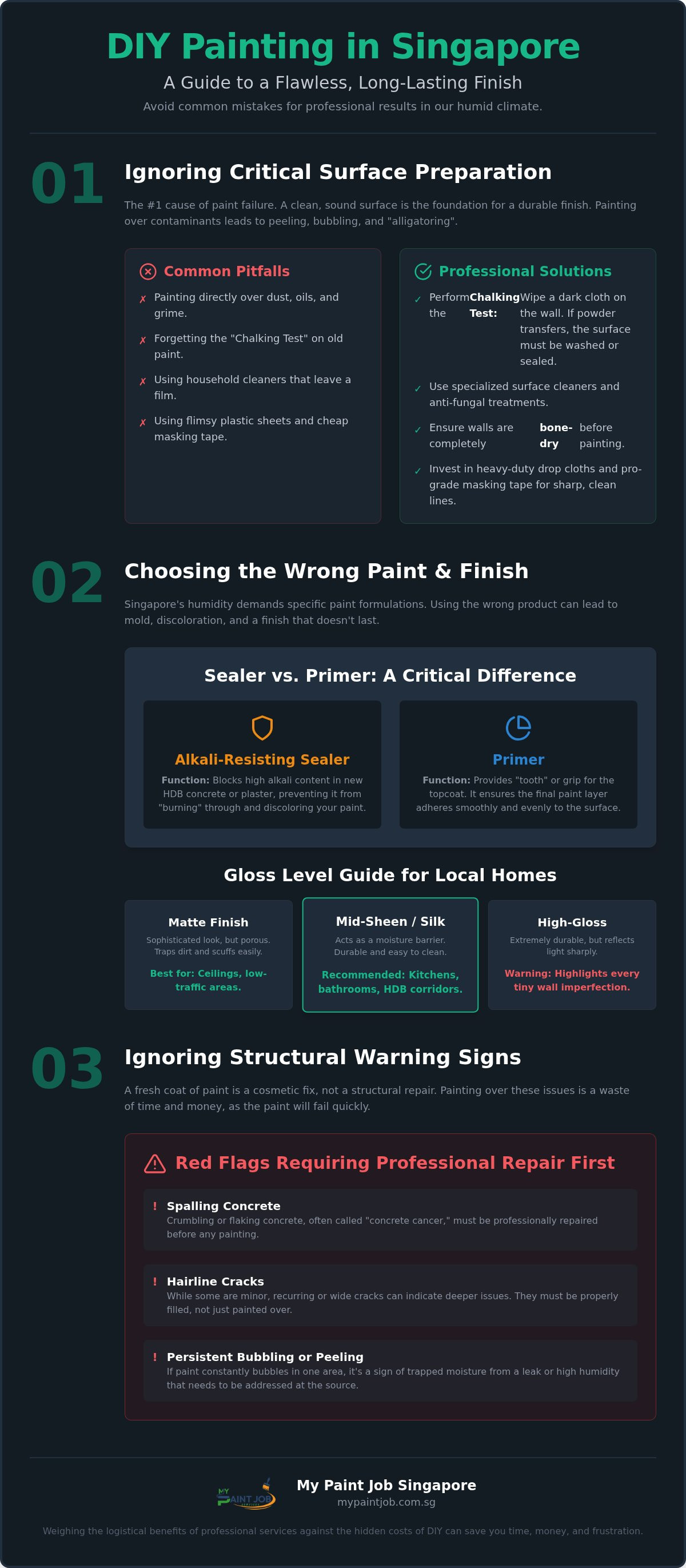
Professional decorators know that Critical Surface Preparation and Cleaning is the foundation of every high-standard finish. While it’s tempting to start rolling paint immediately, a wall that looks clean to the naked eye often hides invisible layers of dust, oils, and degraded binders. If you paint over these contaminants, the new layer cannot bond. This leads to “alligatoring,” where the paint cracks and lifts in a pattern resembling reptile skin, forcing you to scrape everything off and start again.
Before you open a single tin of paint, perform the “Chalking Test.” Run a dark cloth or your hand across the existing wall; if a fine white powder transfers to your skin, the previous paint has oxidized and must be thoroughly washed or sealed. Standard household cleaners often contain fragrances or oils that leave a film, effectively repelling your new coat. We recommend using specialized surface treatments that strip these residues without damaging the plaster underneath. In Singapore’s humidity, mold spores are also a constant threat. Simply wiping them away with a damp cloth is a temporary fix that spreads the infection. You must treat the area with a chemical anti-fungal solution to neutralize the spores at their root.
The Danger of Painting Over Damp or Oily Surfaces
Kitchen walls are notorious for accumulating a fine mist of cooking oil that acts like a non-stick coating for your rollers. Even high-quality acrylic paints will slide or bead up on these surfaces instead of soaking in. Moisture trapped behind paint causes bubbling in humid climates. Ensure every surface is bone-dry and degreased to achieve that smooth, professional depth of color you desire.
Failing to Protect Your Assets
Many common DIY painting mistakes involve the surrounding environment rather than the wall itself. Using thin, flimsy plastic sheets is a risk; they tear easily under ladders or shoes, allowing paint to seep onto your expensive parquet flooring. Protect your investment by using heavy-duty drop cloths or canvas. Invest in professional-grade masking tape for your skirting boards and light switches. This creates the crisp, sharp lines that distinguish a master’s work from a rushed amateur job.
Choosing the Wrong Paint and Finish for Singapore’s Humidity
Selecting a paint color is the fun part, but choosing the wrong technical formula is where many projects fail. In Singapore’s tropical climate, humidity is your constant opponent. One of the most common DIY painting mistakes is treating all paints as equal. Without the right additives, your beautiful new walls can become a breeding ground for mold within months. Modern homeowners should prioritize paints with anti-fungal properties and low VOC levels. As of January 2026, the National Environment Agency (NEA) has enforced stricter bans on formaldehyde in interior paints, making eco-friendly selections a health necessity rather than just a trend.
The role of specialized additives cannot be overstated. High-moisture areas like kitchens and bathrooms require moisture-resistant finishes that prevent water from seeping into the substrate. If you overlook these performance features, you’ll likely face peeling or bubbling before the year is out. Using the wrong product is just as problematic as Ignoring Structural Issues, as both lead to a total failure of the paint film that requires a complete strip-down to fix.
Sealer vs. Primer: The Technical Must-Know
Many people use these terms interchangeably, but they serve different functions on masonry. A sealer is specifically designed to resist the high alkali content in new plaster or HDB concrete walls. If you skip this, the alkali will “burn” through your topcoat, causing white salt patches or discoloration. A primer, conversely, focuses on providing “tooth” for the next layer to grip. Relying on “2-in-1” products is a risk on porous Singaporean walls; these often lack the depth of protection required for long-term durability.
Gloss Levels and Room Functionality
Finish matters as much as color. Matte finishes look sophisticated but are porous and trap dirt easily. In high-traffic HDB corridors, a matte wall will show permanent scuff marks the moment a grocery bag or bicycle grazes it. For bathrooms and kitchens, we recommend mid-sheen or silk finishes. These act as a moisture barrier, preventing steam from soaking into the plaster. Be careful with high-gloss options; they reflect light so sharply that every minor DIY rolling error or uneven patch becomes painfully visible. If you’re unsure which finish suits your space, our team at My Paint Job Singapore can guide you toward a durable, professional choice.
Ignoring Structural Issues Like Cracks and Spalling Concrete
A fresh coat of paint can transform a room, but it cannot mend a failing structure. One of the most overlooked common DIY painting mistakes is treating structural damage as a purely cosmetic flaw. While a quick layer of paint might hide a hairline crack for a few days, the natural movement of your home will cause that crack to reappear within weeks. These fissures often indicate that the plaster has separated from the masonry, requiring more than just a brush-over to fix. If you ignore these signs, you’re simply delaying an inevitable and more expensive repair.
In many Singaporean homes, particularly older HDB units, spalling concrete is a serious concern. This occurs when the steel reinforcement bars inside the concrete slab begin to rust and expand, causing the concrete to flake or fall off. You can’t hide the “rusty rebar” problem with paint; the moisture and rust will simply push the new paint layer off the surface. Another warning sign is a “hollow” sound when you tap your ceiling or walls. This suggests deep-seated delamination that needs professional attention before you even think about aesthetics. Ignoring these signals is a risk to both your home’s beauty and its safety.
The Role of Skim Coating in Wall Restoration
If your walls are riddled with small dents, old nail holes, or uneven patches, simple spot-patching won’t suffice. You’ll need to plaster walls to achieve that high-end, smooth appearance. Professional wall restoration and plastering creates a uniform, glass-like surface, ensuring your premium paint looks its best. It’s the difference between a DIY project that looks “good enough” and a home that looks truly brand new.
Dealing with Seepage and Bubbling
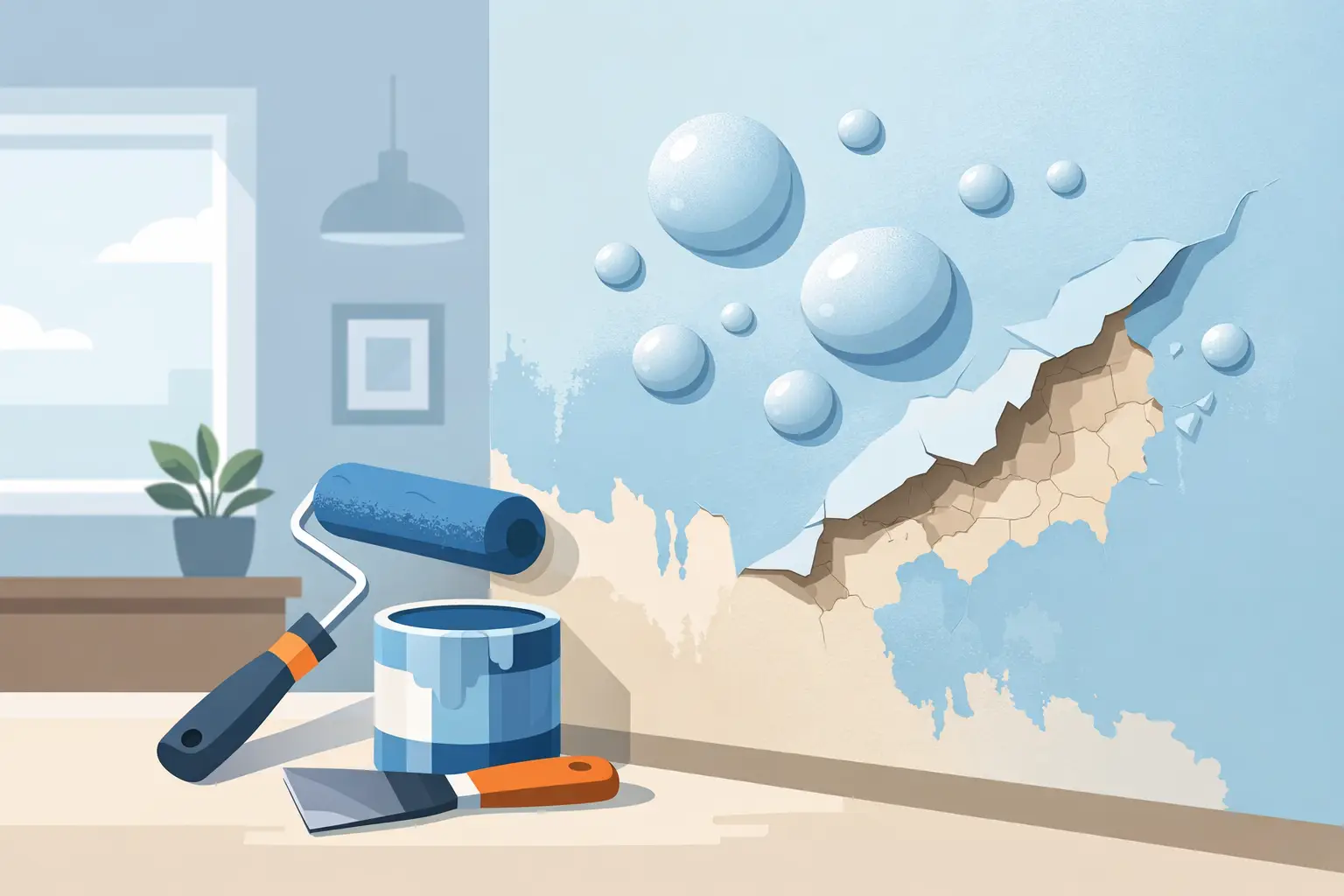
Wall seepage is a common headache in our humid climate, often caused by leaking pipes or external rain penetration. You must trace the moisture to its source before applying any waterproof sealers. Painting over a damp wall is the primary cause of “paint rot,” where the paint film fails to cure and becomes a soggy, bubbling mess. If you’ve noticed persistent damp patches or bubbling, it’s time to seek a permanent fix. Reach out to us for an expert assessment of your spalling concrete repair needs to ensure your home remains safe and beautiful.
When to Trade the Roller for Professional HDB Painting Services
While the DIY route appears budget-friendly on paper, the true cost often hides in the details. You might spend hundreds of dollars on premium rollers, ladders, and heavy-duty drop cloths that you’ll only use once. When you factor in paint wastage from poor application and the loss of your precious weekends, the “savings” quickly vanish. Correcting common DIY painting mistakes after they happen is often more expensive than hiring a specialist from the start. Trusting a professional ensures your property is in safe, capable hands without the logistical nightmare of self-managed prep.
Professional hdb painting services singapore remove the burden of furniture movement and post-job cleanup entirely. A professional application doesn’t just look better; it lasts significantly longer. While a DIY effort might start showing wear or peeling within two years, a masterfully applied coat by an experienced team typically remains pristine for five to seven years. This longevity is a direct result of the technical accuracy in surface treatment and environmental resistance we’ve highlighted throughout this guide.
The Efficiency of a Professional Crew
Speed is a major advantage for busy homeowners. A dedicated team can complete a 5-room HDB flat in a few days, whereas a solo DIY project often drags on for weeks of disrupted living. Secure a professional-looking finish by engaging our team for a consultative, high-standard service. You gain the peace of mind that comes with a service guarantee and expert color consultation, ensuring the final result reflects your individual style perfectly.
Investing in Your Property’s Value
If you are planning to sell or rent your property, a “showroom look” is essential for a high valuation. A sloppy DIY job with visible brush marks or uneven patches can actually decrease your home’s market appeal. Buyers notice these details immediately. A professional finish signals that the property has been meticulously maintained, which increases your leverage during negotiations. Don’t leave your biggest asset to chance. Book a hassle-free consultation with My Paint Job Singapore today and let us transform your space with integrity and craftsmanship.
Achieve a Lasting Finish for Your Singapore Home
A professional home transformation is about more than just a new shade of sand or sage. It’s about ensuring the substrate is healthy and the application is resilient against our tropical climate. By understanding the common DIY painting mistakes that lead to premature peeling and visible scuffs, you’re already ahead of most homeowners. You now know that skipping sealers or ignoring spalling concrete is a risk that compromises your property’s value and aesthetic appeal.
If you prefer a result that carries the hallmark of meticulous craftsmanship, we are here to help. At My Paint Job Singapore, we bring over 10 years of local industry experience to every project, whether you’re refreshing an HDB flat, a condo, or a landed property. We handle the heavy lifting, including comprehensive furniture protection and thorough cleanup, so you can enjoy your renewed space without the logistical stress.
Take the first step toward a showroom-quality finish today. Get a Professional Quote from My Paint Job Singapore and let us turn your vision into a durable reality. Your home deserves a finish that stands the test of time and reflects your personal style with certainty.
Frequently Asked Questions
Can I paint over moldy walls if I use a mold-resistant paint?
No, painting directly over mold is one of the most common DIY painting mistakes. Even high-quality mold-resistant paint is a preventative measure, not a cure for an active infestation. You must chemically treat the surface with an anti-fungal wash or a bleach solution to kill the spores at their root. If you skip this step, the mold will continue to grow beneath the new layer, eventually causing the paint to bubble and peel away from the wall.
How long should I wait between coats of paint in Singapore’s humid weather?
Wait at least two to four hours between coats, though high humidity can extend this timeframe. While the wall might feel dry to the touch within thirty minutes, the paint film needs time to cure before it can support another layer. Applying a second coat too soon can cause the first layer to lift or “drag,” resulting in an uneven texture. Use a fan to improve air circulation and help the moisture evaporate more efficiently during the drying process.
Do I really need a sealer if the current paint is still in good condition?
Yes, applying a sealer is a vital step for ensuring a professional-grade bond. Over time, old paint can “chalk” or oxidize, creating a powdery residue that prevents new paint from sticking. A sealer acts as a bridge between the old substrate and the new topcoat, providing a stable surface for the paint to grip. This is especially important when you are switching between different paint formulas or moving from a dark color to a lighter shade.
What is the best way to fix a “patchy” look after the paint has dried?
The best way to fix a patchy finish is to lightly sand the uneven areas once they are completely dry. After removing the dust with a damp cloth, apply a final, consistent coat over the entire wall rather than just spot-painting the affected areas. Patchiness, or “flashing,” often occurs due to uneven roller pressure or using a “dry roller” that lacks enough paint. Consistent application across the whole surface ensures uniform light reflection and a smooth, showroom look.
Is it cheaper to DIY or hire a professional painting service for an HDB flat?
DIY has a lower upfront cost, but hiring a professional is often more cost-effective when you consider long-term durability. You must factor in the price of high-quality rollers, brushes, ladders, and heavy-duty drop cloths, which are expenses that add up quickly. Professional services include meticulous prep and furniture protection, preventing common DIY painting mistakes like paint splatters on parquet floors. A professional job typically lasts five to seven years, whereas a DIY effort may require a touch-up within two years.