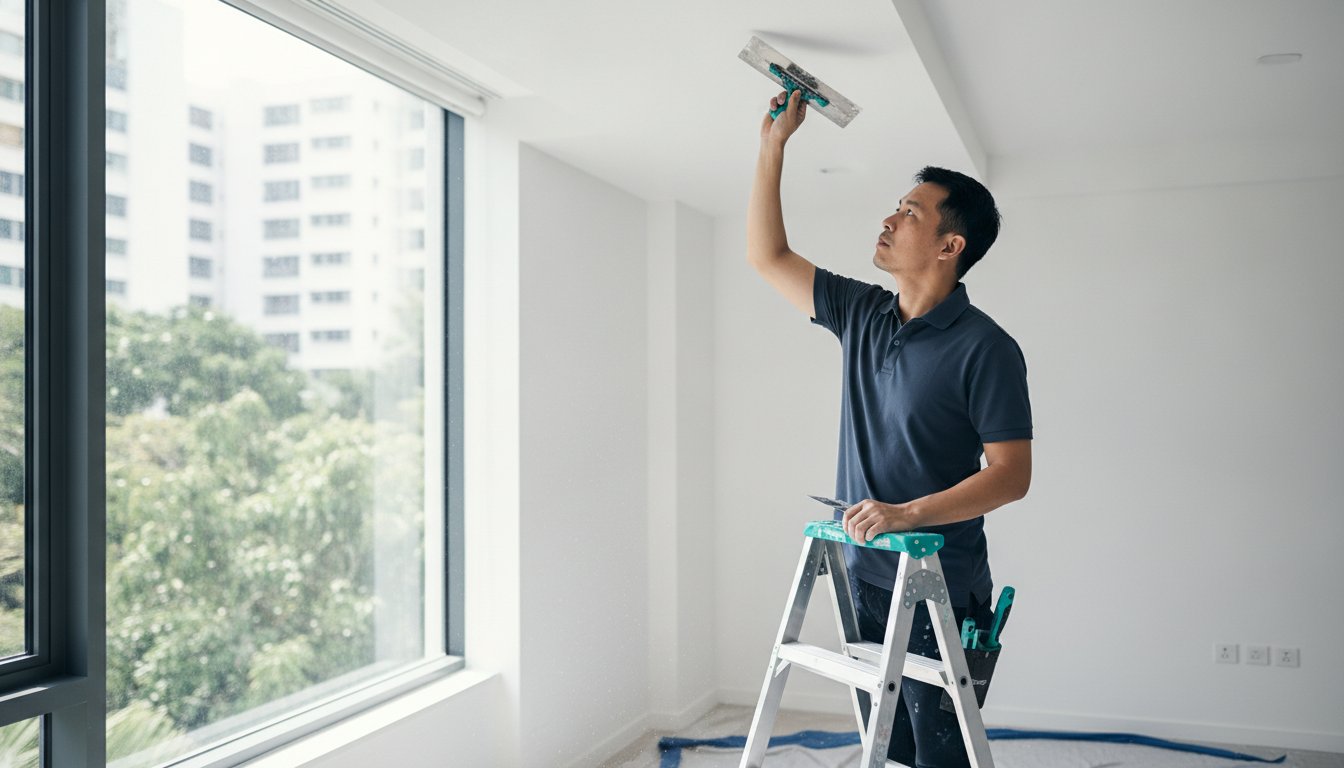
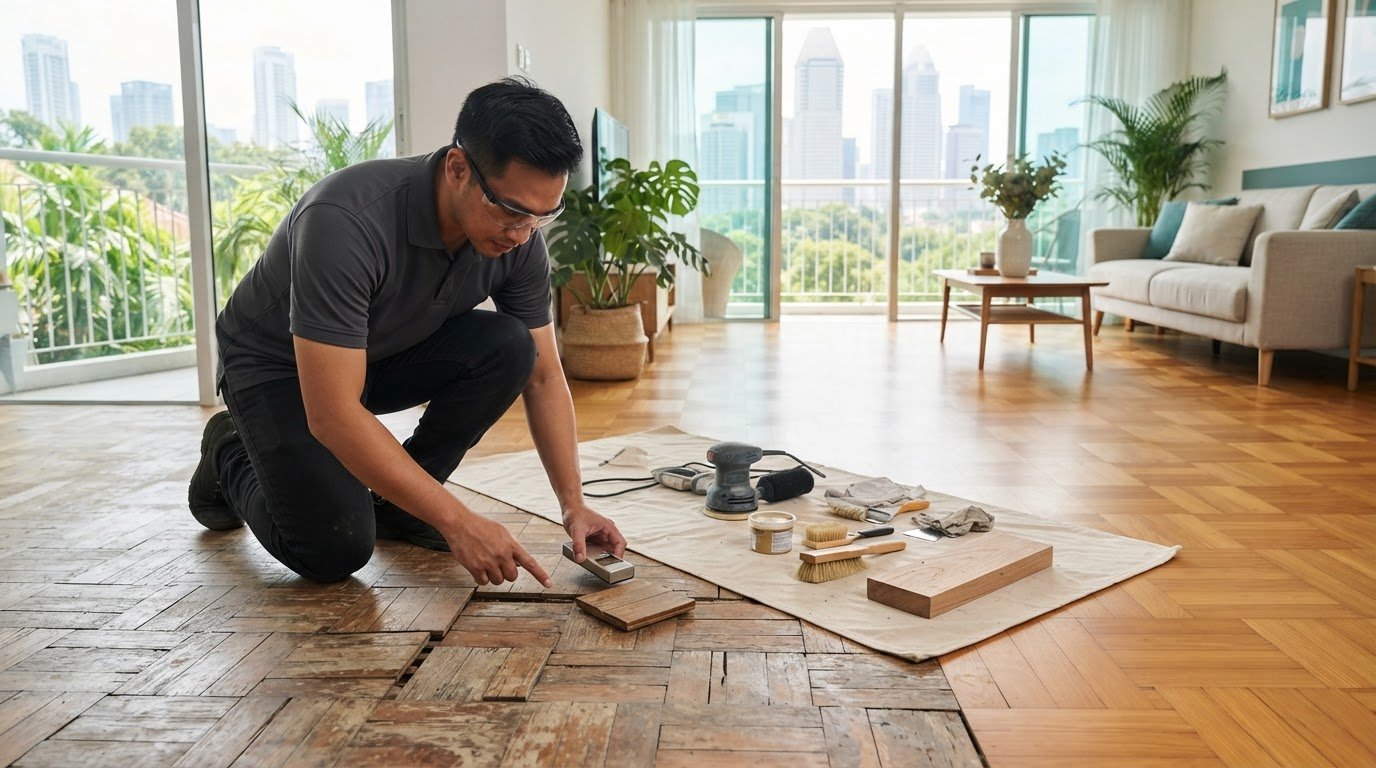
Your parquet’s age doesn’t determine whether it can be restored; its condition does. If you’re considering how to restore old parquet flooring, begin by checking for loose or lifting blocks, water damage, deep stains, gaps and creaking. Some wear affects only the finish, while other signs point to damage that should be addressed before sanding.
Start with a careful inspection rather than reaching for a sander or coating. The wrong treatment can leave marks or worsen a vulnerable floor, and sanding calls for specialised equipment. This guide explains how to assess worn parquet, choose an approach that fits its condition, and understand what restoration can and can’t resolve. You’ll also find a practical sequence for repairs, surface preparation and refinishing, along with ways to care for the renewed floor. When wear goes beyond simple surface care, professional sanding or varnishing may be the better route. With the right preparation and treatment, old parquet may be renewed without replacing the entire floor.
Key Takeaways
- Check for lifting blocks, water damage, gaps and deep stains before deciding how to restore old parquet flooring.
- Match the treatment to the wear: gentle cleaning may help with surface dirt, while loose or damaged blocks may need repair.
- Understand the restoration sequence before work begins, from clearing the room and assessing the floor to repairs and refinishing.
- Protect the renewed finish with gentle cleaning and prompt attention to moisture. Professional sanding or varnishing may suit more extensive wear.
How to assess old parquet flooring before restoring it
Restore sound blocks where possible rather than assuming the whole floor needs replacing. Age alone doesn’t determine whether parquet can be renewed. The condition of the finish, the stability of the blocks and the floor’s construction matter more. Parquet varies in materials and construction, so this overview of the history and types of parquet flooring provides background, but the floor itself should guide your next step.
Check the finish and block stability before choosing a treatment. Inspect the floor in good light, then walk over it carefully to identify areas that look or feel different. Note the location of each concern so you can describe its extent accurately. Look for:
- A dull, cloudy or worn-looking finish
- Surface scratches that appear limited to the coating
- Loose, lifting or missing blocks
- Gaps between blocks or uneven areas
- Dark marks or stains that remain after gentle surface cleaning
Which signs suggest surface wear rather than deeper damage?
A dull finish or light scratches may indicate surface wear, especially if the blocks remain firm and level. Movement underfoot, missing pieces, widening gaps or persistent dark staining can point to a problem beyond the coating. These signs don’t establish the cause on their own. If movement or deeper damage affects a broad area, arrange a closer assessment before sanding. Refinishing can improve the surface, but it won’t stabilise loose blocks or resolve underlying damage.
When should you pause before attempting restoration?
Pause before applying a coating or attempting DIY sanding if blocks are loose, moisture damage is a concern, or you don’t know which finish was previously used. If the issue stems from leaks or underlying water damage rather than everyday humidity, residential water mitigation specialists like DK Production Restoration focus on structural drying and remediation before wood surfaces can be safely refinished. Avoid covering the area or starting abrasive work until the floor has been assessed. A professional assessment can help distinguish finish wear from issues that need repair first, so the restoration method suits the floor.
Choose the right parquet restoration method for the floor
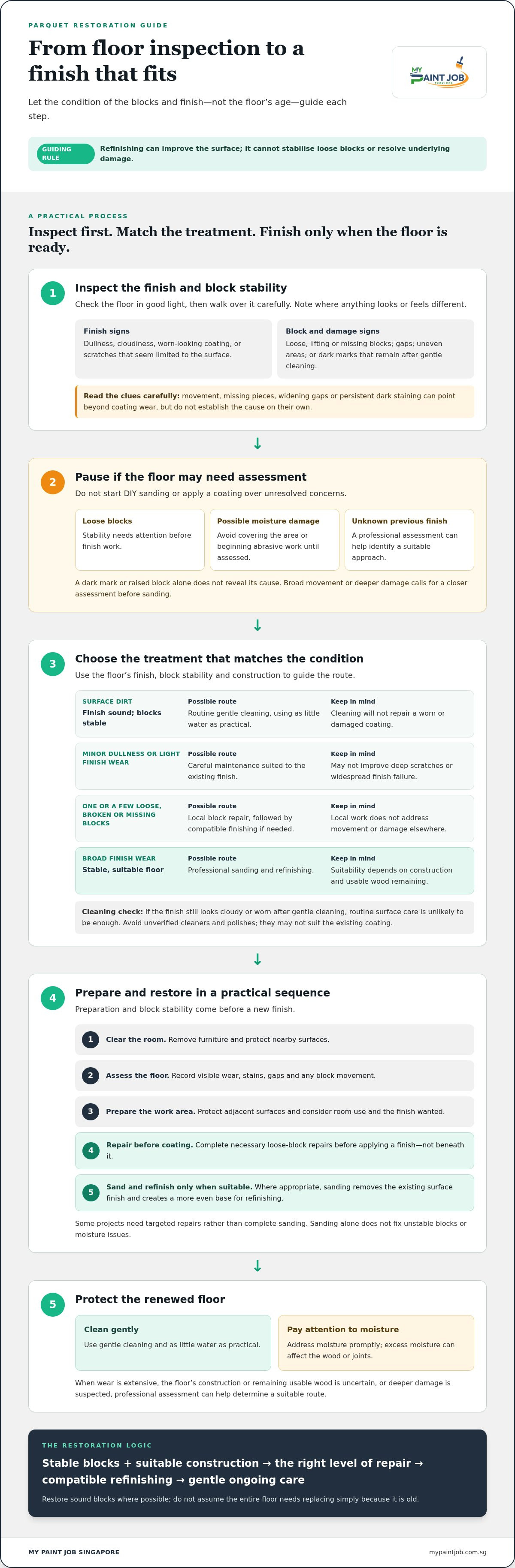
Choose a treatment that addresses the wear you can see, not simply the floor’s age. The right method depends on both the finish and the condition of the blocks. Use this comparison as a starting point after inspecting the floor:
| Floor condition | Possible treatment | Key limitation |
|---|---|---|
| Surface dirt, with a sound finish and stable blocks | Routine gentle cleaning | Won’t repair a worn or damaged coating |
| Minor dullness or light finish wear | Careful, finish-specific maintenance | May not improve deep scratches or widespread finish failure |
| One or a few loose, broken or missing blocks | Local block repair, followed by compatible finishing if needed | Doesn’t address movement or damage elsewhere |
| Broad finish wear on a suitable, stable floor | Professional sanding and refinishing | Suitability depends on the floor’s construction and usable wood remaining |
When can careful cleaning or minor care be enough?
If the floor looks dull from everyday dirt but the finish is intact and the blocks are stable, start with gentle cleaning. Use as little water as practical; excess moisture can affect the wood or joints. Avoid unverified cleaners and polishes because they may not suit the existing coating. If the finish still looks cloudy or worn after cleaning, routine surface care is unlikely to be enough.
When might sanding and varnishing be appropriate?
Sanding and refinishing can renew broader areas of wear when the parquet’s construction and remaining usable wood make the floor suitable. It isn’t right for every floor, and sanding won’t fix unstable blocks or moisture issues by itself. For general context on professional wood-floor practices, consult the National Wood Flooring Association resource. My Paint Job Singapore provides professional parquet sanding and varnishing. Assessing the floor first helps match the finish work to its condition and avoid unsuitable DIY abrasion.
How to prepare and restore old parquet in a practical sequence
A clear sequence keeps restoration focused and prevents a new finish from being applied over unresolved damage. If you’re learning how to restore old parquet flooring, treat preparation and block stability as the foundation for a consistent result.
What should homeowners do before restoration starts?
Clear furniture from the work area and protect adjacent surfaces before work begins. Note scratches, gaps, stains and any blocks that move. Also consider how the room is used and the finish you want. These details help shape the preparation and treatment. Don’t rush into sanding: the condition of the floor determines whether it needs local repairs or broader refinishing.
What happens during sanding, repair, and refinishing?
The scope depends on the floor. Some projects need targeted repairs rather than complete sanding. Where sanding is suitable, preparation removes the existing surface finish and creates a more even base for refinishing. Any necessary loose-block repairs should be completed before coating, not hidden beneath it. My Paint Job Singapore provides parquet sanding and varnishing, with furniture protection and movement, as well as post-project clean-up as part of the service experience.
A stable floor and careful preparation underpin a consistent finish. A practical sequence is:
- Clear the room. Remove furniture and protect nearby surfaces.
- Assess the floor. Record visible wear, stains, gaps and any block movement.
- Prepare the work area. Get the floor and surrounding space ready for the planned treatment.
- Repair as appropriate. Address loose or damaged blocks before applying a finish.
- Refinish selectively. Sand and apply a suitable coating only if the floor’s construction and condition allow.
- Care for the renewed surface. Follow finish-specific guidance and protect the floor as it settles into use.
My Paint Job Singapore brings over 10 years of industry experience to parquet sanding and varnishing projects, with preparation that includes furniture protection and movement, followed by post-project clean-up.
How to protect restored parquet and decide on professional help
A renewed finish needs thoughtful care. In Singapore’s humid conditions, avoiding standing moisture is an important part of looking after wood flooring. Wipe up spills promptly and don’t leave water on the surface. Aftercare won’t correct an unsuitable coating or unstable blocks, but it can help maintain the finish when you follow its specific care requirements.
How can you care for parquet after restoration?
Follow the coating manufacturer’s instructions for curing and ongoing care. Suitable methods depend on the finish applied. Clean gently, remove grit without abrasive tools, and use only products recommended for that coating. Wipe up spills promptly rather than letting moisture stand. If you’re unsure whether a cleaner or maintenance product is compatible, don’t test it across the floor. Follow the finish guidance first.
When is professional parquet restoration the sensible next step?
Arrange a professional assessment if blocks are loose, wear is extensive, the existing coating is uncertain or moisture is a concern. Sanding or applying a new coating without understanding the floor’s condition may lead to an unsuitable treatment. A specialist can assess whether sanding, varnishing or a more limited approach fits the project. This is a practical way to decide how to restore old parquet flooring without risking unnecessary damage.
My Paint Job Singapore provides parquet sanding and varnishing, with project preparation that includes furniture protection and movement, followed by post-project clean-up. The right scope depends on the floor and the finish you want. For another room, remember that parquet and marble need different care: marble floor polishing is a separate treatment for stone surfaces.
If your floor needs more than routine care, professional parquet sanding or varnishing can be a considered next step. My Paint Job Singapore can help plan an approach suited to the floor, with preparation and clean-up included in the project experience.
Plan the next chapter for your parquet floor
Choose a next step that suits how you use the room, not just how you want the floor to look. Before work begins, consider your preferred finish, the amount of daily foot traffic and any areas that still concern you. These details help shape a practical restoration plan and avoid committing to more work than the floor needs.
If the surface needs more than routine care, professional sanding or varnishing may be suitable, depending on the parquet’s condition and construction. My Paint Job Singapore provides parquet sanding and varnishing to help renew the floor. Explore parquet floor sanding and varnishing with My Paint Job Singapore.
Knowing how to restore old parquet flooring starts with a careful assessment, followed by a treatment that suits the floor and care for the finish that follows. Contact My Paint Job Singapore to discuss parquet sanding or varnishing for your floor.
Frequently Asked Questions
Can old parquet flooring be restored without sanding?
Yes, if the main issue is surface dirt or mild dullness and the coating is still in reasonable condition. Gentle cleaning may improve the appearance without removing the finish. A small area of damage might need a local repair instead. Avoid applying a new coating over the old one without knowing whether the finishes are compatible, as poor adhesion can affect the result.
Is it better to restore old parquet flooring or replace it?
Restoration may make sense if the blocks are stable and enough usable wood remains for the proposed treatment. Replacement may be more appropriate if damage is extensive or the floor cannot be restored effectively. Compare the repairs needed with the result you want rather than deciding based on age alone. An assessment of the floor can clarify whether restoration is a practical option.
What should I do if parquet blocks are loose or lifting?
Pause sanding, coating or attempts to force the blocks back into place. Note which areas move and whether the issue appears isolated or spread across the room. Don’t assume the cause from appearance alone, and avoid household glue, which may complicate a proper repair. Have the floor assessed so the necessary repairs can be identified before refinishing.
How long does it take to restore parquet flooring?
There isn’t one reliable duration for every project. Timing depends on the floor area, the repairs and preparation needed, the restoration method, and the coating’s instructions for curing and use. Local repairs differ from broader sanding and refinishing. Before planning furniture movement or room use, base the schedule on the project’s scope and the finish manufacturer’s guidance, not a general estimate.
How do I maintain parquet flooring after it has been restored?
Use felt pads beneath furniture legs and rugs in busy areas to reduce scuffs and dents. Remove grit regularly with a soft brush or vacuum attachment, and avoid steam mops, which can expose wood and joints to heat and moisture. For deeper cleaning, use a method approved for the installed finish. Keep heavy furniture off the surface until the coating instructions say it’s ready.