Peeling paint in Singapore is rarely a failure of the paint itself; it’s almost always a failure of the surface preparation under the pressure of our intense tropical humidity. You might have tried to scrape and patch the area yourself, only to see the same ugly flakes return a few months later. Dealing with paint peeling on walls Singapore residents frequently encounter is a common frustration for HDB and condo owners alike, especially when you worry that the damage might hide deeper issues like water leaks or spalling concrete. It’s stressful to see your living room aesthetic ruined by bubbling surfaces that simply won’t stay fixed.
We believe your home should be a sanctuary of quality craftsmanship, not a source of maintenance anxiety. You’ll discover the technical root causes of wall failure and the professional restoration steps required to ensure a smooth, durable finish that lasts through 2026 and beyond. This guide previews the essential role of specialized sealers, the importance of addressing moisture at the source, and how a meticulous approach to plastering can finally end the cycle of peeling walls for good.
Key Takeaways
- Understand why Singapore’s constant 80%+ humidity causes delamination and why simple DIY patches often fail within months.
- Learn how high-performance sealers act as a technical “lock” for masonry surfaces to prevent moisture from lifting your new paint.
- Discover the essential professional steps for treating paint peeling on walls singapore, including comprehensive scraping of hollow sections and removing efflorescence.
- Identify the best anti-mould and moisture-resistant paint ranges designed specifically for the unique tropical climate of HDBs and condos.
- Explore how a partnership with experienced specialists provides a hassle-free restoration that includes furniture protection and meticulous post-project cleanup.
Why Paint Peeling on Walls in Singapore is a Recurring Problem
Peeling paint, technically known as delamination, occurs when the bond between the paint film and the wall substrate fails. In our experience with local homes, this is rarely a simple case of old age. Singapore’s average humidity often exceeds 80%, creating a relentless moisture load on your interior walls. This moisture doesn’t just sit on the surface; it penetrates the porous concrete of HDB and condo units. When water enters the wall, it triggers an “alkali attack.” This chemical reaction draws out white, salty deposits called efflorescence, which physically push the paint film away from the masonry. Understanding these common causes of paint failure is the first step toward a permanent fix.
The Impact of High Humidity and Poor Ventilation
Bathrooms and kitchens usually show the first signs of paint peeling on walls singapore residents encounter. Steam from daily showers and cooking creates a high-moisture environment where condensation settles on the ceiling and upper walls. If you use low-quality, non-breathable paints, moisture becomes trapped behind the film. This creates pressure that leads to bubbling and eventual flaking. Open your windows during and after showers to reduce the thermal stress on your wall coatings.
Hidden Water Leaks and Seepage Issues
Not all peeling is merely environmental. If you notice localized dampness or brownish stains alongside the peeling, you might be facing a hidden water leak from a neighbor’s unit or an external wall crack. It’s vital to distinguish between cosmetic issues and structural warnings. Look for signs of spalling concrete, such as cracks or exposed rusty rebar. Addressing these structural failures early prevents the damage from spreading and ensures your property remains safe and durable.
The Science of Adhesion: Why You Can’t Just Paint Over It
Many homeowners try to solve paint peeling on walls singapore by simply applying a fresh coat over the visible damage. This approach almost always leads to failure within a few months. When you paint over existing flakes, the new layer creates tension as it dries. This tension pulls on the already weakened bond of the old paint, causing it to detach even faster. True restoration requires a deep understanding of surface tension and molecular bonding. You must remove the unstable layers entirely to reveal a sound substrate that can support a new finish.
Proper adhesion starts with a clean surface. Dust, oils, and old chalky residue act as barriers that prevent new paint from “biting” into the wall. Modern house painting services in 2026 now prioritize moisture-resistant base layers that lock the masonry surface. By following BCA’s Good Industry Practices for Painting, professional teams ensure that every layer is chemically compatible with the one beneath it. This technical accuracy is what distinguishes a lasting renovation from a temporary cosmetic fix.
Sealer vs. Primer: Choosing the Right Foundation
Don’t confuse a sealer with a basic primer. While a primer provides a surface for the topcoat to grip, a high-quality sealer actually penetrates the porous concrete. This is essential for HDB walls that have become chalky or brittle over time. Use an oil-based sealer for problematic areas where moisture has previously caused paint peeling on walls singapore. These specialized formulas seep into the masonry pores to create a waterproof barrier, effectively “locking” the wall against future alkali attacks and moisture seepage.
The Danger of “Quick Fix” DIY Repainting
Avoid the temptation of the “patch and paint” method. This shortcut ignores the moisture levels trapped deep within your masonry. Professional specialists use high-precision moisture meters to verify that a wall is sufficiently dry before any coating begins. If you aren’t sure about the state of your walls, consider a professional site inspection to identify hidden dampness before you invest in premium paint. Protecting your home requires a partner who values long-term durability over a fast, temporary aesthetic.

The Professional Restoration Process for Peeling Walls
Achieving a durable finish requires a systematic approach that addresses the root of the failure. We don’t just patch the flakes; we restore the structural integrity of the wall surface. To permanently resolve paint peeling on walls singapore homeowners must follow a rigorous four-step restoration cycle:
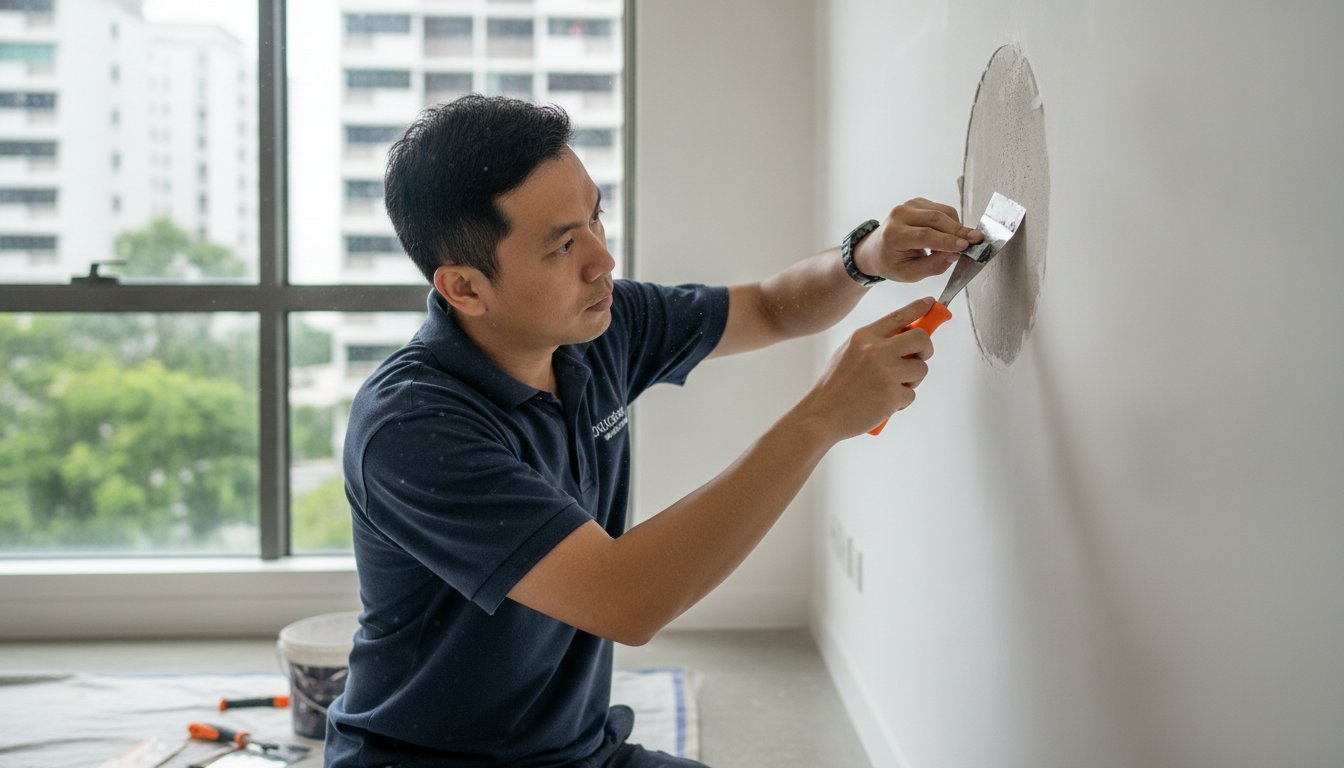
- Step 1: Comprehensive Scraping. Remove all loose, flaking, or “hollow” sections using a steel scraper. You must continue scraping until you reach a firm, sound edge where the existing paint still adheres strongly to the masonry.
- Step 2: Thorough Sanding and Cleaning. Sand the exposed concrete to remove efflorescence and residual chalk. This step is critical to ensure the next layer can bond directly to the clean substrate.
- Step 3: Chemical Neutralization. Apply a high-quality alkaline-resistant sealer. This layer neutralizes the wall’s pH level and prevents the “alkali attack” that often pushes paint off the surface.
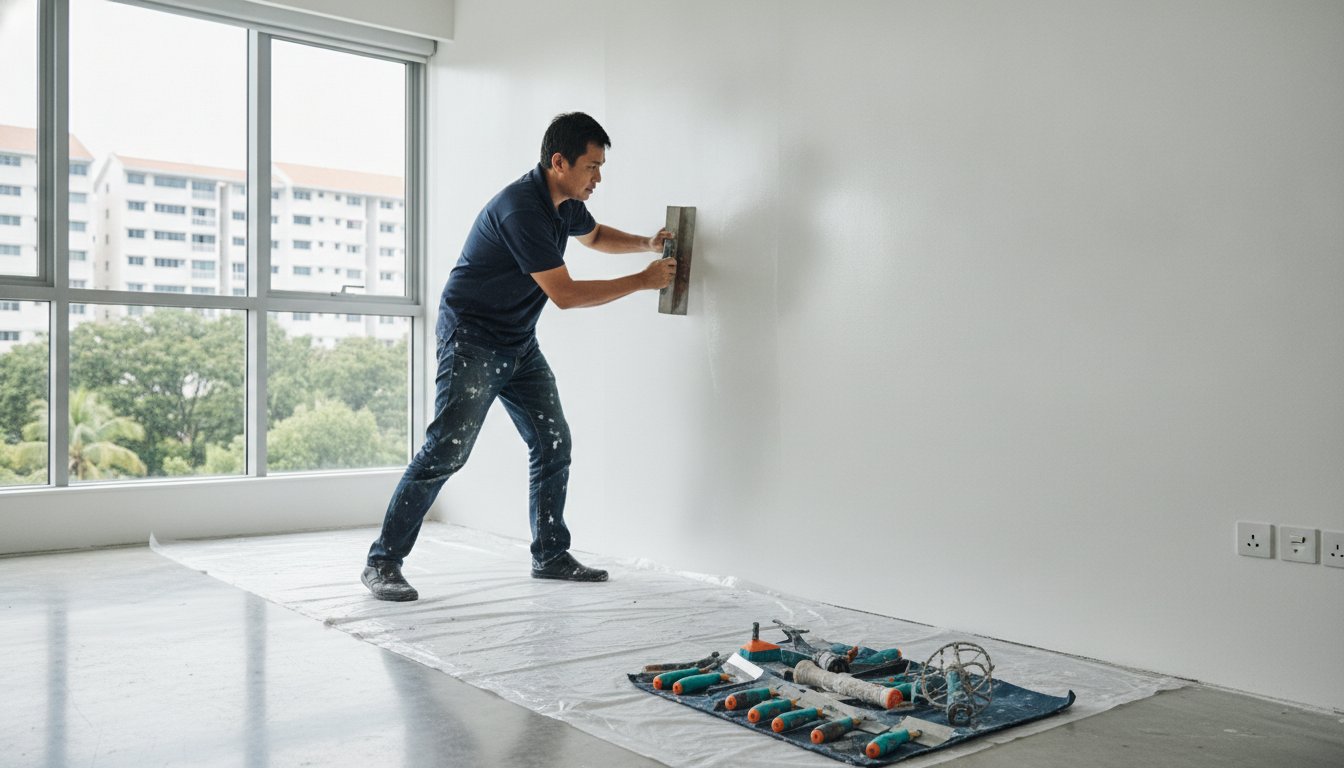
- Step 4: Surface Leveling. Utilize professional plastering and skim coating to fill the craters left by the removed paint and create a perfectly flat, smooth surface.
Meticulous Surface Preparation
Preparation is the most labor-intensive part of the job, but it’s where the longevity of your wall is determined. Our team uses a “hollow test” by tapping the wall to identify areas where the paint has detached but hasn’t yet fallen off. We take great pride in our craftsmanship, ensuring that every loose fragment is cleared before the first drop of sealer is applied. We manage the heavy dust generated during this phase by implementing strict furniture protection and post-project cleanup protocols. This ensures your home remains liveable while we perform the necessary repairs.
Skim Coating for a Flawless Finish
Once the wall is sealed and stable, the surface will likely be uneven due to the varying depths of old paint layers. Apply a fine layer of skim coat to bridge these gaps and restore an aesthetic smoothness. It’s essential to allow the plaster to dry completely before applying any topcoat. Trapped moisture in the plaster is a common cause of failure in many DIY projects. For a professional result that withstands the humidity of 2026, patience during the drying phase is non-negotiable.
Secure a smooth, flake-free home with our expert plastering and restoration services today.
Selecting Durable Paint Solutions for Singapore Homes
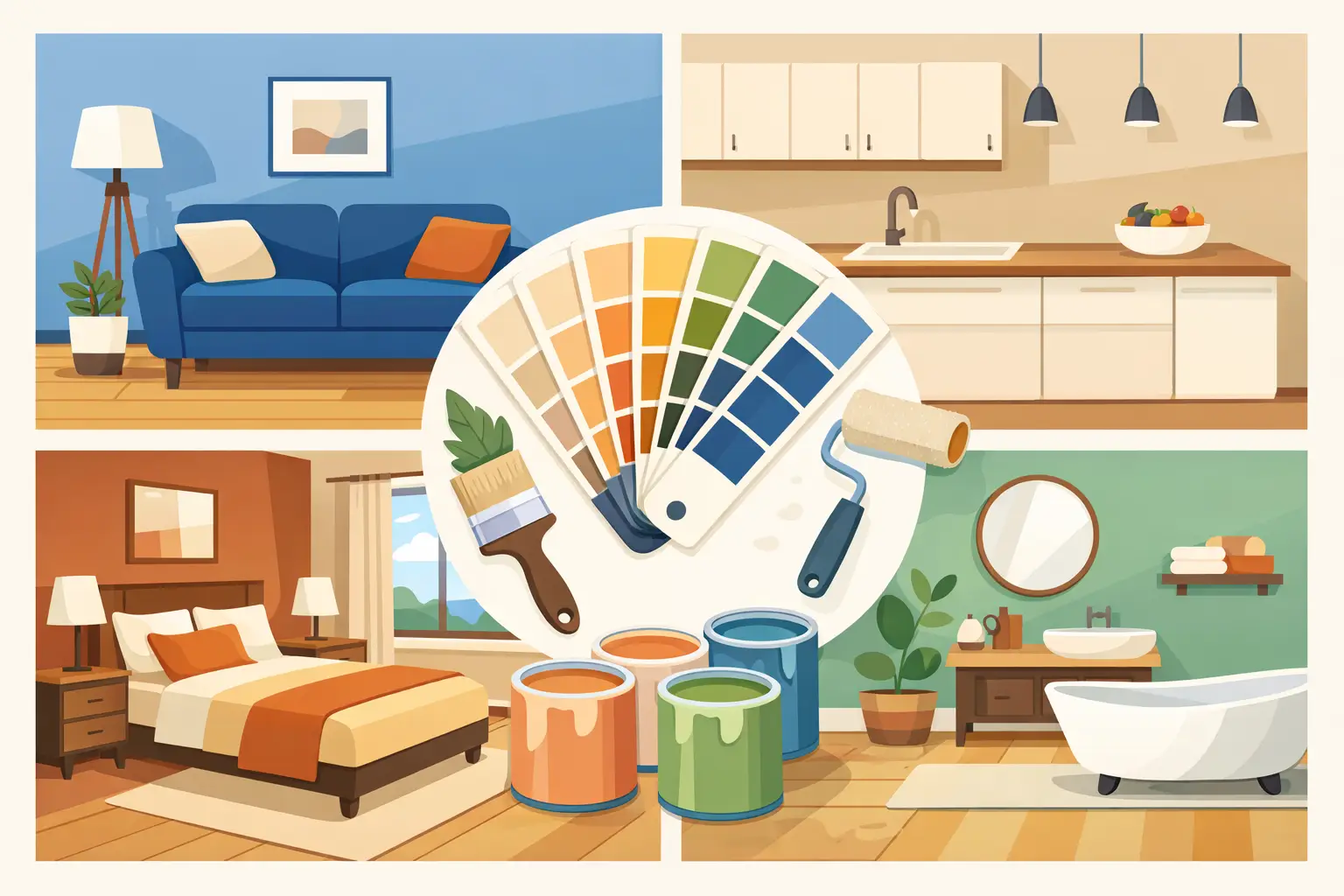
Choosing a high-performance topcoat is your final defense against the paint peeling on walls singapore homeowners frequently face. While the preparation steps we covered previously provide the foundation, the topcoat must act as a resilient shield against the tropical climate. Focus on anti-mould and moisture-resistant ranges that are specifically formulated for high-humidity environments. These advanced coatings prevent fungal growth and resist the bubbling caused by condensation, ensuring your walls remain vibrant and flake-free for years.
Consider the sheen level carefully to balance aesthetics with functionality. Silk or semi-gloss finishes offer higher moisture resistance and are easier to wipe clean, making them ideal for high-traffic or damp areas. Matte finishes are excellent for hiding wall imperfections in living rooms but may be more permeable to moisture. If you aren’t sure which system fits your lifestyle, use our hdb painting services to receive expert guidance on the best material combinations for your specific flat type.
Eco-Friendly and Low-VOC Options
Homeowners in 2026 increasingly prioritize indoor air quality alongside durability. We utilize premium brands like Nippon Paint and Dulux that offer low-VOC and zero-VOC options, which are safer for children and pets. These eco-friendly paints don’t sacrifice performance; they provide excellent coverage and scrub resistance while eliminating the harsh chemical odors associated with traditional coatings. You can achieve a beautiful home environment without compromising on health or environmental responsibility.
The My Paint Job Singapore Guarantee
Leverage our 10+ years of industry experience to navigate the technical requirements of a comprehensive condo painting package. We understand that a successful project is about more than just the paint on the wall. Our meticulous approach includes full furniture protection and a thorough post-project cleanup, leaving your home in pristine condition. We stand behind our craftsmanship with multi-year warranties against peeling, providing you with the certainty that your property is in safe, capable hands.
Ready to transform your space with a finish that lasts? Consult My Paint Job Singapore today for a professional assessment of your wall health and a bespoke restoration plan.
Achieve a Flawless, Durable Finish for Your Home
Your home deserves a surface that reflects the care you put into it. Dealing with paint peeling on walls singapore doesn’t have to be a recurring struggle. By understanding the chemical nature of adhesion and the relentless impact of our local humidity, you can move beyond temporary patches. True restoration relies on meticulous surface preparation and the application of a specialized anti-peeling sealer to lock out moisture effectively.
We bring over 10 years of Singapore painting experience to every project, ensuring your property is in safe, capable hands. Our team prioritizes your peace of mind by including comprehensive furniture protection and handling all post-project cleanup. You don’t have to navigate the technical complexities of masonry repair alone. Take the first step toward a renewed environment and a smooth, flake-free finish that stands the test of time through 2026 and beyond.
Get a Professional Wall Assessment from My Paint Job Singapore
Let’s work together to create a beautiful, lasting space you can be proud of. We look forward to helping you restore the integrity and aesthetic of your home.
Frequently Asked Questions
Can I just scrape the peeling paint and paint over it immediately?
You shouldn’t paint immediately after scraping because the surface remains unstable and contaminated. Simple scraping leaves behind microscopic dust and loose edges that prevent a strong bond. You must sand the area smooth and apply a high-quality sealer to lock the substrate. This technical step ensures your new finish adheres to the wall rather than just floating on a layer of residue.
Why does my wall paint keep peeling even after I fixed it myself?
Recurrence is usually caused by failing to address the root moisture or alkalinity of the masonry. If you only fix the surface, the natural salts in the concrete will continue to push the paint film away. Professional restoration involves neutralizing these chemicals with specialized sealers. This is the only way to permanently stop the paint peeling on walls singapore owners frequently struggle with after DIY attempts.
How much does it cost to fix peeling paint professionally in Singapore?
Professional restoration costs depend on the severity of the damage and the total surface area that needs treatment. Every home is unique, so factors like the presence of efflorescence or the need for extensive skim coating will influence the labor required. We recommend a formal site assessment to determine the exact scope of work. This ensures you receive a solution tailored to your property’s specific wall health.
Is peeling paint a sign of spalling concrete in my HDB flat?
Peeling paint can sometimes be an early warning sign of deeper structural issues. While standard peeling is an adhesion failure, spalling concrete occurs when the internal steel bars rust and expand, causing the concrete to crack and fall off. If you notice bulging masonry or brownish rust stains under the flakes, it’s vital to contact a specialist. Addressing these structural warnings early prevents more costly repairs later.
What is the best type of paint to prevent peeling in humid bathrooms?
Anti-mould and moisture-resistant paints are the superior choice for high-humidity areas like bathrooms and kitchens. These advanced formulas allow the wall to breathe, which prevents condensation from getting trapped behind the paint film. Combining these products with a high-performance sealer is the most effective way to prevent paint peeling on walls singapore in damp zones. Always prioritize quality materials to ensure a lasting, beautiful finish.