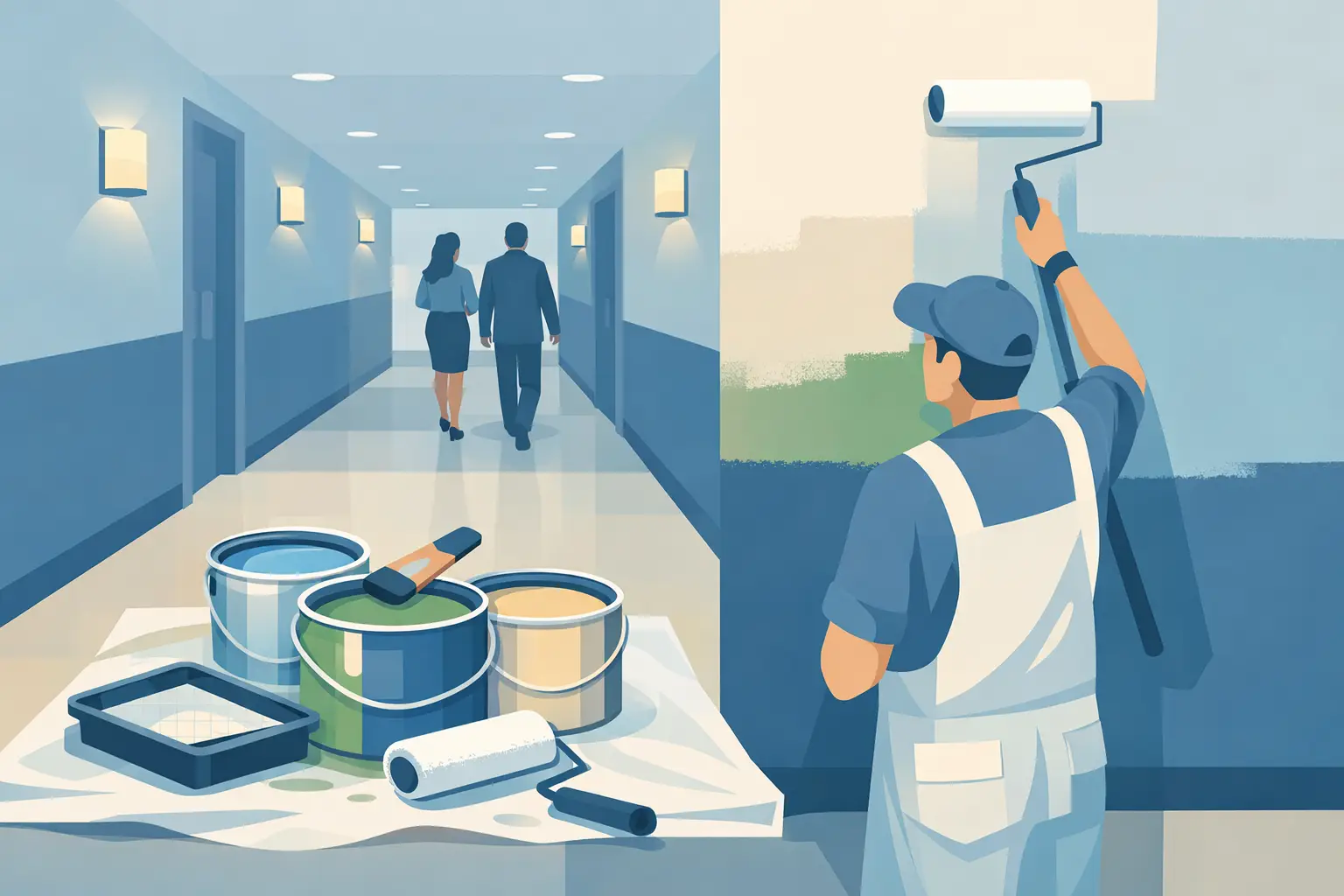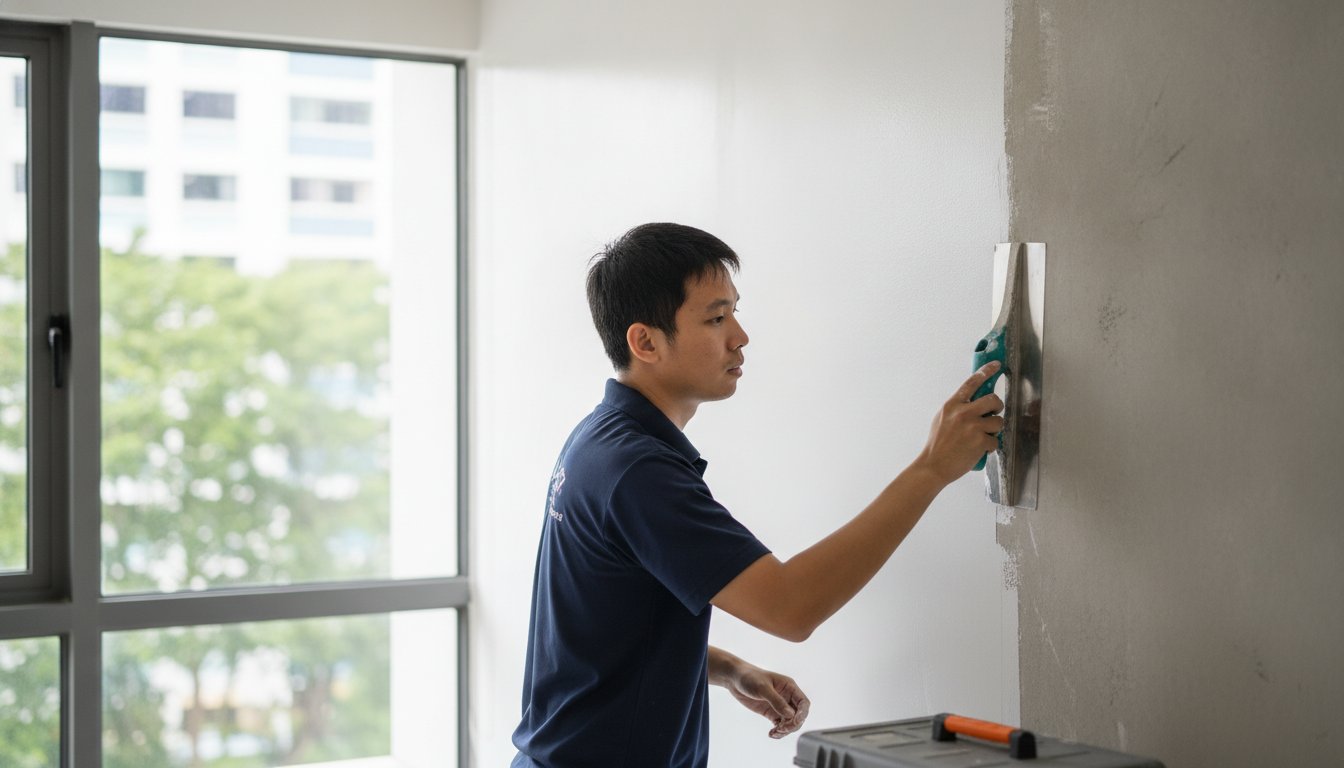
Grabbing a scraper the moment paint starts flaking is the quickest way to ruin a wall and contaminate your home with toxic airborne dust. Whether you’re refreshing an older HDB flat or restoring weathered timber in a landed home, mastering how to safely remove old paint requires more than brute force; it demands proper containment. Stripping failing coatings is undeniably messy work, and your hesitation over inhaling fine particles or gouging delicate plaster underneath is completely justified.
You don’t have to compromise your indoor air quality or scar your walls to achieve a smooth, lasting finish. In this guide, you’ll discover how to evaluate underlying paint hazards, choose the safest stripping technique for your substrate, and prep surfaces without sending dust into your ventilation. We will explore the right tools and chemical solutions for masonry, wood, and drywall, followed by clean-up protocols that leave every room spotless and ready for an enduring topcoat.
Key Takeaways
- Learn how to safely remove old paint by testing vintage coatings for toxicity and misting surfaces to keep hazardous airborne dust out of your home.
- Match mechanical, chemical, or thermal stripping methods to your specific wall material to prevent accidental gouging of delicate plaster or timber.
- Follow proven interior containment protocols to strip stubborn paint layers cleanly without spreading residue into living spaces or ventilation ducts.
- Restore bare substrates with targeted moisture checks and patching techniques to create an ultra-smooth base for lasting paint adhesion.
Assessing Paint Hazards and Preparing Your Worksite Safely
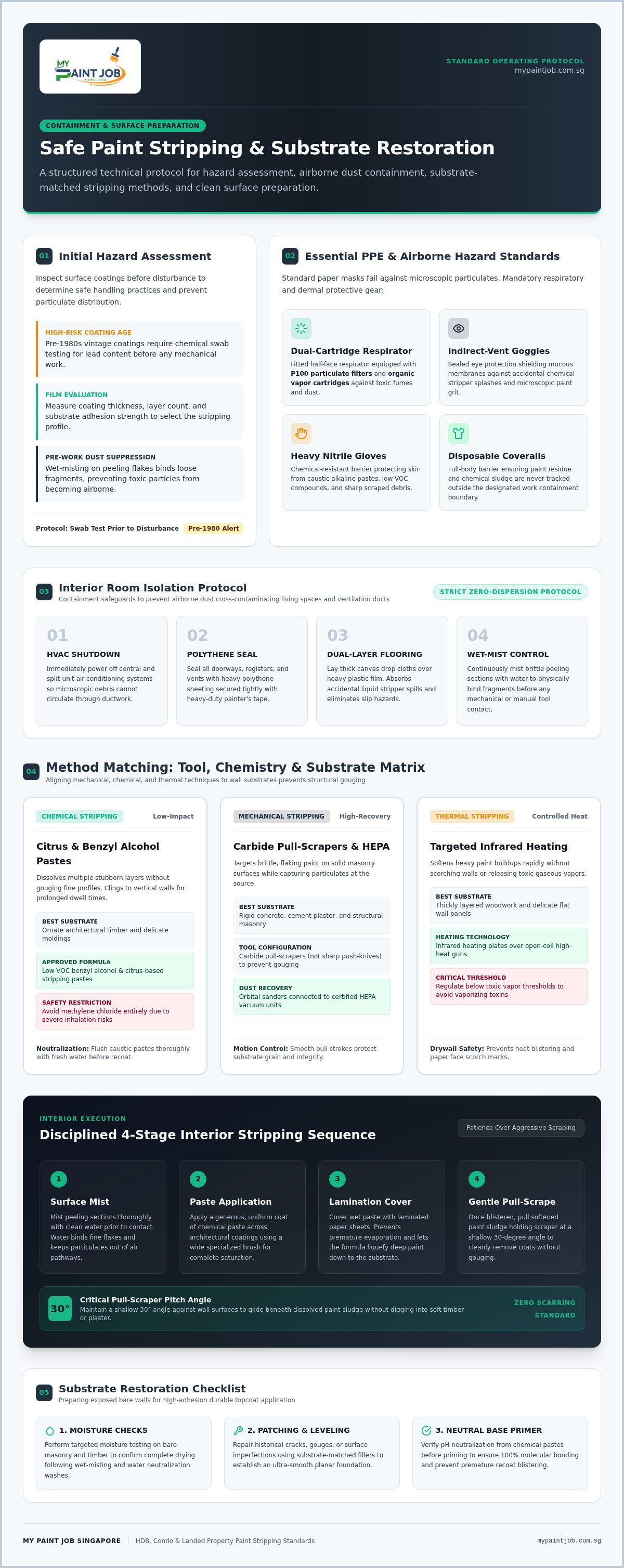
Every successful renovation begins with an honest surface inspection. Before tackling peeling layers in an older apartment or landed property, inspect the paint film’s thickness, adhesion, and age. Vintage coatings applied before the 1980s warrant extra caution. Run an instant chemical swab test across exposed layers to confirm whether toxic additives like lead exist before disturbing the surface. Understanding these hazards dictates chemical paint strippers or mechanical methods, showing you how to safely remove old paint without cross-contaminating your household.
Essential PPE and Airway Protection Standards
Standard paper surgical or dust masks fail against microscopic particulates. Protect your respiratory health by investing in proper gear:
- Respirators: Equip a fitted, half-face respirator using P100 particulate filters and organic vapor cartridges to block fine dust and harsh solvent fumes.
- Eye and Skin Cover: Wear indirect-vent safety goggles to prevent chemical splashes, alongside durable nitrile gloves.
- Protective Suits: Step into disposable coveralls so you never track scraped residue beyond the work boundary.
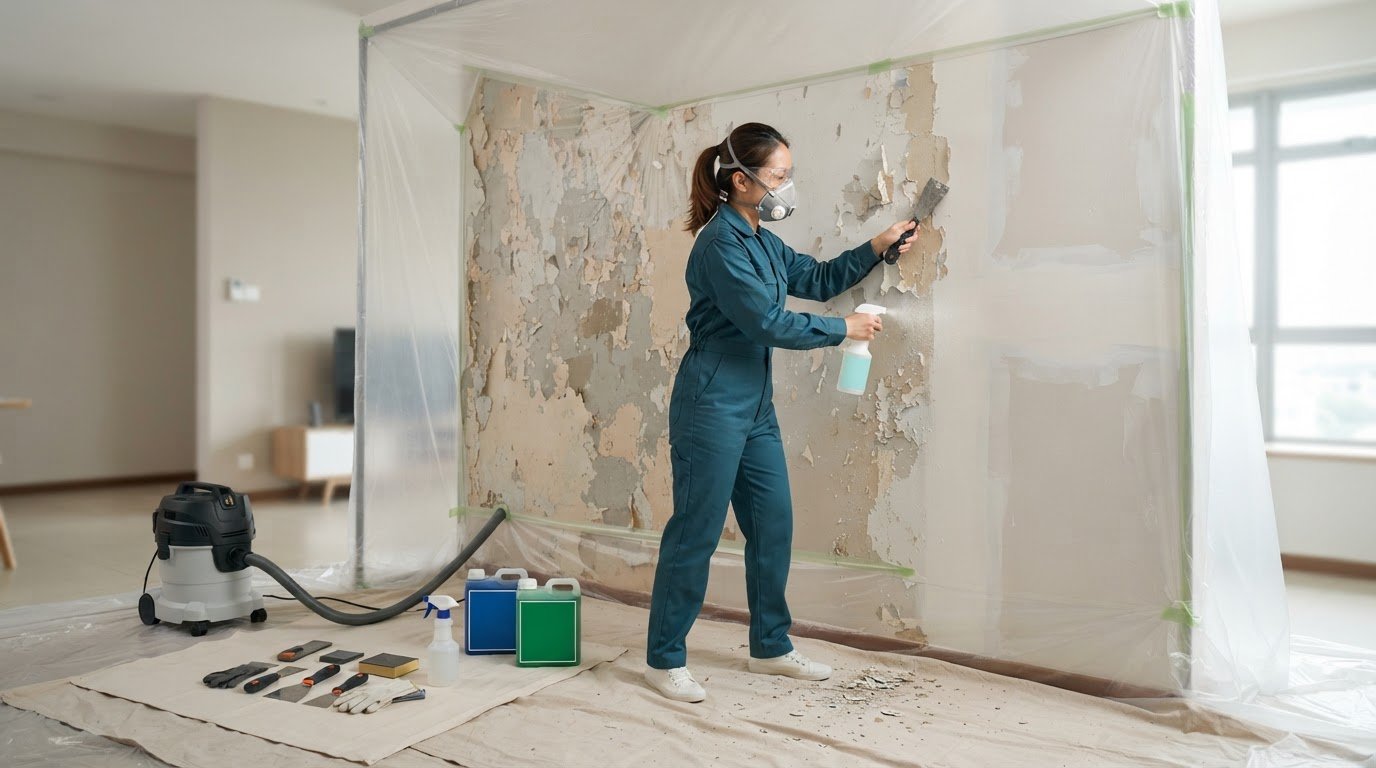
Room Isolation and Containment Setup
Unlike basic exterior timber stripping, residential interiors require strict containment. Turn off central or split-unit air conditioning systems immediately so microscopic debris cannot circulate through indoor ventilation. Seal doorways and registers with heavy polythene sheeting secured by painter’s tape. Lay thick canvas drop cloths over plastic floor film to absorb accidental spills and reduce dangerous slip hazards.
Wet-misting is the primary dust-suppression tactic that binds loose paint fragments to stop toxic particles from becoming airborne. This careful isolation ensures that learning how to safely remove old paint keeps surrounding living spaces clean, safe, and ready for meticulous restoration.
Comparing the Three Main Paint Removal Methods
Choosing the right removal technique depends directly on your surface material. Mechanical scraping works best for brittle, flaking sections across rigid concrete and masonry. Chemical stripping dissolves stubborn build-ups on ornate architectural timber without gouging fine profiles. Controlled thermal stripping softens thick coatings quickly, though it demands disciplined heat regulation below toxic vapor thresholds. Knowing how to safely remove old paint means balancing these tools against substrate vulnerability.
Chemical Strippers: Solvent vs Citrus and Caustic Formulas
Modern stripping pastes offer high performance without dangerous airborne fumes. Avoid methylene chloride entirely due to severe inhalation risks. Instead, apply low-VOC benzyl alcohol or citrus-based paste compounds. These cling effectively to vertical walls and allow overnight dwell times to lift multi-layered paint film. If you use alkaline caustic pastes, follow EPA lead safety guidelines for containment, and neutralize surfaces thoroughly with fresh water or dedicated washes before repainting.
Mechanical Scraping and Controlled Thermal Tools
Manual tools require deliberate technique to protect structural substrates:
- Carbide Pull-Scrapers: Use smooth pull-scrapers instead of sharp push-knives to avoid scarring delicate plaster or timber grain.
- Infrared Strippers: Choose targeted infrared heating plates over high-heat open-coil guns to soften paint without vaporizing toxins or scorching drywall.
- HEPA Extraction: Connect every orbital sander to a certified HEPA-filtered vacuum unit for continuous dust recovery.
When extensive stripping across high ceilings or aging walls feels overwhelming, booking professional condo painting services or HDB restoration specialists provides complete peace of mind.
Step-by-Step Guide to Stripping Paint from Interior Surfaces
Knowing how to safely remove old paint requires a disciplined sequence that prioritises dust suppression over quick shortcuts. Mist failing sections with water before touching them. Moisture binds loose flakes, preventing microscopic debris from drifting through your living areas. Next, apply a generous, uniform layer of paste stripper across stubborn architectural coats using a wide brush. Cover the wet paste with laminated paper sheets to stop premature evaporation, allowing the formula to liquefy deep paint layers down to the bare substrate.
Executing the Gentle Pull-Scrape Technique
Patience protects the delicate surface underneath. Once the chemical paste blisters the paint film, strip the softened sludge using controlled, steady motions:
- Hold your scraper at a shallow thirty-degree angle relative to the wall surface.
- Pull smoothly along the plaster plane or timber grain without digging the blade corners into the wall.
- Deposit the wet, dissolved paint sludge directly into heavy-duty polythene bags using blunt-edged collection blades for safe containment.
Safe Cleanup and Decontamination Protocol
A tidy workspace prevents toxic residue from transferring outside your work zone. Wipe down all stripped masonry or timber surfaces using damp microfiber cloths to capture lingering chemical film. Run an industrial vacuum fitted with a certified HEPA filter across the entire containment perimeter to draw up dry specks. Double-bag all used masking plastics, paper sheets, and scrapings in accordance with local non-hazardous disposal regulations.
If stripping exposes rough, uneven surfaces beneath old coatings, book our specialised plastering services to level your walls before applying fresh primer.
Substrate Restoration and Surface Prep for a Flawless Recoat
Stripping old layers is only half the battle. Once you uncover the bare substrate, test the wall for trapped dampness. Allow stripped concrete or masonry to air out thoroughly before applying any patching compound. Sealing wet plaster traps residual moisture, causing premature bubbling down the road. Understanding how to safely remove old paint includes giving bare substrates adequate curing time, setting the stage for lasting paint adhesion.
Repairing Gouges and Leveling Walls with Skim Coating
Even the steadiest hand occasionally nicks softer wall materials. Fill gouges, hairline fissures, and nail holes with a premium patching compound. Leveling uneven walls requires quality plaster and skim coating techniques to create a continuous, flawless plane. Once dry, smooth the joint compound using fine-grit abrasive sanding pads attached to HEPA vacuum units. Eliminating ridges now stops harsh interior lighting from casting unsightly shadows later.
Priming Bare Surfaces and Knowing When to Call Professionals
Bare substrates thirst for moisture and require proper stabilization. Seal exposed walls with an alkali-resistant, penetrating primer:
- Substrate Sealing: Apply an oil- or water-based masonry primer to lock in residual chalk and create an impenetrable moisture barrier.
- Even Absorption: Prime the entire wall rather than spot-priming to prevent noticeable sheen differences across the finished topcoat.
- High-Ceiling Safety: Reach out to skilled contractors for house painting services when scraping multi-story stairwells or dealing with expansive, brittle walls.
Mastering how to safely remove old paint gives your home the clean foundation it deserves. When large structural areas or delicate architectural details make DIY work risky, turning to dedicated specialists protects your property and your family’s health.
Transform Your Living Space with Confidence and Care
Testing vintage coatings, isolating your work zone, and choosing the right paste or pull-scrape technique are essential steps in mastering how to safely remove old paint. Once peeling layers are cleared, repairing surface gouges with smooth skim coating and applying an alkali-resistant primer guarantee that your fresh coatings bond securely without bubbling or flaking.
You don’t have to face hazardous airborne dust or exhaustive multi-room scraping on your own. Backed by over a decade of hands-on surface preparation and residential painting mastery, our team provides full furniture masking, strict dust containment, and spotless post-work clean-up. We also deliver specialised plastering to give your stripped walls an ultra-smooth, crack-free finish. Restore your walls safely with My Paint Job Singapore professional painting and enjoy a pristine, vibrant home with complete peace of mind.
Frequently Asked Questions
Can I paint directly over peeling old paint without removing it first?
No, you shouldn’t paint directly over peeling layers. Fresh paint cannot bond to an unstable foundation and will quickly blister, crack, and pull away within months. Learning how to safely remove old paint down to a firm edge ensures lasting adhesion. Scrape off loose coatings, level rough transitions with skim coating, and prime bare masonry before recoating for an enduring, high-standard finish.
How can I tell if old interior paint contains toxic lead compounds?
Use an instant chemical swab test kit to check your wall coatings accurately. Cut a small notch through all paint layers to expose historical coats, then rub the testing swab firmly against the cross-section. A rapid color change indicates lead additives. Older properties built before the 1980s carry higher risks, making careful testing an essential safety step before any mechanical disturbance begins.
Is chemical paint stripper safe to use inside closed living areas?
Standard solvent strippers aren’t safe in unventilated living spaces, especially harsh formulas containing volatile compounds. However, low-VOC citrus or benzyl alcohol pastes are much safer options for interior projects. Always establish cross-ventilation by opening windows, isolate adjoining rooms with heavy polythene sheeting, and wear a dual-cartridge respirator with organic vapor filters to keep your indoor air completely clean and breathable.
Why is dry sanding without a HEPA vacuum dangerous for interior walls?
Dry sanding without continuous HEPA extraction pulverizes aged coatings into fine, microscopic dust that stays airborne for days. These tiny particles easily bypass basic paper masks, settle into soft furnishings, and enter air ducts. When mastering how to safely remove old paint, using certified HEPA vacuum extraction or wet-sanding methods captures hazardous dust right at the source, protecting your family’s lungs and living environment.
What is the best way to clean and neutralize a wall after chemical stripping?
Wipe down the stripped surface with clean, damp microfiber cloths using fresh water or a manufacturer-recommended neutralizing wash. This neutralizes active alkaline residue that would otherwise interfere with primer bonding. Test the surface with litmus paper if you used caustic formulas, and let the bare masonry or timber dry out completely before applying patch repairs, skim coat, or penetrating primer coats.