
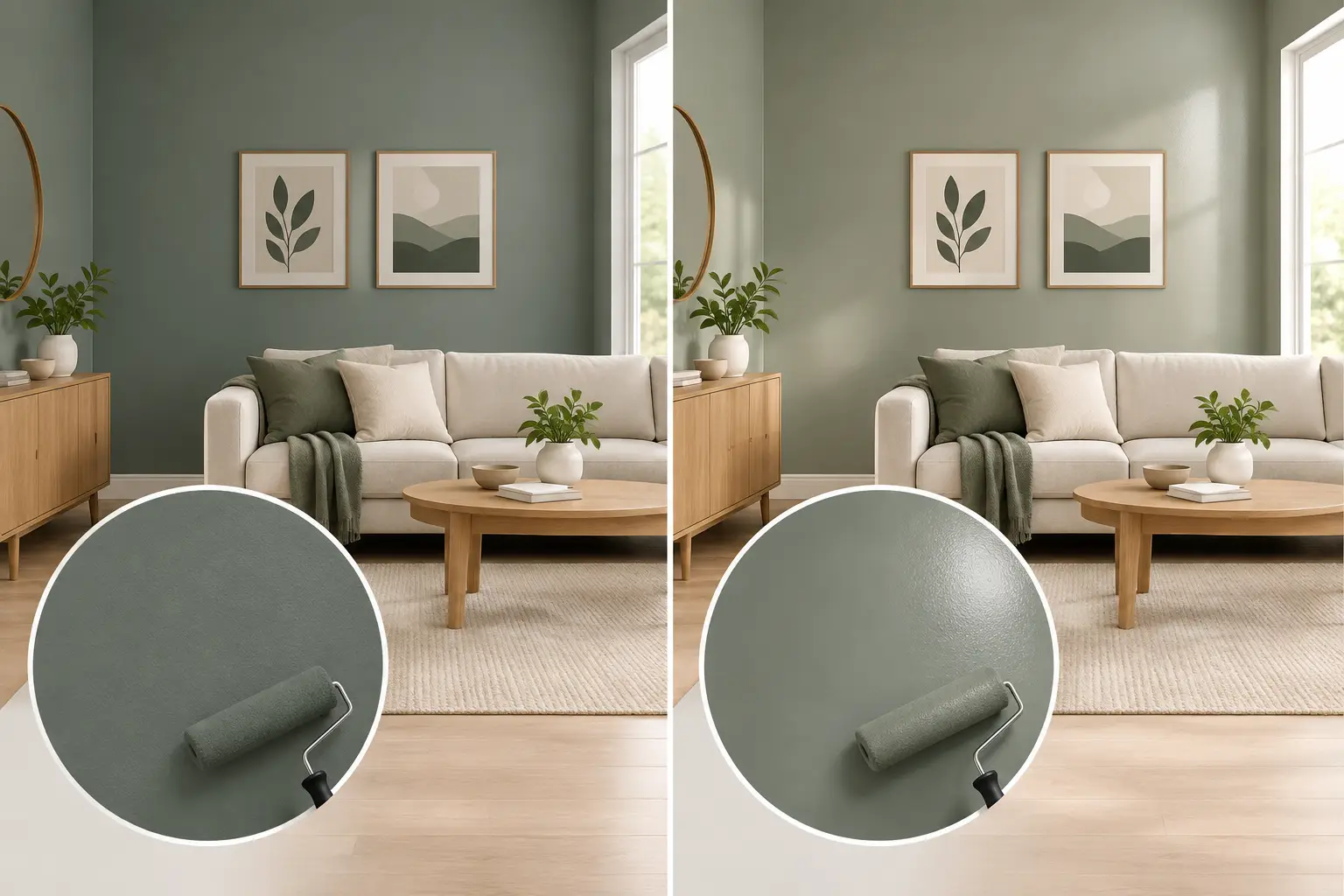
A wall can have the right color and still feel unfinished if the sheen is wrong. In the matte finish vs satin finish decision, the best choice comes down to how the room is used, how much natural and artificial light it receives, and how often its surfaces need cleaning. Both can look refined, but they perform very differently once daily life begins.
For homeowners, landlords, and business owners, choosing the right finish helps protect the investment in a professional paint job. It affects everything from how smoothly walls appear to how easily fingerprints, scuffs, and splashes can be removed.
Matte Finish vs Satin Finish: The Main Difference
Paint sheen describes the amount of light a painted surface reflects. Matte paint has very little shine, creating a soft, non-reflective appearance. Satin paint has a gentle, low-level luster that catches light without looking glossy.
That difference may sound minor on a paint swatch, but it becomes obvious across a full wall. A matte finish absorbs light and visually softens the room. Satin reflects more light, giving walls a slightly brighter and cleaner-looking surface.
Matte is often selected for its elegant, modern appearance. It is especially effective when you want the wall color to be the focus rather than the wall surface itself. Satin is chosen when a space needs more durability and easier maintenance while still keeping a polished residential look.
How Matte Paint Looks and Performs
Matte paint creates a calm, velvety finish with almost no reflection. This makes it highly forgiving on imperfect walls. Small dents, uneven plaster, patch repairs, and subtle texture are less noticeable because matte paint does not bounce light back across the surface.
For this reason, matte is a strong option for older properties, large living room walls, bedrooms, and ceilings. It can make a bold dark shade look rich and sophisticated, while pale colors feel soft and restful. In rooms with strong sunlight, matte also prevents distracting glare.
The trade-off is maintenance. Standard matte finishes are more likely to show handprints, rub marks, and stains, particularly around light switches, doors, and furniture edges. Repeated scrubbing can leave a shiny patch or remove paint if the wall is cleaned too aggressively.
Premium washable matte paints improve on this issue and can be suitable for active homes. Even so, a matte wall still calls for gentler care than a satin one. If young children, pets, frequent guests, or heavy daily use are part of the picture, consider whether the visual appeal of matte outweighs the need for easy cleaning.
Why Satin Is a Practical Choice for Busy Spaces
Satin paint sits between matte and higher-sheen finishes such as semi-gloss. It has a smooth, understated glow that adds dimension without making a room look overly shiny. It is a practical choice for people who want a clean, durable finish but prefer something softer than gloss.
Because satin has a tighter surface, it is generally easier to wipe down. It stands up better to everyday marks, light moisture, and regular cleaning. That makes it well suited to hallways, kids’ rooms, entryways, kitchens, and frequently used common areas.
In commercial settings, satin can be particularly useful in offices, retail spaces, reception areas, and corridors where walls need to stay presentable with less effort. A well-applied satin finish gives these spaces a professional appearance and helps cleaning teams manage scuffs and fingerprints more efficiently.
Satin does have one limitation: it reflects enough light to reveal poor surface preparation. Roller marks, uneven patches, nail holes, and rough plaster can become more visible, especially near windows or ceiling lights. Proper wall repair, sanding, priming, and skilled application make a significant difference.
Which Finish Works Best in Each Room?
There is no single finish that suits every surface in a property. Selecting by room use is often the most practical approach.
Living Rooms and Bedrooms
Matte works beautifully in living rooms and bedrooms where you want a relaxed, high-end feel. It minimizes wall imperfections and supports a softer atmosphere, especially with neutral, earthy, or deep colors. If the room receives a lot of direct light, matte helps prevent reflections from becoming distracting.
Satin can also work in a living room, particularly in households where walls receive more contact or need regular wiping. In bedrooms, it is often a good choice for children’s rooms because it is more forgiving of fingerprints and minor spills.
Hallways, Entryways, and Stairwells
These high-traffic areas benefit from satin. People brush past walls, move furniture, carry bags, and touch switches in these spaces every day. Satin offers better resistance to scuffs and makes routine spot-cleaning much simpler.
If you prefer a matte look, washable matte paint may be a workable compromise. The condition of the wall should still be assessed first, as satin will highlight rough patches that matte could hide.
Kitchens and Dining Areas
Satin is usually the safer choice for kitchen walls. Cooking can create moisture, grease residue, and food splashes, while dining areas are prone to marks from chairs and daily activity. A satin finish allows for easier cleaning without relying on a high-gloss appearance.
For a feature wall positioned away from cooking zones, matte may still be suitable. The key is to match the finish to the wall’s real exposure, not just the room name.
Bathrooms and Laundry Areas
Walls exposed to humidity need a paint system designed for moisture resistance and mildew control. Satin is often the better choice because its surface is more washable and less absorbent than matte. However, paint finish alone cannot solve ventilation problems. Bathrooms and laundry areas should have adequate airflow, and existing peeling or dampness must be repaired before painting.
Ceilings, Doors, and Trim
Matte is a classic ceiling finish because it hides unevenness and reduces glare from lights. Doors, baseboards, trim, grills, and gates usually require a more durable coating than standard wall paint. Satin or a higher sheen may be selected depending on the material, exposure, and desired look.
Surface Preparation Matters More Than Most People Expect
A quality finish begins well before the first coat is applied. Satin can look excellent, but only when the wall is properly prepared. Hairline cracks, peeling paint, uneven plaster, and previous patchwork should be repaired, sanded, and primed so the sheen appears consistent across the surface.
Matte is more forgiving, but preparation still matters for paint adhesion and long-term durability. Skipping surface preparation can lead to visible defects, early peeling, or an uneven color result regardless of which sheen you choose.
At My Paint Job, the process begins with understanding the condition of the walls and how each room will be used. This allows the painting plan to account for repairs, the right paint products, furniture protection, and a clean handover instead of treating finish selection as an afterthought.
How to Make the Right Choice
Choose matte when appearance, softness, and hiding wall imperfections are your top priorities. It is ideal for lower-contact spaces, ceilings, and rooms where a calm, contemporary look matters most.
Choose satin when the walls are likely to face regular handling, cleaning, moisture, or scuffing. It is the more practical option for busy households and commercial interiors, provided the underlying surface is prepared carefully.
If you are undecided, use both strategically. Matte on main walls and ceilings can create a refined visual foundation, while satin in hallways, kitchens, children’s spaces, and other high-contact areas provides useful everyday protection. Keeping the color consistent while changing sheens by room can make a property feel cohesive without sacrificing durability.
Before committing, view sample boards on the actual wall at different times of day. Morning sunlight, warm evening lighting, and overhead fixtures can change how each finish appears. A small test can prevent a costly choice based on a tiny paint chip.
The right finish should make your space easier to live or work in, not harder to maintain. A thoughtful sheen choice, paired with proper preparation and careful application, gives every room the clean, lasting result it deserves.