What if honoring ancient balance principles doesn’t require coating your walls in jarring, oversaturated shades? Choosing the right feng shui paint colors for home often feels intimidating when you want an elegant, contemporary aesthetic without disrupting household harmony or making compact rooms feel dark and confined. You shouldn’t have to compromise between energetic balance and a fresh, spacious interior. With the right tonal adjustments, traditional elemental wisdom enhances modern living rather than competing with your design aspirations.
This room-by-room guide bridges that gap, giving you the practical confidence to transform your living spaces. You’ll discover how to translate the five Wu Xing elements into subtle, elevated wall palettes perfectly matched to each compass direction. We will examine sector-specific color recommendations, strategic sheen selections, and the foundational plastering and surface prep needed to ensure flawless adhesion, vibrant Qi, and lasting craftsmanship across every room.
Key Takeaways
- Understand the five elemental cycles (Wu Xing) to combine warm and cool undertones without triggering clashing energies.
- Discover the optimal feng shui paint colors for home interiors by balancing vibrant Yang areas with calm, restorative Yin spaces.
- Align modern wall palettes with the eight-sector Bagua map to support positive energy flow across every compass direction.
- Learn why thorough wall plastering and surface restoration in Singapore’s tropical climate are essential before rolling on fresh coats.
Understanding the Five Elements: The Foundation of Feng Shui Paint Colors
In classical Feng Shui, universal energy (Qi) circulates through residential architecture via the Wu Xing, or Five Elements framework: Wood, Fire, Earth, Metal, and Water. Selecting effective feng shui paint colors for home spaces doesn’t mean saturating rooms in glaring, dated primaries. Modern palettes interpret these elemental principles through sophisticated, livable undertones that cultivate household calm, physical vitality, and enduring prosperity.
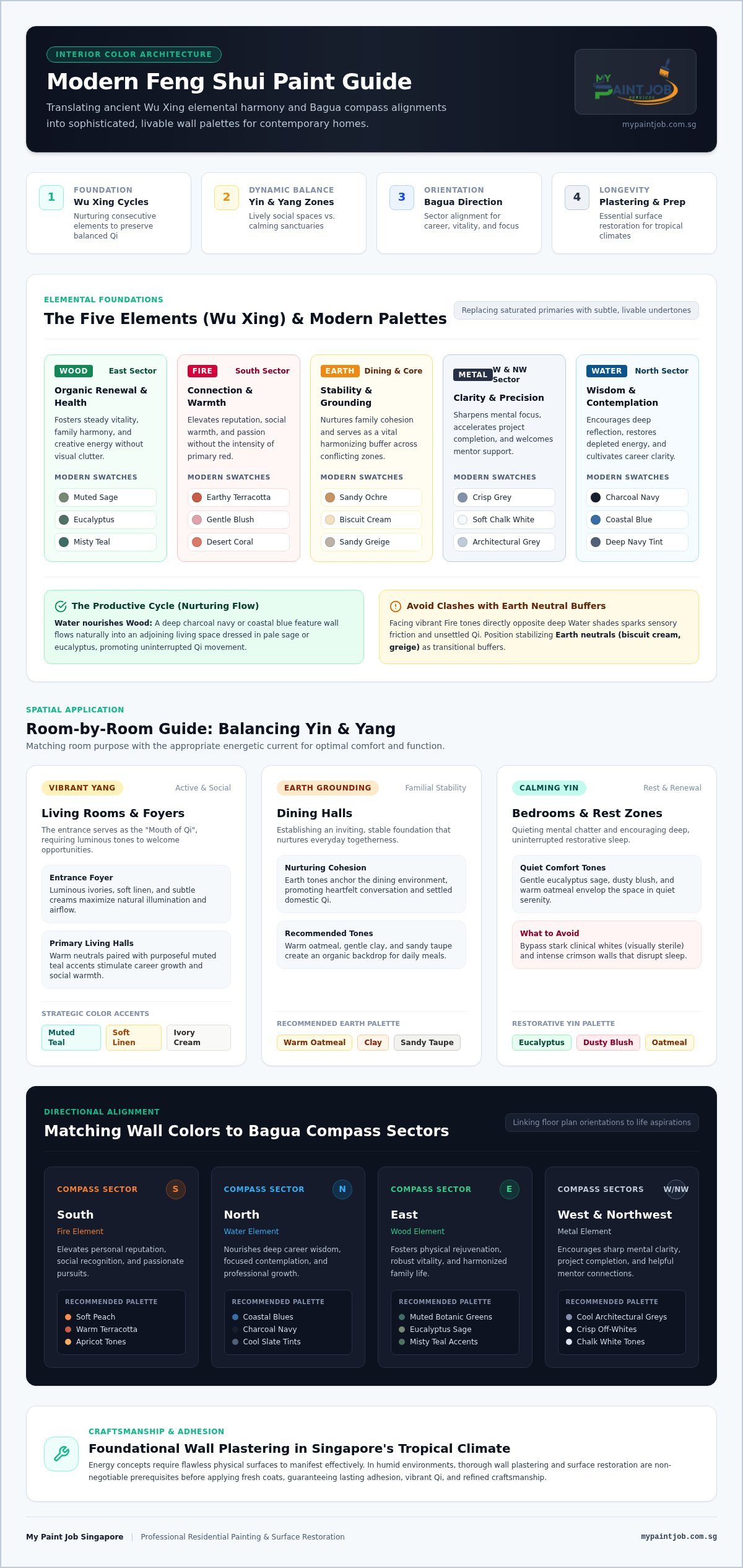
The Five Elements and Their Modern Paint Palettes
Contemporary paint formulations make it simple to express elemental balance through refined architectural tones:
- Wood: Muted sage, eucalyptus, and misty teals foster organic renewal, vibrant health, and steady creative vitality.
- Fire: Earthy terracotta, gentle blush, and warm desert corals spark connection and warmth without visual overwhelm.
- Earth, Metal, and Water: Sandy ochres anchor domestic stability; crisp greys and soft chalk whites sharpen mental clarity; deep charcoal navy tones encourage deep contemplation and rest.
Balancing Productive Cycles and Avoiding Elemental Clashes
True spatial harmony depends on the productive cycle, where elemental forces nurture one another sequentially. Water nourishes Wood, meaning a soft navy feature wall flows naturally into an adjoining living space painted in pale sage. Conversely, avoid destructive pairings across facing interior partitions. Placing vibrant Fire tones directly opposite deep Water shades causes sensory friction and unsettled Qi. Use stabilizing Earth neutrals like biscuit cream or sandy greige as buffers between conflicting zones, smoothing spatial transitions while preserving domestic equilibrium.
Room-by-Room Guide: Selecting Harmonious Feng Shui Paint Colors
Functional balance begins by aligning each domestic zone with its natural energetic current. Active communal rooms thrive on lively Yang energy to stimulate connection and conversation, while private sanctuaries demand quiet Yin tones to replenish depleted vitality. Selecting tailored feng shui paint colors for home interiors guarantees that every square foot actively supports your lifestyle. Grounding Earth tones like warm oatmeal, clay, and sandy taupe in dining halls nurture familial cohesion, establishing an inviting, stable foundation for everyday family meals.
Living Rooms and Entryways: Welcoming Vibrant Yang Energy
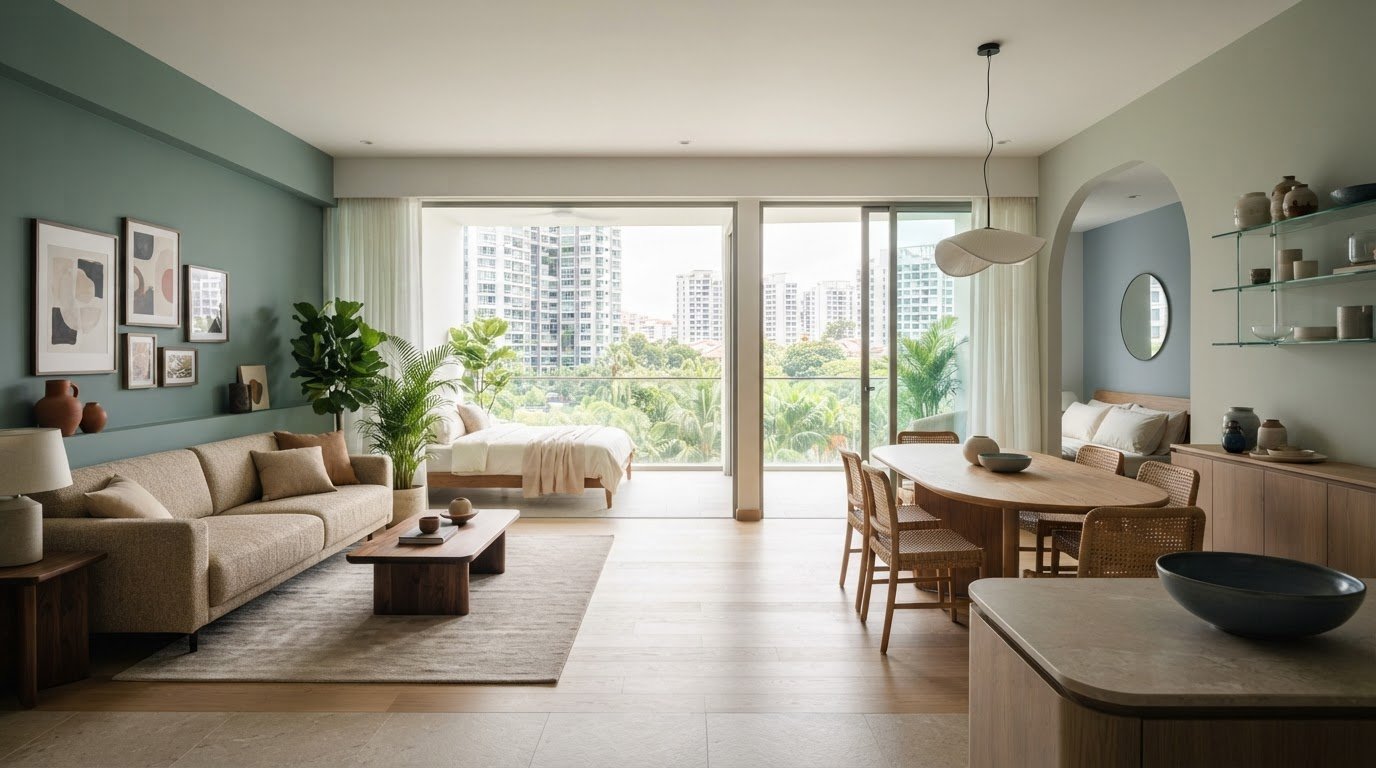
The entrance foyer serves as the essential mouth of Qi, greeting incoming opportunities and channeling fresh vitality across your floor plan. Brighten this critical transition with luminous ivories, soft linen, and subtle creams that maximize natural illumination. In primary living halls, pairing warm neutrals with purposeful muted teal accents activates career growth and social warmth without visually shrinking compact apartment or landed interiors.
Bedrooms and Rest Zones: Calming Yin Palettes for Restful Sleep
Bedrooms require tranquil Yin energy to quiet mental chatter and encourage deep, uninterrupted sleep. Gentle eucalyptus sage, dusty blush, and warm oatmeal envelop the space in quiet comfort. Avoid stark clinical whites that feel visually sterile, and bypass intense crimson feature walls that disrupt restorative rest. When you are ready to transform your living spaces, consulting with professional residential painting services ensures each balanced shade is applied with precision and long-lasting elegance.
Matching Wall Colors to Bagua Compass Directions
The classical Bagua energy map acts as an eight-sector blueprint, linking compass orientations to distinct life aspirations and elemental rulers. Mapping your floor plan reveals which exterior and interior walls correspond to specific directional energies. Selecting the right feng shui paint colors for home orientations ensures your spatial layout reinforces vitality, mental focus, and domestic prosperity rather than creating energetic turbulence.
North, South, East, and West: Core Directional Palettes
Each primary cardinal sector responds to specific elemental undertones:
- South (Fire): Soft peach, warm terracotta, and apricot tones elevate personal reputation, social recognition, and passionate pursuits.
- North (Water) & East (Wood): Coastal blues nourish deep career wisdom, while muted botanic greens foster vitality, family harmony, and physical rejuvenation.
- West & Northwest (Metal): Cool architectural greys and crisp off-whites encourage sharp mental clarity, project completion, and support from helpful mentors.
Harmonizing Corner Sectors in Modern Open-Concept Layouts
Modern open-plan layouts often merge conflicting compass zones into a single continuous wall. You can resolve this friction without creating abrupt, jarring paint lines. For Northeast (Knowledge) and Southwest (Relationships) Earth zones, introduce stabilizing sandy beige, warm linen, or soft clay. When two sectors share an open living and dining partition, apply a cohesive neutral base tone across the entire span. Then, use accent walls, alcoves, or architectural trims to introduce directional colors subtly without disrupting visual continuity. To bring balance and structural beauty to your property, schedule a residential painting consultation with seasoned specialists who understand both tonal balance and architectural craftsmanship.
From Energy Concept to Flawless Finish: Professional Painting and Wall Prep
Even the most auspicious color scheme loses its potency over rough, deteriorating walls. In energetic design, positive Qi travels effortlessly across smooth, uninterrupted planes, whereas surface fissures, flaking paint, and dark mold patches generate physical and visual stagnation. In Singapore’s humid tropical climate, high ambient moisture frequently penetrates untreated masonry, causing unsightly blisters and deep substrate stains. Eliminating these defects before applying your chosen feng shui paint colors for home spaces protects both your physical wellness and environmental balance.
Surface Preparation: Repairing Cracks and Uneven Plaster
Pristine energy conduits require a structurally sound foundation. Remediating wall blemishes with professional wall plastering smooths out hollow depressions, hides hairline settlement cracks, and restores complete substrate integrity. Applying specialized anti-mould primers and moisture-resistant sealers then locks out tropical humidity. A rigorous four-stage preparation routine, encompassing diagnostic inspection, skim coating, deep priming, and precision topcoating, guarantees steady paint adhesion that resists damp decay for years.
Sheen Selection and Full Home Execution
Sheen selection controls how light and energy interact across your rooms. Matte and low-sheen eggshell finishes disperse incoming daylight gently, muting harsh reflective bounce that can agitate resting minds in bedrooms and studies. High-traffic living areas benefit from durable, washable low-sheen paints that retain elemental depth without specular glare. Engaging established residential house painting services backed by over a decade of trade expertise ensures tidy masking, thorough furniture protection, and flawless color application from start to finish.
Transform Your Living Space With Balanced Elemental Design
Aligning your interior walls with elemental wisdom creates an uplifting sanctuary where everyday life flows smoothly. Choosing balanced feng shui paint colors for home spaces bridges traditional Wu Xing energy cycles with contemporary design. By pairing directional sectors with refined modern undertones and dedicating calming Yin tones to your private rest areas, you cultivate an inviting environment that supports daily vitality, prosperity, and peace.
Remember that lasting energetic resonance always begins with immaculate craftsmanship beneath the paint film. Backed by over 10 years of trusted residential painting experience across Singapore, My Paint Job Singapore handles every project with meticulous care. From wall plastering and comprehensive furniture protection to the application of premium low-VOC eco-friendly paints, our craftsmen ensure a pristine finish. Book your expert consultation with My Paint Job Singapore today and enjoy a revitalized, harmonious home built to inspire.
Frequently Asked Questions
Can I use white paint throughout my entire home according to Feng Shui?
No, painting an entire home pure white creates an overbearing Metal element imbalance. While crisp whites sharpen focus, excessive use makes living spaces feel sterile, cold, and emotionally detached. This sharp energy can stifle the growth associated with the Wood element. If you love clean aesthetics, soften your walls using warm off-whites, alabaster, or linen undertones, and incorporate grounding Earth accents to restore domestic warmth.
What is the best Feng Shui paint color for a small bedroom?
Soft, muted Yin shades like pale eucalyptus sage, warm ivory, or misty coastal blue work best in compact sleeping quarters. These gentle feng shui paint colors for home bedrooms visually expand limited square footage without overstimulating your senses. They reflect soft ambient light evenly, quiet racing thoughts, and support deeply restorative sleep. Avoid heavy charcoal or saturated navy tones, which can trap stale energy and make the room feel constricted.
How do I choose paint colors if my living room spans two compass directions?
Choose a harmonious neutral base tone, such as warm biscuit or soft greige, to coat the continuous perimeter walls. Bridging two compass sectors across an open living hall requires subtle transitional harmony rather than dividing walls down the middle. Once your neutral foundation is established, introduce the appropriate compass colors through accent walls, recessed alcoves, or architectural trims to activate each sector’s unique energetic potential without visual friction.
Does the paint finish or sheen affect Feng Shui energy?
Yes, sheen directly regulates how light and Qi circulate across your walls. High-gloss finishes reflect light intensely, accelerating active Yang energy that can feel restless or harsh in living areas. Conversely, matte and low-sheen eggshell finishes softly diffuse incoming illumination. This gentle dispersion fosters calm, stable Yin energy, making low-sheen wall coatings ideal for supporting emotional tranquility and visual comfort throughout your home.
What colors should be avoided in the kitchen according to Feng Shui?
Avoid intense fiery reds and deep water-element tones like pure black or dark navy on primary kitchen walls. Because the kitchen already generates heavy Fire from stoves and Water from sinks, saturated red triggers energetic burnout and domestic arguments. Saturated blues create a direct Fire-Water clash. Instead, select balancing Earth tones like soft butter yellow, light terracotta, or warm off-white to harmonize the cooking hearth.