A fresh coat of paint can look protective while hiding a wall that is still taking on moisture. In Singapore’s humid, rain-prone climate, protecting exterior walls from rain and sun starts with more than choosing a weather-resistant colour. The condition of the surface and the quality of the preparation matter just as much.
Peeling, stains, fading and cracks can each point to different issues. Before deciding between repainting, repairs or another treatment, note where the change appears, whether it returns after rain and how it develops over time. This guide explains how weather affects exterior finishes and what to inspect before choosing a solution.
You’ll also find a practical maintenance plan, from checking visible damage to understanding when suitable paint, sealer, plastering or wall restoration may help. A considered approach can refresh the exterior while addressing the wall’s condition before a new finish goes on.
Key Takeaways
- Learn how Singapore’s rain, humidity and strong sun affect exterior finishes, and which changes to record.
- Understand why the wall’s condition, preparation and coating all matter when protecting exterior walls from rain and sun.
- Follow a simple inspection sequence to observe walls safely, track changes and schedule follow-up checks after wet weather.
- See how repairing surface defects and preparing the wall before repainting can support a more considered finish.
How Rain and Sun Wear Down Exterior Walls in Singapore
Recurring rain and high humidity keep exterior finishes under moisture stress, while strong ultraviolet exposure can fade and weather paint. Protecting exterior walls from rain and sun starts with noticing changes early, then considering the wall and its surroundings instead of judging the paint alone.
What weather exposure can look like on a painted wall
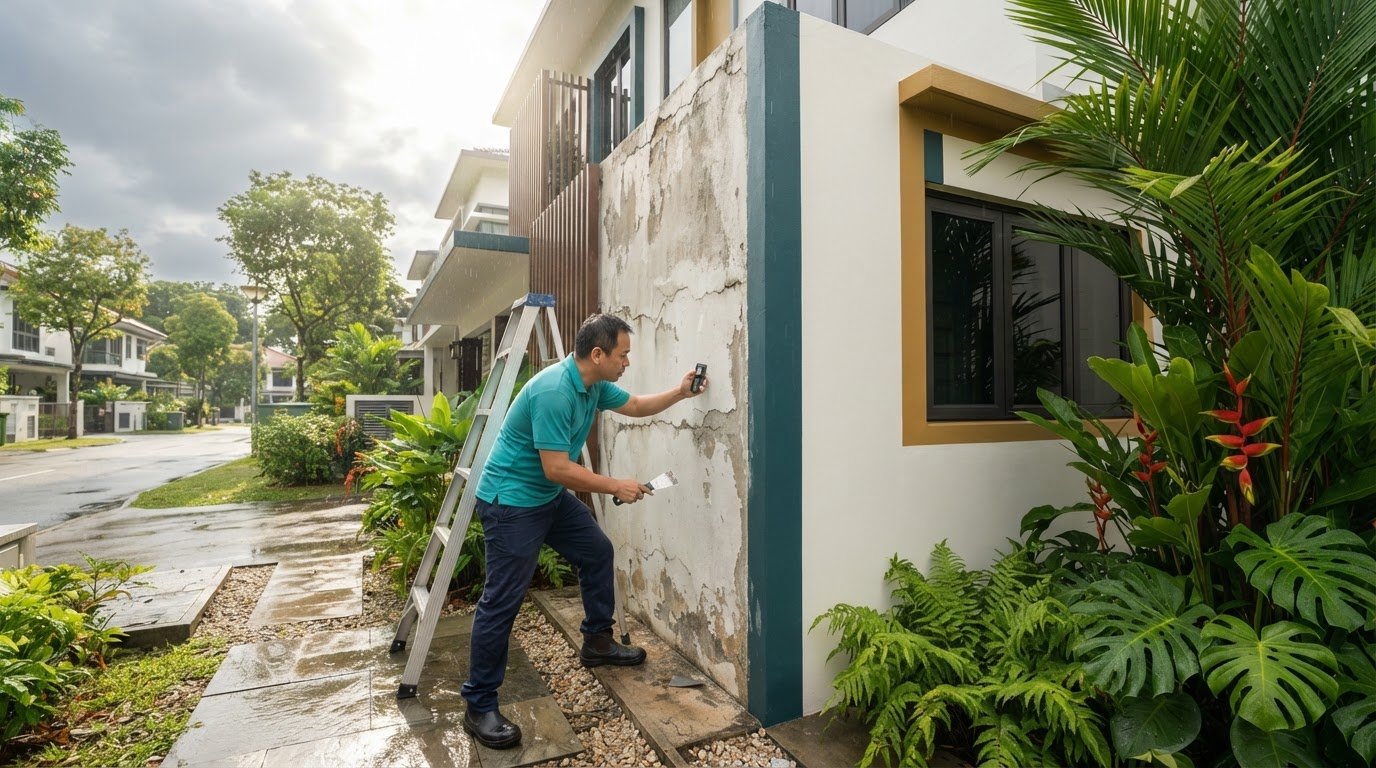
Fading or uneven colour may reflect prolonged sun exposure. Peeling can mean the paint has lost adhesion, while stains, recurring damp patches or hairline cracks may indicate moisture movement or changes in the substrate. These signs are not diagnoses. A stain can have several causes, and a crack’s location and pattern provide useful context.
If a patch remains damp or returns after the surface dries, the source may be beyond the paint film. Water can travel through cracks, joints or parts of the wall assembly. The rain screen principle illustrates how some wall systems manage rain by helping keep water away from the inner structure. A coating alone cannot resolve every route moisture may take.
Why Singapore’s climate calls for regular observation
Singapore receives about 2,300 mm of rain annually, and humidity often ranges from 70% to 90%. Repeated wetting, limited drying and intense sunlight can affect exposed finishes in different ways. Wear also depends on a building’s orientation, shelter, surrounding conditions and upkeep, so no single repainting timeline suits every property.
Regular wall inspections help you spot changing finishes before mistaking a surface symptom for the whole problem. Observe walls after wet periods and during routine property maintenance. Note whether marks recur, spread or cluster near cracks and joints. This record can help distinguish a one-off blemish from a pattern that needs closer assessment before repainting.
Does Exterior Paint Alone Protect Walls from Rain and Sun?
Exterior paint forms a protective finish that helps a wall withstand weather and maintain its appearance. But it is not a fix for every moisture problem. Protecting exterior walls from rain and sun depends on a sound substrate, suitable preparation and a coating compatible with the surface. If water is entering through a crack or damaged render, painting over it may hide the symptom without addressing its source.
When repainting may be appropriate, and when it may not be
Repainting may suit a sound wall where the main issue is finish-related, such as faded colour or widespread wear in the paint film. Persistent damp patches, peeling that returns after repainting or damaged masonry call for closer assessment before another coat goes on. Moisture or surface deterioration may need attention first.
Paint can protect a surface, but it is not a substitute for waterproofing or structural repair. If the wall remains damp, identify and address the underlying cause before treating the finish.
Why preparation and compatible materials matter
A durable result begins with a clean, stable surface. Remove dirt and loose paint, then repair cracks and other defects so the new coating can adhere to sound material. Painting over flaking layers or unrepaired damage can leave weak spots beneath an otherwise fresh-looking finish.
Choose a coating suited to the wall and its condition. A sealer may help limit moisture seepage or peeling as part of an appropriate preparation system, but it is not a universal remedy for active leaks. Careful assessment helps determine whether repainting, plastering or wall restoration is the right next step. For an exterior surface that needs attention, professional exterior painting brings surface preparation and coating together in a considered plan.
How to Inspect and Maintain Exterior Walls Before Repainting
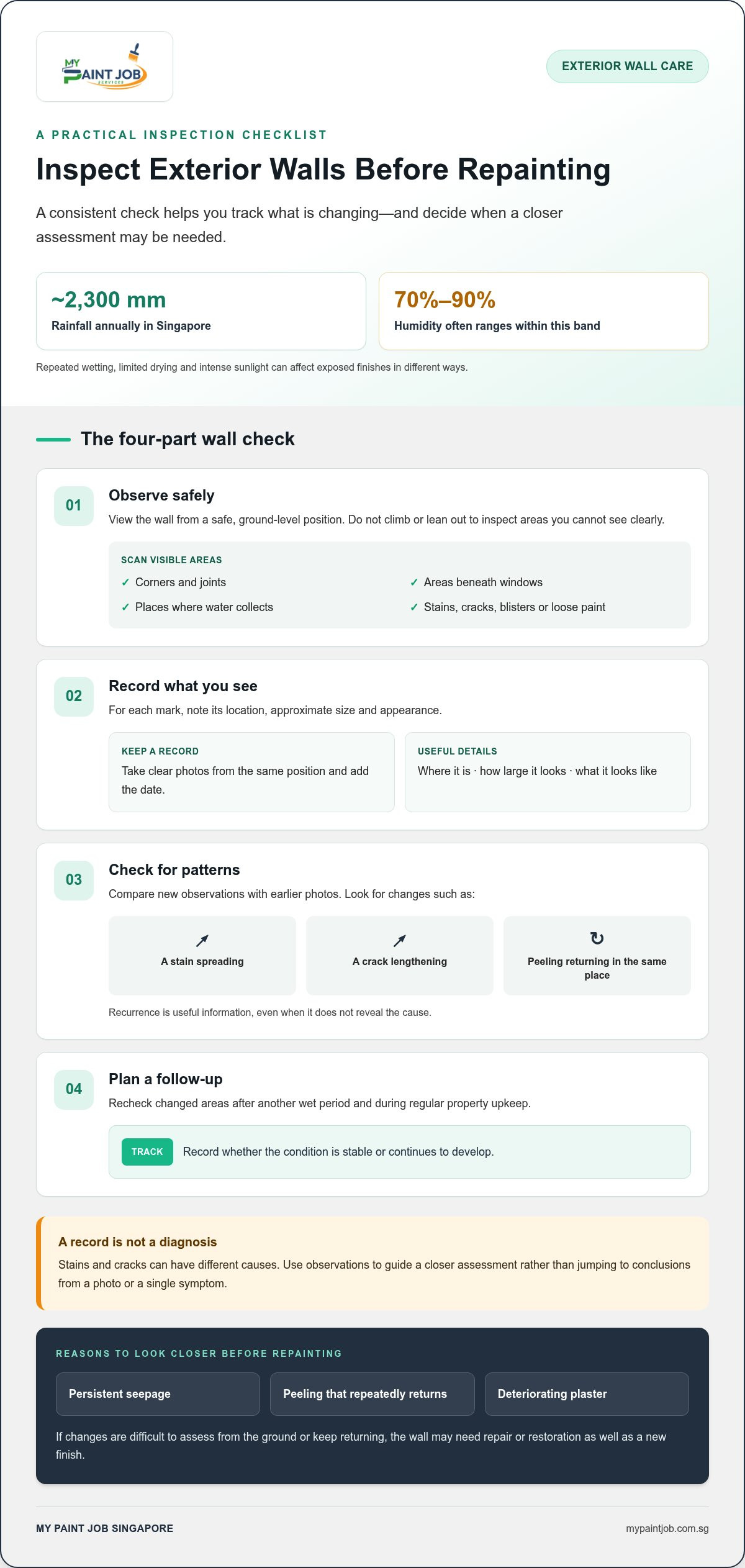
A short, consistent check can help you tell whether a wall’s condition is stable or changing. Inspect after wet weather and include exposed walls in routine property maintenance. Stay at a safe, ground-level viewing position. Do not climb or lean out to examine areas you cannot see clearly.
A simple exterior wall inspection sequence
- Observe safely. Scan the visible wall, including corners, joints, areas beneath windows and places where water tends to collect. Look for stains, cracks, blistering or loose paint.
- Record what you see. Note each mark’s location, approximate size and appearance. Take clear photos from the same position and add the date so you can compare them later.
- Check for patterns. Compare new observations with earlier photos. Has a stain spread, a crack lengthened or peeling returned in the same place? Recurrence is useful information, even if it does not reveal the cause.
- Plan a follow-up. Recheck areas that have changed after another wet period and during regular property upkeep. Record whether the condition is stable or continues to develop.
Observe and record what the wall shows. Do not treat a photo or a single symptom as a diagnosis. Stains and cracks can have different causes, so a clear record helps guide a closer assessment without jumping to conclusions.
When a wall needs closer professional attention
Persistent seepage, peeling that repeatedly returns or deteriorating plaster are reasons to investigate the wall before repainting. The surface may need repair or restoration as well as a new finish. For background on the role of plaster condition and finishing, consult a wall plastering and skim coating guide.
If changes keep returning or are difficult to assess from the ground, professional wall restoration can help address the surface before repainting. A closer assessment helps match the work to the wall’s condition.
Protect Exterior Walls with the Right Preparation and Painting Plan
A sound exterior finish depends on a sequence, not just a fresh coat. Assess the wall, address defects, prepare the surface for the chosen coating, then apply a finish suited to the substrate and its exposure. This measured approach to protecting exterior walls from rain and sun helps avoid covering damage that needs attention before painting.
What a careful exterior painting process should address
Begin with the wall’s condition. Remove loose paint, attend to surface defects and repair damaged plaster before coating. Cleaning and suitable preparation create a more stable base. Select materials for the wall and its exposure, rather than choosing by colour alone. A sealer may suit some surfaces, but it is not a universal fix for persistent moisture.
My Paint Job Singapore brings over 10 years of industry experience to exterior painting, plastering and wall restoration. The team uses meticulous surface preparation and premium eco-friendly paints. For broader planning advice, the Professional House Painting Services in Singapore: The 2026 Homeowner’s Guide can help you consider the steps involved in a painting project.
When to plan exterior painting or wall restoration
If your observations point mainly to finish wear and the underlying surface is sound, plan for preparation and repainting. Where plaster is deteriorating or other defects are visible, include repair or restoration before the final coating. Persistent dampness or recurring seepage calls for closer investigation of the moisture source. Repainting alone may not address it. The article Waterproofing Services Singapore: Stop the Leaks offers further context for considering persistent moisture concerns.
Professional preparation helps address the surface carefully before painting, but no coating can promise a fixed service life under every building’s conditions. If your inspection shows deterioration, arrange an assessment for exterior painting and wall restoration. The work can then be planned around the wall’s condition.
Make Your Next Wall Check Count
Let the wall’s condition guide your next step instead of covering every mark with fresh paint. A dated photo and a brief note about what has changed give you a clearer starting point for deciding whether the surface needs attention. It is a practical habit for protecting exterior walls from rain and sun over time.
If dampness or deterioration keeps returning, a professional assessment can help shape a suitable plan. My Paint Job Singapore brings more than 10 years of industry experience to exterior painting and wall plastering, with meticulous surface preparation. Explore My Paint Job’s exterior painting services to take the next step.
Start with the wall’s condition, then choose the work that fits. For exterior painting, plastering or wall restoration, contact My Paint Job Singapore to discuss a practical plan for your walls.
Frequently Asked Questions
Can exterior paint stop water from seeping through a wall?
Not reliably if water is entering through a defect or from behind the painted surface. Exterior paint helps protect the exposed face of a wall, but it cannot seal every crack, joint or route water may take. If seepage appears near a window, pipe or wall junction, note the location and whether it worsens after rain. That context can help identify what needs closer attention.
How often should I inspect exterior walls for rain and sun damage?
No single inspection interval suits every building. Include a visual check in routine property upkeep and look again after particularly wet periods. Pay extra attention to walls that receive direct sun or are more exposed to wind-driven rain. A reminder in your maintenance calendar can make checks more consistent. Compare dated photos taken from the same viewpoint to spot gradual changes.
Can I paint an exterior wall during rainy weather?
Do not apply paint in the rain or to a damp surface. Moisture can interfere with adhesion or drying, and sudden showers may disrupt the work. Follow the paint manufacturer’s instructions for suitable application conditions and allow the wall to dry as directed. Plan around the forecast and avoid starting if rain is likely during application.
Why does exterior wall paint peel or blister?
Peeling or blistering can develop when paint loses adhesion or moisture becomes trapped beneath the coating. Poorly prepared surfaces, an unstable older paint layer or moisture entering through the wall may contribute. A blister after a hot, sunny period can have a different cause from peeling around a recurring damp patch. Do not assume appearance alone identifies the problem. Note where it occurs and whether it returns.
Does exterior wall paint protect against strong sunlight?
Exterior paint provides a finish that helps shield the wall surface from weather, including sunlight, but it cannot prevent all colour change or wear. Sun exposure varies with a wall’s orientation and the amount of shade it receives. For protecting exterior walls from rain and sun, choose a coating intended for exterior use and suited to the wall. Regular observation still matters.