A cafe table can look renewed on day one and still struggle under daily service. Spills, repeated wiping, cleaning products and constant handling test both the coating and the preparation beneath it. That’s why wood varnishing for cafe tables takes more planning than occasional home furniture care. The finish needs to suit the timber and its daily use, and the curing period needs to fit the cafe’s operating plan.
Durability depends on more than choosing a hard-wearing varnish. You also need to assess the existing surface, prepare it correctly and follow the selected product’s application and curing guidance. This guide covers those steps, how to compare finish characteristics, and how to plan table downtime in a Singapore cafe. My Paint Job Singapore provides commercial painting and wood varnishing services, with careful surface preparation and project planning to help operators refresh their tables.
Key Takeaways
- Choose a finish with the table’s daily use and cleaning routine in mind. No coating prevents every mark or spill.
- Use clear or tinted finishes and gloss, satin or matte sheens to shape the table’s appearance, not as a measure of durability.
- For wood varnishing for cafe tables, assess the existing coating first. Preparation and removal methods depend on its condition and the selected finish system.
- Plan the work around table condition and cafe operations, and follow the coating’s application and curing guidance before returning tables to service.
Wood Varnishing for Cafe Tables: What Daily Service Demands
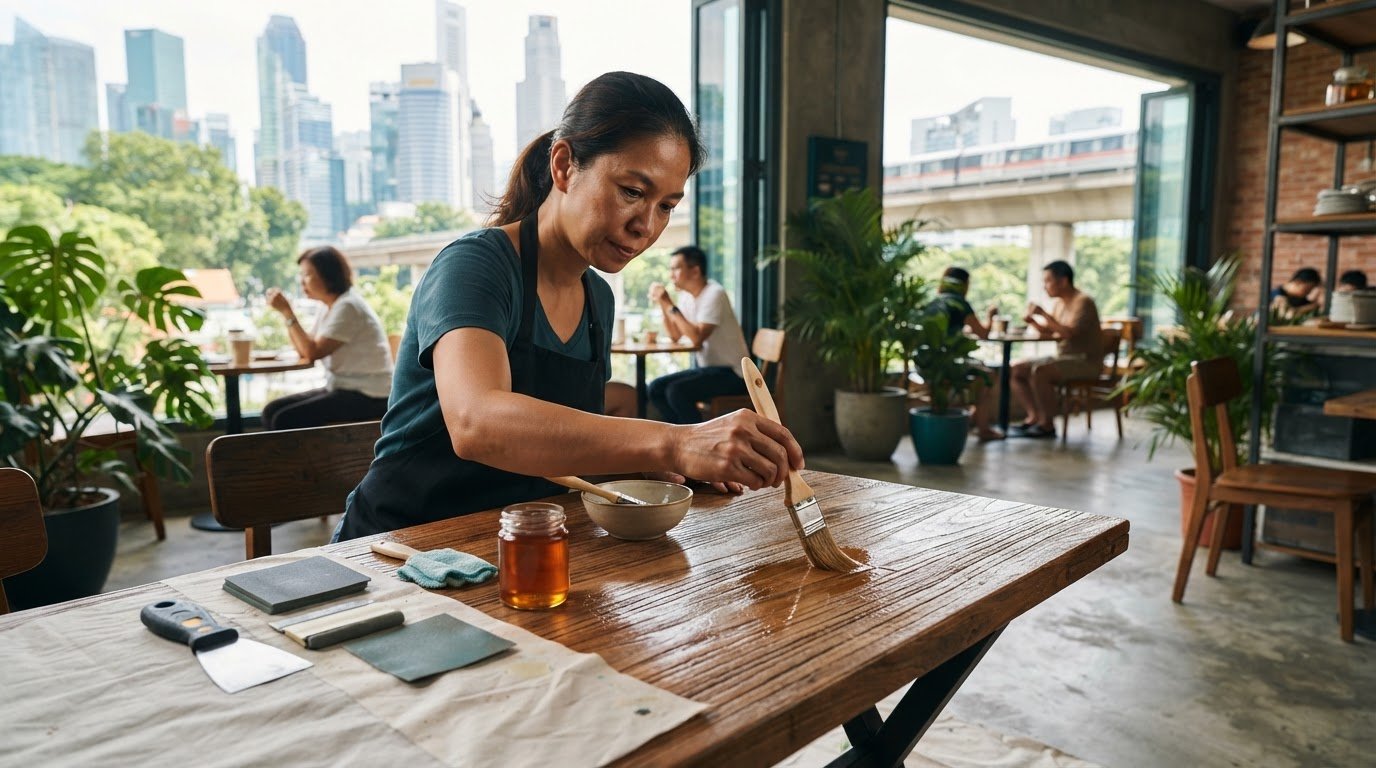
Wood varnishing for cafe tables means preparing and coating timber to refresh its appearance and create a protective surface suited to regular service. Varnish can help shield wood from everyday wear, but it won’t prevent every scratch, heat mark or spill. Start by considering how each table is used and checking its condition.
How cafe use changes the table-finishing brief
Tableware slides across the surface, customers lean on edges, and drinks spill and need prompt wiping. Repeated cleaning adds wear over time, so the finish must suit both the table’s use and the cleaning guidance for the selected coating. For a basic overview of varnish types and composition, see understanding wood varnishes.
Singapore’s warm, humid conditions make it especially important to follow product-specific instructions for application and curing. Temperature and humidity can affect how a coating behaves, so don’t assume every varnish can be applied or returned to service in the same way.
When varnishing may be preferable to replacing a table
A table with sound, repairable timber may be suitable for refinishing. A dull or worn coating may need only suitable preparation and recoating, while deeper damage calls for closer assessment. Loose joints, splits, swollen areas and significant dents may need repair before a new coating can create an even result.
Check the existing finish as well. If it’s peeling, incompatible with the intended coating or otherwise unsuitable as a base, it may need to be removed or abraded. The right approach depends on the table’s condition and the coating system selected. A careful assessment helps distinguish a surface that needs renewal from one requiring more substantial repair.
Choosing a Wood Varnish for Cafe Tables: Finish, Use, and Care
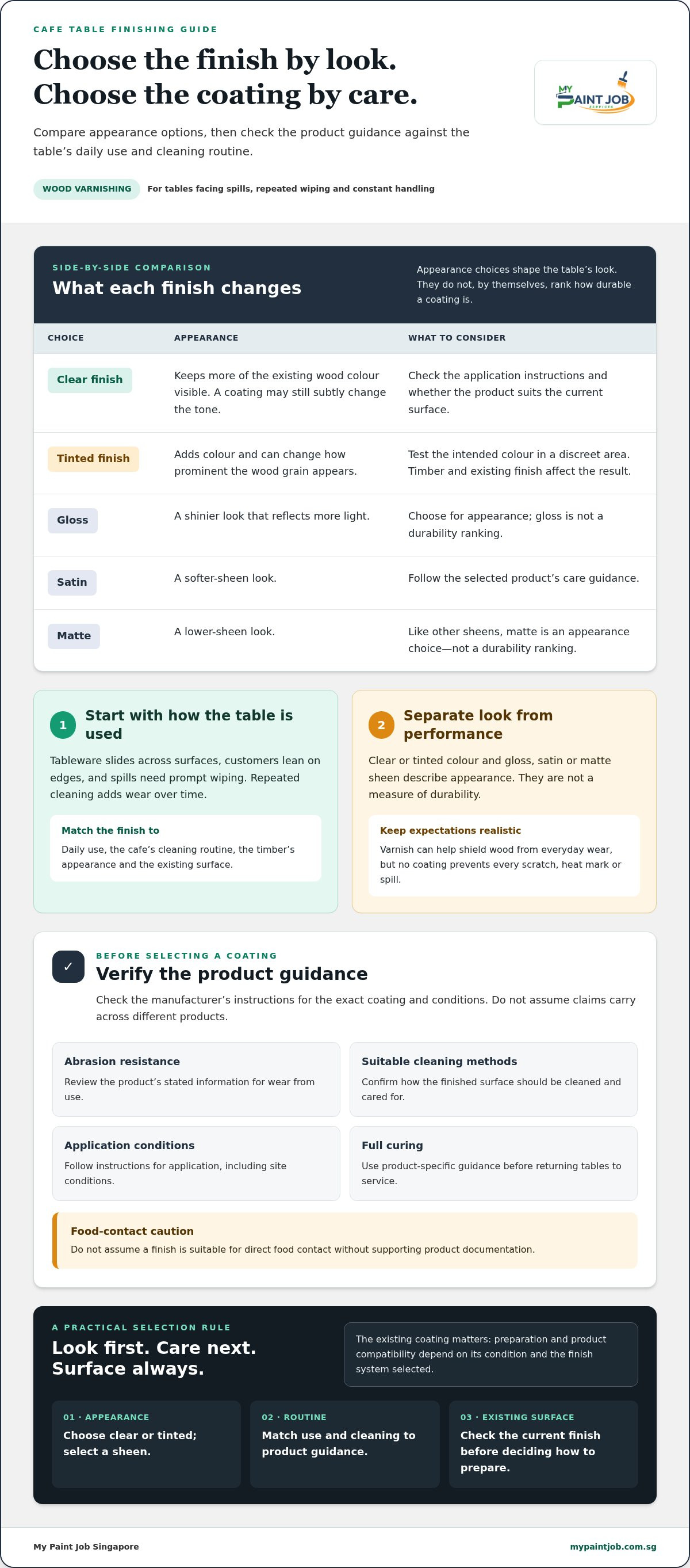
The right finish should suit both the timber’s appearance and the routine it will face. For wood varnishing for cafe tables, compare colour, sheen, cleaning requirements and the coating’s stated performance. Don’t choose by appearance alone.
What to compare before selecting a table finish
| Choice | Appearance | Care and product considerations |
|---|---|---|
| Clear finish | Keeps the existing wood colour more visible, though a coating may subtly change its tone. | Check the product’s application instructions and whether it suits the current surface. |
| Tinted finish | Adds colour and can change how prominent the grain appears. | Test the intended colour on a discreet area, since the timber and existing finish affect the result. |
| Gloss, satin or matte | Creates a shinier, softer-sheen or lower-sheen look respectively. | These are appearance choices, not a ranking of durability. Follow the selected product’s care guidance. |
Checklist: Match the finish’s appearance and care instructions to the table’s use, cleaning routine and existing surface. Before deciding, read the manufacturer’s guidance for abrasion resistance, suitable cleaning methods, application conditions and full curing. Don’t assume performance claims apply across different coatings, or that a finish is suitable for direct food contact without supporting product documentation.
How finish choice affects the cafe atmosphere
Sheen and colour can complement existing furniture, flooring and lighting. A clear coating keeps more of the wood’s character visible, while a tint can bring tables closer to other interior colours. Gloss reflects more light; satin and matte have less sheen. For a consistent look, use one finish and colour approach across the tables, while allowing for differences in timber and previous coatings.
My Paint Job Singapore provides wood varnishing services to help align surface preparation and finish selection with the tables’ condition and the cafe’s requirements.
Preparing and Varnishing Cafe Tables: A Practical Project Plan
A clear sequence helps protect the finish and manage disruption. For wood varnishing for cafe tables, plan each stage around the table’s condition, the coating system and the cafe’s service needs.
- Inspect: Check for worn coating, stains, loose joints, splits and other damage. Identify the existing finish before deciding how to prepare it.
- Clear the work area: Remove tableware and nearby items, then set tables aside in a clean, suitable space. Working in groups can help preserve a practical service layout.
- Prepare surfaces: Clean away grease and residue, let the timber dry, repair suitable defects, then create an even surface. Remove dust thoroughly before coating. Dust or residue trapped under varnish can leave a rough or uneven appearance.
- Apply: Follow the coating manufacturer’s instructions for preparation, application conditions, tools and recoating. Whether an old finish should be removed or abraded depends on its condition and compatibility with the selected coating system.
- Allow it to cure: Protect the tables while the coating dries and cures as directed. Singapore’s humidity and other site conditions make product-specific guidance important. Don’t assume a standard timeframe.
- Return to service: Put tables back into use only when the manufacturer’s instructions indicate they’re ready for the intended use, including cleaning.
Plan work around cafe operations and curing
Consider taking tables out of service in groups, leaving some available while others are being prepared or curing. Choose the sequence to suit the layout and operating workflow. Project duration and return-to-use timing vary with table condition, application requirements and product conditions, so build flexibility into the plan.
Touch-dry doesn’t necessarily mean ready for normal cafe use. Follow the coating’s curing and return-to-service guidance before placing tableware on the surface or restarting routine cleaning. My Paint Job Singapore provides professional wood varnishing, including careful preparation and project planning for your tables.
Professional Wood Varnishing for Cafe Tables: From Assessment to Upkeep
A useful assessment shapes the work before varnishing begins. For wood varnishing for cafe tables, consider the timber or other substrate, the type and condition of the existing finish, visible damage and the appearance you want. These details inform preparation and coating choices, rather than treating every table the same way.
What professional varnishing can address
Careful preparation and an even finish are important parts of the work. Where the surface is suitable, professional wood varnishing can refresh its appearance and add a coating selected for the intended use. My Paint Job Singapore brings more than 10 years of industry experience in commercial work and wood varnishing. Explore the parquet floor varnishing guide for related information on wood finishing, or read about commercial painting services.
Scope and scheduling should reflect the number and condition of the tables, the preparation required and how the cafe can manage table downtime. A considered plan can help reduce avoidable disruption without promising a fixed completion or curing time.
Keeping varnished cafe tables presentable
Care continues after the tables return to service. Follow the selected coating’s cleaning instructions and use suitable cleaning materials. Wipe up spills promptly, then check the surfaces periodically for dull patches, peeling, scratches or other wear. These checks can help identify when a table needs attention. The right maintenance approach depends on the coating and its condition.
My Paint Job Singapore provides wood varnishing for cafe tables. Careful assessment, suitable preparation and coating-specific upkeep guidance help you plan a refresh around your tables’ condition and cafe operations.
Give Your Cafe Tables a Considered Refresh
A lasting-looking result starts with sound decisions: assess the timber and existing coating, prepare the surface carefully, and choose a finish whose appearance and care instructions suit daily cafe use. For wood varnishing for cafe tables, follow the product’s curing guidance and plan table downtime around service needs. Regular cleaning as directed and prompt attention to spills can help keep the finish presentable.
My Paint Job Singapore brings more than 10 years of painting industry experience to commercial painting and wood varnishing, with careful surface preparation as part of its service approach. Projects can be planned around table condition and the finish you want. Arrange wood varnishing for your cafe tables with My Paint Job Singapore and take the next step toward a refreshed dining space.
Frequently Asked Questions
Is wood varnish suitable for cafe tables?
Wood varnish can suit cafe tables when the selected coating is intended for that surface and its expected use. Cafe tables face frequent handling, spills and cleaning, so consider the product’s stated performance, care instructions and curing requirements. No finish prevents every mark or spill. Don’t assume a coating is suitable for direct food contact without supporting product documentation.
How do you prepare cafe tables before varnishing?
Inspect the timber and existing coating, clean away grease and residue, then allow the surface to dry. Repair suitable defects and sand or otherwise prepare the surface as directed by the selected coating system. Remove dust thoroughly before application, since trapped particles can affect smoothness and appearance. Preparation methods depend on the table’s condition and coating compatibility.
How long should varnished cafe tables cure before use?
Keep tables out of service for the curing period specified by the coating manufacturer. There isn’t one reliable timeframe for every varnish because product instructions and application conditions differ. A surface that feels touch-dry may not be ready for tableware, regular wiping or normal cafe use. Follow the product’s return-to-use guidance, including instructions relevant to cleaning or contact.
Can you varnish cafe tables without removing the existing finish?
Sometimes, but assess the existing finish first. If it’s sound and compatible with the new coating system, preparation may involve cleaning and abrading rather than complete removal. Peeling, damaged or incompatible finishes may need more extensive removal. For wood varnishing for cafe tables, the right preparation depends on the coating’s condition, the timber beneath it and the product instructions.
How should a cafe clean varnished wooden tables?
Clean varnished tables according to the selected coating’s care instructions. Use suitable cleaning materials, and don’t assume a cleaner or abrasive cloth is safe for every finish. Wipe spills promptly, then check surfaces periodically for peeling, dull patches or wear. If the coating becomes damaged, seek guidance on appropriate maintenance before applying a new product over the existing surface.