
A paint tin can look closed and still leave you with a dry, unusable leftover when the next touch-up comes around. Storing leftover paint for future use means protecting the seal from air and contamination, then keeping the paint in a suitable place. If you’re unsure how to close an opened tin, where to keep it in Singapore’s warm, humid conditions or whether old paint is still usable, a few careful steps can help.
This guide explains how to clean and seal the rim, choose a suitable container and storage spot, and label paint so you can identify its colour and room later. Paint type and storage conditions affect how long it keeps, so don’t rely on the tin’s age alone. Before reusing it, check for changes in smell and texture, and don’t apply it if it appears spoiled. Good storage makes future touch-ups easier and helps you make better use of paint left after a home refresh.
Key Takeaways
- Storing leftover paint for future use can make touch-ups easier, but careful storage cannot preserve paint indefinitely.
- Prepare the tin promptly after painting to help protect the remaining paint from contamination and air exposure.
- Choose a storage spot suited to Singapore’s warm, humid climate, away from harsh heat and temperature swings.
- Before a touch-up, assess the paint’s condition rather than relying on how long it has been stored.
Why storing leftover paint properly matters for future touch-ups
What can cause leftover paint to deteriorate?
A loose lid or paint on the rim can prevent the container from sealing properly. Air exposure may dry the paint’s surface and form a skin. That layer doesn’t necessarily mean all the paint underneath has changed, but don’t stir dried skin back in, as it can leave lumps. Heat, direct sunlight and temperature swings can also affect paint over time. Persistent clumps or an unpleasant smell throughout the paint are reasons to check its condition carefully before use.
Why keep a small amount for touch-ups?
Stored paint can be useful for covering minor marks from moving furniture or repairing a small area where the finish has been damaged. Keeping the original colour details makes routine upkeep easier. Thoughtful storage and reuse also support the broader idea of paint recovery: paint stewardship programs are one part of that conversation. When storing leftover paint for future use, label the container clearly and keep its product information with it. Assess the paint before applying it rather than assuming storage has kept it fresh.
How to store leftover paint for future use, step by step
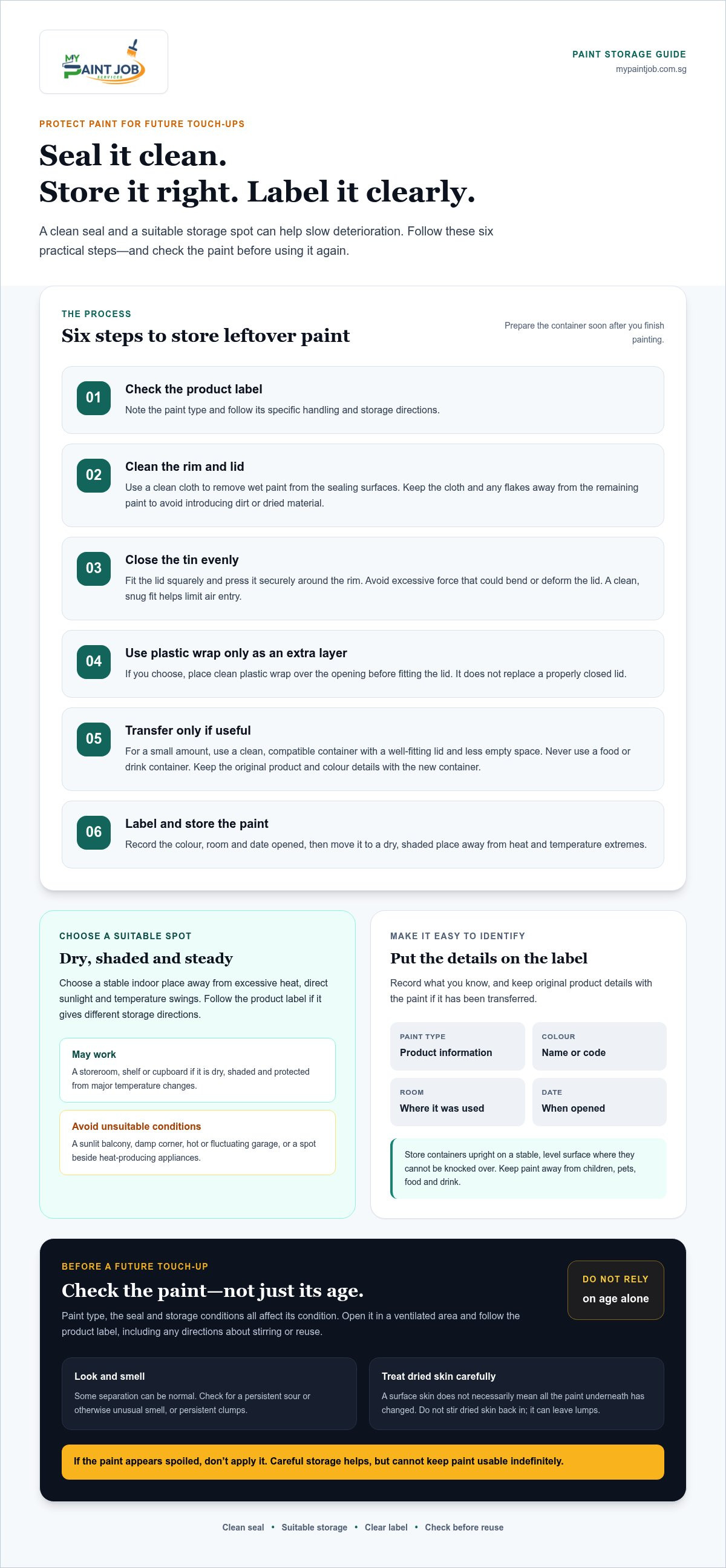
Prepare the container soon after you finish painting. A clean, secure seal helps limit air exposure while you move the tin to a suitable storage spot. Follow these steps:
- Check the product label. Note the paint type and follow its specific handling and storage directions.
- Clean the rim and lid. Use a clean cloth to remove wet paint from the sealing surfaces. Keep the cloth and any flakes away from the remaining paint to avoid introducing dirt or dried material.
- Close the tin evenly. Fit the lid squarely and press it securely around the rim. Avoid excessive force that could bend or deform the lid. A clean, snug fit helps limit air entry, a key part of preventing paint from spoiling.
- Use plastic wrap only as an extra layer. If you choose, place clean plastic wrap over the opening before fitting the lid. It does not replace a properly closed lid.
- Transfer only if useful. For a small amount, use a clean, compatible container with a well-fitting lid and less empty space. Never use a food or drink container, which could be mistaken for something consumable. Keep the original product and colour details with the new container.
- Label and store the tin. Record the colour, room and date opened, then move it to a dry, shaded place away from heat and temperature extremes.
Clean the rim, close the lid evenly, label the paint and store it in a suitable place. These steps support careful storing leftover paint for future use, but cannot guarantee that the paint will remain usable indefinitely.
If leftover paint is part of a larger home refresh, professional home painting can help create a consistent finish from the start.
Where to keep stored paint in Singapore’s warm, humid conditions
Choose a stable indoor spot that stays dry, shaded and away from excessive heat. A corner that feels cool isn’t automatically suitable if it gets damp, receives strong sunlight or sits beside equipment that warms the area. Keep paint in a dry, shaded indoor location with steady conditions, and follow the product label if it gives different storage directions.
Is a storeroom, garage or balcony suitable?
Judge the conditions, not the room name. A storeroom may work if it’s dry, shaded and protected from major temperature changes. A garage may heat up or fluctuate, while a balcony can expose tins to sun, rain and outdoor humidity. Avoid unprotected spots and damp areas where a metal tin could rust; for homeowners planning practical utility spaces, organization concepts from The Garage RX show how dedicated cabinetry can keep supplies elevated and properly organized. Keep paint away from children, pets, food and drink, and don’t store it beside heat-producing appliances.
How should paint containers be labelled and arranged?
Record the paint type, colour name or code, room and date opened, where available. If you’ve transferred the paint, keep the original label or product details with the new container. Clear information lets you identify what’s inside without relying on memory.
- Store each container upright on a stable, level surface.
- Keep lids securely closed and place tins where they cannot be knocked over.
- Store paint separately from everyday food and household products so it won’t be mistaken for something else.
When storing leftover paint for future use, a protected indoor shelf or cupboard may be more suitable than a sunlit balcony or damp corner. Follow the product’s storage directions. If you’re planning a broader home refresh, explore professional home painting for a carefully prepared finish.
How to check stored paint before using it again
Don’t judge stored paint by age alone. Its type, how well the tin was sealed and where it was kept all affect its condition. Before relying on stored leftover paint for a touch-up, inspect it carefully and follow the product label, including any directions about stirring or reuse.
What signs suggest paint may no longer be usable?
Open the container in a ventilated area and check for a persistent sour or otherwise unusual smell. Some separation can be normal. If the label allows stirring, mix the paint thoroughly and see whether it returns to a smooth, even consistency. Don’t use it if hard lumps remain, it feels gel-like after stirring, or you notice mould or rust. If you’re uncertain about its condition, avoid applying it to a large or prominent surface.
How can you make future touch-ups easier?
Test the paint first. Apply a small amount to an inconspicuous area of the same surface, then let it dry fully before checking the colour and finish in the room’s lighting. A wet patch can look different from the dried result. If the test doesn’t blend well or the paint behaves unusually, don’t proceed with a visible repair. For a larger refresh, read this professional house painting guide.
If you decide not to reuse the paint, follow the product label and verify current Singapore disposal guidance for its type. Never pour paint down a drain. Small amounts of water-based paint can be dried completely before disposal in regular trash; oil-based paint is hazardous waste and should go through a licensed chemical disposal service, not be dried out or placed in regular trash. Keep unusable paint contained while arranging the appropriate disposal route.
Planning a broader home refresh? Plan your next home refresh with My Paint Job.
Make Your Next Touch-Up Easier
A little care after painting can make future repairs more manageable. Clean the rim and close the tin securely, keep it upright in a dry, shaded indoor spot, and label it with the colour details. Before using it, check the smell and texture, follow the product directions, and test a small area before touching up a visible surface. Storing leftover paint for future use can help preserve a useful colour match, but always let the paint’s condition guide your decision.
For a wider home refresh, My Paint Job Singapore provides residential and commercial painting, with surface preparation and post-project clean-up as part of the service. Plan your next home refresh with My Paint Job and take the next step towards a carefully finished space.
Frequently Asked Questions
How long can you store leftover paint?
Leftover paint can remain usable for different lengths of time depending on its type, how well it was sealed and where it was stored. There’s no single shelf-life estimate that applies to every tin. Check the product label, then inspect the paint’s smell and texture before reuse. Even if it looks sound, apply a small test patch and let it dry before touching up a visible area.
Can you store leftover paint in a plastic container?
Yes, if the container is clean, seals securely and is compatible with that paint. Compatibility depends on both the paint and the container, so follow the product directions. Choose a container that isn’t much larger than the leftover amount to limit excess air space. Keep the original label or product and colour details with it, and never use a food or drink container.
Is it okay to store paint in a garage or storeroom?
It can be suitable if the actual spot is dry, shaded and protected from temperature extremes. A garage that heats up or a damp storeroom may be unsuitable, so assess the location rather than relying on its name. Keep the container upright with its lid secured, and store it away from children, pets, food and drink.
How can you tell if stored paint has gone bad?
Look for a persistent sour or unusual smell, hard lumps, or a jelly-like texture that remains after stirring. Some separation can be normal if the paint returns to a smooth consistency when mixed. Check the label before stirring. If the texture or smell remains concerning, don’t use the paint on a large or prominent surface. Test a small, inconspicuous patch if it seems usable.
Should you throw away leftover paint or keep it for touch-ups?
Keep leftover paint if it’s identifiable, the container is securely sealed and the paint passes an inspection before reuse. Save the colour and product details with it to make future touch-ups easier. If it appears spoiled or you don’t need it, follow the label and Singapore disposal guidance. Never pour paint down drains; fully dried water-based paint can go in regular trash, while oil-based paint requires licensed chemical disposal.