
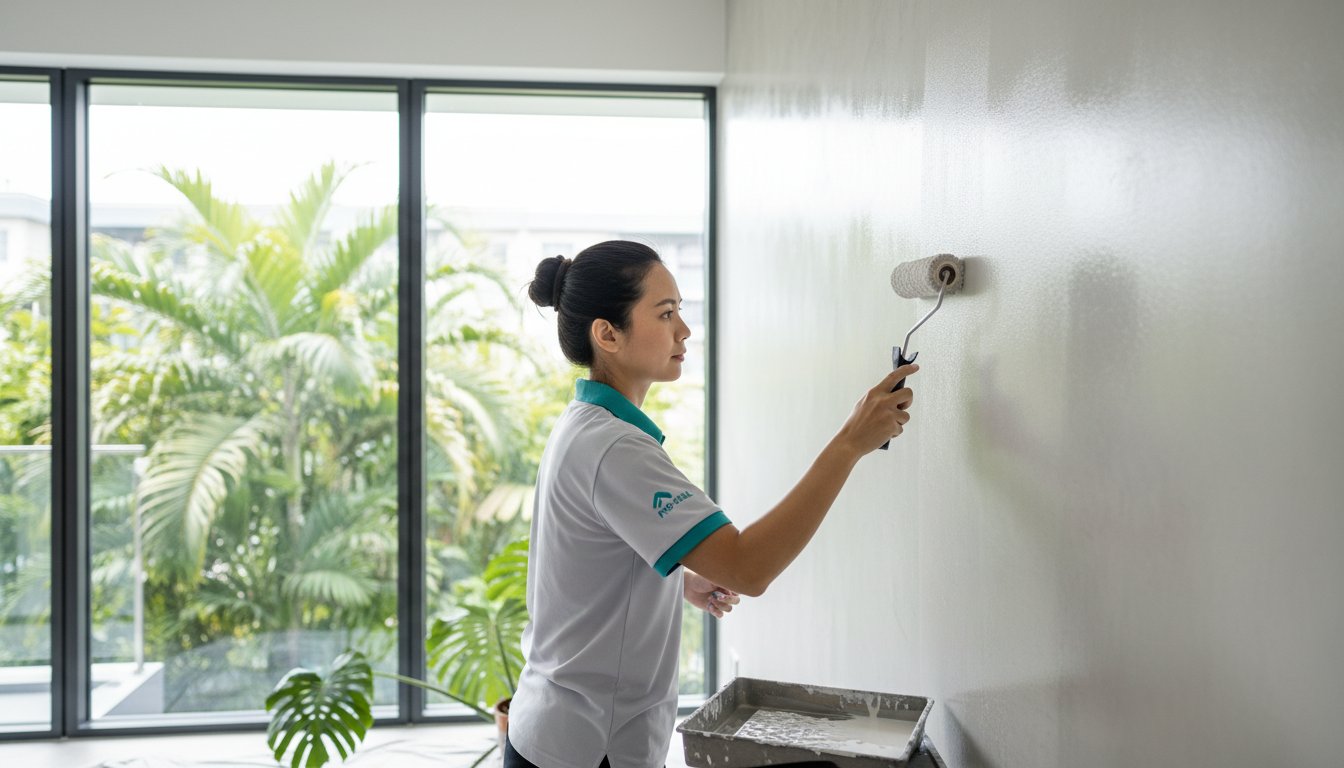
In Singapore, where humidity levels average 84% year-round, your wall’s color is only as good as the foundation beneath it. Most homeowners believe a fresh coat of paint is enough to transform a space, but without a high-quality paint sealer, that masterpiece can quickly turn into a nightmare of peeling layers and white powdery efflorescence. You likely want a home that stays beautiful without the stress of constant touch-ups or bubbling plaster. We’ve seen many residents struggle with these issues after attempting a quick fix without the right technical knowledge.
We understand the frustration of seeing a DIY job fail within 90 days because of moisture damage or alkaline stains. This guide provides the expert knowledge you need to select and apply the correct sealer for your HDB flat or landed property. You’ll discover how to distinguish between primers and undercoats, ensure your surface preparation is flawless, and gain the confidence to achieve a professional finish that stands up to our tropical climate. Let’s turn your vision into a long-lasting reality with precision and care.
Key Takeaways
- Understand how a high-quality paint sealer creates a defensive barrier against alkali “burn” in new concrete to keep your topcoat vibrant and durable.
- Discover the technical differences between water-based and solvent-based sealers to select the right product for your specific HDB or landed property needs.
- Learn the essential surface preparation techniques, from deep cleaning to expert plastering, that guarantee a smooth and professional-grade finish.
- Gain the skills to troubleshoot common moisture-related issues like white powdery efflorescence and chalking for long-term wall protection.
What is a Paint Sealer and Why is it Critical for Singapore Walls?
A paint sealer is a specialized, thin liquid coating designed to penetrate porous masonry surfaces and create a uniform, stable base for your chosen color. It acts as the essential bonding agent between raw masonry and your decorative topcoats, ensuring the final finish adheres perfectly to the wall. In our decade of experience painting HDB flats and landed homes across the island, we’ve found that skipping this layer is the most common reason for premature paint failure.
Singaporean walls present a unique chemical challenge. Fresh concrete and plaster used in local construction are naturally high in alkali. If you apply paint directly to these surfaces, the alkaline salts react with the moisture in our tropical air, leading to what professionals call an “alkali attack.” This reaction literally burns through the paint film, causing white powdery stains and patchy discolouration that ruins your interior’s aesthetic. A high-quality paint sealer creates a robust chemical barrier that neutralizes these salts before they can damage your masterpiece.
The Difference Between Sealer, Primer, and Undercoat
While homeowners often use these terms interchangeably, they serve distinct roles in surface preparation. Sealers are formulated to close the pores of absorbent materials like plaster. Primers focus on creating “teeth” for better adhesion on smooth surfaces, while undercoats are thicker and help build film depth to hide previous colors. Don’t rely on “2-in-1” products for your kitchen or bathroom. These multi-purpose paints often lack the specialized chemical resistance needed to withstand the high-humidity environments found in Singapore homes.
Why Humid Climates Demand High-Performance Sealers
Our local humidity often hits 90% during the monsoon season, which can cause moisture to seep into unsealed walls. This trapped water eventually pushes the paint away from the surface, resulting in unsightly bubbles and peeling. Using a dedicated paint sealer seals off these microscopic pathways. It also provides a critical first line of defense against fungus and mould growth on damp interior walls. Protect your home by choosing a sealer that is specifically engineered for weather-resistant performance in tropical climates.
Choosing the Right Sealer: Solvent-Based vs. Water-Based
Selecting the correct paint sealer depends entirely on the current condition of your walls. Before you head to the hardware store, perform a simple “finger rub test.” Run your hand across the surface of your existing wall. If a white, powdery residue transfers to your skin, your wall is “chalky.” This happens when the old paint binder breaks down over time. Identifying this early allows you to choose a sealer that can actually penetrate that powder and grip the masonry underneath.
Water-based sealers are the standard choice for most modern HDB interiors. They are popular because they have low VOC (Volatile Organic Compounds) levels and very little odour, which is vital for families living in the home during the project. These products typically dry within 2 to 3 hours, allowing our team to apply the first topcoat on the same day. They work beautifully on new plaster and surfaces that are in relatively good condition.
When to Use Water-Based Sealers
Choose a water-based option for your bedrooms, living areas, and any space with fresh wall plastering. These sealers provide a breathable finish that is perfect for new construction where the walls are still “curing.” Because they dry so quickly, they are the most efficient choice for a fast refresh of your home’s interior masterpiece.
The Power of Solvent-Based Sealers for Problem Walls
Landed properties and older flats often face tougher conditions that require solvent-based sealers. These are heavy-duty products designed to bite into difficult surfaces. If your finger rub test revealed a lot of chalking, or if you’re painting an exterior wall or a high-moisture bathroom, solvent-based is the only way to go. It offers superior adhesion by soaking deep into the substrate, binding loose particles into a solid foundation. While the smell is stronger and drying times can extend to 12 hours, the durability it provides is essential for protecting your investment.
Using the wrong base can cause your expensive topcoat to flake off within 6 months. If you’re worried about making the wrong choice for your specific wall type, our experts offer landed painting services that include a thorough surface analysis to ensure we use the perfect sealer for a lasting finish.

How to Apply Paint Sealer Like a Professional
Achieving a professional-grade finish starts with the right technique. Applying a paint sealer isn’t a step you can rush; it requires a systematic approach to ensure the foundation of your home’s interior is sound. Transform your walls into a long-lasting masterpiece by following these four critical steps used by our expert teams during every HDB or landed project.
- Step 1: Clean the wall thoroughly. Use a damp cloth to remove dust, grease, and loose paint flakes. Statistics show that 95% of painting failures are caused by poor surface adhesion due to hidden debris.
- Step 2: Repair cracks and unevenness. A sealer cannot hide structural flaws. For a perfectly smooth surface, refer to The Ultimate Guide to Wall Plastering and Skim Coating in Singapore (2026) to learn how to prep your substrate with precision.
- Step 3: Apply the sealer. Use a high-quality roller for large flat areas and a brush for cutting into corners and edges. This ensures total coverage and a uniform chemical barrier.
- Step 4: Allow for drying time. While some products claim to be fast-drying, wait at least 4 hours in Singapore’s typical 80% humidity before applying your topcoat.
Surface Preparation: The Secret to a Masterpiece
Preparation is 70% of the work. If you notice rusted steel bars or cracking in your ceiling, you must address spalling concrete repair singapore before you start sealing. Use a metal scraper to aggressively remove old, flaking paint. This allows the paint sealer to reach the raw masonry and provide the protection your home deserves.
Application Tips for a Smooth Finish
Don’t over-thin your product. Adding more than 5% water or thinner to a sealer reduces its protective chemical properties and weakens the bond. Always maintain a “wet edge” by overlapping each stroke with the previous one while it’s still wet. This prevents visible lap marks once the wall dries. For a guaranteed professional result without the DIY stress, get a free quote from our experienced team today.
Troubleshooting Common Sealer Mistakes and Wall Issues
Even when you use a high-quality paint sealer, local homeowners sometimes face persistent wall issues. Understanding these common problems helps you maintain a long-lasting finish and gives you the confidence to protect your property effectively. Our tropical weather is relentless, and sometimes the substrate behaves in ways that require a deeper technical understanding to manage.
Efflorescence is a frequent sight in Singapore, appearing as white, crusty salt deposits on masonry. This occurs when moisture migrates through the concrete, bringing minerals to the surface. If you don’t scrub this away and treat the area with an alkali-resistant sealer, the salts will inevitably destroy your topcoat. Chalking is another common culprit. If the surface isn’t cleaned of all powdery residue, the sealer bonds to the dust rather than the masonry, leading to rapid peeling within months of application.
Blistering happens when heat or trapped moisture causes the paint film to lift and form bubbles. It’s vital to remember that a paint sealer is a protective barrier, not a solution for active structural leaks. If your wall has a burst pipe or severe external seepage, you must engage a waterproofing specialist before we can help transform your space into a masterpiece.
Why Your Paint Still Peels After Using a Sealer
Why does paint still peel after sealing? The most common reason is applying the product to a damp wall. If the moisture content in your concrete exceeds 16%, the sealer simply cannot form a secure bond. Another mistake involves incompatibility; applying a water-based topcoat over a solvent-based sealer that hasn’t cured for at least 24 hours will cause the layers to slide apart and fail. Before sealing, it’s worth understanding whether your surface needs structural work or a cosmetic fix — our guide on plaster walls vs. skim coating for Singapore homes can help you make the right call.
When to Call a Professional Painting Service
Complex environments like shops or offices require industrial-grade solutions and specialized equipment. Our commercial painting services singapore use heavy-duty sealers designed for high-traffic durability and chemical resistance. If you’re dealing with persistent peeling or large-scale damage at home, our house painting services provide the precision and expert surface prep needed for a stress-free result. We bring the right tools to ensure your vision is painted with precision, giving you a fresh coat of confidence in every room.
Secure Your Home’s Beauty With Professional Protection
Protecting your HDB or landed property from Singapore’s persistent humidity starts with a solid foundation. You’ve now got the technical knowledge to identify chalky walls and select the perfect paint sealer to prevent peeling and alkali stains. By focusing on meticulous surface preparation and choosing the right chemical barrier, you ensure that your home’s interior remains a durable masterpiece rather than a temporary fix.
Our team brings over 10 years of expert painting experience to every local project. We use premium eco-friendly paints from reputable brands like Nippon and Dulux to provide a finish that is both beautiful and safe for your family. We also guarantee a 100% hassle-free process, including full furniture protection and a complete clean-up; it’s our way of ensuring you enjoy your refreshed space without any stress or disruption to your daily routine.
Ready to give your walls the professional care they deserve? Get a Free Quote for Your Singapore Painting Project today. Let us help you transform your vision into a long-lasting reality with the precision and expertise your home deserves. Your space is our masterpiece, and we’re ready to help it shine.
Frequently Asked Questions
Do I need a sealer if I am repainting the same colour?
Yes, you usually need a sealer if the existing paint has started to chalk or lose its bond. Color matching doesn’t fix a degraded surface. If the finger rub test reveals a white powder, the old paint binder has broken down. Applying a new coat without a sealer will likely lead to peeling within 12 months.
How many coats of paint sealer should I apply?
One coat is typically sufficient for standard HDB interior walls that are in good condition. If you’re working on an older landed property with highly porous or repaired plaster walls, a second coat ensures a uniform foundation. This extra layer provides the “teeth” needed for your topcoat to adhere with total precision.
Can I use a sealer on a wall that already has mould?
No, you must kill and remove the mould before applying any coatings. Sealing over active spores traps them against the masonry, which leads to bubbling and structural issues. Clean the surface with an anti-fungal wash first, and for a comprehensive approach to removing mold from walls in Singapore’s humid climate, follow a proven treatment protocol before sealing. Once the wall is dry, use a paint sealer to provide the moisture resistance needed for Singapore’s high-humidity environments.
Is it okay to skip the sealer on a brand new HDB wall?
Skipping the sealer on brand new HDB walls is a major risk to your paint’s longevity. Fresh concrete and plaster have high alkali levels that react chemically with decorative paints. This “alkali attack” causes unsightly white stains and patchy discolouration. A sealer neutralizes these salts, giving you a fresh coat of confidence in your new home.
How long can I wait between applying the sealer and the topcoat?
Apply your topcoat within 3 to 48 hours after the sealer has dried. While most water-based products are touch-dry within 180 minutes, leaving a paint sealer exposed for more than 7 days is problematic. Dust and airborne contaminants will settle on the surface, which ruins the adhesion of your final masterpiece finish.


Pingback: Dulux EasyClean Paint Review: Worth It? - My Paint Job Singapore