A painting dispute often begins when the completed work differs from what was agreed. To understand how to resolve disputes with a painting contractor, compare the finished work with the written scope, inspect it in good natural light, and document any differences with dated photos or video. Then raise your concerns politely in writing and give the contractor a chance to respond.
It’s reasonable to expect clarity about the work, finish and any additional tasks before a project is complete. Learning how to resolve disputes with a painting contractor also means knowing when to seek professional advice and how to keep discussions focused on the agreement. This guide explains what can count as a dispute, how to resolve disputes with a painting contractor step by step, and common sources of conflict, from surface preparation and colour choices to incomplete work, extra costs, delays and communication gaps.
Key Takeaways
- Compare the completed paintwork with the written quote, and document any differences clearly before raising a complaint.
- Use a detailed written scope to clarify preparation, products, finishes, inclusions and any approved changes.
- When discussion stalls or the stakes are high, consider professional or legal advice before deciding on further action.
- Identify whether the disagreement concerns workmanship, colour, incomplete work, extra costs, delays or communication to focus your next steps.
1. What Counts as a Painting Dispute?
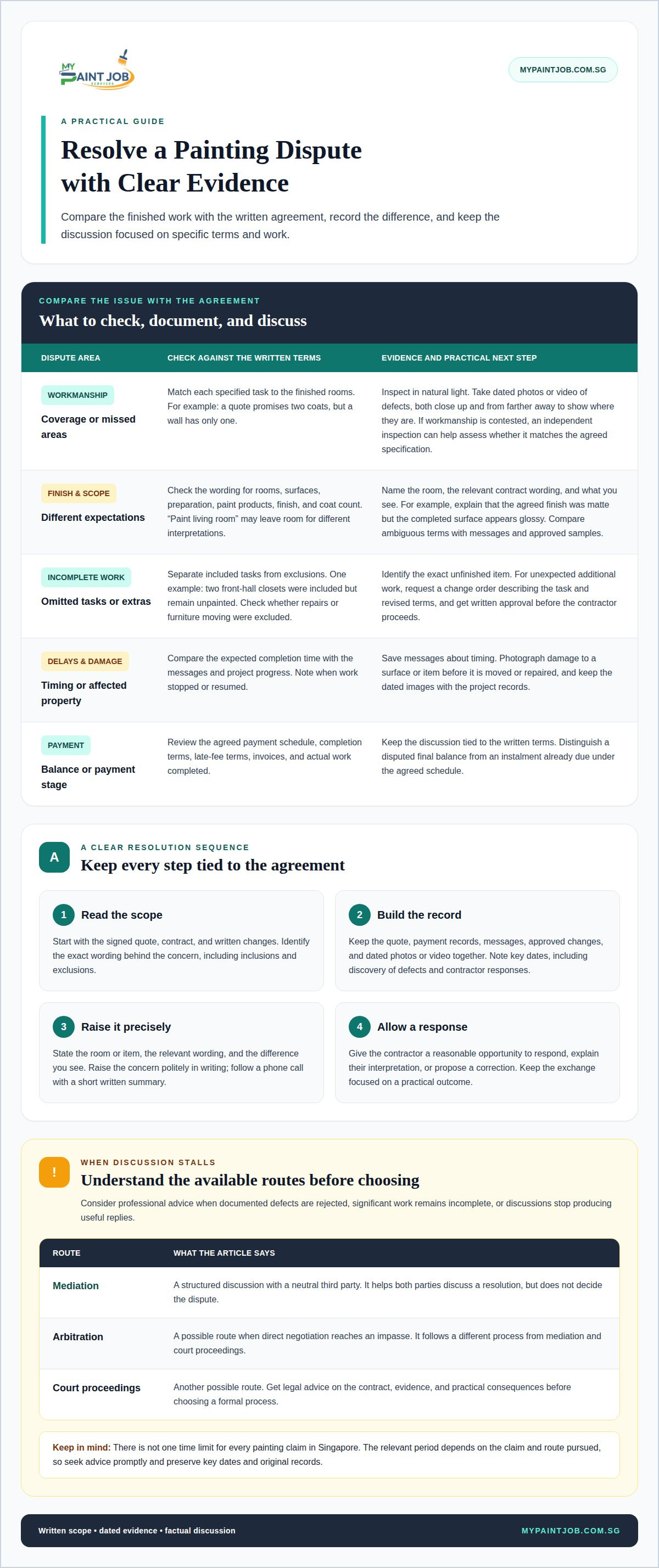
A dispute arises when completed work differs from the written quote, agreed scope, or approved changes. Compare each specified task with the finished rooms. If the quote promises two coats but a wall has only one, record the difference. If two front-hall closets were included but remain unpainted, identify them clearly. Inspect in natural light, since shadows can disguise uneven coverage or missed areas.
Document defective paintwork, delays, or damage with dated photos and video. Capture each defect close up and from farther away to show its location. Keep the signed quote, payment records, messages, and agreed changes together. For delays, save messages about the expected completion time and note when work stopped or resumed. For damage, photograph the affected surface or item before it is moved or repaired.
Disagreements about completion and payment also count. Compare the agreed schedule with actual progress, then check the contract for payment stages and completion terms. A disagreement may involve a balance requested before agreed work is finished, or a homeowner withholding payment over incomplete items. Keep the discussion tied to written terms and specific work, rather than assumptions about what “complete” means.
There isn’t one time limit for every painting claim in Singapore. The relevant period depends on the claim and the route pursued, so seek advice promptly and keep records of key dates, including the agreement, discovery of defects, and contractor responses.
For complex disagreements about contract meaning or warranty claims, mediation gives both parties a structured way to discuss a resolution without going straight to court. CASE can be a starting point for consumer guidance: explain the disputed work, the outcome you want, and the steps already taken. Bring the quote, dated evidence, and written replies to support the discussion.
2. How do I begin to resolve a dispute with my contractor?
Start with the signed quote, contract, and any written changes. Read the scope line by line, then identify the exact wording behind your concern. “Paint living room” leaves room for differing expectations. A clearer scope names the walls, ceiling, preparation, finish, and coat count. Separate included tasks from exclusions, such as repairing cracks or moving furniture.
Before making a claim, check whether the quote states what work is included and excluded, preparation requirements, paint products and brands, finishes, and coat counts. Review the payment schedule and any late-fee terms, then compare them with invoices and completed work. These details help establish what each party agreed to, rather than relying on memory.
For future work, request a detailed written scope and written approval of paint samples before painting begins. If unexpected plaster work or another extra arises, ask for a change order describing the added task and revised terms. Get written approval before the contractor proceeds. This creates a shared record of changes and reduces disputes over whether extra work was authorised.
Raise the issue calmly and precisely. State the room, the relevant contract wording, and the difference you see. For example, explain that the agreed finish was matte but the completed surface appears glossy. Follow a phone call with a short written summary. Give the contractor a reasonable opportunity to respond, explain their interpretation, or propose a correction.
If the scope is ambiguous, discuss the competing interpretations against the quote, messages, and approved samples. Keep the exchange focused on a practical outcome, such as completing an omitted task or agreeing on a correction. Clear records can help both parties reach a resolution before the disagreement escalates. For a clearly defined Singapore painting project, review painting project services as you plan the scope.
3. Seeking legal advice when negotiations reach an impasse
Consider professional advice when the contractor rejects a documented defect, significant work remains incomplete, or discussions stop producing useful replies. A dispute over whether surface preparation met the agreed specification may need technical assessment as well as contract interpretation. Seek legal advice if the disputed amount or potential consequences are substantial, or you’re unsure what to do next.
Before taking formal action, have a lawyer review the signed contract and its dispute-resolution clauses. Bring the quote, approved changes, invoices, photographs, and written communications. Ask how the clauses apply, what obligations remain, and whether the contract describes a process such as mediation or arbitration. A clear review can help you understand the available routes before committing to one.
Pause before withholding payment, arranging replacement work, or making a formal demand. Each step may affect the parties’ positions, especially if the contract sets payment conditions or a process for reporting defects. Ask a lawyer to assess the relevant wording and your evidence first. For example, distinguish a disputed final balance from an instalment already due under the agreed schedule.
Where workmanship is contested, an independent inspection can help establish what is visible and whether it matches the agreed specification. Give the inspector the scope and relevant correspondence, not just a list of complaints. A written assessment may clarify whether the problem concerns coverage, surface preparation, finish quality, or incomplete areas, helping focus further discussions.
If direct negotiation reaches an impasse, possible resolution routes include mediation, arbitration, or court proceedings. Mediation lets both parties discuss a settlement with a neutral third party; it doesn’t decide the dispute. Arbitration and court proceedings follow different processes, so get legal advice on the contract, evidence, and practical consequences before choosing. Keep communications factual, preserve original records, and avoid commitments you don’t understand.
4. Common causes of painting and decorating disputes
Disputes often begin with a mismatch between expectations and the agreed scope. “Prepare and paint the bedroom” may not clarify whether preparation includes filling cracks, sanding, or treating stains. If one party expects wall repairs and the other expects painting only, the disagreement can surface after work starts. Specific descriptions of surfaces and preparation steps help prevent that gap.
Workmanship concerns may involve patchy coverage, visible brush marks, peeling paint, or uneven edges. Surface preparation can also become contentious: paint applied over dust, loose material, or an unrepaired crack may not meet the expected finish. Identify the affected area and describe the observable issue. A clear record helps distinguish a finish defect from a difference in personal preference.
Colour and finish misunderstandings are another source of conflict. A shade can look different under a room’s lighting, while “matte” and “satin” describe distinct finishes. If the selected sample or product wasn’t recorded, the parties may disagree about what was approved. Written sample approval and named finish specifications make the intended result easier to establish.
Incomplete work, property damage, and extra costs can create separate or overlapping complaints. For example, an unpainted door may be an omission, while paint splashes on flooring concern damage. Added plaster repairs can also lead to a scope dispute if approval wasn’t recorded before work proceeded. Keep each issue distinct, since the evidence and proposed remedy may differ.
Delays and poor communication can intensify any of these problems. A missed start date, unclear updates, or unanswered messages may leave each party with a different account of what happened. Record agreed dates and changes in writing, then address the specific cause rather than treating every concern as one complaint. Clear specifications, approvals, and timely updates help prevent small misunderstandings from becoming larger conflicts. To plan a painting project with clear expectations, discuss your painting project.
My Paint Job Singapore
My Paint Job Singapore provides painting services for HDB flats, condos, landed homes, and commercial properties. A repainting project is separate from resolving the underlying dispute, so consider what support you need before proceeding. Clear preparation and an agreed scope help set expectations before painting begins. My Paint Job Singapore focuses on careful surface preparation and quality finishes, helping you plan a refreshed space with practical details in view. Share the property type, areas to be painted, and finish you want to discuss the project. If you’re planning painting work after resolving a contractor dispute, contact My Paint Job Singapore to talk through your needs.
Choose a clear next step for your space
Once the disagreement is addressed, give your home a fresh start by planning any separate painting work with clear expectations from the outset. Knowing how to resolve disputes with a painting contractor can also help you approach future projects with greater clarity, from defining the work to agreeing on the finish you want.
My Paint Job Singapore provides painting services for HDB flats, condos, and landed homes. Guidance on how to resolve disputes with a painting contractor can help you set expectations for a new project, too. Share the property type and the areas you want refreshed to start a practical conversation about your goals.
Contact My Paint Job Singapore to discuss your painting needs. Take the next step at your own pace, with a clearer vision for the space ahead.
Frequently Asked Questions
How do I begin to resolve a dispute with my contractor?
Begin by stating the outcome you want, such as completing an omitted task or correcting a specific finish. Keep the request focused on the agreed work, not assumptions about the contractor’s intentions. Give a clear reply deadline in your message, then save the response. If both parties agree on a remedy, record its scope and timing in writing before work resumes.
What Counts as a Painting Dispute?
A painting dispute is a disagreement about the agreed work, its quality, timing, payment, or consequences. It can involve whether a stain needed sealing before painting, whether a quoted area included a doorway, or whether paint damaged a nearby fitting. A difference in colour preference alone may not establish defective work. The key issue is what the parties agreed and whether the result matches it.
What steps should I take to resolve a dispute with a painting contractor in Singapore?
Set out the issue and requested solution in a dated message, then keep the contractor’s reply with your project records. Avoid threats or public accusations while the facts are being discussed. If a proposed repair is accepted, agree in writing on which areas it covers and how completion will be acknowledged. If discussions stall, consider a neutral mediator or suitable professional advice before escalating.
Can I withhold payment or ask a painting contractor to fix poor workmanship in Singapore?
You can ask the contractor to inspect and remedy work you believe falls short of the agreement. Whether withholding payment is appropriate depends on the contract, payment stage, and circumstances. Don’t assume a workmanship concern automatically permits withholding the full balance. Explain the defect and requested correction in writing, and obtain legal advice before taking a payment step that could breach the contract.
Can the Small Claims Tribunals hear disputes with painting contractors, and what are the claim limits and fees?
The Small Claims Tribunals may hear eligible consumer disputes involving painting services, subject to their jurisdiction and claim requirements. Claim limits and filing fees are set by the applicable tribunal rules, so confirm the current figures and eligibility with the Singapore State Courts before filing. Keep your contract, payment evidence, and correspondence ready, as these records help explain the claim and the remedy sought.
When should I hire a lawyer or report a painting contractor to the police or another authority?
Seek legal advice if a substantial claim remains unresolved, contract terms are disputed, or you’re considering formal proceedings. A workmanship or payment disagreement is generally a civil matter; contact the police if you have a genuine basis to suspect criminal conduct, such as deliberate deception or threats. For other concerns, identify the relevant issue first, since a consumer complaint and a suspected crime follow different routes.