A repaint doesn’t have to interrupt a working day. After-hours commercial painting services can refresh offices, shops and commercial buildings outside their busiest hours; a smaller space may take a few days, while a larger or multi-floor project can take up to two weeks.
A clear plan matters when staff, customers and site access all need consideration. During inspection, professional teams like Mantoolsute Painting Service assess the areas, surface preparation and work sequence, helping define the project scope and schedule.
This guide explains what commercial premises can be painted after hours, what to ask about workmanship and warranty terms, and how to plan ongoing maintenance. You’ll also learn why an annual inspection of commercial paintwork can help identify areas that need attention before a refresh becomes more involved.
Key Takeaways
- Plan work around business operations by mapping the areas, access needs and sequence for evening or holiday painting.
- Understand how surface preparation and repair affect the final finish, and make the expected workmanship clear in the project scope.
- Review warranty terms for coverage, exclusions and the process for reporting a workmanship issue.
- Build a maintenance plan around regular visual checks, so peeling, scuffs and other wear can be addressed before a larger repaint is needed.
1. What types of commercial premises do you paint?
Offices, shops, shophouses and commercial buildings can be considered for repainting outside trading hours. Work areas might include reception desks, meeting rooms, sales floors, corridors or shared spaces. Define the surfaces, access routes, furniture and areas that must stay open before setting the work sequence. A shop might be painted aisle by aisle, while an office could schedule meeting rooms after staff leave.
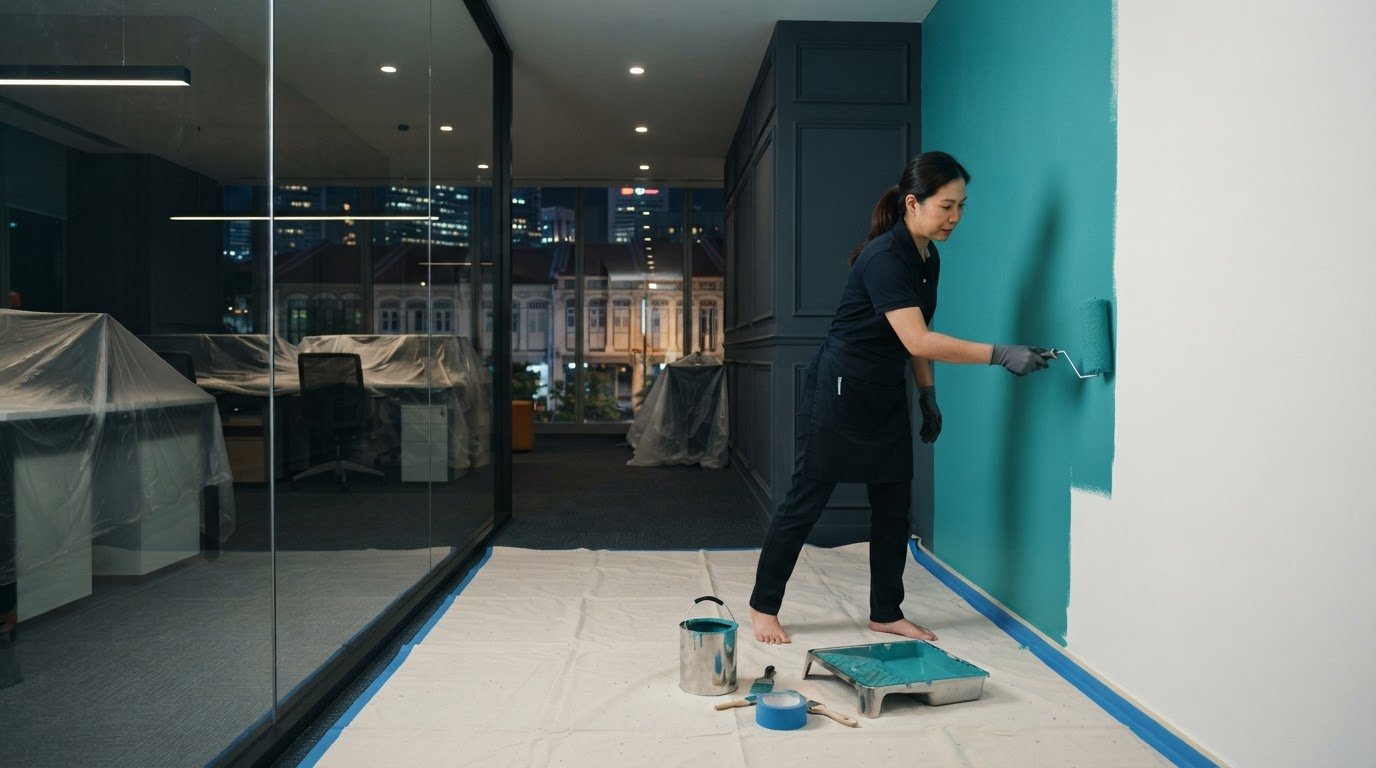
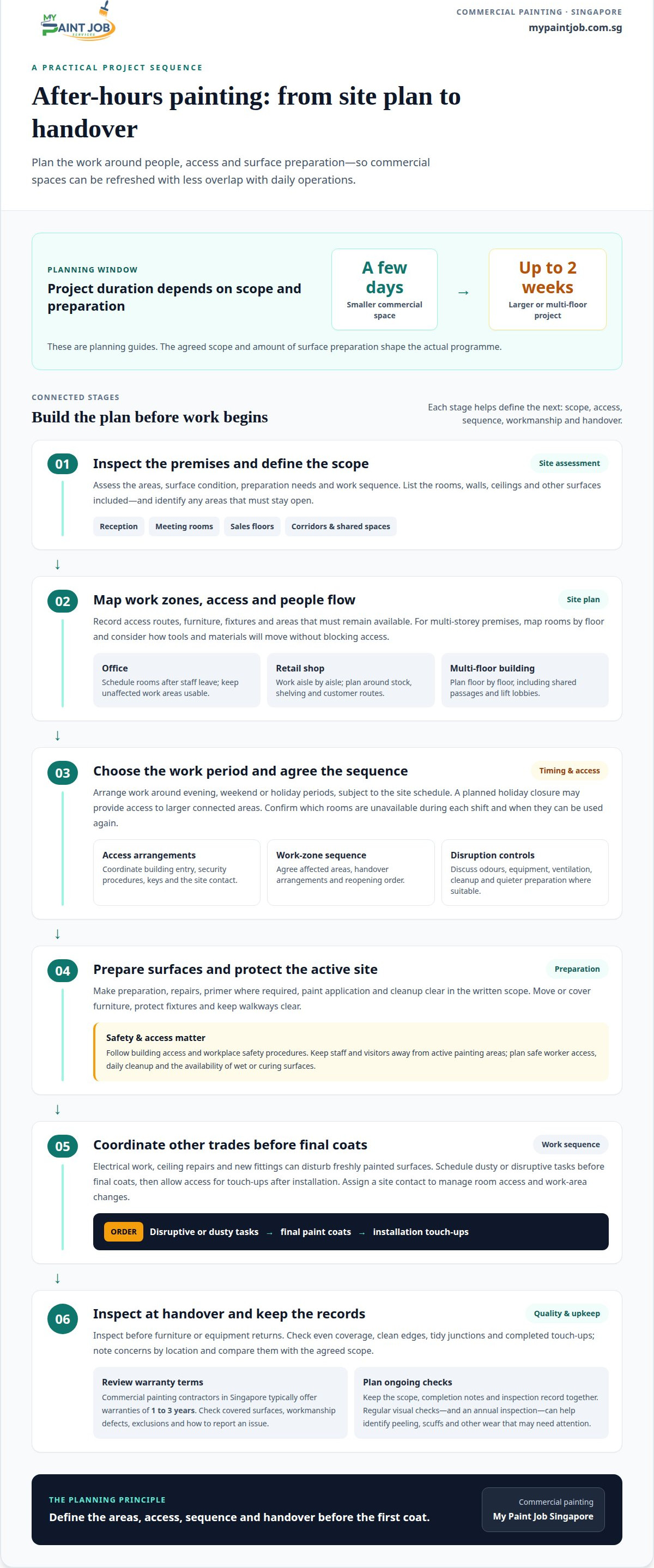
After-hours commercial painting services can be arranged around evening, weekend or holiday periods, subject to the site schedule. A planned holiday closure may give the team access to larger connected areas. For weekend work, identify building access arrangements, security procedures and any noisy activities that need coordination. Smaller commercial spaces might take a few days, while a larger building or multi-floor project can take up to two weeks. These durations help with planning, but the scope and surface preparation shape the actual programme. Confirm which rooms will be unavailable each shift and when they can be used again.
Painting outside normal business hours can reduce overlap with staff and customers, while daytime work may make it easier to reach building contacts. Either way, agree on work zones and the sequence in advance. To limit disruption, move or cover furniture, keep walkways clear, ventilate work areas where practical and use quieter preparation methods where suitable. Discuss odours, equipment and cleanup before work begins.
Follow the building’s access and workplace safety procedures, and coordinate work zones with the site contact. Keep staff and visitors away from active painting areas, and plan safe access for workers and equipment. Restricted access can slow preparation, shared corridors may need careful staging, and wet or curing surfaces may remain unavailable after a work period. For weekend or holiday work, agree on handover arrangements, affected areas, daily cleanup and the reopening sequence before work starts.
2. Contractor warranties and workmanship
In Singapore, commercial painting contractors typically offer warranties of 1 to 3 years. Treat the stated period as one part of the agreement. Read the written terms for covered surfaces and qualifying workmanship defects. Then note exclusions and the process for reporting an issue.
Ask how the work scope defines a finished surface. It should set out preparation, repairs, primer where required, paint application and cleanup. Peeling paint may point to a surface preparation issue, while scuffs from daily use may need a different response. A clear scope helps distinguish workmanship concerns from routine wear.
Inspect the work at handover, before furniture or equipment returns to the area. Look for even coverage, clean edges, tidy junctions and completed touch-ups. Note any concerns by location and describe them clearly. Compare your observations with the agreed scope and any applicable terms rather than assuming every mark has the same cause.
- Coverage: Identify the rooms, walls, ceilings and other painted surfaces covered by the terms.
- Exclusions: Note how the agreement treats impact damage, leaks, stains or later alterations.
- Reporting: Confirm the required contact method and details needed to describe a defect.
- Handover: Keep the scope, completion notes and inspection record together for reference.
Coordinate painting with other contractors before setting the sequence. Electrical work, ceiling repairs and new fittings can disturb freshly painted surfaces. Schedule dusty or disruptive tasks before final coats, then allow access for touch-ups after installation. Assign a site contact to manage keys, room access and changes to the work areas. This helps prevent clashes between trades and keeps handovers clear.
For a commercial project, align the written scope, inspection and trade sequence before work begins. This makes workmanship expectations easier to follow and warranty terms easier to understand. Use commercial painting project planning as the next step when mapping the work.
3. Painting offices, retail spaces, shop houses and buildings
Commercial premises need different painting plans because each space serves a different purpose. An office may prioritise reception walls, meeting rooms and corridors. A retail shop may focus on the sales floor, entrance and fitting rooms. Map the areas first, then identify which spaces need to remain accessible during work.
In an office, divide the work by room or zone so staff can use unaffected areas. Note wall condition, existing finishes and furniture that needs protection. For example, a meeting room can be cleared for preparation and painting while nearby workstations remain in use. Mark doors and shared corridors clearly to direct people around active work areas.
Retail painting needs careful planning around display units, stock and customer routes. A shop might clear one section at a time, protect shelving and keep the entrance orderly. Identify high-contact surfaces, such as walls near counters, and include them in the scope. Decide which fixtures need to be moved or covered before work begins.
For a multi-storey commercial property, inspect each level and note differences in access, lighting and surface condition. A narrow stairwell, upper-floor office or shared passage may affect how materials move through the premises. Record work areas by floor, and plan where tools and materials can be placed without blocking access.
Larger commercial buildings benefit from a clear floor-by-floor sequence. Include lift lobbies, corridors and common rooms in the area plan, then coordinate access with the building’s site contact. Smaller spaces may take a few days to paint, while a larger or multi-floor project can take up to two weeks. The scope and preparation influence the schedule.
4. What commercial painting services are available after hours in Singapore?
After-hours commercial painting can cover interior and exterior surfaces in Singapore. A project might include office walls, retail ceilings, corridor finishes or a building’s exterior walls. Define the locations first, then list each surface requiring attention. This makes the scope clear across different parts of a commercial property.
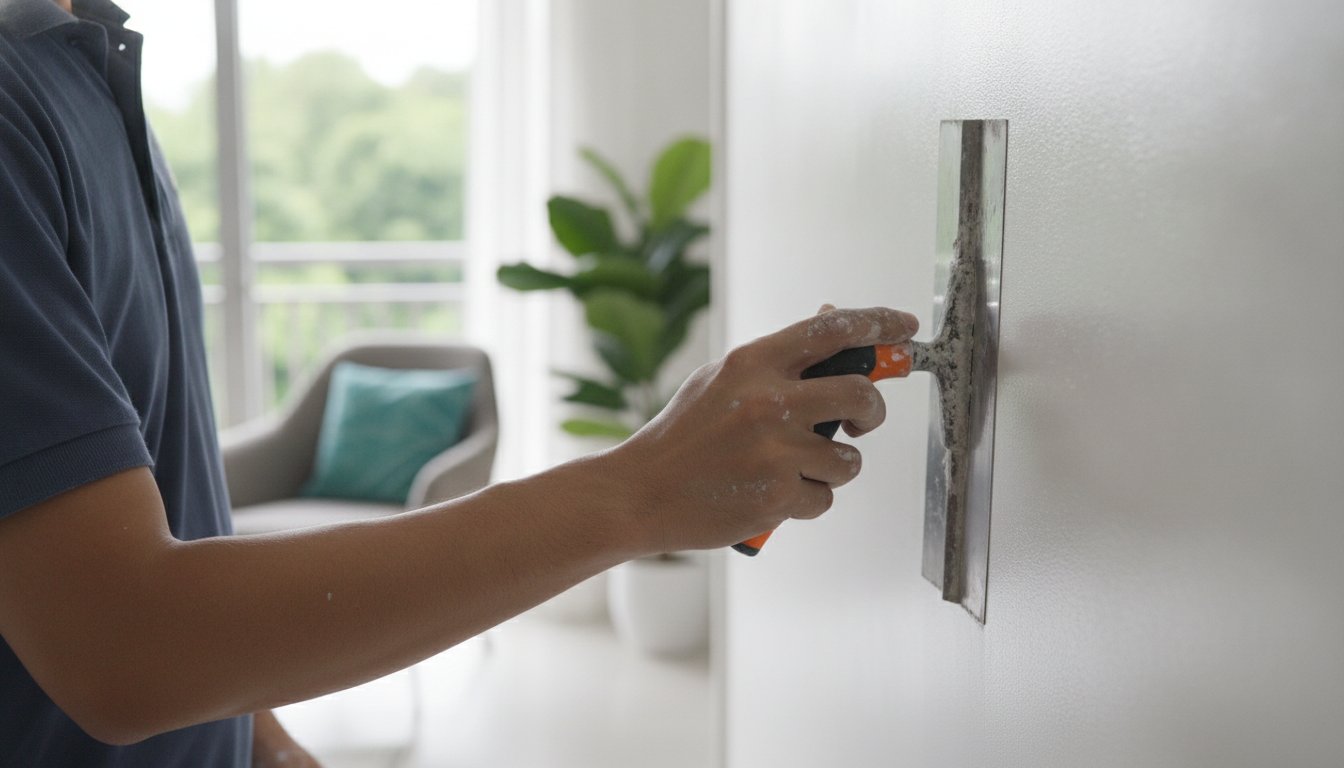
Preparation is a key part of painting. Surfaces may need cleaning, loose paint removal, filling and other preparation before a new finish is applied. For example, a marked office wall may need patching before repainting, while a damaged section may require more substantial repair. Record visible issues separately so they can be addressed in the work plan.
Some commercial projects also need wall plastering or spalling concrete repair alongside painting. These tasks address different surface conditions, so repair and prepare affected areas before applying paint. In a multi-use building, that could mean repairing a damaged corridor section before repainting nearby walls. Clear work zones distinguish repair areas from surfaces ready for painting.
- Interior repainting: Identify offices, sales areas, corridors and shared rooms.
- Exterior painting: Specify the building surfaces and access areas included in the scope.
- Plastering: Mark uneven or damaged wall sections needing preparation.
- Concrete repair: Note spalling areas that need repair before paintwork.
For work outside business hours, set the sequence around site access and surface condition. Confirm which areas can be cleared, where materials can be placed and what needs to be completed before reopening. These details help coordinate painting with daily operations, since rooms and surfaces may need different preparation.
Prepare a list of the affected areas and surface concerns before arranging the project. Arrange commercial painting for a tailored scope covering the relevant premises and work areas.
My Paint Job Singapore: HDB painting services
My Paint Job Singapore provides commercial painting services for businesses planning a refresh around their operations. Share the premises type, areas to paint and preferred work sequence so the team can shape the scope to suit the property, whether it is an office, shop or commercial building.
My Paint Job Singapore also provides painting for HDB flats, condominiums and landed properties. Surface preparation supports a consistent finish, while a defined work area helps keep the project organised. For commercial repainting, gather the site areas, surface concerns and preferred schedule before discussing the project.
Contact My Paint Job Singapore to discuss your painting project, or visit mypaintjob.com.sg.
Plan your next refresh with confidence
Give your repaint a clear starting point: decide which areas matter most to daily operations, then describe the results you want from the finished space. A focused scope turns a broad refresh into a practical project plan, whether you are updating a customer-facing area or renewing a workplace.
For after-hours commercial painting services, include the operating schedule in the project brief. Identify access arrangements, the areas to be painted and any business activities that need to continue. This gives the planning discussion a useful foundation and helps shape the sequence around your premises. Keep priorities specific, such as refreshing reception or improving the appearance of a retail interior.
My Paint Job Singapore can discuss commercial painting alongside residential painting needs. If a repaint is on your plans, discuss your commercial painting project and outline the spaces you want to renew. A well-defined brief is a simple first step towards a more polished, welcoming environment.
Frequently Asked Questions
Do you provide a free site inspection for commercial jobs?
My Paint Job Singapore provides free, non-obligatory quotes, and Inspection is the first step in its project process: Inspection → Preparation → Painting → Cleanup. A quote and an on-site inspection are separate parts of planning. When requesting a quote, share the property type, areas involved and visible surface concerns. This gives the project discussion a clear starting point.
What preparation work is included?
Preparation can include protecting floors and furniture, moving furniture and preparing surfaces before painting. Cracks or holes may need wall plastering, while old wallpaper removal is available as additional work. Identify damaged sections and furniture that needs protection. Low-odour, zero-VOC paint options are available for projects where reducing odour is a priority.
What types of commercial premises do you paint?
My Paint Job Singapore provides commercial painting for offices and retail outlets. The project scope can identify areas such as reception spaces, customer-facing walls, meeting rooms or shop interiors. For example, a business refreshing reception can specify that space separately from back-of-house rooms. A clear list of the premises and affected areas helps define the work.
Which Singapore commercial painters offer overnight or weekend painting?
My Paint Job Singapore offers commercial painting services. If you are planning work overnight or on a weekend, state the preferred work window and access arrangements in the project brief. Include any rooms that must remain available and the order in which areas can be worked on. This makes the schedule an explicit part of the plan.
How much does after-hours commercial painting cost in Singapore?
The project price depends on the scope, painted area, surface condition, preparation needs and access requirements. For example, high ceilings or specialised coatings involve different requirements from straightforward office walls. A free, non-obligatory quote lets you discuss the specific work rather than relying on a generic rate.
How are after-hours painting rates calculated, including overtime and materials?
Commercial project pricing is based on square footage and requirements such as high-ceiling access or specialised coatings. Materials and the work scope also contribute to the estimate. Set out the surfaces, preparation needs and preferred work hours when requesting a quote. This gives the pricing discussion concrete details without assuming a standard overtime rate or materials allowance applies to every site.