
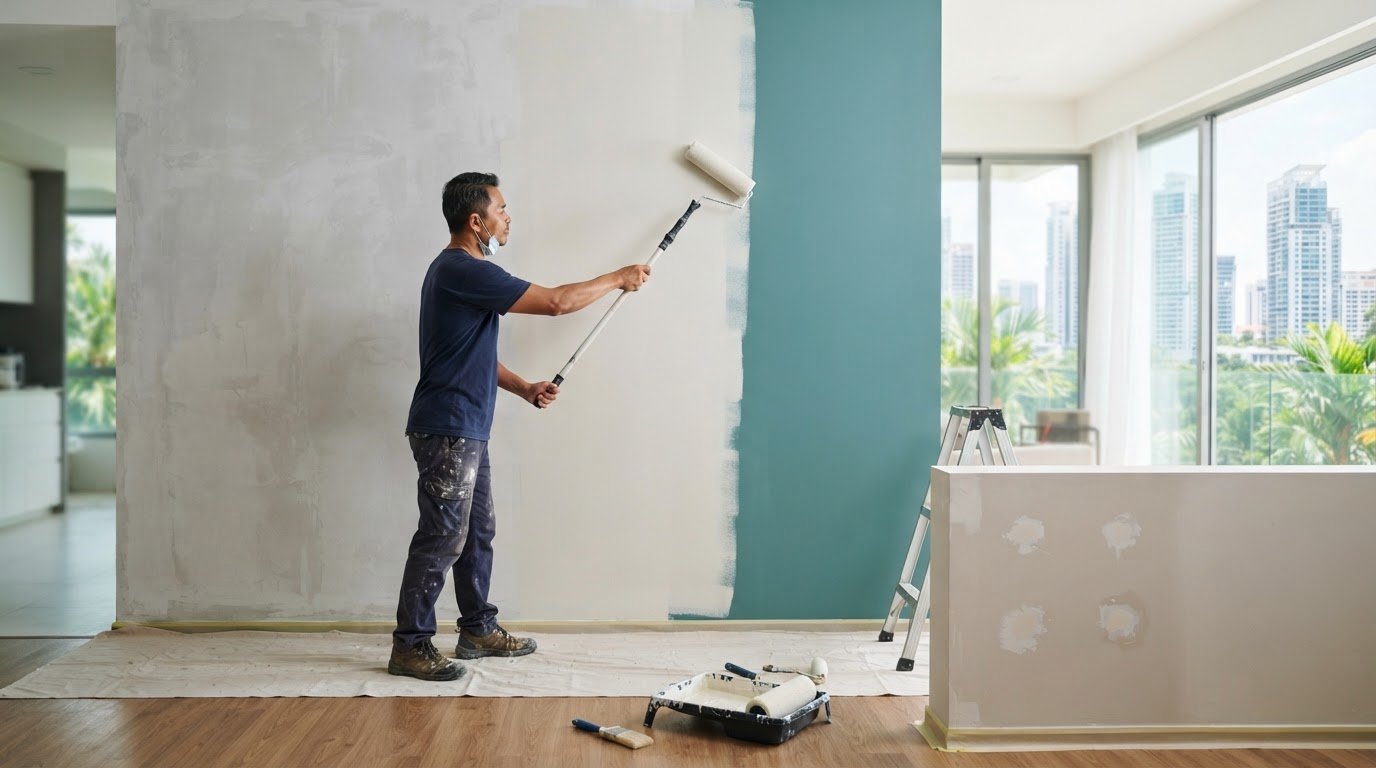
What if the key to a smoother, longer-lasting paint finish is a layer you’ll barely see? It’s natural to wonder whether primer is necessary when fresh paint seems ready to go straight onto the wall. The benefits of using a paint primer can include better adhesion, more even coverage and help managing stains or surface differences, provided the primer suits the wall’s condition.
Primer isn’t a cure-all, and it won’t replace repairs or careful cleaning. The right preparation depends on what’s already on the wall, whether the surface is bare, glossy, patched or stained, and which paint you plan to use. This guide explains what primer does beneath the topcoat, when a dedicated primer is useful and how to prepare walls before painting. It also explains why paint-and-primer-in-one products aren’t the right shortcut for every surface, so you can make a more informed plan for your home.
Key Takeaways
- The benefits of using a paint primer depend on choosing one suited to the wall and the job. A suitable primer can help paint adhere and create a more consistent base.
- Check how the surface absorbs paint. Porous plaster and repaired patches may need different preparation from the surrounding wall.
- Consider primer for bare, patched or markedly porous surfaces, but a sound, previously painted wall may not need a separate coat.
- Inspect, clean and repair the wall before priming. Follow the product label for compatibility, application and drying.
What Are the Benefits of Using a Paint Primer?
Primer is a preparatory coating applied before paint. It creates a suitable base between the wall and the topcoat, but works best as part of careful surface preparation, not as a substitute for it. A suitable primer can help paint adhere and reduce uneven absorption, particularly on porous plaster or where repairs have left different textures. For a concise overview of what paint primer is and how it’s used, see this foundational reference.
How Does Primer Help Paint Adhere?
A well-prepared surface gives primer a better chance to bond with the wall. The topcoat can then adhere to the primer layer. This depends on choosing a primer and paint that are compatible with the surface and with each other. Experienced residential painters such as Walls Done Right emphasize that dust, grease, loose paint or a damaged substrate can interfere with adhesion, making thorough cleaning and preparation essential. Primer can support a sound finish, but it can’t make a poorly prepared surface reliable.
Can Primer Improve Colour and Finish Consistency?
Yes, in the right conditions. A more uniform base can help the topcoat look consistent instead of appearing dull or patchy where the wall absorbs paint unevenly. This can be useful on porous plaster, repaired patches, stained areas or walls changing to a noticeably different colour. The result depends on the surface and the primer selected. Primer won’t necessarily hide every mark or colour difference.
The benefits of using a paint primer are most noticeable when the wall’s condition calls for it. Clean the surface and complete necessary repairs before priming. If there are signs of moisture, address the underlying cause instead of coating over the area. Primer helps prepare a surface for paint; it isn’t a fix for damage, dampness or poor preparation. For property owners planning broader surface treatments or seeking professional finishing work, check out NovoTech to explore high-quality painting services.
How Paint Primer Works on Different Wall Surfaces
Primer works best when it’s selected for the wall and applied in the right order: inspect the surface, clean it, complete repairs, prime where needed, then apply the topcoat. Its role is to form a compatible layer between a prepared wall and the finish paint. These are practical benefits of using a paint primer, but the product must suit both the substrate and the paint system.
A primer and a sealer can serve related purposes, but the terms aren’t interchangeable for every product. Some products may help limit absorption, while others are formulated for particular surfaces or conditions. Check the label to confirm the intended use instead of assuming one product will perform every role.
Primer on New, Porous, or Repaired Plaster
New plaster and filled patches can absorb paint differently from surrounding areas. If one section takes up more paint than another, the topcoat may dry with visible differences in sheen or colour. A suitable primer can help create a more consistent base, but the plaster should be sound and prepared first. For more on plaster preparation, see The Ultimate Guide to Wall Plastering and Skim Coating in Singapore (2026).
Primer on Previously Painted or Stained Walls
Sound, clean existing paint may need a different approach from bare plaster. Check whether the surface is suitable for direct recoating or needs a compatible primer. For stains, look for a product label that specifically identifies the type of stain it’s intended to block. Don’t assume a general-purpose primer will conceal every mark. If staining returns or the wall shows signs of moisture, investigate the cause before painting over it.
When damage or uneven plaster makes the right preparation uncertain, an assessment can help clarify the next step. My Paint Job Singapore provides painting and plastering services as part of its wall preparation and painting work.
When Should You Use Paint Primer, and When Is It Not Enough?
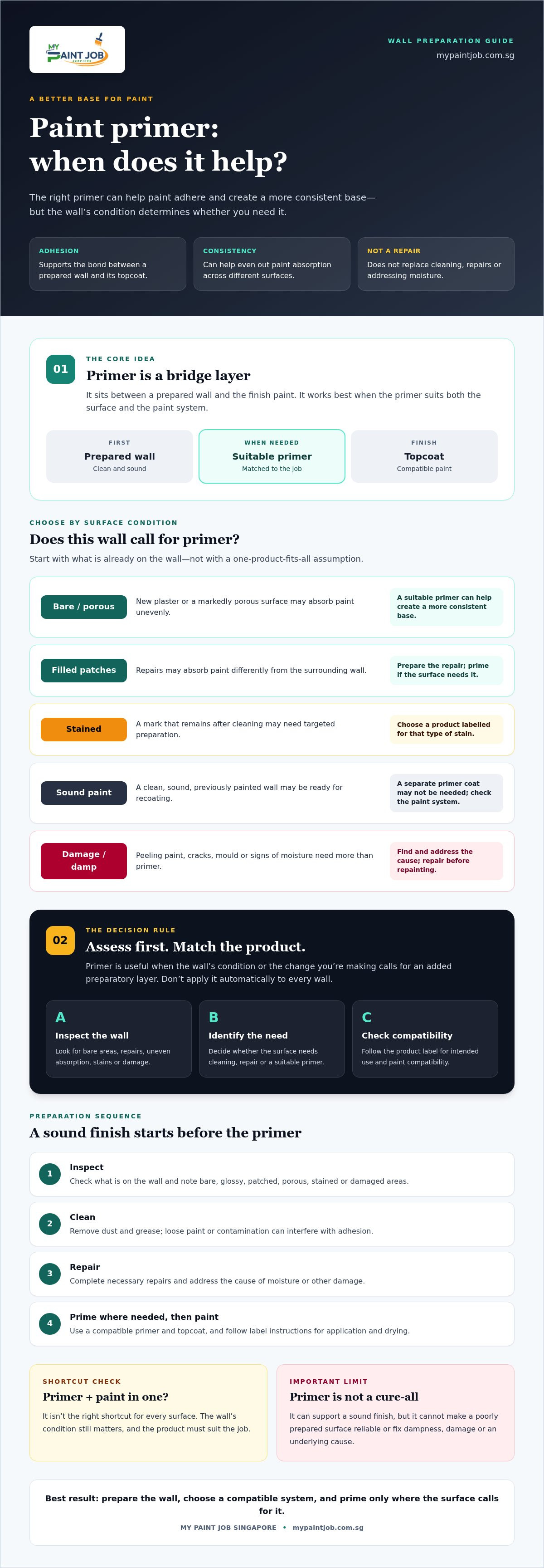
Primer is most useful when the wall’s condition or the change you’re making calls for an added preparatory layer. Bare areas, fresh repairs and markedly porous surfaces may absorb topcoat unevenly. Certain persistent stains or colour changes may call for a primer designed for that purpose. By contrast, a clean, sound wall with existing paint may be ready for repainting without a separate primer coat, depending on the paint system.
Decision rule: assess the surface first, then follow the compatible paint system’s instructions. The benefits of using a paint primer depend on matching the product to the actual issue, not applying it automatically to every wall.
Signs a Wall May Need Primer or Further Preparation
Look for bare patches, filled repairs, areas that seem to absorb paint differently, or stains that remain after cleaning. These may indicate that targeted priming or more preparation is needed. Peeling paint, cracks, mould and dampness need more than a coat of primer. Find and address the underlying cause, remove unstable material and repair the surface as appropriate before repainting. Covering a moisture problem can leave the finish vulnerable to further damage. For exterior substrates, specialized property maintenance providers such as squirtzpropertydetailing.com illustrate how comprehensive washing and detailing prepare surfaces effectively before repainting.
Choosing Primer for the Surface and Paint System
General-purpose primers suit some routine preparation. Stain-blocking products are intended for specific marks, while masonry-oriented options are formulated for suitable mineral surfaces. These categories aren’t interchangeable. Check the label for the substrate it covers, compatibility with your intended topcoat and instructions for use. If the wall is damaged, uneven or shows signs of moisture, a professional assessment can help clarify whether painting, plastering or further repair is the sensible next step.
For help assessing wall condition and planning suitable preparation, explore My Paint Job Singapore’s painting and plastering services.
How to Get the Most from Primer Before Painting
A Practical Primer-Preparation Checklist
- Inspect: Check for loose paint, cracks, stains, dampness and uneven areas.
- Clean and repair: Remove dirt and loose material. Complete repairs before priming. If plastering is needed, finish that work and prepare the surface before applying primer.
- Confirm readiness: Make sure the wall is clean, dry and stable, and suitable for the selected product.
- Protect and apply: Protect nearby furnishings, then follow the label for coverage, tools, coats, ventilation, safety and drying conditions.
Don’t guess at drying time or assume every primer uses the same method. Product directions can differ, so check the specific label before applying the topcoat.
When Professional Surface Preparation Can Help
Damaged or uneven walls, uncertain plaster condition and signs of moisture can make preparation less straightforward. A painter can assess what repairs may be needed and help determine a suitable approach before priming and painting. For broader guidance, look for Professional House Painting Services in Singapore: The 2026 Homeowner’s Guide.
If you’d like to talk through your wall condition and next steps, discuss your painting project with My Paint Job Singapore.
Prepare Your Walls for a Finish You’ll Love
The benefits of using a paint primer depend on matching it to the wall and the paint system. Primer can support adhesion and create a more consistent base, especially on bare, porous or repaired areas. It can’t replace cleaning, sound repairs or addressing the cause of peeling and moisture.
Start by assessing the surface, then follow the product label for compatibility, application and drying. A sound, previously painted wall may not need a separate primer coat, while damaged or uneven areas may call for plastering or other preparation before painting.
My Paint Job Singapore brings over 10 years of painting industry experience, with surface preparation and wall plastering services as part of its work. To plan the right preparation for your walls, discuss your painting project with the team.
Frequently Asked Questions
What are the main benefits of using a paint primer?
A suitable primer can help paint adhere, create a more consistent base and reduce uneven absorption on some surfaces. Certain primers may also help with stains if they’re specifically designed to block them. The benefits of using a paint primer depend on the wall’s condition, product compatibility and correct preparation. Primer doesn’t replace repairs or resolve the cause of moisture, so address those issues before painting.
Do I need primer before painting an already painted wall?
Not always. If the existing paint is clean, sound and compatible with the new coating, you may be able to apply the topcoat without a separate primer. Bare patches, repairs, persistent stains or a major change in surface condition may call for extra preparation or primer. Inspect the wall carefully and follow the instructions for the chosen paint system to decide what it needs.
Can primer prevent paint from peeling?
Primer can support adhesion when it’s suitable for the surface, but it can’t guarantee that paint won’t peel. Peeling may be linked to moisture, contamination, loose existing paint or inadequate preparation. Identify and address the underlying cause, remove unstable material safely, then choose compatible products. If dampness persists or damage is widespread, seek a qualified assessment before repainting.
Should I use primer on plaster walls before painting?
A suitable primer may help bare or repaired plaster absorb paint more evenly than surrounding areas. First, allow plaster and repairs to dry as directed, remove dust and confirm that the selected primer is suitable for the substrate. Requirements can vary with the plaster’s condition and the paint system, so check the product label rather than assuming every plaster wall needs the same treatment.
Can I paint directly over primer without sanding?
Often, you can apply the topcoat once the primer has dried as directed, but sanding requirements depend on the product and surface. Check the label for drying, recoating and preparation instructions. If the primed wall feels rough or has visible imperfections, address them before painting. Don’t assume every primer needs sanding or that sanding is never required.



Pingback: Can Painting Cover Nicotine Stains Permanently? - My Paint Job Singapore
Pingback: Best Coatings for Metal Window Grilles That Last - My Paint Job Singapore
Pingback: Is Zero VOC Paint Durable for Busy Homes? - My Paint Job Singapore
Pingback: How to Remove Wallpaper Safely Without Wall Damage - My Paint Job Singapore