
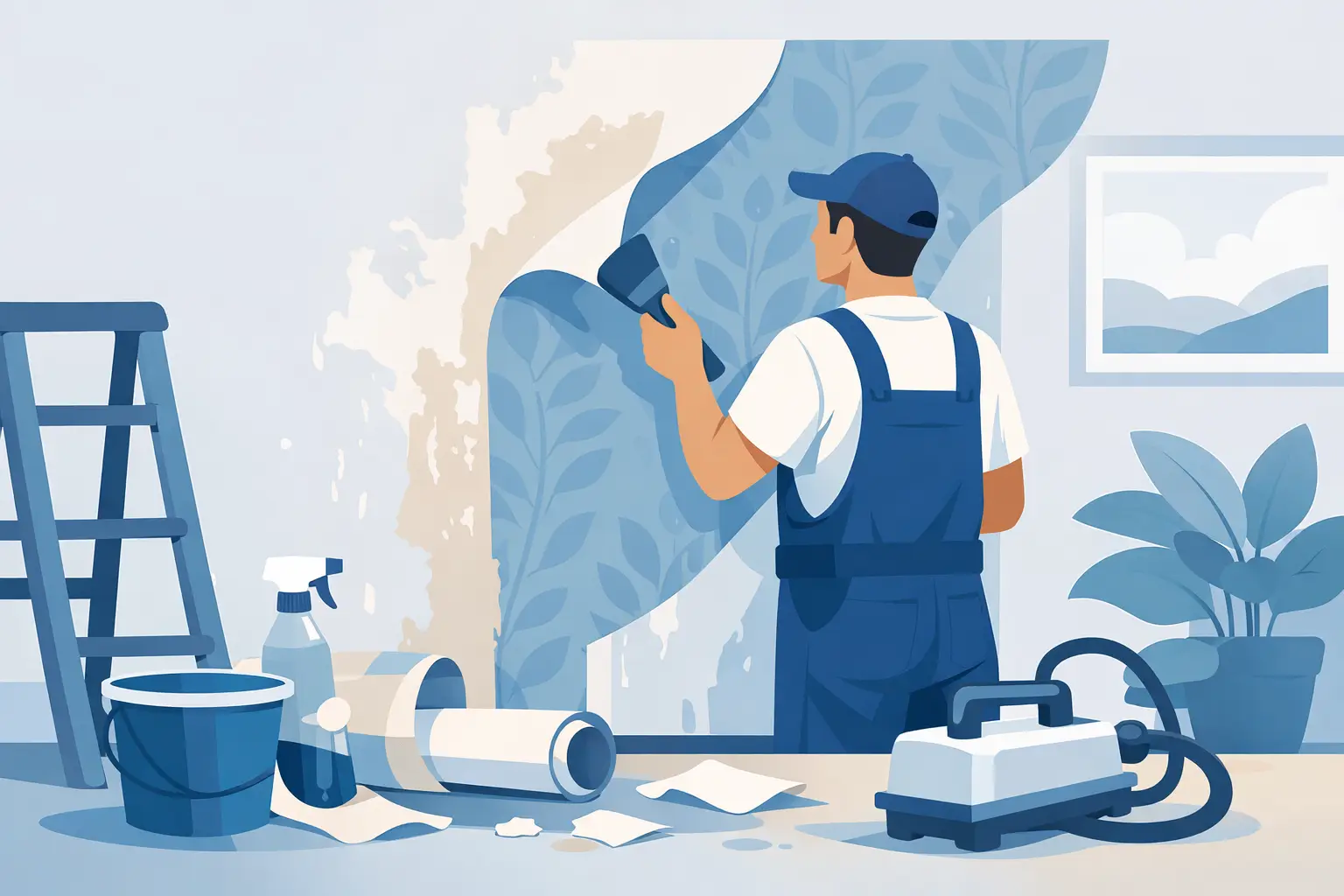
Peeling wallpaper can make a room look like an easy weekend project. The reality usually shows up fast – torn paper stuck in patches, glue that refuses to come off, and drywall damage that only becomes obvious once the walls are bare. A professional wallpaper removal service helps avoid that cycle by removing old wall coverings cleanly and preparing the surface properly for paint, skim coating, or a new finish.
For homeowners, tenants, landlords, and commercial property managers, the goal is rarely just to get wallpaper off the wall. The real goal is a clean, smooth result without unnecessary damage, delays, or mess. That is where professional handling matters most.
What a wallpaper removal service actually includes
Wallpaper removal is more than stripping paper. Different materials behave differently. Vinyl wallpaper, fabric-backed wallpaper, textured coverings, and older adhesive layers each require a different approach. Some walls release easily with steam or solution. Others need scoring, softening, scraping, patching, and sanding in stages.
A proper service usually starts with inspection. The condition of the wallpaper, the age of the property, the type of wall underneath, and the intended next step all affect the method used. If the wall is going to be painted, the surface needs much more than basic stripping. Adhesive residue must be removed fully, damaged spots must be repaired, and the wall has to be stabilized so the new paint will bond evenly.
That extra preparation is often what separates a satisfactory result from one that still shows old seams, bubbling paint, or uneven texture weeks later.
Why wallpaper removal often goes wrong
Most problems happen because the visible paper is only part of the job. Once the top layer is removed, glue remains on the surface. If that residue is left behind, fresh paint can fail. It may streak, flash, blister, or peel earlier than expected.
There is also the issue of wall condition. In some properties, wallpaper was installed over unprimed drywall or patched plaster. When the paper comes off, the facing paper of the drywall may tear with it. In older homes or commercial spaces that have seen multiple renovations, there may be several layers of wallpaper underneath. Each layer adds labor and increases the chance of surface damage.
This is why a low quote that only covers stripping can become expensive later. If wall repairs and surface correction are not addressed from the start, the room may still not be ready for painting.
Wallpaper removal service for homes and rental units
In residential spaces, wallpaper tends to show up in bedrooms, dining rooms, feature walls, hallways, and older bathrooms. Some homeowners want a full refresh before moving in. Others need to remove dated wallpaper before listing a property for sale or rent.
For rental units, speed matters. Turnaround needs to be quick, but the finish still has to hold up for incoming tenants. A dependable wallpaper removal service helps landlords and property managers avoid patchy shortcuts that lead to complaints or rework. The walls are stripped, cleaned, repaired, and left ready for the next stage, whether that is repainting the entire unit or updating a single room.
In occupied homes, care matters just as much as speed. Furniture protection, dust control, and orderly cleanup make the process less disruptive. That is especially important in condos, apartments, and family homes where work has to fit around everyday routines.
Commercial wallpaper removal needs a different approach
Offices, retail shops, and commercial interiors often use wallpaper as part of branding or decorative design. When that look becomes dated, damaged, or inconsistent with a new tenant fit-out, removal needs to happen efficiently and with minimal interruption.
A commercial wallpaper removal service should account for operating hours, access restrictions, and surrounding finishes. In a retail space, there may be display fixtures, glass panels, or custom joinery nearby. In offices, timelines may need to work around staff schedules or handover dates. The removal process has to be controlled, clean, and coordinated with any follow-up painting or repair work.
For business owners, the priority is straightforward: get the space back to a presentable, paint-ready condition without turning the job into a drawn-out renovation.
What to expect during the process
The first step is always evaluation. The wall covering is checked to determine how it was installed and how the substrate is likely to respond. Protective covering is then placed over floors, furniture, and nearby fixtures. Depending on the wallpaper type, technicians may dry-strip loose sections first, then use moisture, solution, or steam to soften the adhesive.
Once the paper is removed, the wall is washed down to clear remaining glue. This stage takes patience. Rushing through adhesive removal is one of the main reasons repainting fails later. After the wall is clean, any torn drywall facing, dents, gouges, or uneven areas are repaired. The surface is then sanded and prepared for primer or paint.
Some walls come up cleanly. Others reveal hidden cracks, previous patchwork, or moisture-related damage. That is why honest assessment matters. The best service is not the one that promises every wall will be easy. It is the one that explains what the wall needs and handles the extra prep correctly.
When removal is better than painting over wallpaper
People often ask whether wallpaper can simply be painted over. Sometimes it can, but it depends on the condition of the paper and the wall underneath. If the wallpaper is firmly bonded, has tight seams, and shows no bubbling or peeling, painting over it may be possible in limited cases.
Even then, it is usually not the best long-term option for a quality finish. Seams can telegraph through paint. Moisture in primer and paint can loosen adhesive. Textured or patterned wallpaper may still remain visible after several coats.
Removal is generally the better choice when the wallpaper is damaged, dated, layered, or starting to lift. It is also the safer route when a client wants a truly smooth wall and a polished final appearance. If the room is being fully updated, removing the wallpaper and preparing the substrate properly gives a more dependable result.
The value of combining removal with wall prep and painting
Wallpaper removal works best as part of a complete surface improvement plan. Once the wall is bare, it becomes much easier to address imperfections and create a fresh finish that lasts. This is where an experienced painting contractor adds real value.
Instead of hiring one team to remove wallpaper and another to repair and paint, a single service partner can manage the entire process from inspection through cleanup. That reduces delays, avoids finger-pointing between trades, and helps keep the final finish consistent. My Paint Job takes this practical approach by pairing wallpaper removal with wall repairs, surface preparation, and professional painting for a cleaner overall result.
For customers, that means less coordination and more peace of mind. The work is handled in the right order, and the walls are not just stripped – they are made ready for what comes next.
How to choose the right wallpaper removal service
The best provider is not always the cheapest quote. Look for clear scope, honest assessment of wall condition, protection of surrounding areas, and proper surface preparation after removal. If painting is the next step, ask whether adhesive removal, patching, sanding, and priming are included.
Experience also matters. A team that regularly handles both residential and commercial interiors is more likely to recognize substrate issues early and adapt the method accordingly. Clean workmanship, reliable scheduling, and careful finishing are just as important as getting the paper off the wall.
A good service should leave you with walls that are ready, not walls that create another problem to solve.
Old wallpaper has a way of making a room feel stuck in the past, even when everything else is in good shape. Removing it properly gives the space a clean starting point and opens the door to a brighter, smoother, more updated finish that actually lasts.


Pingback: How to Choose a Residential Painting Contractor - My Paint Job Singapore