The colour that looks perfect on a paint chip may be wrong for your room. If you’re wondering how to test paint colors before buying, the key is to view each shade at a useful scale, in your own space, and under the lighting you actually live with.
A small card or screen can help you narrow your options, but it can’t show how a colour will look beside your flooring, furniture, and trim. Daylight changes throughout the day, while warm or cool artificial lighting can shift a shade again at night. Testing carefully takes some patience, but it can help you avoid choosing a colour that feels wrong once it covers the walls.
This guide explains how to prepare paint samples, compare shortlisted shades fairly, and assess them at different times of day before you commit. You’ll learn what to look for in changing light and how to make a more confident decision. If you’re planning a larger painting project, careful testing can also help you communicate your preferred colour and finish before work begins.
Key Takeaways
- Learn how to test paint colors before buying by narrowing your shortlist and sampling shades on a large, clean surface.
- Consider room orientation and nearby finishes to understand why the same shade can look different from one space to another.
- Use a comparison table to record how each sample looks in your room and which options feel most consistent.
- Choose the colour that suits the space across real viewing conditions, then confirm the paint finish and preparation requirements before purchasing.
Why Test Paint Colours Before Buying for Your Room?
Paint colour testing means comparing real samples in the room where they’ll be used before buying enough paint for the full project. It helps you see how a shade looks alongside existing finishes and under the room’s actual lighting, rather than relying on a screen or small paint card alone. Online images and color selection charts are useful for exploring options and building a shortlist, but they can’t reproduce your room’s conditions.
Room orientation affects the quality and amount of daylight entering a space, and that light changes throughout the day. A colour may seem bright in one part of the room and subdued in another. Flooring, furniture, curtains, and trim also affect how you perceive a shade. For example, a warm-toned floor may make a cool paint colour feel more pronounced, while pale furnishings can make the same colour seem stronger by contrast. Your usual lamps add another variable. Warm bulbs can make some colours appear yellower or softer, while cooler lighting may make them feel sharper.
A shortlisted colour is a possibility; a colour checked in your room is an informed choice. Testing in place helps you compare the shade with the finishes and lighting it will live alongside, reducing the risk of choosing based on a brief or misleading impression.
Why paint colours look different on a wall
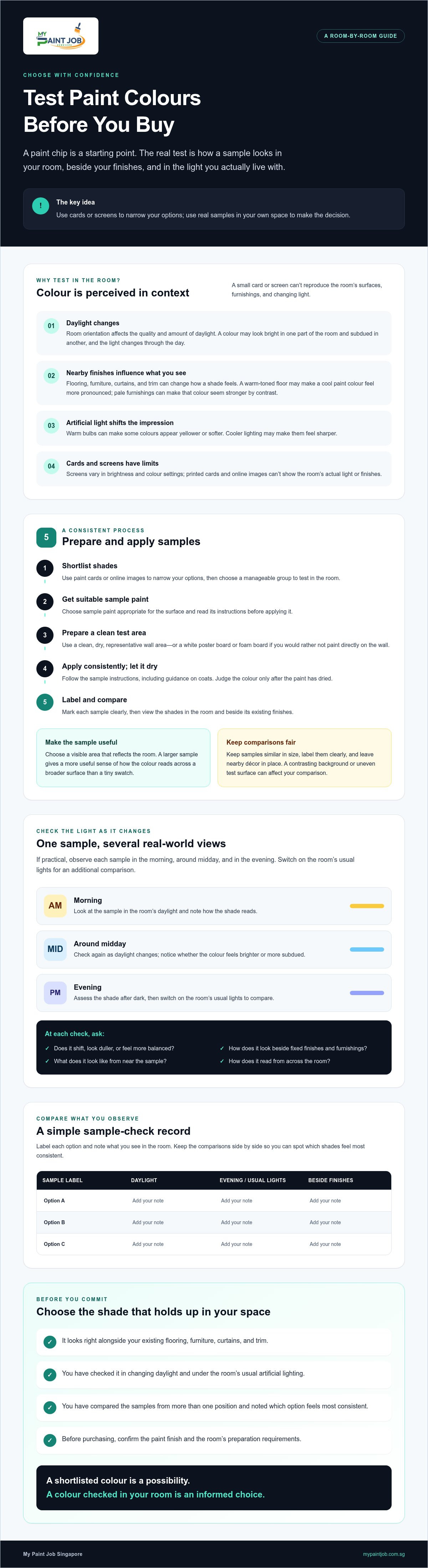
Colour is perceived in context. A sample surrounded by white space on a small card may look different when viewed across a larger area beside dark flooring or coloured curtains. Screens vary in brightness and colour settings, and printed cards can’t show every shade accurately. Neither reflects changing daylight or the warm and cool lamps in your room. Use cards and screens to narrow your options, then assess real samples in the space before deciding.
Understanding how to test paint colors before buying starts with treating each sample as a practical comparison, not a final verdict in isolation. A considered choice is one that looks right beside your existing finishes and holds its appeal as the room’s light changes.
How to Prepare and Apply Paint Samples Before You Buy
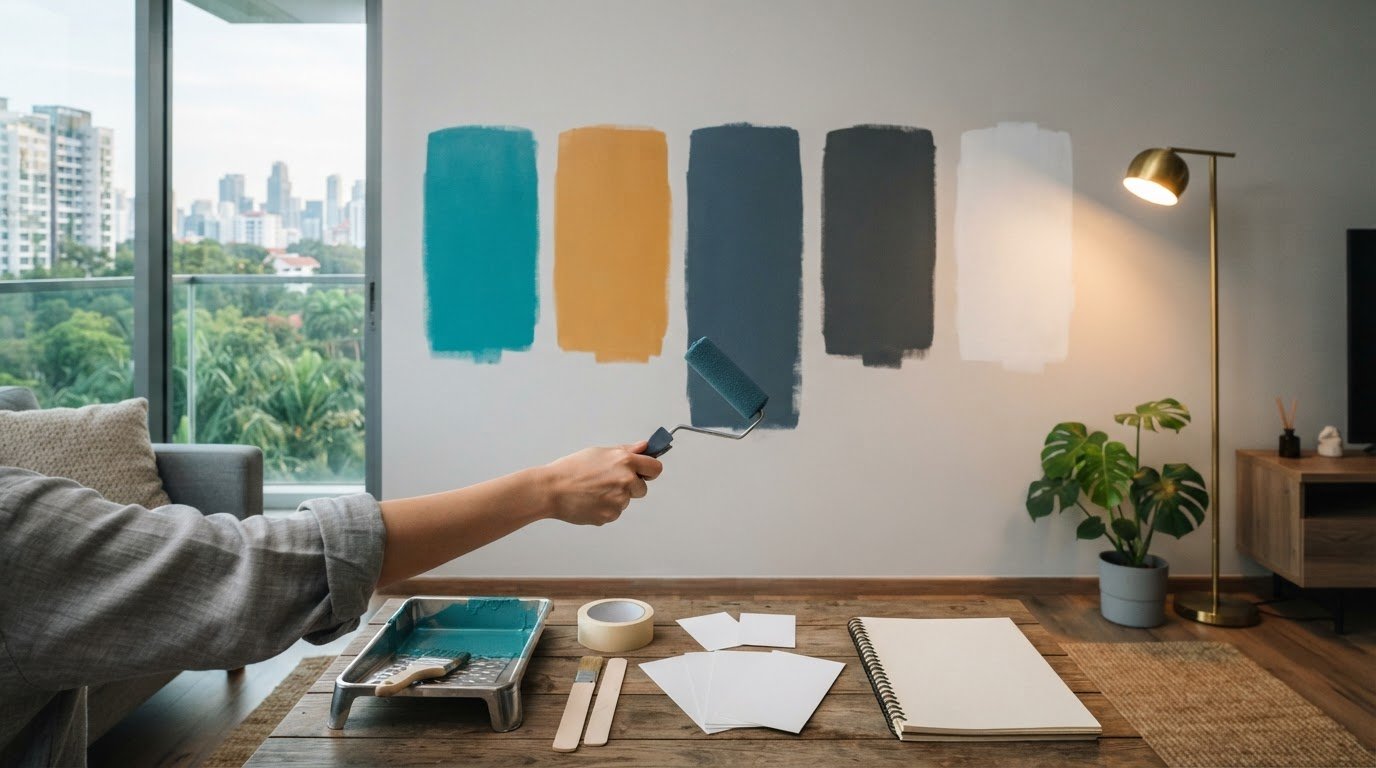
A consistent process makes colour comparisons more useful. Follow these steps before buying paint for the full project:
- Shortlist shades. Use paint cards or online images to narrow your options, then choose a manageable group to test in the room.
- Get suitable samples. Choose sample paint that’s appropriate for the surface, and read its instructions before applying it.
- Prepare the test area. Use a clean, dry, representative wall area, or a white poster board or foam board if you’d rather not paint directly onto the wall.
- Apply each sample consistently. Follow the sample instructions, including guidance on coats, and let the paint dry before judging its colour.
- Label and compare. Mark each sample clearly, then view the shades in the room and beside its existing finishes.
Where and how large should a test sample be?
Choose a visible area that reflects the room, rather than judging a colour only from a tucked-away corner. If you use a movable board, make each sample large enough to assess at a glance, then position it against different parts of the wall. A tiny swatch offers a hint; a larger sample gives you a more useful sense of how the colour reads across a broader surface.
How to compare shortlisted shades fairly
Keep the samples similar in size and label them clearly so the shades don’t blur together in your notes. Check that the test surface is clean and in reasonable condition, since a contrasting background or uneven surface can affect your comparison. Keep nearby décor in place while assessing each option. That way, you judge the colour in context rather than against an artificially empty room.
Before testing, think about the mood you want the room to create and review common mistakes when choosing paint. If you’re planning a painting project, you can also explore My Paint Job Singapore’s painting services and consider what surface preparation the room may need.
How to Judge Paint Samples in Daylight and Evening Light
A shade can look fresh in daylight and noticeably warmer under lamps after dark. The most useful way to judge it is to observe the sample in the room’s actual lighting, at different times and from more than one position. This is an essential step in how to test paint colors before buying.
A simple routine for checking samples through the day
If practical, look at each sample in the morning, around midday, and in the evening. Switch on the room’s usual lights for an additional comparison, and note whether the colour shifts, looks duller, or feels more balanced. Stand near the sample, then view it from across the room. Check it beside fixed finishes and furnishings, such as flooring, cabinetry, trim, and a large sofa. Record which shade works best at the times you use the room most.
Don’t decide from one brief glance. Allow the sample to dry fully according to its instructions before evaluating it, since a wet surface may not show its final appearance. Judge paint colour in the room’s real light, because that’s where you’ll live with it.
Check finish and surroundings before choosing
Sheen affects how light reflects from a surface, so a glossier finish may look different from a flatter one even in the same colour. Where possible, compare samples in a finish relevant to the paint you intend to use, and assess colour separately from sheen. Keep your usual furnishings in place, because their tones and nearby surfaces can change how a shade feels. For more context on planning the room, read this guide to choosing the right paint for a room.
Once you have a preferred shade, check the intended paint use, finish, and preparation instructions before deciding what to buy. My Paint Job offers painting services and surface preparation for residential projects, which can be useful to consider as you plan the work.
How to Choose a Paint Colour Confidently After Testing
Use your observations to compare the shortlisted shades, rather than chasing a colour that looks perfect in just one moment. A simple record helps you spot which option remains appealing as the light changes and as you view it beside the room’s permanent finishes.
| Sample | Room lighting | Surrounding finishes | Overall impression |
|---|---|---|---|
| Shade A | Daylight; usual lights on | Flooring, trim, furniture | Balanced, too cool, or too strong? |
| Shade B | Daylight; usual lights on | Flooring, trim, furniture | Balanced, too cool, or too strong? |
| Shade C | Daylight; usual lights on | Flooring, trim, furniture | Balanced, too cool, or too strong? |
Fill in the table after viewing each sample in the room, then look for consistency. The strongest choice is often the shade that works across the conditions you experience regularly, rather than the one that wins in a single glance. That is the practical aim of learning how to test paint colors before buying: make your decision using evidence from your own space.
A final checklist before committing to a colour
- Recheck your preferred sample under the room’s different lighting conditions.
- Compare it with permanent surfaces and furnishings you plan to keep.
- Confirm the intended paint finish and use with the manufacturer’s guidance.
- Review the product instructions and consider whether the wall needs preparation before painting.
When professional painting support can help
If your colour choice is settled but you’re unsure about the condition of the walls, consider whether they need repairs or smoothing before painting. My Paint Job offers wall plastering and painting services, including surface preparation as part of its painting work. You can also explore these professional house painting services as you plan the project.
Make Your Colour Choice with Confidence
A confident paint choice comes from seeing a real sample in your own room, beside the finishes you plan to keep, and in the light you experience throughout the day. That’s the practical answer to how to test paint colors before buying: compare carefully, let samples dry, and choose the shade that feels right consistently, not just at first glance.
Once you’ve settled on a colour, confirm the finish, intended use, and preparation requirements before purchasing paint. A considered choice is the first step towards a polished result, while careful surface preparation helps create a sound foundation for the work.
If you’re ready to plan the painting work, My Paint Job Singapore provides residential and commercial painting, wall plastering, and other surface services. Its team has over 10 years of industry experience and uses meticulous surface preparation and premium, eco-friendly paints. Explore My Paint Job’s painting services to discuss your project and take the next step.
Frequently Asked Questions
How long should I test a paint colour before buying?
Test it long enough to see it in the lighting conditions you experience during your normal routine. Check the sample at different times of day and with your usual room lights switched on, rather than deciding after one glance. Let the paint dry according to its instructions before judging the colour. If you’re still uncertain, keep comparing it with the room’s fixed finishes before committing.
Can I test paint colours with a small swatch?
A small swatch is useful for narrowing down options, but it may not show how a colour feels across a larger area. The white space around a shade on a paint card can affect your impression, and the colour may look different beside your flooring or furniture. For a more useful comparison, apply a larger sample to a suitable board or representative surface and assess it in the room.
Should I paint samples directly on the wall?
You can, but direct wall swatches may be influenced by the existing wall colour and surface, and sample patches can sometimes remain visible beneath later coats. A movable white poster board or foam board offers another way to test: apply the sample as directed, let it dry, then position it against different walls. If testing directly on the wall, choose a clean, representative area and follow the paint instructions.
Do paint colours look different in natural and artificial light?
Yes. Natural light changes through the day, while warm or cool artificial lights can shift how a shade appears. A colour that looks crisp in daylight may feel warmer under your regular lamps. As part of how to test paint colors before buying, compare samples in natural light and under the lighting you typically use, then note which shade feels balanced in the room’s usual conditions.
Is a paint colour sample the same as the finished wall?
Not necessarily. A sample is a guide, but the final appearance can vary with the painted area’s size, the wall’s condition, the chosen finish, and the room’s lighting. Sample paint may also have a different sheen from the paint you plan to use. Check the sample and final paint instructions, and compare finishes where possible before making your decision.