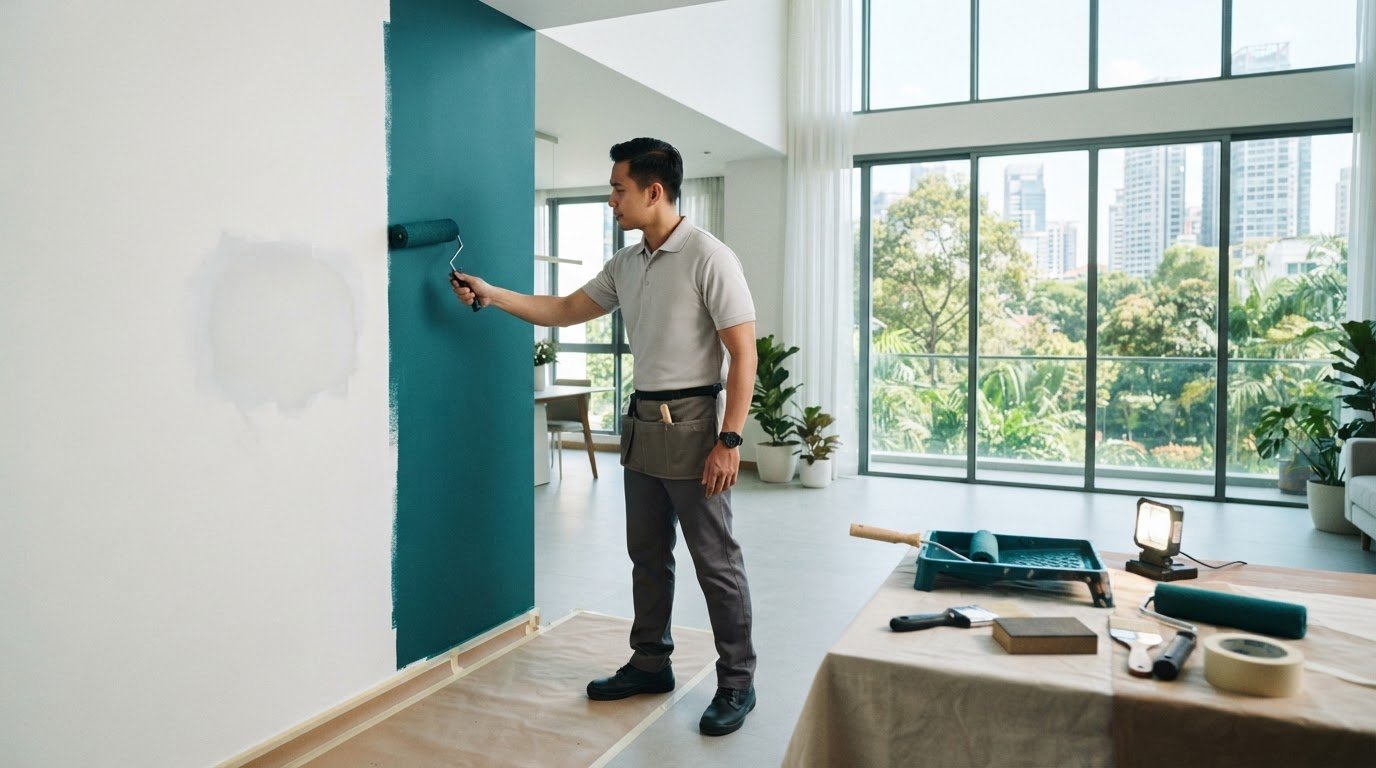
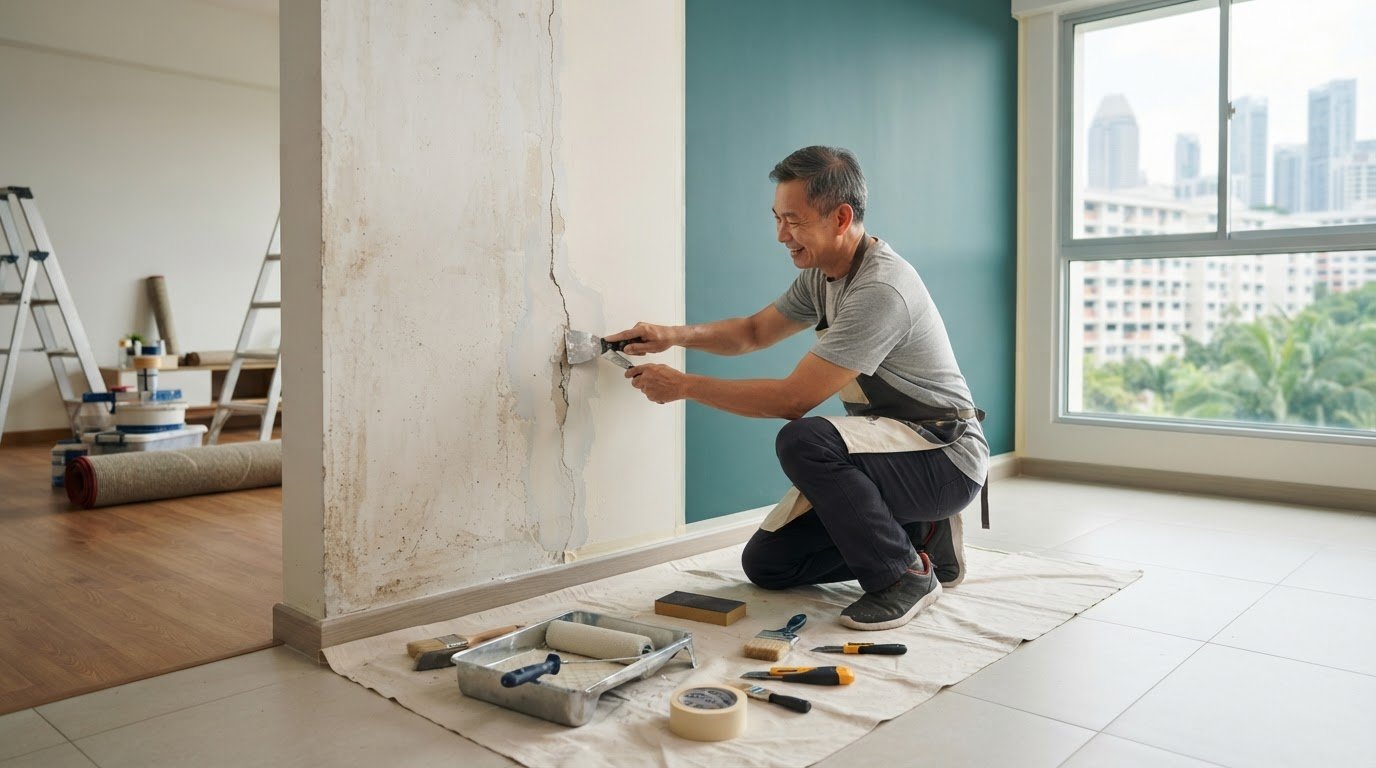
Buying paint first can be the wrong first step. Before repainting an old resale HDB flat, agree on the paint selection and who will supply it as part of the painting scope. Preparation also depends on the condition of the walls: old colours, stains, cracks and powdery surfaces each need attention before fresh coats go on.
It’s understandable to want a clear plan before work begins, especially when years of everyday wear show across the walls. This guide explains how to inspect and prepare surfaces, handle minor cracks and stains, and decide when sealer is needed. You’ll also learn what affects a repainting estimate and how to settle paint choices and supply arrangements before work starts. The price depends on the flat, wall condition, paint selection and preparation required, and is provided after a quote request.
Key Takeaways
- Inspect walls in good light and identify peeling paint, powdery patches and stains before planning the repaint.
- Match surface preparation to the wall condition: sound paint, loose coating and damaged plaster need different treatment.
- Compare repainting estimates by checking what preparation, sealer, paint type and colour changes are included.
- Settle paint supply and colour choices before work starts so the materials and painting plan are aligned.
Wall scraping, patching and surface preparation
Start with the walls’ actual condition, not just the paint colour. In a resale flat, preparation may involve protecting finishes, scraping loose paint, patching defects, sanding and priming before applying finish coats.
-
Protect Furniture and Prepare the Flat
Move small furniture out of each work area, then cover remaining pieces and flooring before wall or ceiling work begins. Keep skirting, corners and wall edges accessible so preparation can cover the full surface. Move curtains, artwork and removable fittings out of the way, too. Dust from scraping can settle beyond the immediate work area.
In an occupied resale flat, plan room by room around furniture that must stay. Group movable items away from the wall being prepared rather than leaving them exposed nearby. Protect adjacent finishes before patching starts, and keep pathways clear for moving covers and tools.
-
Scrape and Patch Wall Surfaces
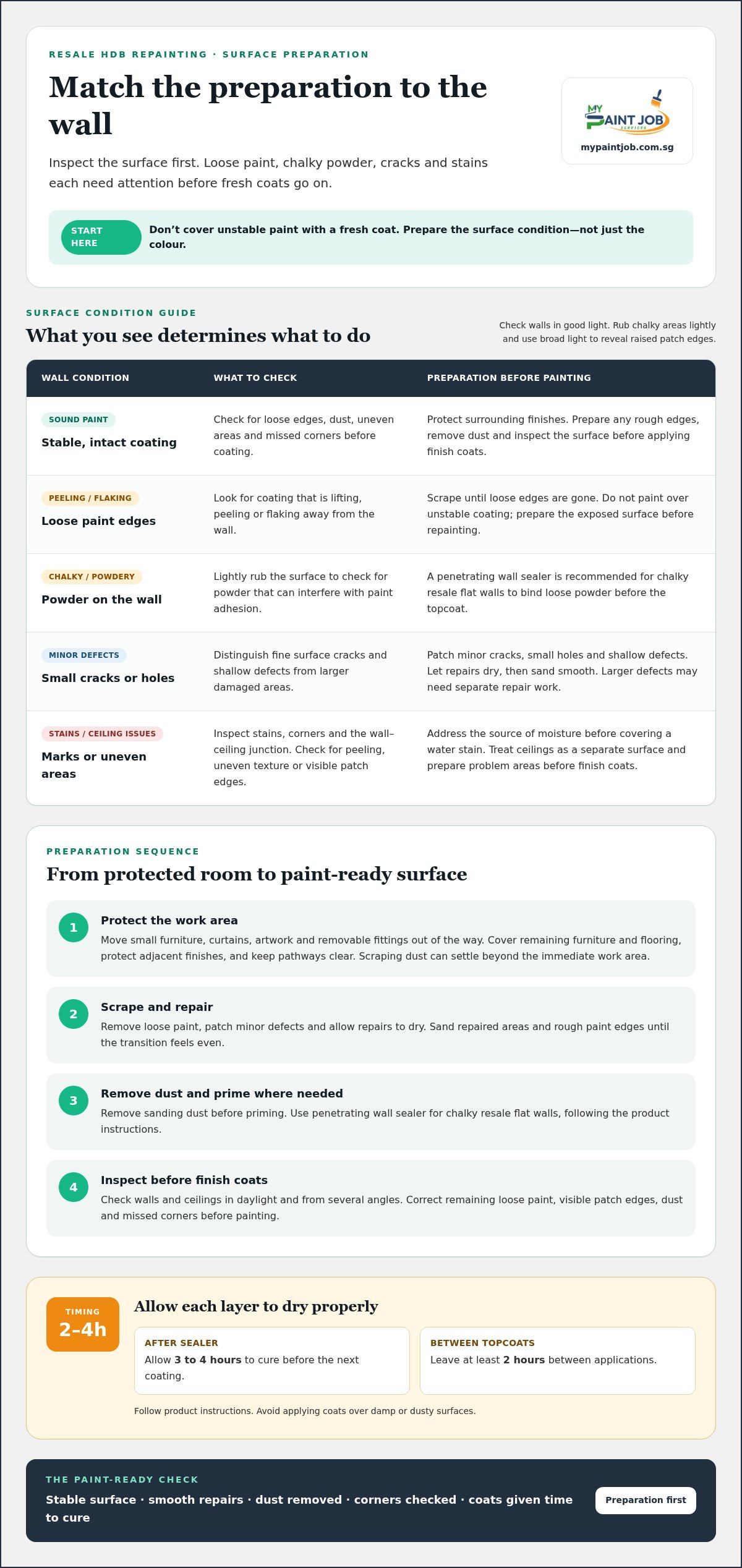
Scrape peeling or flaking paint until the loose edges are gone. Check older walls for chalky powder by lightly rubbing the surface, as powder can interfere with paint adhesion. A penetrating wall sealer is recommended for chalky resale flat walls to bind loose powder before the topcoat. Don’t cover unstable paint with a fresh coat.
Patch minor cracks, small holes and shallow surface defects, then let the repair dry before sanding it smooth. Larger defects may need separate repair work rather than routine painting preparation. Shine a broad light across the wall to reveal ridges around patches. Uneven repairs can remain visible after the paint dries.
-
Prepare Walls and Ceilings for Painting
Sand repaired areas and rough paint edges until the transition feels even. Remove sanding dust before priming, because loose particles can mark the finish. Treat the ceiling as a separate surface: inspect corners and the wall-ceiling junction for peeling, stains or uneven texture, then prepare those areas before applying finish coats.
Allow sealer to cure for 3 to 4 hours before the next coating. Leave at least 2 hours between topcoat applications. Follow the product’s instructions and avoid rushing coats over damp or dusty surfaces; a proper dry surface helps each layer adhere evenly.
-
Inspect the Prepared Surface
Before painting, check walls and ceilings in daylight and from several angles. Look for remaining loose paint, visible patch edges, dust and missed corners. Correct these preparation issues before finish coats begin, since paint won’t hide an unstable or uneven surface.
How Much Does It Cost to Repaint an HDB Flat in Singapore?
Compare estimates by flat size, paint selection and the preparation included. Make sure the agreed quote clearly sets out the scope before painting begins.
-
Compare Repainting Prices by Flat Size and Paint Tier
Compare like with like: note your flat type, selected paint and whether sealer is included. A larger flat, extra colours, feature walls and additional surface repairs can change the materials and labour required. The price depends on the case and is provided after a quote request. Flat size, wall condition, paint selection and preparation are key cost factors.
Ask for the scope in writing, not just a total. A useful HDB painting quote records the included work, preparation, products, colours and work programme.
-
Consider Anti-Mould Paint for Wet Areas
Choose paint for the room’s use. For bathroom and kitchen walls, consider a finish intended for damp, frequently cleaned spaces, and check the product’s stated suitability before selecting it. Singapore’s humidity, air-conditioning condensation and everyday cleaning all affect paint selection.
Compare durability and cleaning needs alongside colour. A washable finish may suit high-use areas, while other rooms may need a different balance of appearance and maintenance. Agree on the number of colours before work starts, since extra colours and feature walls affect materials and labour.
-
Compare Professional Painting and DIY
Compare the full scope, not only the cost of paint. DIY means organising materials, protecting furniture, preparing surfaces and applying coats yourself. Professional painting brings those tasks into an agreed work programme. Your choice depends on the wall condition, available time and the preparation the flat needs.
Interior repainting of an HDB flat doesn’t require an HDB permit. Exterior-facing colours must follow estate guidelines, so keep the work within the approved interior scope.
- For corridors, doors, windows and exterior-facing walls, distinguish interior surfaces from shared or external-facing areas. Follow estate guidelines for exterior-facing colours, and make sure the agreed quote clearly states which surfaces are included.
- Check that the quote names the preparation, products, colours, included surfaces and work programme. Read any written warranty terms and exclusions, then inspect the completed finish for missed areas or visible defects.
- Repainting a resale HDB flat in standard condition takes an estimated 2-3 days; where repairs are needed, allow 2-4 days. Plan move-in around the agreed programme and let painted surfaces dry according to product instructions.
For a tailored scope, review HDB painting services alongside your flat’s preparation needs.
Patching cracks, holes and water stains
Address the cause and condition of each defect before covering it with paint. In a resale flat, minor cracks and surface defects can be prepared within the painting scope, while larger defects may need separate repair work.
- Inspect cracks and holes under good light before choosing a filler. Note whether a crack is a fine surface line or part of a larger damaged area. Fill minor defects, allow the patch to dry, then sand it level with the surrounding wall. A raised edge can show through the finish, especially on a smooth surface.
- Look closely at water stains before patching. Find and address the source of moisture first, or the mark may return through fresh paint. Once the wall is dry, remove loose coating and prepare the stained area. For persistent water marks, an appropriate sealer can help block staining before the topcoat.
- Check for oily residue and chalking as well as visible stains. Rub a powdery patch with a clean hand; loose powder can weaken paint adhesion. A penetrating wall sealer is recommended on chalky resale walls to bind loose powder. For water stains, oil residue or heavy chalking, an oil-based sealer may suit the surface, but its strong chemical smell can take 2 to 3 days to dissipate.
- Allow each layer time to cure. During HDB painting, allow water-based or oil-based sealer to cure for 3 to 4 hours. Leave at least 2 hours between topcoat applications. Follow the paint label and avoid covering damp patches or dusty repairs.
- Separate plaster damage from paint preparation. If concrete is breaking away or exposing a deeper defect, don’t treat it as an ordinary hole to fill. Spalling concrete repair addresses damaged concrete; surface patching alone won’t resolve the problem. Once repairs are complete, inspect the wall again for loose edges, uneven patches and remaining stains before painting.
Common wear and tear in resale HDB flats
Assess each room by the marks it carries, not by age alone. Preparing a resale flat often means addressing older walls, previous colours, stains and everyday wear.
- Walk through each room in daylight and note visible marks. Check high-contact areas, such as walls beside doorways, switches and furniture. Scuffs may need cleaning or surface preparation; deep gouges need patching before painting. Mark each area so the work plan covers the full wall, not just obvious discolouration.
- Look for previous colours that show through or have uneven coverage. A dark feature wall, for example, may need more careful preparation than a sound, light-coloured surface. Note where old paint peels, feels rough or leaves powder on your hand. These signs help distinguish a cosmetic refresh from walls that need scraping, patching or sealer.
- Check corners, ceiling edges and areas behind furniture for neglected wear. A wardrobe can hide rubbed paint, while a ceiling junction may reveal stains or flaking. Include these less visible surfaces in your inspection. If furniture stays in the flat, plan access so painting doesn’t stop at the exposed centre of each wall.
- Separate routine wear from damage that needs repair. Fine surface marks and minor defects can be prepared within a painting scope; larger defects may need separate repair work. Crumbling concrete is not simply a scuff to paint over. Spalling concrete repair addresses that damage before a new finish is applied.
- Build a room-by-room checklist before deciding the repainting scope. Note previous colours, stains, loose paint, scuffs and areas behind fixed furniture. An executive flat may have different room layouts and wall coverage from a smaller HDB flat, so identify every surface that needs attention. This helps align preparation, coverage and finish with the home’s actual condition.
For a coordinated approach to worn HDB walls, discuss HDB painting services.
My Paint Job Singapore: HDB painting services
My Paint Job Singapore provides HDB painting services for homeowners preparing a resale flat for a fresh finish. Turn to the team when worn walls, previous colours or everyday marks need careful surface preparation before repainting. The process includes preparation and paint application, helping create an even finish across your home.
When planning the job, share the areas you want painted, the condition of the walls and your preferred colours. This gives the painting scope a clear starting point and helps align preparation with the finish you have in mind. My Paint Job Singapore also provides painting for condos, landed homes and commercial properties.
Contact My Paint Job Singapore to discuss repainting your HDB flat, or visit mypaintjob.com.sg.
Make the Next Coat Part of Your Home’s Refresh
Fresh walls can mark a new chapter in your home, not just cover years of use. As you plan to repaint an old resale HDB flat, think about how you want each room to feel once it’s furnished and lived in. A calm bedroom palette, for example, may call for a different finish from a busy dining area. Let the room’s intended use guide your colour and finish choices.
My Paint Job Singapore provides HDB painting services, as well as painting for condo and landed properties. If you’re ready to move from planning to a considered painting scope, share the look you want and the condition of your home’s walls.
Contact My Paint Job Singapore to discuss your painting plans. A well-prepared start can help your refreshed rooms feel more like home.
Frequently Asked Questions
Do I need to buy the paint myself before the contractor arrives?
Not necessarily. Settle who supplies the paint before work begins. If the painting scope includes materials, you can focus on selecting colours and finishes rather than buying tins yourself. For example, note whether the living room and bedrooms will share one colour or need separate colours. Confirm the agreed paint selection and supply arrangement in writing so everyone follows the same plan.
How long does paint smell last?
With windows open, the mild odour from standard HDB painting packages typically dissipates within 24 to 48 hours. Oil-based sealer used for stains, oil residue or heavy chalking has a stronger chemical smell, which can take 2 to 3 days to dissipate. If odour is a concern, My Paint Job Singapore offers low-odour, zero-VOC paint options. Ventilate the flat during and after painting.
Need Painting Services?
My Paint Job Singapore provides HDB painting services for flat owners planning a refresh or preparing a home for new occupants. It also offers condo, landed-property and commercial painting services. If paint odour matters in your household, low-odour, zero-VOC paint options are available. Share your property type, preferred colours and rooms needing attention when discussing the work, then agree on a suitable scope.
How much does it cost to repaint an old resale HDB flat in Singapore?
The cost depends on the flat’s size, wall condition, paint selection and preparation required. A resale flat with sound walls has a different scope from one needing extensive patching, sealer or extra colour changes. The price depends on the case and is provided after a quote request. Describe visible defects and the rooms you want painted to help define the work accurately.
What are typical painting prices by HDB flat size and number of rooms?
Room count is a starting point, but it doesn’t define the full painting scope. Two flats with the same number of rooms can differ in wall condition, ceiling coverage, colour changes and finish requirements. Compare quotations by matching the included surfaces, preparation, paint products and number of colours. This makes it easier to understand why estimates differ without relying on room count alone.
How do I prepare an old HDB flat for repainting?
Before work starts, remove wall decorations, clear small items from shelves and set aside valuables near work areas. Identify furniture that can be moved and keep access to corners, doors and window edges clear. Make a room-by-room note of stains, peeling paint and damaged patches, then share it when agreeing on the scope. This helps avoid overlooked areas and makes colour decisions easier.