A small patch of crumbling concrete on a ceiling, balcony, or wall can look like a cosmetic issue at first. But learning to identify spalling concrete damage early can prevent falling debris, water intrusion, more extensive repairs, and unnecessary disruption to your home or business.
Spalling is not simply old paint peeling off. It occurs when the concrete surface breaks away, exposing the material beneath and sometimes the steel reinforcement inside. In Singapore’s humid climate, where moisture exposure is common, prompt attention makes a meaningful difference to the safety, appearance, and long-term condition of a property.
What Spalling Concrete Looks Like
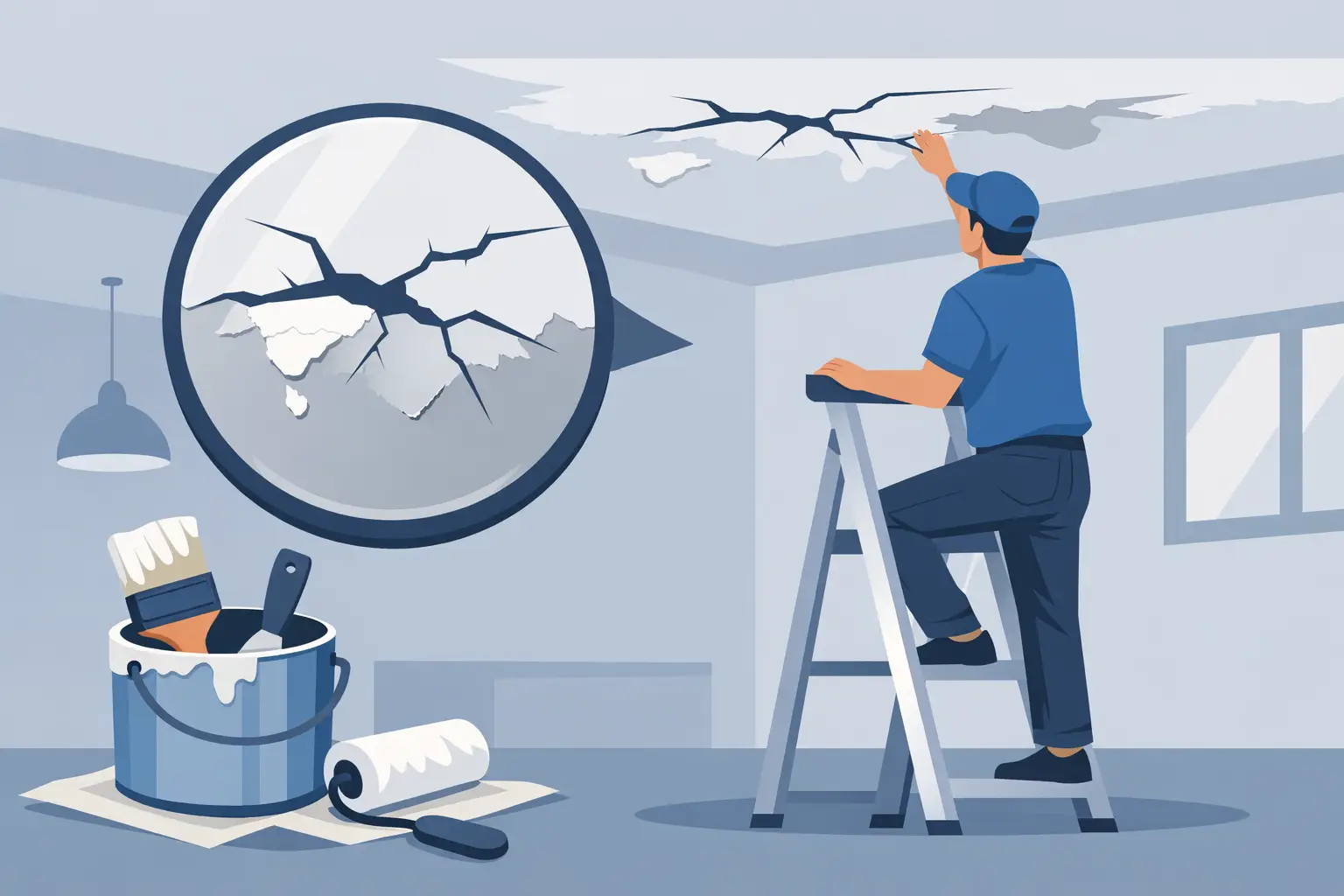
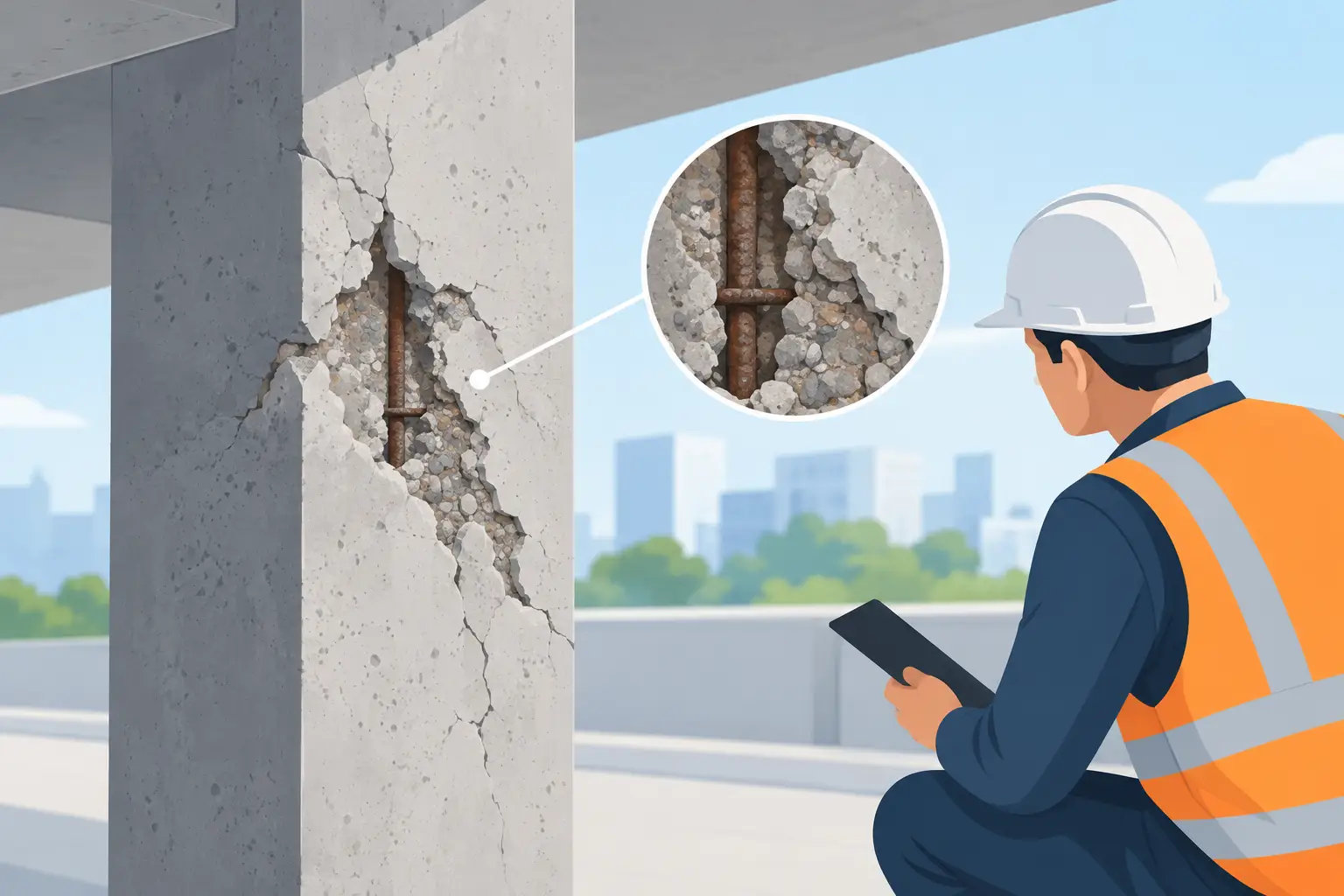
Spalling concrete is usually easy to recognize once you know what to look for. The surface may appear cracked, uneven, hollow, flaky, or chipped. In more advanced cases, chunks of concrete may fall away and reveal rusty steel bars beneath.
The damage is often found on concrete ceilings, beams, columns, exterior walls, balconies, car park structures, and areas close to bathrooms or kitchens. Water leaks from upper floors, failed waterproofing, pipe leaks, and prolonged rain exposure can all contribute to the problem.
Paint can conceal early signs, which is why a fresh coat should never be used to cover suspicious cracking or damp patches. If the concrete below is deteriorating, the problem will continue behind the paint and may reappear quickly.
How to Identify Spalling Concrete Damage Before It Spreads
Start with a careful visual check in well-lit conditions. Look beyond the surface color and focus on changes in texture, shape, and moisture. A sound concrete surface should feel solid and remain firmly bonded. Damaged concrete often looks weak, rough, or separated from the surrounding area.
Common warning signs include:
- Hairline, spreading, or map-like cracks in concrete ceilings, walls, or beams
- Brown, orange, or rust-colored stains bleeding through paint or plaster
- Bubbling paint, loose plaster, or patches that sound hollow when gently tapped
- Concrete flakes, grit, or small pieces collecting on the floor below
- Exposed steel reinforcement bars, especially where rust is visible
- Damp marks, mold growth, or recurring water stains near the damaged area
Not every crack means that spalling has started. Fine paint cracks can result from normal movement, aging paint, or minor shrinkage. The concern increases when cracks are accompanied by rust stains, moisture, hollow areas, loose material, or visible concrete loss.
Ceilings deserve extra attention. A damaged ceiling can shed debris without much warning, particularly if the steel reinforcement has corroded and expanded beneath the surface. Keep people away from any area where concrete is actively breaking off, and avoid tapping, drilling, or scraping loose material yourself.
Why Rust Is a Serious Sign
Most reinforced concrete contains steel bars that provide structural strength. Concrete normally protects this steel, but water and air can reach it through cracks, porous concrete, or failing waterproofing. Once steel begins to rust, it expands.
That expansion pushes outward against the surrounding concrete. Over time, the pressure causes cracking, delamination, and pieces of concrete to break away. This is why rust staining and exposed reinforcement should be treated as more than an appearance issue. The visible patch may be only part of the affected area.
Moisture Often Starts the Problem
Spalling frequently has a water-related cause. A leaking bathroom floor above, cracked exterior sealant, damaged roof waterproofing, air-conditioning condensation, or concealed pipe leak can allow moisture to enter concrete over time.
Repairing only the broken concrete without addressing the moisture source can lead to repeat damage. A dependable repair approach checks both the spalled area and the conditions around it. For example, a ceiling below a bathroom may require investigation of waterproofing or plumbing before repair work begins.
When Is Spalling Concrete Urgent?
Any loose or falling concrete should be treated as urgent. The same applies if steel bars are exposed, the damaged patch is growing, or the area is located above a walkway, entrance, bed, workstation, or parking space.
For homeowners, the immediate priority is safety. Move furniture and belongings away from the affected zone, keep children and pets clear, and do not place ladders or storage beneath a damaged ceiling. For offices, retail spaces, and managed properties, cordon off the area where practical and arrange a professional inspection promptly.
A small, stable-looking patch may not require an emergency response, but it should still be assessed before it worsens. Early repairs are generally less disruptive than waiting until the concrete has detached over a larger area.
What a Proper Spalling Concrete Repair Involves
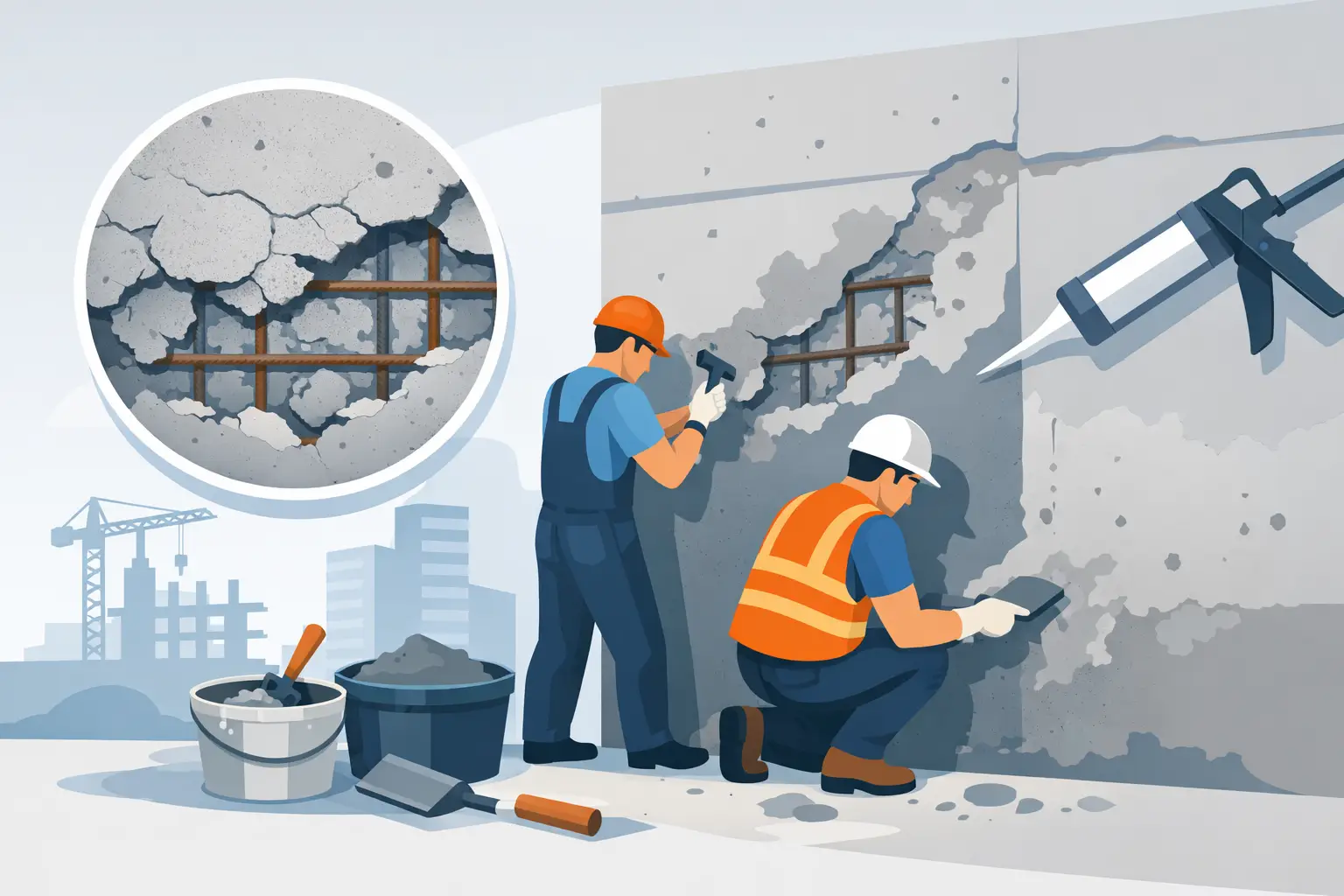
A lasting repair is more involved than applying filler over a damaged spot. The repair must remove weak material, treat corrosion where present, restore the concrete profile, and prepare the surface for a protective finish.
First, loose and unsound concrete is carefully removed until a stable base is reached. If reinforcement steel is exposed, it is cleaned and treated with an appropriate anti-corrosion coating. The repaired area is then rebuilt with suitable repair mortar, shaped to match the surrounding surface, and allowed to cure properly.
After the repair has stabilized, the surface may be plastered, sealed, primed, and painted for a clean finish. Where moisture has caused the problem, waterproofing or leak rectification may be necessary as part of the overall solution.
The right method depends on the location and severity of the damage. A minor internal patch is different from widespread deterioration on an exterior façade, structural beam, or ceiling with heavily corroded steel. An experienced contractor should assess the condition before recommending a scope of work or quotation.
Why Painting Over Spalling Is Not a Repair
It can be tempting to repaint a stained or cracked ceiling before a property viewing, handover, renovation, or business opening. While painting is valuable after proper surface repair, it cannot stop corrosion or reattach failing concrete.
Covering spalling with paint may briefly improve the appearance, but the paint can blister, crack, or fall away as moisture and rust continue beneath it. More importantly, it can delay the discovery of a safety issue.
The better sequence is straightforward: identify the cause, repair the damaged concrete, resolve related moisture issues, prepare the surface, and then paint. This creates a finish that looks polished because the surface underneath is stable.
Choosing Help That Reduces Disruption
For property owners and managers, the goal is not just to repair a damaged patch. It is to get the work handled safely, neatly, and with minimal interruption to daily life or operations.
Ask whether the contractor will inspect the surrounding area, protect floors and furniture, remove debris responsibly, explain the repair materials being used, and complete repainting or finishing after the concrete work. Clear communication matters, especially where access must be coordinated with tenants, office staff, or building management.
My Paint Job provides end-to-end spalling concrete repair and surface finishing for residential and commercial spaces, with practical attention to preparation, protection, repair quality, and cleanup. A professional assessment helps ensure the recommended work matches the actual condition rather than merely covering what is visible.
If you notice cracking, rust stains, loose concrete, or recurring ceiling damage, act before the patch becomes a larger repair. A timely inspection can turn an uncertain surface problem into a safe, clean, finished space that you can use with confidence.