For scratch-resistant paint for homes with pets, washable satin or semi-gloss finishes are a practical starting point for busy walls. They’re easier to clean than flat or matte paint, making them useful in high-traffic areas such as entryways, hallways and living rooms. A pet-friendly choice also takes the paint’s ingredients into account, and requires keeping pets away until the surface is fully dry.
Durability matters: muddy paws, rubbing and claws can leave marks where pets move through the home every day. But the finish is only one part of the decision. Paint formulation, surface preparation and protection for vulnerable areas all affect how well walls withstand daily wear.
Compare eggshell, satin and semi-gloss finishes, learn what to look for in pet-friendly paint, and identify where extra protection can help. These practical tips on cleaning and protecting painted surfaces can help you choose a finish that balances appearance with everyday resilience in your home.
Key Takeaways
- Match the finish to the room’s traffic: satin and semi-gloss are practical options for busy walls, while flatter finishes can show marks more readily.
- Look beyond the finish by considering paint ingredients, ventilation and keeping pets away until painted areas are fully dry.
- Identify where paws, rubbing and claws are most likely to mark walls, then consider targeted protection for those spots.
- Good surface preparation supports a durable finish; learn when HDB painting services can help refresh worn or scuffed walls.
1. Eggshell, satin, and semi-gloss finishes
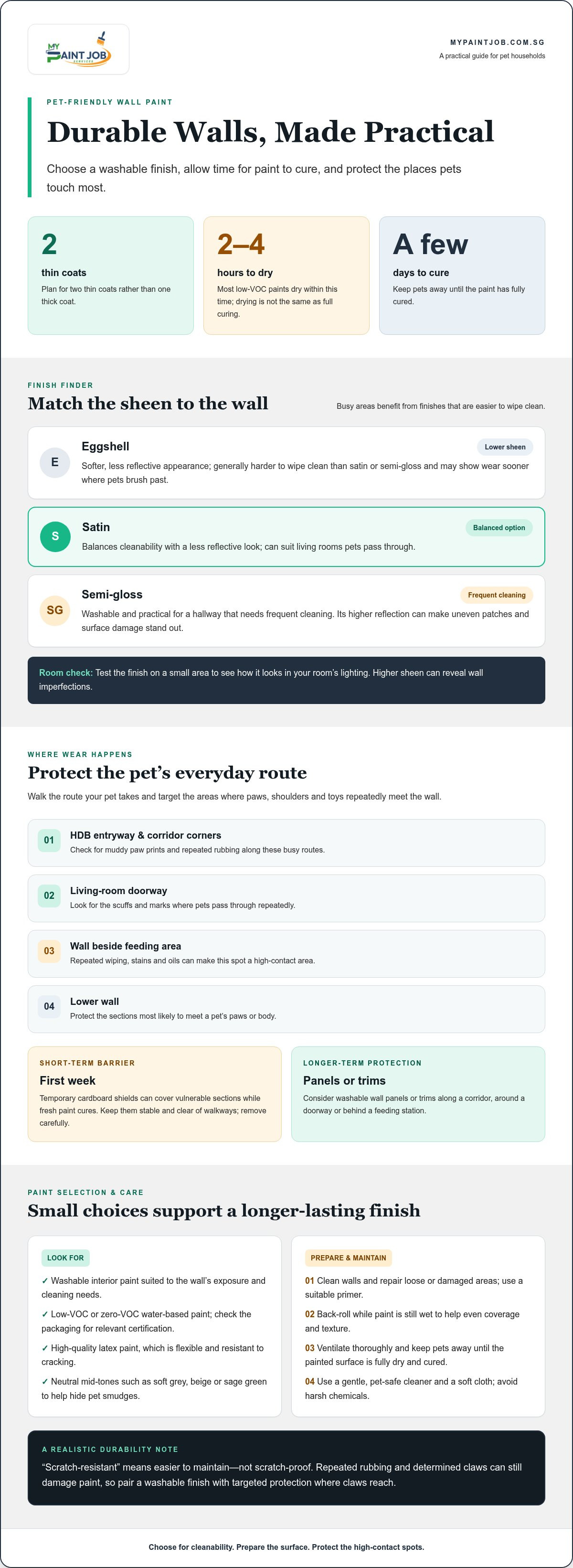
For a busy entryway or hallway, satin and semi-gloss are practical choices. Their washable surfaces make muddy paw prints and everyday marks easier to remove than they are from flat or matte paint. Eggshell has a softer, lower-sheen appearance, but may show wear sooner where pets brush against walls. Satin offers a middle ground, balancing cleanability with a less reflective look.
Choose a finish based on both foot traffic and wall condition. Semi-gloss reflects more light, which can make uneven patches and surface damage stand out. Eggshell is less reflective but generally harder to wipe clean than satin or semi-gloss. Satin can suit living rooms pets pass through, while semi-gloss can work well in a hallway that needs frequent cleaning. Test the finish on a small area to see how it looks in your room’s lighting.
Back-rolling means rolling over freshly applied paint to even out its coverage and texture. Work in manageable sections, rolling while the paint is still wet. This can help create a more consistent finish, but it does not replace proper preparation or make paint scratch-proof. Clean, sound walls and a suitable primer support better adhesion.
Plan for two thin coats rather than one thick coat. Most low-VOC paints dry within 2-4 hours, but full curing may take a few days. Dry to the touch doesn’t mean fully cured, so keep pets away until the paint has cured.
Higher-sheen paint can reveal wall imperfections, and a touch-up may look different if its sheen or application does not match. Paint odour may also be a concern around pets. Choose low-VOC or zero-VOC water-based paint and ventilate the room thoroughly. Keep pets away until the painted surface is fully dry, then clean it gently to protect the finish.
2. High-traffic areas needing extra protection
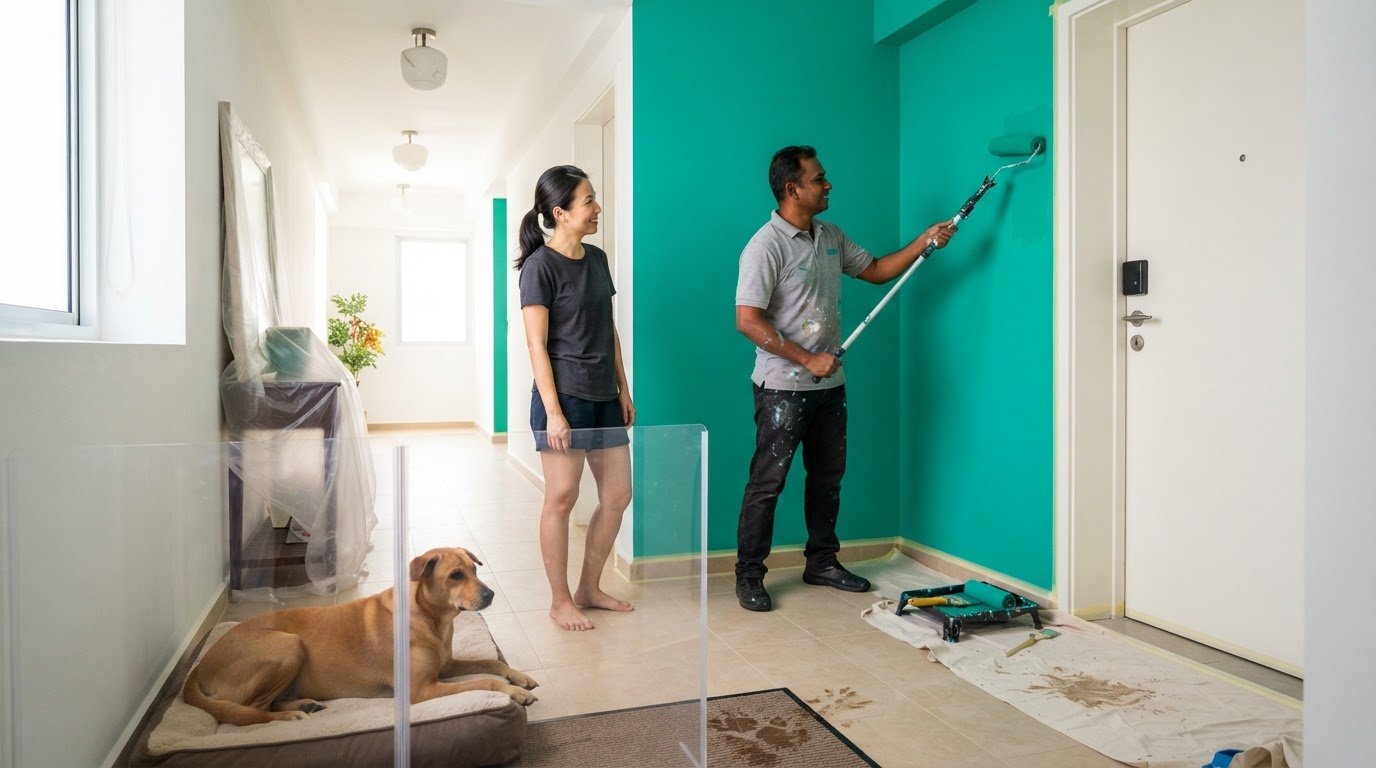
Map where paws, shoulders and pet toys repeatedly meet the wall. In a Singapore home, check the HDB entryway, corridor corners, living-room doorway and the wall beside a feeding area. These specific spots collect muddy prints, rubbing and accidental knocks. Using paint designed for high-traffic areas can help resist scratches and scuffs, while an extra coat can add durability where daily contact is concentrated.
Protect the lower wall, where a pet’s body or paws are most likely to leave marks. Temporary cardboard shields can cover vulnerable sections during the first week while fresh paint cures. Keep the shields stable and clear of walkways, then remove them carefully to avoid scraping the new finish. This short-term barrier helps minimize contact during the curing period.
For longer-term protection, washable wall panels or trims can take the brunt of daily wear. Consider them along a corridor, around a doorway or behind a feeding station. Smooth surfaces are easier to wipe clean than painted walls, and trims create a defined boundary with the surrounding paint. Choose a style that complements the room.
Plan the wall design for easy cleaning as well as appearance. Neutral mid-tones, such as soft grey, beige and sage green, tend to hide pet smudges better than very pale colours. Wipe marks with a gentle, pet-safe cleaner and a soft cloth. Avoid harsh chemicals, which can damage paint or protective coverings.
Walk the route your pet takes and mark the places needing the most protection before painting. That simple step helps target durable coatings, panels or trims instead of treating every wall alike. If a wall needs a fresh, coordinated finish, plan a wall refresh around its busiest areas and the protection those spots need.
3. What Makes a Paint Pet-Friendly?
Pet-friendly paint balances cleanability, durability and careful ingredient selection. In Singapore homes, walls near litter trays, feeding areas and pet beds may face stains, oils and repeated wiping. A washable interior finish makes routine cleaning easier, while a well-prepared, properly primed surface helps paint adhere and last. No wall coating can prevent damage from determined scratching, so pair the paint choice with practical protection where claws reach.
High-quality latex paint is flexible and resistant to cracking, making it a suitable option for homes with pets. A hallway wall, for example, needs to withstand regular contact, while the wall behind a feeding station may need frequent cleaning. Choose a washable product intended for interior walls, and follow its preparation and application directions. Stain-resistant paint can help with marks, but promptly cleaning spills with a gentle cleaner also helps protect the finish.
Which paint brands in Singapore offer durable, pet-friendly interior paint? Compare Singapore-available interior ranges by their labelled features, rather than relying on a brand name alone. Look for washable, low-VOC or zero-VOC water-based paint, and consider how the stated finish suits your room and cleaning needs.
Are low-VOC or pet-safe paints available in Singapore, and what certifications should you check? Low-VOC and zero-VOC water-based paints are recommended for pet households; check the paint packaging for a relevant low-VOC or zero-VOC certification. VOCs evaporate as paint dries and may cause respiratory issues or trigger allergies in people and animals, so ventilate the room thoroughly and keep pets away until the paint is fully dry.
Before painting, clean the wall and repair loose or damaged areas so the coating has a sound surface. Follow the product’s recoat and curing directions, then use a gentle cleaner for everyday marks. Choose a washable finish suited to the wall’s exposure to pets and regular cleaning, as well as a colour that works for your room.
4. Scratch- and scuff-resistant paint
Paint marketed for high-traffic or high-touch areas can help resist scratches and scuffs from pets. Treat “resistant” as easier to maintain, not scratch-proof: claws and repeated rubbing can still damage a coating. For a Singapore corridor, prioritize a durable, washable finish on the wall pets brush against. Add an extra coat in that zone to improve durability, following the paint’s recoat directions.
Protect trim separately. Enamel paint is suitable for baseboards and trim that face more contact from claws. It can be a practical choice along a hallway edge or beside a doorway, where paws and claws may reach the lower surface. Before painting, clean and prepare the trim so dirt or loose material does not undermine adhesion.
A reported home example offers context, not a promise: a hallway stayed in good condition for two years with a 75-pound golden retriever and two cats. The useful lesson is to combine a suitable coating with careful preparation and targeted protection. Check the lower wall for scuffs, then place furniture to prevent repeated scraping and keep pets from rubbing against freshly painted areas.
Cleaning habits matter, too. Wipe marks with a soft cloth and gentle, pet-safe cleaner instead of scrubbing with an abrasive pad. Abrasion can wear the finish, while oils and dirt left on the surface can build up. Keep pets away until paint is fully dry, and attend promptly to marks in high-contact areas. Trimming pets’ nails can also reduce accidental wall damage.
For a comfortable, stylish room, choose shades that suit the furniture and consider where scuffs will be most visible. If the wall beneath peeling paint has damaged concrete, that needs repair before recoating. Arrange spalling concrete repair for affected areas, then plan a sound surface for the next finish.
My Paint Job Singapore: HDB painting services
My Paint Job Singapore provides HDB painting services for homeowners ready to refresh scuffed, marked or tired-looking walls. The team also paints condos and landed homes, using meticulous surface preparation to support a high-quality finish. If pet traffic has left visible wear, repainting can refresh the room and give you the opportunity to choose a washable finish suited to everyday cleaning.
When planning the work, discuss the walls’ condition and the areas pets frequently brush against. Proper preparation helps the new coating adhere, while eco-friendly, low-odour, zero-VOC paint options support a considered choice for a lived-in home. My Paint Job Singapore also handles commercial painting projects.
Contact My Paint Job Singapore or visit its website to discuss your painting project.
Plan a finish that fits your home
Choosing scratch-resistant paint for homes with pets is also a chance to shape how your rooms feel as daily routines change. Before refreshing your home, note which spaces you want to feel brighter, calmer or more connected. A simple room-by-room plan helps keep colour choices and the overall look cohesive, rather than treating every wall as a separate project.
My Paint Job Singapore provides HDB, condo and landed painting services for homeowners planning a refresh. Share which rooms you’re updating and the look you want to create, then discuss a suitable painting approach for your space.
Contact My Paint Job Singapore to discuss your painting project. A considered plan can make the refreshed space feel both personal and ready for everyday life.
Frequently Asked Questions
What Makes a Paint Pet-Friendly?
Pet-friendly paint combines suitable ingredients with a finish that can handle routine cleaning. Choose low-VOC or zero-VOC water-based paint, ventilate the room, and keep pets away until the paint is fully dry. Low emissions and scratch resistance are different qualities: paint can be a considered choice for a pet household without preventing claw damage.
What types of interior paint are most scratch-resistant for homes with pets?
Look for interior paint designed for high-traffic or high-touch areas, and use enamel on vulnerable baseboards or trim. High-quality latex paint is another suitable option because it is flexible and resists cracking. A hallway wall may need a washable coating, while trim beside a doorway needs a tougher surface. Paint can help reduce wear, but it cannot make walls scratch-proof.
Is washable or scrubbable paint better for pet scratches and scuffs?
Washable paint helps remove surface dirt and paw marks, but it will not stop a claw from cutting or scraping the coating. A scrubbable label may suit areas that need frequent cleaning, such as beside a feeding station. Start with a soft cloth and gentle cleaner; aggressive scrubbing can wear the finish and make marks more noticeable.
Which paint finishes hide scratches and pet marks best?
Eggshell’s lower sheen can make minor surface irregularities less prominent, while satin balances appearance and cleanability. Semi-gloss is easier to wipe, but its stronger reflection can draw attention to uneven patches or scratches. For a wall with visible scuffs, consider a mid-tone colour and test a small painted area in the room’s lighting before deciding.
How should walls be prepared and painted to resist scratches from pets?
Start with a clean, sound surface: remove dirt, repair loose areas, and prime where needed for adhesion. Apply two thin coats rather than one thick coat, following the paint’s recoat directions. Keep pets out of the room until the surface is fully dry and cured. Move furniture away from walls to reduce rubbing, then restore it carefully.
What paint brands in Singapore offer durable pet-friendly interior paint?
Compare interior paint ranges available in Singapore by their labelled features rather than brand name. Look for washable, low-VOC or zero-VOC water-based paint and a finish suited to the room’s traffic and cleaning needs.