
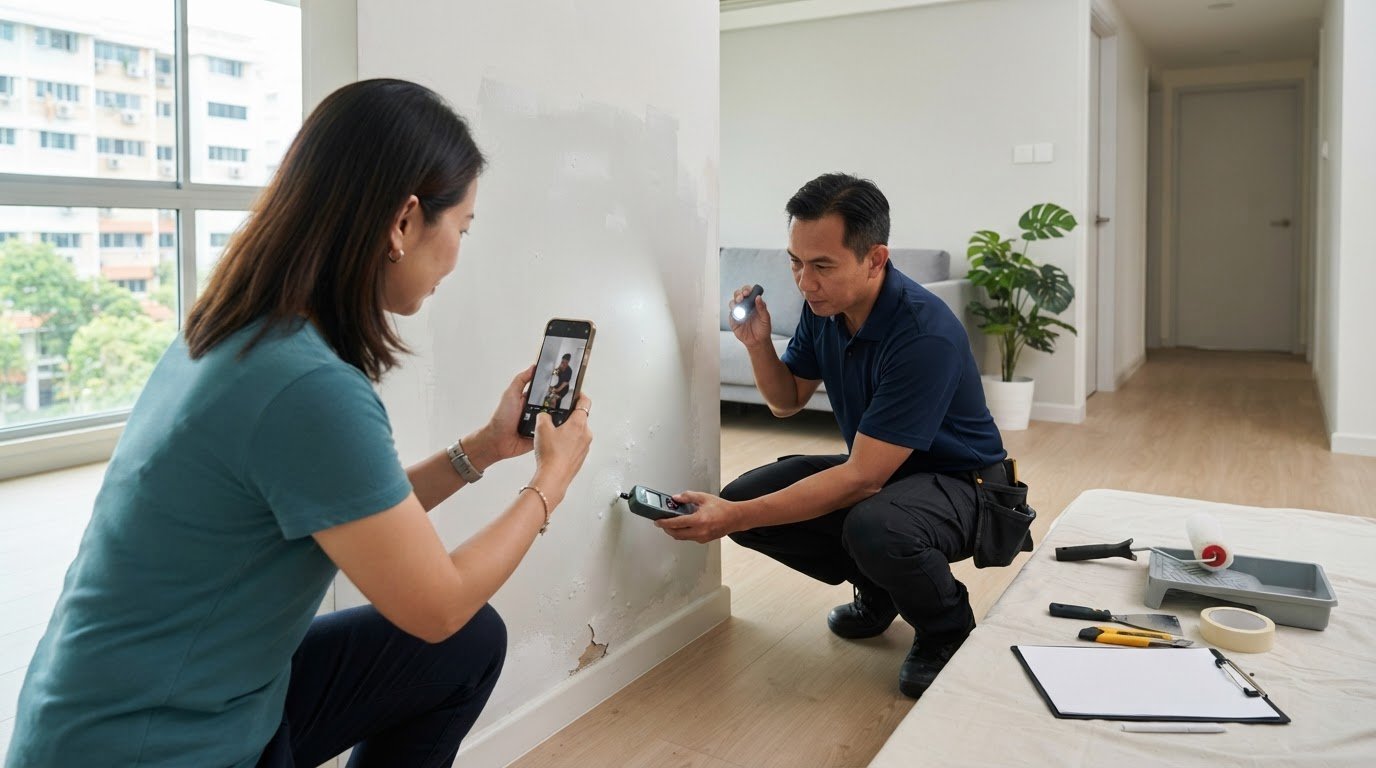
Patchy coverage, roller marks or peeling paint can make a new home feel unfinished, but repainting straight away may make the problem harder to document. If you’re wondering what to do about poor paint job from developer, start by recording the issue before changing the surface.
It’s understandable to want an even finish quickly. But not every mark has the same cause: a minor surface variation may be cosmetic, while bubbling, recurring damp patches or cracks could point to an underlying wall or moisture problem. The right fix depends on what is happening beneath the paint.
This guide explains how to photograph and describe paint defects, report them through the developer’s documented channel, and review your handover documents and defect-reporting process. You’ll also learn how to distinguish a paintwork issue from a damaged or uneven surface, and when repainting, plastering or further investigation may be the sensible next step. Document first, then decide how to restore the finish without repeating work unnecessarily.
Key Takeaways
- To decide what to do about poor paint job from developer, create a clear record before patching or repainting.
- Compare simple finish flaws with recurring peeling, bubbling, cracks or damp-looking areas, which may need closer investigation.
- Use your handover documents and the type of defect to decide whether to seek developer rectification before arranging independent repairs.
- For a lasting finish, address the cause first, then prepare the surface and assess whether plastering or repainting is needed.
Poor developer paint job? Start by recording the defects before repairs
It’s tempting to touch up a patchy wall as soon as you notice it. Pause first. Patching or repainting can change the surface before the developer has a chance to inspect it, so record the affected areas before making repairs. If you’re deciding what to do about poor paint job from developer, start with evidence you can refer to later.
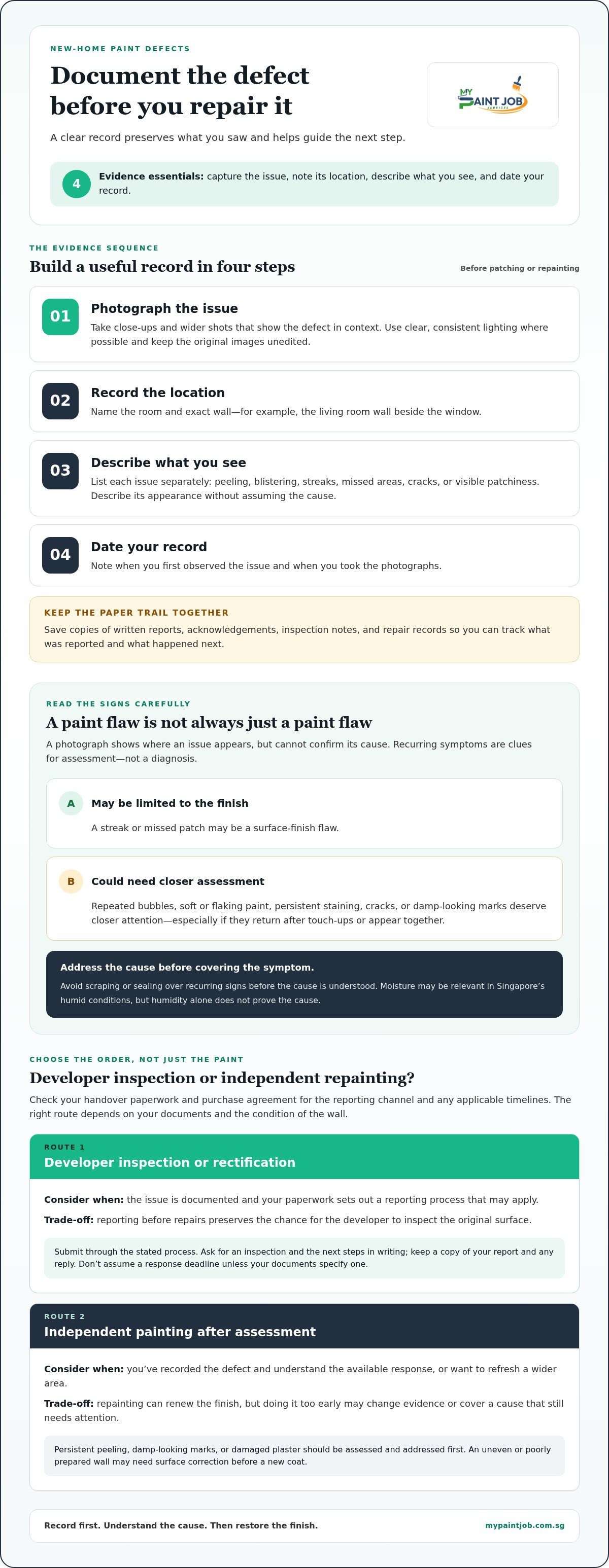
Follow a simple sequence:
- Photograph the issue. Take close-ups and wider shots that show the defect in context. Photograph the wall in clear, consistent lighting where possible, and keep the original images unedited.
- Record the location. Note the room and exact wall, such as the living room wall beside the window.
- Describe what you see. Record each issue separately, including peeling, blistering, streaks, missed areas, cracks or visible patchiness. Describe the appearance without assuming its cause. For background on common paint defects, see the overview of paint failure modes.
- Date your record. Note when you first observed the issue and when you took the photographs.
What evidence helps explain a poor paint finish?
Unaltered images and precise location notes make it easier to identify what needs inspection. Keep copies of your written reports, acknowledgements, inspection notes and repair records together. That way, you can track what you reported and what happened next.
How should you raise the issue with the developer?
Check your handover paperwork and purchase agreement for the reporting channel and any applicable timelines. Submit the details through the stated process, asking the developer to inspect the affected areas and explain the next steps in writing. Keep a copy of your submission and any reply. Don’t assume a response deadline unless your documents specify one.
How to tell paint defects from wall or moisture problems
A streak or missed patch may be limited to the paint finish. Recurring bubbles, peeling, cracks or damp-looking marks can point to a problem beneath the coating. These signs are clues, not a diagnosis. A photograph shows where an issue appears, but cannot confirm its cause. In Singapore’s humid conditions, moisture may be relevant to an assessment, but humidity alone doesn’t prove the cause.
A coating flaw affects the finish; recurring failure may signal a substrate or moisture issue that needs attention before repainting. The BCA Quality at Handover Guide provides useful context when reviewing the quality of a new home’s finishes. If you’re considering what to do about poor paint job from developer, note whether the symptom is isolated or returns after a repair, then report that pattern for inspection.
Which signs suggest the wall needs more than repainting?
Repeated bubbles, soft or flaking paint, persistent staining and cracks deserve closer assessment, especially if they return after touch-ups or appear alongside damp-looking areas. Avoid scraping or sealing over them before the cause is understood. The wall and surrounding area may need professional inspection to determine whether the issue involves moisture, adhesion or the underlying surface.
When might plastering or surface preparation be needed?
Even after the original cause has been addressed, an uneven, damaged or poorly prepared wall can leave a new coat looking rough or patchy. Repairs may involve removing loose material, correcting surface imperfections and applying an appropriate finish. The work depends on the wall’s condition. See this wall plastering and skim coating guide for more detail. Once the cause is addressed, professional wall plastering and painting can help restore a smooth, even finish.
Developer rectification or repainting: choose the right order
The right first step depends on your handover documents and what the paint problem suggests. Reporting the issue before repairs gives the developer an opportunity to inspect the original surface. Independent repainting may be practical once you understand the response, particularly if you’re planning a wider refresh.
| Route | Best considered when | Trade-off |
|---|---|---|
| Developer inspection or rectification | The issue is documented, and your paperwork sets out a reporting process that may apply. | Preserves the chance for the developer to inspect the original surface before it is altered. |
| Independent painting after assessment | You’ve recorded the defect and understand the available response, or want to refresh a wider area. | Can renew the finish, but repainting too early may change evidence or cover a cause that still needs attention. |
When should you give the developer an opportunity to inspect?
If the issue may be a handover defect, report it promptly through the channel described in your documents, before patching or repainting the affected area. Check your purchase agreement and handover paperwork for any applicable reporting period. Don’t rely on a general timeline: the relevant terms depend on your documents and property.
When might professional repainting be the practical next step?
Once the issue is documented and you understand the developer’s response, professional repainting may be a practical choice for an isolated finish flaw or a wider refresh. Persistent peeling, damp-looking marks or damaged plaster should be assessed and addressed first. A fresh coat alone may not last if the underlying cause remains. For HDB homeowners planning a broader makeover alongside rectifications, partnering with a renovation specialist like FT2 Interior Design can ensure surface treatments fit smoothly into the overall project.
Still weighing what to do about poor paint job from developer? After documenting the issue and considering rectification, professional painting for your home can restore the finish when repainting is the right next step.
How to arrange a lasting paint repair after the cause is addressed
Once the underlying cause has been dealt with, plan the repair in the right order. A fresh coat can renew a room, but the wall needs to be sound and properly prepared first. A durable-looking finish depends on addressing surface issues before repainting.
- Identify the cause. Establish whether the issue was limited to paintwork or involved moisture, damaged plaster or another surface problem.
- Repair the wall. Remove loose or damaged material and complete any necessary plaster repairs before painting.
- Prepare the surface. Make it suitable for painting so unevenness and poor adhesion don’t undermine the finish.
- Apply an appropriate paint system. Choose materials and an application method suited to the wall condition and repair scope, then review the finished surface for consistency.
The work depends on how much of the home is affected, the condition of each wall and whether plastering or additional preparation is needed. Treating only the visible patch may not be enough if surrounding areas are uneven or damaged.
What should a careful repainting process cover?
A considered repaint includes protecting the home, preparing the surfaces, selecting suitable materials, applying the paint and checking the finished work. My Paint Job Singapore’s residential painting service includes protecting and moving furniture, followed by post-project clean-up, so the work considers the home as well as the finish.
How can you plan the next step for an HDB home?
After documenting the defect and addressing its cause, decide whether you need a local repair or a broader refresh. For more planning considerations, read this professional house painting guide. My Paint Job Singapore provides HDB painting and wall plastering services. To discuss repainting your HDB home, discuss your painting needs and request a painting assessment.
Move from careful documentation to a finish you can feel good about
The sensible answer to what to do about poor paint job from developer is to document the defects, check your handover documents and consider the cause before choosing a repair. Surface streaks may call for repainting, while recurring peeling, cracks or damp-looking areas may need assessment and wall repairs first.
Once you’ve considered the developer’s response and addressed any underlying issue, professional preparation and painting can help restore a smooth, cohesive finish. My Paint Job provides residential painting and wall plastering in Singapore, with over 10 years of industry experience. The service includes furniture protection and movement, followed by post-project clean-up.
Ready to refresh your home with a considered repair plan? Discuss your home painting needs. With the right steps in the right order, you can move forward with greater confidence and make your walls feel like home.
Frequently Asked Questions
What should I do first if my new home has a poor paint job?
Document each affected area before making changes. Take dated close-up and wider photographs, note the room and wall location, and describe what you see, such as streaks, peeling or missed patches. Then report the issue through the channel stated in your handover documents or purchase agreement. Keep a copy of your report and any acknowledgement or response.
Can I repaint before asking the developer to fix the paint defects?
It’s sensible to photograph and report the defect before repainting, since changing the surface may make its original condition harder to assess. Check your property documents for the reporting process and any applicable timelines. If the wall shows recurring bubbling, damp-looking marks or damaged plaster, don’t treat it as a simple cosmetic repaint until the underlying surface has been assessed.
How can I tell whether peeling paint is caused by moisture?
Peeling alone can’t confirm moisture as the cause. Bubbling, staining or paint that repeatedly fails may warrant further investigation, particularly if the wall feels damp or the symptoms return after repairs. Record where the signs appear and when you notice them. Have the surface assessed before repainting so the repair addresses the cause rather than covering the visible symptom.
Should I hire a painter or wait for the developer to respond?
First document and report the defect using the process in your property documents. Then consider the developer’s response and the nature of the issue before arranging independent painting. Your documents may set out applicable timelines, so avoid relying on a general deadline. If repainting is appropriate, address any moisture concern or wall damage first. A new coat may not resolve an underlying surface problem.
Can a painter fix uneven walls as well as a poor paint finish?
Yes. A painting project can include surface preparation, and uneven or damaged areas may need plastering or skim coating before paint is applied. The right scope depends on the wall’s condition and the cause of the defect. My Paint Job Singapore provides residential painting and wall plastering. Identify which areas need surface repair and which need repainting so the plan addresses both.