

Agree on payment dates before painting begins, rather than leaving them to guesswork. A payment schedule for painting services states how much is due and when, with instalments tied to project stages or set intervals. Put the amounts and timing in writing so both parties can follow the same plan.
It’s reasonable to want a fresh finish without uncertainty about when payments are due. A clear schedule helps you plan cash flow, track each instalment and reduce the risk of disputes or late fees. Link the final payment to a clearly stated project milestone so you know when it is due and what it covers.
This guide explains how to set payment amounts and due dates, what to record to prevent misunderstandings, and how to handle the final payment. You’ll also learn how to tie payments to project stages or agreed intervals, keeping the process organised from start to finish.
Key Takeaways
- Break down each instalment against the work it covers, so the agreed amounts are easier to understand and track.
- Set out how changes, missed due dates and any late charges will be handled to reduce room for disagreement.
- Choose a schedule based on project stages or an agreed recurring interval, with the start and end dates clearly recorded.
- Make the final payment part of a clear handover process, including a review of the completed work and any agreed touch-ups.
Payment amounts and due dates
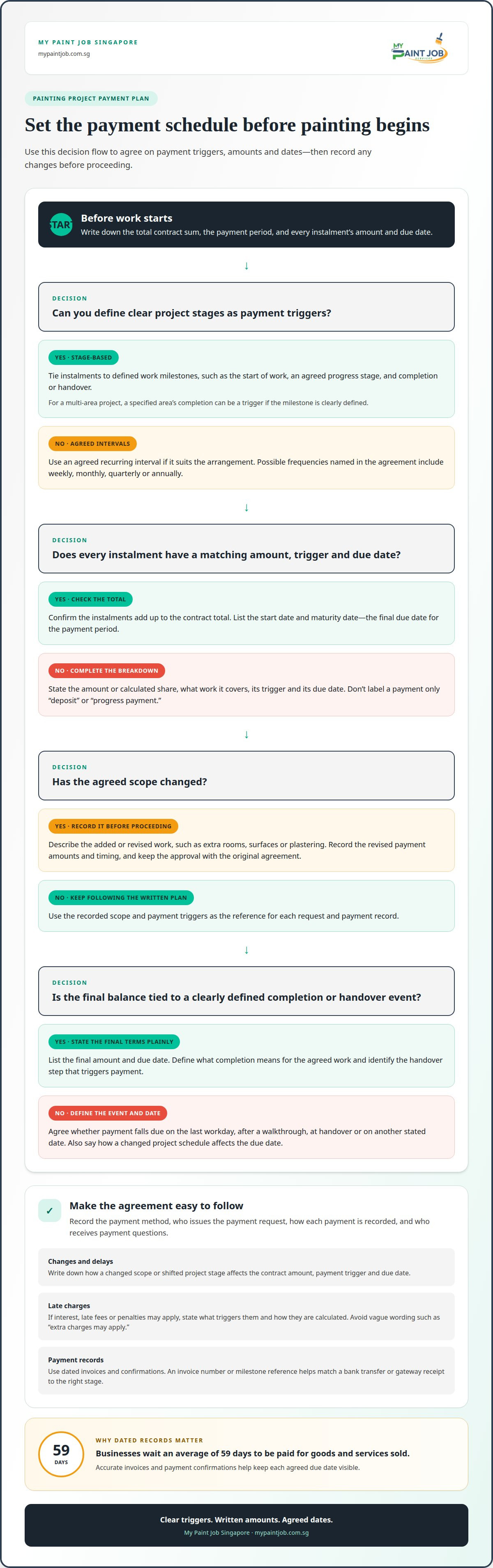
For a painting project in Singapore, agree on the amount and due date of every instalment before work starts. Record the total contract sum, each payment milestone and the date the balance is due.
Payment milestone amounts
State each instalment as an amount or a clearly calculated share of the contract sum. Explain what work each payment covers instead of labelling it only “deposit” or “progress payment.” For example, you could link one instalment to the start of work, another to an agreed project stage, and the balance to completion.
Check that the instalments add up to the contract total, including any agreed changes. If the scope changes, such as adding rooms or surfaces, record the revised work and payment amounts before proceeding. A clear breakdown shows both parties what is due at each stage and distinguishes progress payments from the final balance.
Balance payment timing
For a painting project in Singapore, the balance is due on the date stated in the agreement. Tie that date to a clear project event, such as completion and handover, and define what completion means for the agreed work. State how the due date will be calculated if the project schedule changes.
List the final amount and due date alongside the earlier instalments. If handover triggers the balance, state this plainly and identify the agreed handover step. This avoids uncertainty about whether payment is due on the last workday, after a walkthrough or on another agreed date.
A payment schedule for painting services should state the total contract cost, each instalment amount, its due date and the overall payment period. Include the start date and maturity date, meaning the period’s final due date. Payments may be tied to project stages or arranged at regular intervals, such as weekly, monthly, quarterly or annually, if that frequency suits the agreement.
For painting work, stage-based milestones can tie payments to the project sequence. List the start of work, any agreed progress stages, and completion or handover as separate triggers where applicable. Before signing, check that each trigger has a matching amount and date and that the instalments add up to the agreed total.
Avoiding payment disputes and late fees
Make payment terms specific before painting starts to reduce the risk of disagreements. Match each charge to an agreed part of the work, then record how both parties will handle changes, delays and missed due dates. A written record gives each payment a clear reference point, particularly if surface preparation reveals additional work.
For example, if a wall needs extra plastering, describe the added task and its effect on the amount and timing before proceeding. Keep the change and its approval with the original agreement. This helps distinguish an approved adjustment from a disputed charge when an invoice arrives.
Review these details in the agreement:
- Payment due dates and the method for recording each payment.
- How a changed scope affects the contract amount and schedule.
- Whether interest, late fees, or penalties may apply, and how they are calculated.
- Who should receive payment questions and how notices will be sent.
A schedule may specify interest, late fees or penalties. State the terms clearly, including what triggers them and how they are calculated. Avoid vague wording such as “extra charges may apply.” Clear terms help both parties understand the consequences of late payment without guessing at the amount or timing.
Use dated invoices and payment confirmations to maintain a simple record. Painting contractor software can send automated payment reminders, helping flag an upcoming or overdue date. A reminder supports the agreed schedule; it doesn’t replace clear terms or a direct conversation about a disputed item. Businesses wait an average of 59 days to be paid for goods and services sold, so accurate records help keep each due date visible.
If the painting scope includes damaged concrete, describe that repair as a separate work item, with its own approval and payment trigger. This keeps repair-related changes distinct from painting milestones. For a project that includes spalling concrete repair, clear scope notes can help connect the work completed with the related payment record.
Contractor payment schedules
A contractor’s schedule ties payments to the project timeline or agreed work stages. For a larger painting project in Singapore, progress payments can divide the contract cost into instalments as work advances. Make each trigger easy to identify, such as completion of a defined stage, rather than leaving payment timing open to interpretation.
Progress payments are a practical structure for large projects, but no single schedule suits every job. The scope, work sequence and agreed payment frequency shape the arrangement. For example, a project covering several areas could link an instalment to a specified area’s completion, provided the contract clearly defines that milestone.
Keep the schedule readable by recording:
- The total contract cost and each instalment amount.
- The project stage or interval that triggers each payment.
- The payment due date after that trigger.
- The agreed payment method for each instalment.
Payment methods depend on the contractor’s arrangements and the agreement. Name the accepted method in the schedule, such as a bank transfer or payment gateway, only if it is offered for the project. Painting contractor software may integrate with payment gateways, but the contract still needs to specify the method both parties will use.
For each instalment, state who issues the payment request and how the payment is recorded. A reference such as an invoice number or project milestone helps match a transfer or gateway receipt to the right stage. If a payment is split across methods, list each portion and its due date separately so the outstanding balance remains clear.
Keep approved schedule changes with the contract record. If a project stage shifts, update the related payment trigger and due date in writing before relying on the revised timeline. This creates a traceable link between the agreed work stage and its payment, helping the contractor and property owner follow the same plan.
Handover and final payment
At handover, compare the finished surfaces with the agreed painting scope. Walk through each included area, such as living room walls, bedroom ceilings and listed door frames. Note visible unfinished spots or agreed work that still needs attention, then record the items and next steps in writing.
The balance is due according to the contract’s stated trigger and date. If final payment is tied to handover, define that point clearly, for example, after the agreed walkthrough and completion of the listed work. Don’t assume payment is automatically due on the last workday if the written schedule says otherwise.
A practical handover record can include:
- Areas completed, matched against the agreed scope.
- Any agreed touch-ups, with the location and required action.
- Approved changes, so they are not confused with original work.
- The final invoice amount and payment due date.
Distinguish a requested improvement from work already included in the contract. For instance, a newly noticed surface issue may need assessment before repair work is added to the painting scope. Record any approved change and its effect on the final account instead of adding it to the balance without explanation.
Once the agreed work and any follow-up are clear, compare the invoice with the contract and approved changes. Check that earlier payments are credited and the remaining balance matches the written calculation. Keep the invoice, handover notes and payment receipt together as one project record, giving both parties a consistent reference if questions arise.
If spalling concrete repair forms part of the agreed project, include the repaired area in the walkthrough and handover notes. Describe its completion separately from the painted surfaces, so the record reflects each type of work. For a painting project with a defined scope and handover plan, discuss your painting project.
My Paint Job Singapore
My Paint Job Singapore provides painting services for HDB flats, condominiums, landed properties and commercial spaces. For your project, a written scope and payment plan can make the work and payment stages easier to follow. Tie agreed milestones to amounts and due dates, and record any approved changes clearly.
When discussing your project, share the property type, areas to be painted and any surface preparation needs. These details help define the scope and a payment arrangement suited to the work, rather than relying on a one-size-fits-all schedule. If the project includes plastering, list it as a separate part of the agreed scope.
Contact My Paint Job Singapore to discuss your painting project.
Move Your Painting Project Forward
A clear payment plan supports the bigger goal: a refreshed space that feels considered and complete. When preparing your project brief, note the areas you want painted, your preferred finish and any surface concerns. This gives the discussion a practical starting point and helps connect the agreed work with a suitable schedule.
A payment schedule for painting services should make the financial side clear, leaving you free to focus on the transformation. My Paint Job Singapore provides HDB, condo and landed property painting services, tailored to the property and its needs.
Share what you’re planning and discuss the next steps with the team. Contact My Paint Job Singapore to start shaping your painting project with clarity and confidence.
Frequently Asked Questions
What is the typical payment schedule for painting services in Singapore?
There isn’t one fixed schedule for every painting project in Singapore. A common structure ties instalments to agreed work stages or payment intervals, with a due date for each. The payment schedule for painting services should reflect the project’s size and sequence. For example, work across several areas may use separate progress milestones rather than a single completion trigger.
How much deposit do painters in Singapore usually require?
There’s no single deposit amount for every painting job in Singapore. The amount depends on the contractor’s terms and the agreed project arrangement. Before paying, make sure the written quote or contract states the deposit, what it covers and how it affects later instalments. Keep the payment record with the agreement so you can track it against the project total.
Should payment be made before or after a final inspection?
Follow the payment trigger stated in the agreement. If the final balance is due after handover, complete the agreed walkthrough first and record any outstanding items, such as an unpainted section listed in the scope. Document those items and the follow-up plan to create a clear reference for both inspection and payment timing.
What are typical painting service prices in Singapore, and how are payments tied to the quote?
Painting costs vary depending on the property, areas included, surface preparation and project requirements, so a quote should define the work rather than rely on a generic price. My Paint Job Singapore provides a free, non-obligatory quote. Compare its scope with the payment breakdown: each instalment should relate to quoted work, and approved additions should be recorded separately.
What consumer protections apply to deposits and payment disputes for painting services in Singapore?
Keep the agreement, quote, deposit receipt, invoices and written approvals for changes together. These records help establish what work and payments both parties agreed to if a disagreement arises. For example, keep approval for added surface preparation with the revised scope. This is practical record-keeping, not a substitute for advice about your specific legal rights.
What risks should customers check for in a painting service payment schedule?
Look for unclear payment triggers, unexplained charges and late-fee terms without a stated calculation method. Check that each instalment corresponds to agreed work and that the schedule explains how approved changes affect the amount due. For example, extra rooms should not appear as an unexplained increase. Keep a copy of the final agreed schedule and payment receipts.