Your newly painted HDB wall might feel bone-dry to the touch after just a few hours, but leaning your heavy sofa against it tonight could still leave a permanent, unsightly dent in the finish. Many homeowners mistake a dry surface for a finished job, only to find scuffs or peeling paint just a few days later. You need to know exactly how long does new paint take to cure to ensure your investment stays pristine in Singapore’s unique climate. While a standard 4-room flat can be professionally painted in three to five days, the actual hardening process is a much longer chemical journey that requires your patience.
We understand the impatience to finish your move-in process and finally enjoy your refreshed living space. It’s natural to want the ladders gone and your decor back in place the moment the walls look ready. This guide provides a definitive timeline for protecting your fresh paint from damage while navigating our local 80% humidity levels. You’ll discover the specific difference between drying and curing; we’ll also provide a clear schedule for when it’s finally safe to touch, wash, or lean objects against your walls without compromising the high-standard results of your renovation.
Key Takeaways
- Distinguish between “dry to the touch” and a full chemical cure to prevent accidental damage to your new wall finish.
- Understand how Singapore’s 84% humidity levels impact evaporation times and can cause common issues like surfactant leaching.
- Get a clear timeline on how long does new paint take to cure, from the first four hours of drying to the 14 days required for maximum hardness.
- Learn the “Gentle Use” rules for moving furniture and decor back into your room without leaving permanent marks on the paint film.
- Discover how professional application methods ensure the correct film thickness to avoid structural defects like mud-cracking in tropical climates.
Understanding the Difference Between Paint Drying and Curing
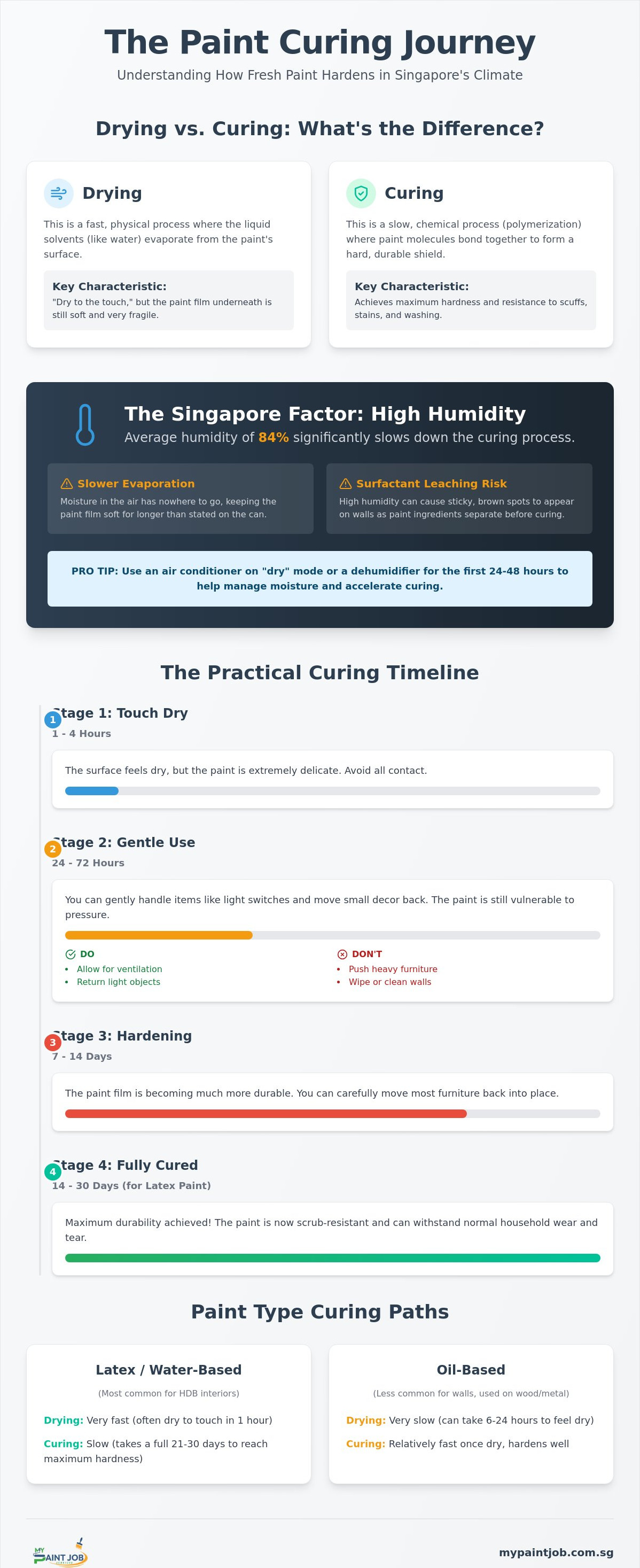
Touch your wall an hour after the final coat; it probably feels smooth and dry. This represents the “dry to the touch” stage, where the liquid solvents have evaporated from the surface. However, this is only the beginning of the journey. To truly understand how long does new paint take to cure, you must look beyond the surface to the chemical process of curing happening underneath. While drying is a physical change, curing is a chemical one called polymerization. This process transforms the soft paint film into a durable, scrub-resistant shield that can withstand the rigors of daily life.
In Singapore, high-quality emulsions like Nippon Vinilex 5000 are engineered for our tropical climate. They offer rapid drying times to help you resume your routine quickly, but they still require several days to reach their peak hardness. Achieve a flawless, long-lasting finish by allowing the paint film to undergo its full chemical transformation before you attempt to scrub the surface or hang heavy decor. Without a full cure, the paint remains soft and vulnerable to pressure, moisture, and stains.
Why “Dry” Does Not Mean “Ready”
Avoid the temptation to push heavy bookshelves against the wall the moment the paint feels dry. You risk a phenomenon called “blocking,” where the paint film hasn’t hardened enough to resist pressure, causing the furniture and the wall to fuse together. Additionally, Volatile Organic Compounds (VOCs) continue to off-gas during the cure phase even after the initial “paint smell” fades. Maintain consistent ventilation by keeping your windows open. This ensures your home environment remains fresh while the paint molecules finish bonding together.
Latex vs. Oil-Based: Different Curing Paths
Water-based paints, including the acrylic and latex varieties used in most HDB interiors, dry quickly but cure slowly. Expect a 21 to 30 day window for these paints to reach maximum durability. Oil-based paints follow a different path. They take much longer to feel dry to the touch, often requiring up to 24 hours between coats. Once they finally dry, however, they often reach a hard cure faster than latex paints in environments with lower humidity. Understanding these specific timelines helps you manage your move-in schedule with complete confidence.
The Singapore Factor: How Humidity Affects Your Paint Job
In Singapore, our average relative humidity often hovers around 84%. This environmental factor drastically changes the answer to how long does new paint take to cure compared to drier climates. When the air is already saturated with moisture, the water in your emulsion paint has nowhere to go. This slows down the evaporation process, keeping the paint film soft and vulnerable for much longer than the manufacturer’s label might suggest.
Understanding how long does new paint take to cure in a tropical environment also helps you avoid “surfactant leaching.” These are the sticky, brown or clear spots that appear on your walls, often in bathrooms or kitchens. It happens when high humidity forces the paint’s ingredients to separate and rise to the surface before the film can set. Adhering to professional painting standards involves managing these environmental variables carefully. For the best results, we suggest running an air conditioner on the “dry” mode or using a dedicated dehumidifier during the first 24 hours of the curing cycle.
The state of your walls before the brush even touches them also plays a critical role. If you’ve recently engaged in professional wall plastering, the new compound must be entirely bone-dry. Trapped moisture within the masonry or plaster will eventually try to escape, leading to unsightly bubbling or peeling during the cure phase. We take pride in ensuring every surface is perfectly prepared to prevent these logistical inconveniences.
Ventilation Strategies for HDB and Condo Units
During the first 48 hours, prioritize cross-ventilation. Open windows on opposite sides of your flat to create a natural breeze that carries moisture away. If it starts to rain, close the windows immediately and switch to your air conditioning. This balance ensures the paint film sets steadily without being overwhelmed by a sudden spike in outdoor humidity levels.
Surface Preparation and Cure Success
A perfect cure begins with the right foundation. Using a high-quality paint sealer is essential in Singapore. It regulates moisture absorption and prevents the alkaline salts in your concrete walls from reacting with the new paint. If you’re looking for certainty in your renovation, our HDB painting services provide the technical accuracy needed for a lasting finish.
Practical Curing Timeline: When Can You Resume Normal Life?
Transitioning your home from a construction zone back to a living space requires a strategic approach. While the initial drying happens quickly, understanding how long does new paint take to cure helps you avoid the heartbreak of a ruined finish. We’ve developed this milestone guide to help you navigate the weeks following your project with complete certainty.
- 0–4 Hours (The Touch Phase): The surface is vulnerable. You may perform a quick finger check in an inconspicuous corner, but avoid all other contact.
- 24–48 Hours (The Gentle Use Phase): It’s safe to walk through the room and place light furniture, such as chairs or side tables, provided they don’t touch the walls.
- 7–14 Days (The Weight Phase): The paint film has gained significant strength. You can generally lean a sofa against the wall or hang light, framed pictures now.
- 30 Days (The Full Strength Phase): The chemical bonding is complete. Your walls are now fully scrub-resistant and ready for standard household activity.
Protect your home’s new look by scheduling your project with our professional painting services, where we ensure every coat is applied for maximum durability.
When to Move Furniture and Hang Decor
Maintain a 2-inch gap between your walls and heavy wardrobes or cabinets for at least the first seven days. This space allows for essential airflow, which prevents moisture from being trapped against the soft paint film. Be extremely cautious with adhesive hooks or “Command” strips during this period. Applying these before the 30-day mark often results in the adhesive bonding to a semi-soft surface; when you eventually try to remove them, they will peel the “skin” of the paint right off the plaster.
First Cleaning: How to Treat New Walls
Avoid using any chemical cleaners, detergents, or even plain water on your new walls for at least 30 days. Use only a soft, dry microfibre cloth for dust during the first month. If you notice a smudge, resist the urge to scrub it until the polymerization process is finished. Treating your walls with this modest level of care in the beginning ensures a flawless aesthetic that lasts for years.
Ensuring a Perfect Cure: Why Professional Application Matters
Achieve a uniform finish that lasts for years by trusting experts to manage the technical aspects of film thickness. While you now understand how long does new paint take to cure, the quality of the application determines if the paint actually survives that 30-day window. Our professional HDB painting services ensure that each coat is applied with precision. We prevent “mud-cracking,” a common defect where paint is applied too thickly and cracks as it dries, by using calibrated tools and techniques tailored to our humid environment.
Predictable results require the use of premium materials like Nippon or Dulux. These reputable manufacturers engineer their formulas to provide stable cure times even in tropical weather, offering you a level of certainty that budget brands cannot match. We also manage the logistical challenges of your renovation by positioning furniture to allow for maximum airflow around the fresh paint. This consultative approach extends to your property’s specific layout; we advise on the best window and fan settings to optimize the chemical bonding process for your unique home.
Avoiding Common Post-Paint Disasters
Identify potential failures early by watching for “flashing,” which appears as uneven patches of sheen on your wall. This often happens when moisture seeps through the masonry, preventing the paint from curing correctly. Our team mitigates this risk by checking the moisture content of your walls with professional meters before the first drop of paint is applied. This meticulous preparation ensures that the underlying surface is ready to bond permanently with the new coating.
The My Paint Job Guarantee
Benefit from over 10 years of dedicated experience in managing Singapore-specific wall issues, from spalling concrete repair to persistent moisture seepage. We view ourselves as your partners in the design process, providing bespoke solutions that reflect your individual style while maintaining the highest standards of technical accuracy. Contact My Paint Job Singapore today for a hassle-free professional finish and enjoy the peace of mind that comes with a perfectly cured, durable home environment.
Protecting Your Investment for the Long Term
Achieve a lasting transformation by respecting the chemical journey of your walls. While the initial drying happens in hours, remember that the full hardening process requires 30 days of patience and proper ventilation. Managing Singapore’s high humidity is essential for preventing surfactant leaching and ensuring your paint reaches its maximum scrub-resistant strength. Understanding how long does new paint take to cure allows you to plan your move-in with complete certainty and avoid the stress of accidental scuffs or peeling.
Trust our team to deliver a flawless finish that stands up to the rigors of daily life. We bring over 10 years of experience in Singapore to every project, using premium eco-friendly paints that provide predictable results. We handle the heavy lifting of furniture protection and provide a thorough post-project clean-up so you can simply enjoy your refreshed space. Get a Professional Quote for Your HDB or Condo Painting Today and secure a high-standard result for your property. Your home deserves the meticulous care and technical accuracy that only a dedicated local specialist can provide.
Frequently Asked Questions
Can I sleep in a room that was painted today?
Yes, you can generally sleep in the room if we used premium, low-VOC water-based paints, but you must ensure excellent ventilation. Wait at least four to six hours for the paint to be dry to the touch before moving back in. Keep the windows open or the air conditioning on to clear any residual scents while the initial drying phase completes.
Why does my wall still feel sticky after 48 hours?
High humidity levels in Singapore often cause this stickiness, which is known as “surfactant leaching.” When the air is saturated with moisture, the water in the paint cannot evaporate efficiently. This keeps the surface soft and tacky. Using a dehumidifier or the “dry” mode on your air conditioner usually resolves this by pulling moisture out of the room to help the paint film set.
When is it safe to use blue tack or adhesive hooks on new paint?
Wait a minimum of 30 days before applying any adhesives to your new walls. Even if the surface feels hard, the internal layers are still undergoing polymerization. Applying blue tack or adhesive hooks too early will likely cause the paint to peel off in a large “skin” when you eventually try to remove them. Patience during this final phase protects the integrity of your professional finish.
Does air conditioning help paint cure faster in Singapore?
Yes, running your air conditioning is one of the most effective ways to manage how long does new paint take to cure in our tropical climate. Air conditioners act as powerful dehumidifiers. By lowering the relative humidity in your HDB or condo, the AC allows the paint to release its moisture content more rapidly and reach maximum hardness sooner than it would in a humid, stagnant room.
How long should I wait before cleaning my new HDB walls with a damp cloth?
You must wait a full 30 days before introducing any moisture or cleaning agents to your walls. During the first few weeks, the paint film is still reaching its peak durability and scrub-resistance. Using a damp cloth too early can soften the finish or leave permanent water marks. Stick to a light, dry microfibre cloth for removing dust until the one-month curing cycle is officially complete.