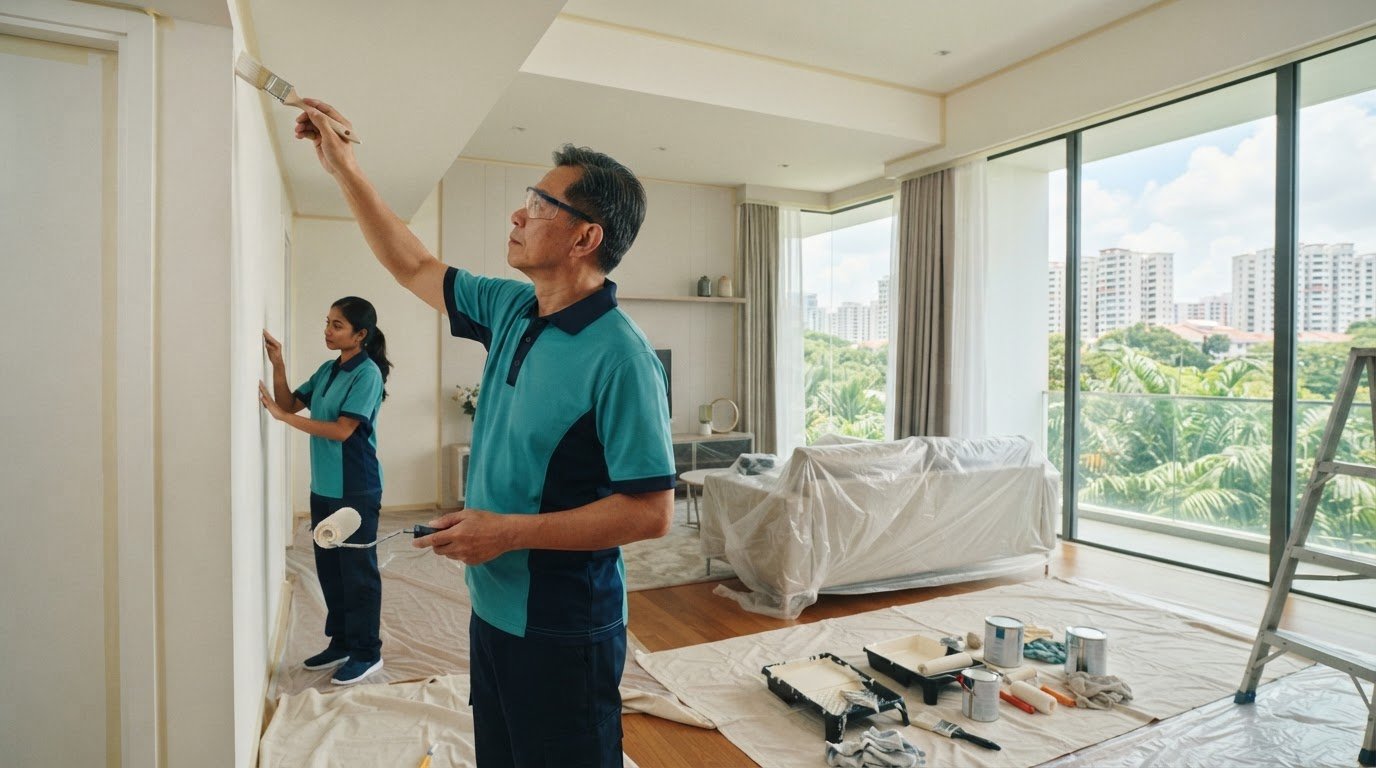
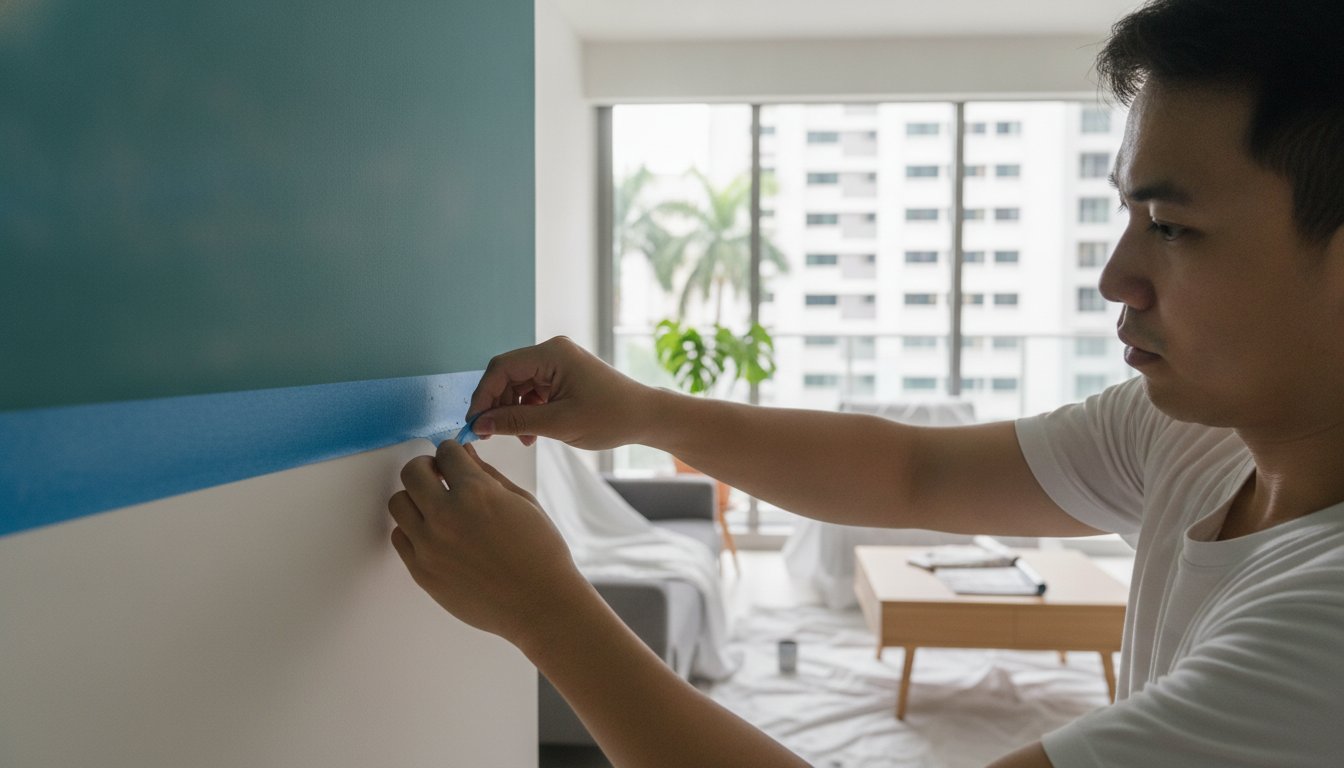
That “dry” feeling on your new wall is often a lie told by Singapore’s 85% humidity. You have likely spent days transforming your HDB or condo, and now you are navigating a cluttered maze of furniture piled in the center of your living room. It’s frustrating to wait when the paint feels smooth, leading most homeowners to ask how long after painting can I move furniture back before they accidentally ruin the finish. Moving a heavy sideboard or sofa too early can cause the paint to bond to the furniture, leading to unsightly peeling or permanent pressure marks that tarnish your beautiful new space.
We want to ensure your investment in a refreshed home remains flawless for years to come. This guide explains the technical difference between surface drying and deep curing so you can protect your walls and your belongings from avoidable damage. You’ll learn a definitive timeline tailored to our tropical climate, understand how the 2026 formaldehyde regulations affect your indoor air quality, and discover a simple test to check your wall’s hardness without leaving a mark. We provide the professional clarity you need to turn your project back into a comfortable home with total confidence.
Key Takeaways
- Understand the critical difference between paint being “dry to the touch” and fully cured to prevent heavy furniture from bonding to your new walls.
- Learn how Singapore’s high humidity levels can extend drying schedules and why proper airflow is your best tool for a faster move-in.
- Follow our specific timeline to determine how long after painting can I move furniture back safely, ranging from 24 hours for light items to several days for heavy cabinets.
- Master the “Fingernail Test” to accurately check the hardness of your paint film in an inconspicuous area before you begin rearranging your space.
- Discover how professional application and premium low-VOC paints help you navigate the 2026 formaldehyde regulations while ensuring a more durable, faster-curing finish.
Understanding the Difference Between Dry Time and Cure Time
Many homeowners feel a sense of relief when the walls look finished and the wet sheen disappears. However, confusing a “dry” wall with a “cured” one is a common mistake that leads to damaged finishes. To ensure your walls remain pristine, you must distinguish between these two distinct phases of the drying process. While the surface might look ready, the underlying layers are often still soft and vulnerable to pressure.
Understanding the timeline is the first step in deciding how long after painting can I move furniture back without causing permanent marks. There are three key stages to monitor:
- Dry to touch: This occurs when the solvent or water has evaporated from the surface, usually within 1 to 4 hours. The wall feels non-sticky, but the paint film hasn’t hardened.
- Recoat time: This is the safe window, typically 2 to 4 hours for modern acrylics, where you can apply a second coat without lifting or wrinkling the first layer.
- Full cure: This is the point where the paint reaches its maximum hardness and chemical resistance. In Singapore, this stage can take anywhere from 7 to 30 days depending on the product used.
The danger of moving furniture too early lies in a phenomenon called “blocking.” When you press a heavy object against a wall that is dry but not cured, the two surfaces can bond together. To understand the science behind this, you should look at what curing means for paint, as it describes the transition from a liquid state to a tough, cross-linked solid. If you pull that furniture away later, the paint often peels right off the wall, sticking instead to the back of your sofa or cabinet.
The 24-Hour Rule vs. The 30-Day Reality
Maintain the integrity of your room by following the 24-hour rule for light items only. While chairs or floor lamps can often return to their spots after a full day, they should still not touch the wall directly. Curing is the process where paint molecules cross-link to form a durable film. Because the latex and acrylic paints common in Singaporean homes rely on evaporation, our humid climate often stretches the time needed to reach peak hardness. For heavy wardrobes or sideboards that sit flush against the surface, waiting several days is the only way to guarantee a stress-free result.
How Singapore’s Climate Impacts Your Paint’s Drying Schedule
In Singapore, the environment is your biggest challenge when finishing a renovation. While paint cans provide estimates based on ideal conditions, our local relative humidity often exceeds 85%. This high moisture level acts as a barrier to evaporation, meaning the water in your latex paint has nowhere to go. Under these conditions, a surface that should be “tack-free” in 30 minutes can easily take over 2 hours to reach the same state. This discrepancy is why many homeowners struggle to decide how long after painting can I move furniture back without risking a ruined finish.
Temperature and airflow play equally vital roles in your project’s success. A stagnant, warm room might feel like a sauna for your walls, trapping moisture against the surface. You might be tempted to blast the air conditioning, but proceed with caution. While AC units dehumidify the air, extremely cold temperatures can actually hinder the chemical bonding of the paint film. Set your unit to a moderate “Dry Mode” instead to pull moisture out of the room without chilling the walls. If you’re planning a project during the Northeast Monsoon, expect even longer wait times compared to the drier months of the year.
If you find the logistics of weather and humidity overwhelming, engaging professional house painting services can take the guesswork out of the process. Experts monitor environmental conditions to ensure every coat is applied at the optimal moment for durability.
Managing Airflow for Faster Results
Achieve a durable finish by controlling the air movement in your HDB or condo. Use a portable dehumidifier to artificially lower the moisture levels in the room, which significantly accelerates the curing process. Keep your ceiling fans on a low setting; high speeds can kick up hidden dust that settles into the wet film. Open windows strategically during the afternoon when the breeze is dry, but seal the room immediately if a tropical downpour begins to prevent a sudden spike in humidity.

A Practical Checklist for Moving Furniture Back Safely
You have managed the local humidity and waited for the initial dry phase. Now you need a reliable way to verify the wall’s readiness before you begin the heavy lifting. Instead of guessing how long after painting can I move furniture back, perform the “Fingernail Test.” Find an inconspicuous area, perhaps behind a door or near the skirting, and press your fingernail firmly into the paint film. If it leaves a visible indentation, the coating is still soft and needs more time to cure. If the surface remains smooth and hard, you can proceed with the next steps of your move-in.
Categorize your furniture by weight to minimize the risk of “blocking” or permanent bonding. Wait at least 24 to 48 hours before placing light items like floor lamps, picture frames, or small side tables near the walls. For heavy pieces such as wardrobes, beds, or plush sofas, extend that wait to 7 to 14 days. Even after the paint feels hard to the touch, leave a 1 to 2 inch “breathing gap” between the furniture and the wall. This space allows air to circulate freely, preventing moisture from becoming trapped, which can cause the paint to bubble or stick to your upholstery.
Essential Tools for a Safe Move-In
Protect your investment by using the right materials during the transition. Apply adhesive felt pads to the back of any furniture that might accidentally touch the wall. This simple step prevents scuffing your fresh plaster or skim coat as you navigate the room. Avoid the urge to wrap furniture in plastic wrap or “cling film” to protect it. Plastic traps off-gassing chemicals and moisture against the wall, which can soften the paint and lead to a tacky, damaged finish. Always ensure your hands are clean and use soft, lint-free cloths if you need to wipe away dust before positioning your items.
If you’re worried about damaging your walls or just want a flawless finish from the start, contact our team for expert painting advice today.
Why Professional Painting Services Ensure a Stress-Free Move-In
The logistical challenge of clearing a room is often more exhausting than the painting itself. While DIY projects might save upfront costs, they often lead to prolonged downtime and confusion over how long after painting can I move furniture back safely. Professional house painting services eliminate this uncertainty through meticulous surface preparation and technical expertise. By ensuring the substrate is perfectly primed, we facilitate uniform paint adhesion. This allows the film to cure more predictably even in our challenging tropical climate.
We prioritize your health and convenience by using premium, eco-friendly materials. Following the 2026 Singapore regulations that ban interior paints with formaldehyde levels at or above 0.01% by weight, we select low-VOC products that minimize off-gassing. These advanced formulas don’t just reduce that lingering “new paint smell”; they are often engineered for faster hard-dry times. This means your living space becomes functional again much sooner than with traditional, slower-curing alternatives used in the past.
The My Paint Job Singapore advantage lies in our comprehensive approach to project management. We don’t just apply a coat of color; we offer bespoke advice on the specific “don’t touch” window for your home’s unique airflow and light exposure. Choosing our hdb painting services singapore specialists provides you with a partner who understands the nuances of local housing, giving you the certainty to arrange your decor without fear of damaging your investment.
Hassle-Free HDB and Condo Transformations
Experience a seamless transition with our comprehensive approach to furniture management. We handle the heavy lifting and protective masking as part of our standard service, utilizing our 10 years of industry experience to protect your belongings. We know exactly how different local paint brands perform against Singapore’s humidity, allowing us to give you a precise move-in timeline. Book your professional paint job with us today to achieve a stunning, durable finish without the logistical headache.
Secure a Flawless Finish for Your Home
Patience is the final ingredient in any successful home transformation. By respecting the difference between a dry surface and a fully cured film, you protect your walls from peeling and your furniture from permanent damage. Always remember to perform the fingernail test and maintain a small breathing gap to ensure your new environment stays beautiful for the long term. Understanding how long after painting can I move furniture back is essential for a lasting result, but having the right team by your side makes the entire process effortless.
We bring over 10 years of local industry experience to every HDB and condo project. Our team uses premium eco-friendly, low-VOC paint options that meet the latest 2026 standards, ensuring your family breathes easier from day one. We take immense pride in our craftsmanship and include comprehensive furniture protection and clean-up as a standard part of our service. Get a Hassle-Free Quote for Your Singapore Home Painting Project and let us handle the technical details while you enjoy the creative change. Your dream home is just a professional touch away.
Frequently Asked Questions
Is it safe to sleep in a room freshly painted with Nippon Paint?
It’s generally safe to sleep in the room after 4 to 24 hours if you use a low-VOC, odour-less formula. Products like Nippon Paint Odour-less All-in-1 reach a hard-dry state in just 2 hours under ideal conditions. However, because 2026 Singapore regulations strictly limit formaldehyde, the health risk is lower than in previous years. Always keep windows open and fans running to ensure any residual off-gassing vapours dissipate completely before you settle in for the night.
How can I make my paint dry faster in Singapore’s humidity?
Run a dehumidifier and maintain steady airflow to pull moisture out of the air. In our local environment, where humidity often stays above 80%, evaporation is naturally sluggish. Using a dehumidifier creates a controlled micro-climate that allows the paint to release water more efficiently. These practical steps help reduce the time you’ll spend waiting to know how long after painting can I move furniture back to your living area while ensuring a more durable finish.
What happens if I put furniture back too early?
You risk a defect called “blocking,” where the furniture bonds to the soft paint film and tears it off the wall when moved. This creates permanent pressure marks, indentations, or peeling that ruins both the wall and your furniture’s backing. Since the paint hasn’t reached its full chemical cure, it remains soft beneath the surface. Even if the wall feels dry, the heavy weight of a wardrobe or sofa will compress the uncured layers and destroy the uniform texture.
Does ‘dry to the touch’ mean I can hang pictures on the wall?
No, “dry to the touch” only means the surface is no longer sticky to a light finger tap. Hanging pictures or using adhesive strips requires the paint to be hard enough to support weight without tearing. Wait at least 72 hours for light frames and up to 30 days for heavier mirrors or items using strong adhesives. If you rush this process, the weight of the frame can pull the soft paint right off the plaster or skim coat.
Why does my paint still feel tacky after 48 hours?
Persistent tackiness is usually caused by high humidity or applying coats that are too thick. In Singapore’s tropical climate, moisture often traps itself within the paint layers, preventing the chemical cross-linking needed for a hard finish. This is a primary factor when determining how long after painting can I move furniture back safely. If the surface is still sticky after two days, use a dehumidifier and increase ventilation to help the remaining solvents and moisture escape the film.