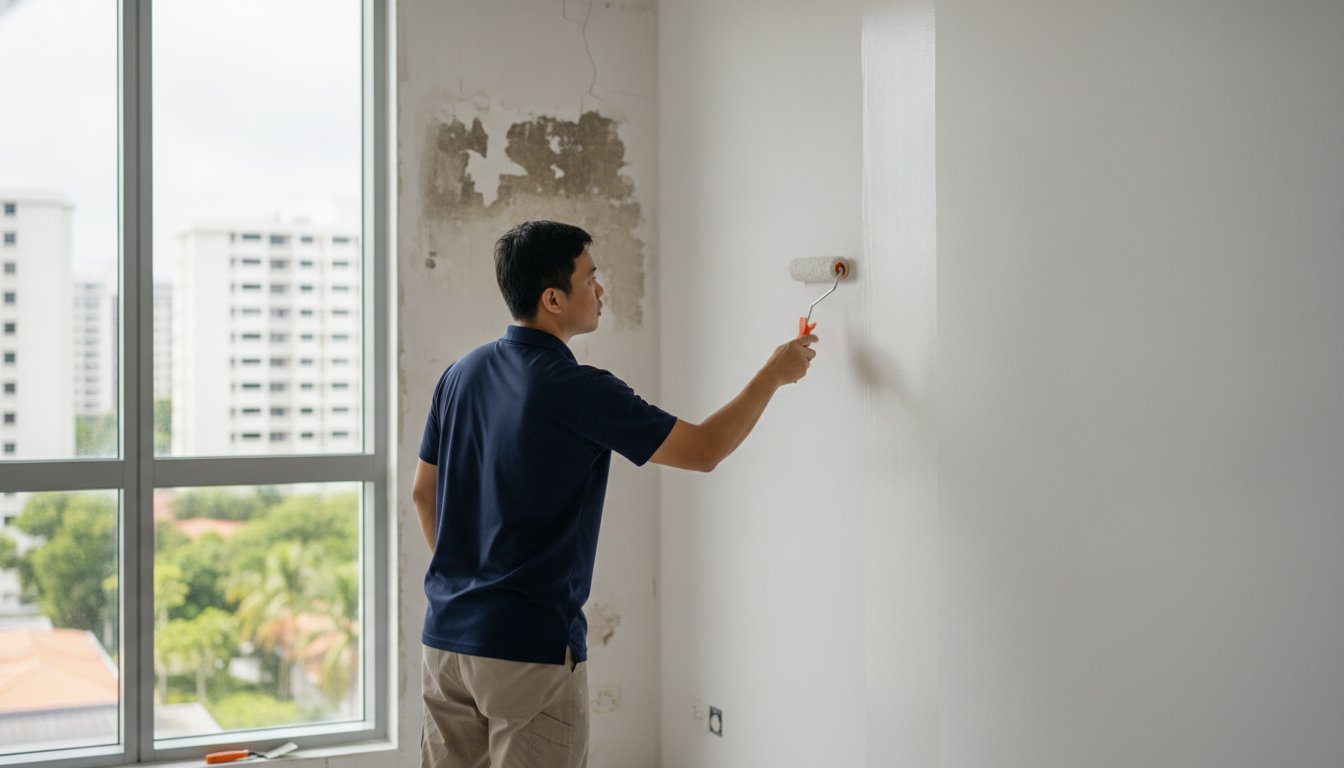
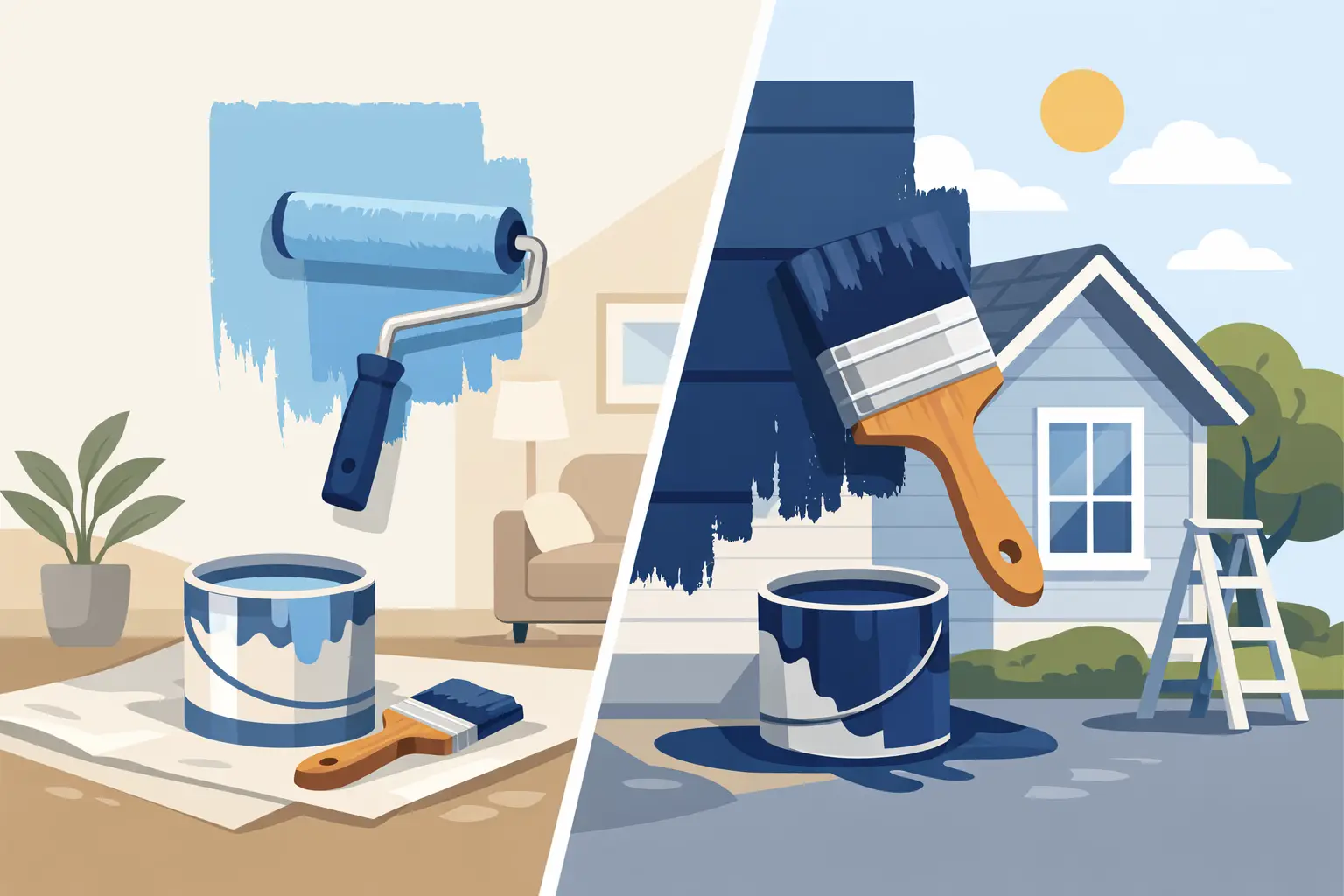
You usually notice the mistake after the paint starts failing. A wall that looked fine on day one begins to peel, chalk, trap odors, or show stains far sooner than expected. That is why interior paint vs exterior paint is not a small technical detail. It directly affects how your space looks, how long the finish lasts, and whether you end up repainting sooner than planned.
For homeowners, landlords, and commercial property managers, the question is simple: can one paint do both jobs? In most cases, no. Interior and exterior paints are engineered for very different environments. They may look similar in the can, but they are built to handle different forms of wear, moisture, sunlight, and cleaning.
Interior paint vs exterior paint: what is the real difference?
The biggest difference comes down to exposure. Interior paint is designed for controlled indoor conditions. Exterior paint is designed to survive heat, rain, UV rays, humidity, and temperature shifts. Because of that, manufacturers use different resins, additives, and formulations for each type.
Interior paint is usually made to resist scuffs, staining, and regular cleaning. It is also formulated with indoor air quality in mind, which is why many options come in low-VOC or low-odor versions that are more comfortable for occupied homes and workplaces. The focus is on appearance, washability, and a smooth finish.
Exterior paint has a harder job. It needs to expand and contract with weather changes, resist fading under strong sunlight, and hold up against moisture without cracking too quickly. It also includes additives that help fight mildew, blistering, and surface breakdown. In short, exterior paint is designed for durability under stress.
That does not mean exterior paint is automatically better. It means it is better for outdoor conditions. Indoors, some of the same additives that help outdoors may be unnecessary or less desirable, especially in occupied rooms where odor and indoor comfort matter.
Why you should not swap them
People often ask whether exterior paint can be used indoors because it sounds tougher. Others ask if leftover interior paint can be used outdoors to save money. Both ideas can create problems.
Using interior paint outside usually leads to early failure. It is not built to handle UV exposure, heavy moisture, or repeated expansion and contraction. Even if it looks acceptable after application, it may fade, crack, or peel much faster than expected. On exterior walls, boundary walls, grills, and outdoor surfaces, that shortcut often becomes more expensive because the repaint cycle comes sooner.
Using exterior paint indoors is also not ideal. While it may adhere, its formulation is meant for outdoor survival, not indoor living conditions. It can produce stronger fumes and may not deliver the refined finish, low odor, or easy maintenance people expect inside bedrooms, living rooms, offices, or retail interiors. For enclosed spaces, especially those used daily, choosing the correct interior system is the safer and more practical approach.
Where interior paint works best
Interior paint belongs on walls and ceilings inside the building envelope. That includes living rooms, bedrooms, hallways, offices, meeting rooms, and most common indoor areas. In these spaces, appearance matters just as much as performance. People want clean lines, consistent color, and surfaces that are easy to maintain.
Different rooms may still need different interior products. A bedroom and a kitchen do not face the same conditions. Bathrooms and kitchens deal with more humidity, grease, and cleaning. High-traffic corridors in homes, schools, or commercial properties need more scrub resistance than a low-use guest room. So even within the interior category, paint selection should match the space.
This is where a professional assessment helps. The right finish for a condo living room may not be the right one for a rental unit, a retail shop, or an office pantry. A dependable painter looks at use, airflow, moisture, and surface condition before recommending a system.
Where exterior paint should be used
Exterior paint should be reserved for surfaces exposed to the elements or near-outdoor conditions. That includes exterior walls, facades, fences, gates, railings, boundary surfaces, and some semi-exposed common areas. In a humid climate, the right exterior coating matters even more because moisture intrusion and mildew can shorten the life of a poor paint choice.
Exterior areas also require better surface preparation. Paint alone cannot solve cracks, chalking, or loose substrate. If the wall has spalling concrete, water damage, or peeling layers from previous jobs, those issues need to be handled before repainting. Otherwise, even a premium exterior product may fail before its time.
That is one reason professional painting is about more than just choosing a paint label. The prep work, repair scope, and application method all affect the result.
Finish matters almost as much as paint type
When comparing interior paint vs exterior paint, many people focus only on the label and ignore the finish. But sheen changes both appearance and maintenance.
For interiors, flat and matte finishes help hide minor wall imperfections and create a softer look. Eggshell and satin finishes are easier to wipe down, which makes them popular in living areas and hallways. Semi-gloss is often used on trim, doors, and places that need stronger washability. The trade-off is that higher sheen tends to reveal more surface flaws.
For exteriors, the finish must support weather resistance and long-term appearance. Very flat exterior finishes can look elegant, but they may collect dirt more easily in some settings. Slightly higher sheen levels can improve washability and moisture resistance, but surface condition becomes more visible. There is no one-size-fits-all answer. The right choice depends on the substrate, building exposure, and maintenance priorities.
The cost question: save now or save later?
It is understandable to think one can of paint should cover multiple jobs. On paper, using leftover paint seems efficient. In practice, the wrong product often leads to patchy performance, a shorter lifespan, and extra labor later.
Paint cost is only one part of a project. Surface preparation, masking, protection, manpower, touch-ups, and cleanup usually represent a large share of the value. If the wrong paint causes early deterioration, you are not just paying for another can. You are paying for a repeat job.
That is especially relevant for rental properties, offices, and retail units where appearance affects tenant satisfaction, customer impression, or handover standards. A finish that fails too soon creates inconvenience on top of cost.
How professionals choose the right system
A reliable painting contractor does not start with color alone. The process starts with the surface and the environment. Is the wall previously painted? Is there moisture? Are there hairline cracks, stains, flaking areas, or old coatings that need removal? Is the space occupied during the work? Does the client need low-odor products or a faster turnaround?
These questions shape the paint system. In some projects, primer is just as important as the topcoat. On repaired plaster, patched areas, or weathered exterior walls, primer improves adhesion and helps deliver an even finish. On problem surfaces, skipping this step can lead to visible patchiness or reduced durability.
At My Paint Job, this kind of planning matters because clients are usually not looking for guesswork. They want the space handled properly, with furniture protected, surfaces prepared, the right products applied, and the site left clean. That is how a paint job becomes durable, not just fresh-looking for a few weeks.
Common mistakes to avoid
One common mistake is assuming all paints marketed as washable or durable are interchangeable. They are not. Another is painting over damaged surfaces without solving the underlying issue, especially outdoors where moisture keeps working behind the coating.
A third mistake is choosing based only on color card appeal. The same color can look different depending on finish, wall texture, lighting, and whether it is used inside or outside. Testing the right product in the right setting gives a much more accurate result than choosing by shade name alone.
Finally, rushing the job causes avoidable failures. Drying time, weather conditions, and surface prep all matter. Fast execution is possible, but it still needs process discipline.
So which one should you choose?
Choose interior paint for indoor rooms where comfort, appearance, and cleanability matter. Choose exterior paint for outside surfaces that must handle weather, moisture, and sun exposure. If a space sits in between, such as a semi-open corridor or sheltered outdoor area, the answer depends on ventilation, exposure, and substrate condition.
That is why the best paint decision is rarely made in the store aisle. It is made after looking at the actual surface, how the area is used, and how long you want the result to last.
If you are planning to repaint a home, office, or commercial unit, the smartest move is not just picking a nice color. It is making sure the coating matches the job, so the finish still looks right long after the painters have packed up.