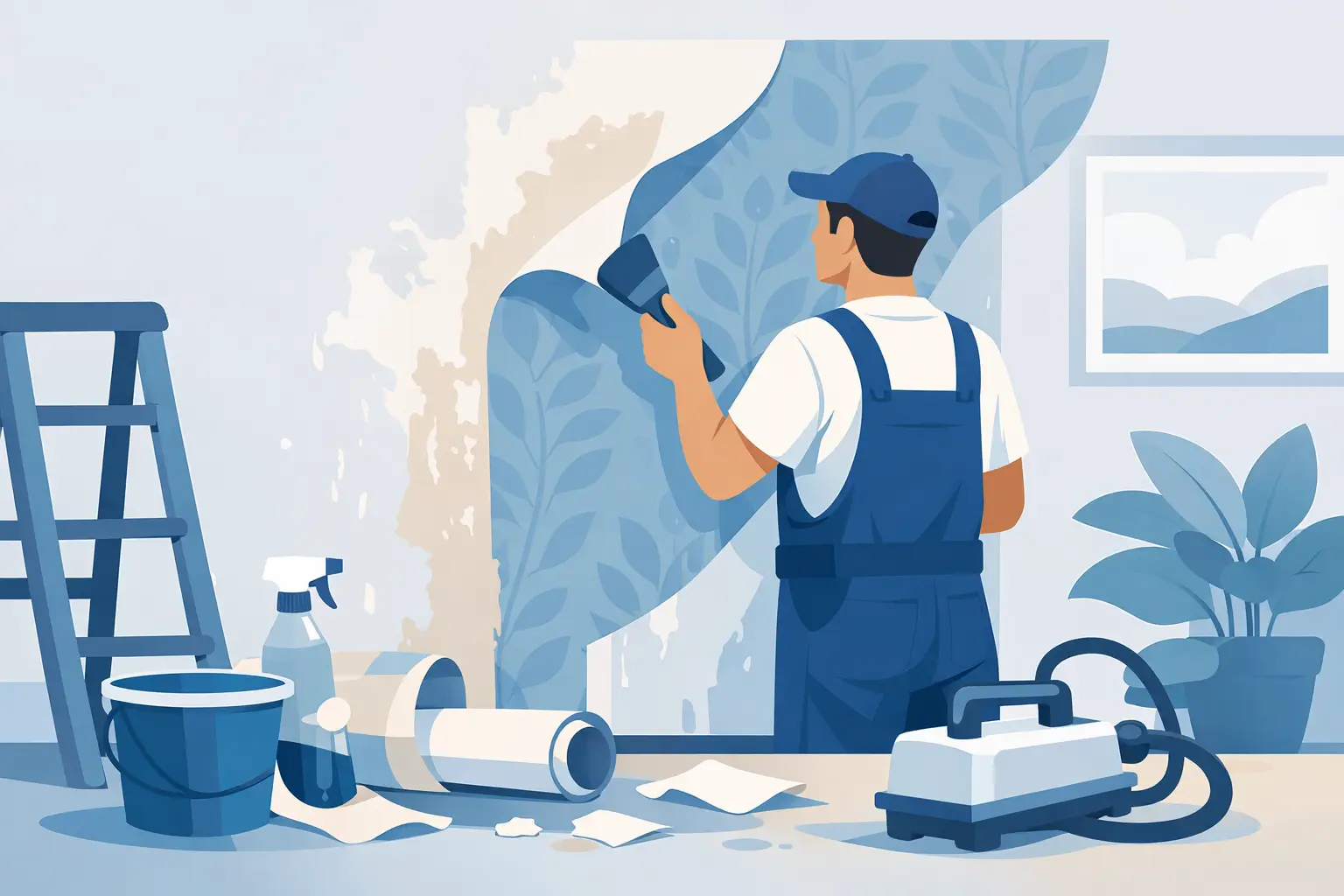
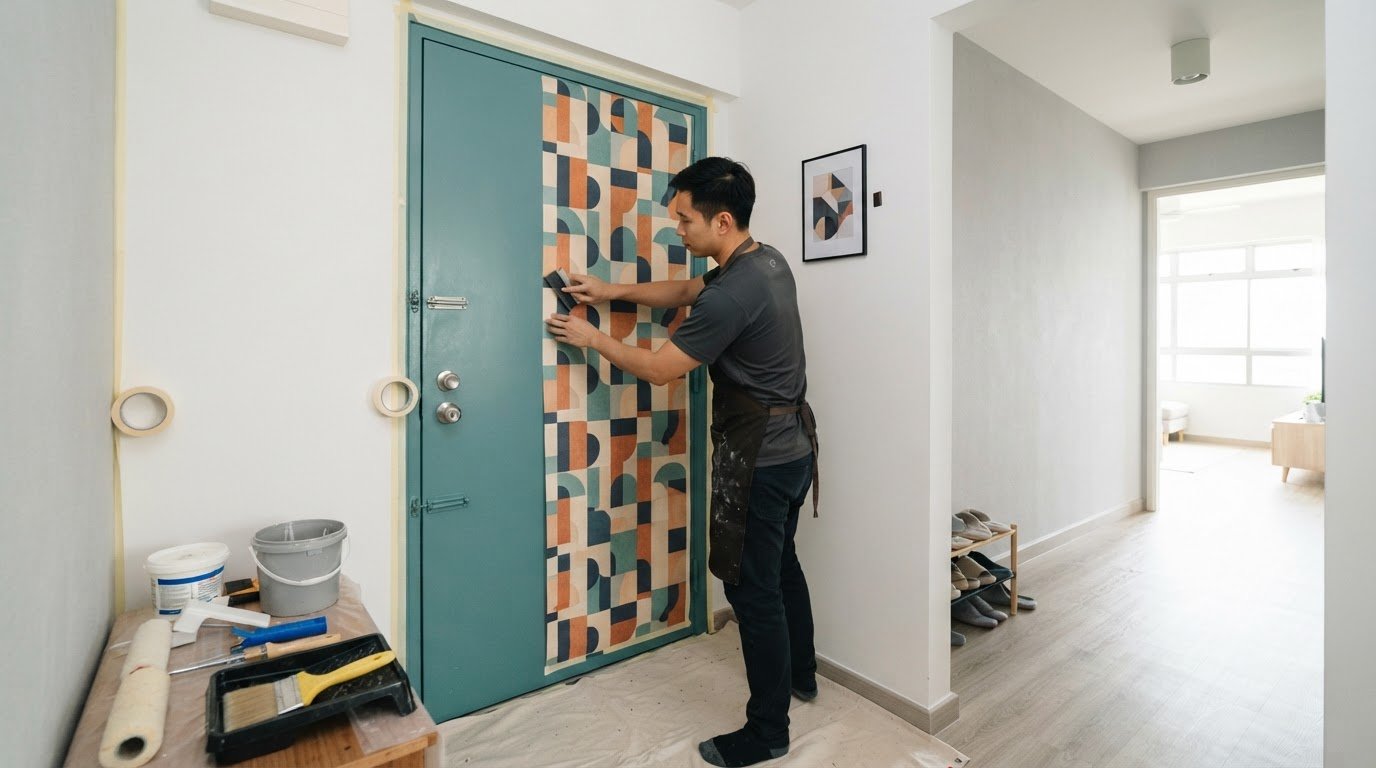
A practical choice for the best paint for a bomb shelter door is the same paint used on the home’s other doors, with careful surface preparation. Before repainting, remove the old paint coat from both the door and frame to avoid difficulty opening and closing the door, according to the Singapore Civil Defence Force. Because the door is metal, magnets also offer a flexible way to arrange decorations without fixing them permanently.
It’s natural to want a fresh, personal look without making the shelter door harder to use. This guide explains how to prepare and paint the door, apply wallpaper to reduce the risk of peeling, and use removable magnetic fixings for artwork. Follow the steps in order, keeping the door’s operation in mind.
Key Takeaways
- Plan your materials around the door’s size and the look you want, including paint, wallpaper, frames, canvases and decorative pieces.
- Apply wallpaper to a clean surface, smooth it as you work and finish the edges carefully to help reduce peeling.
- Keep the door easy to open and close; pay attention to the frame and rubber gasket as well as the door face.
- Use removable decorations for a flexible display, and avoid changes that interfere with the shelter door’s operation.
Materials and DIY costs
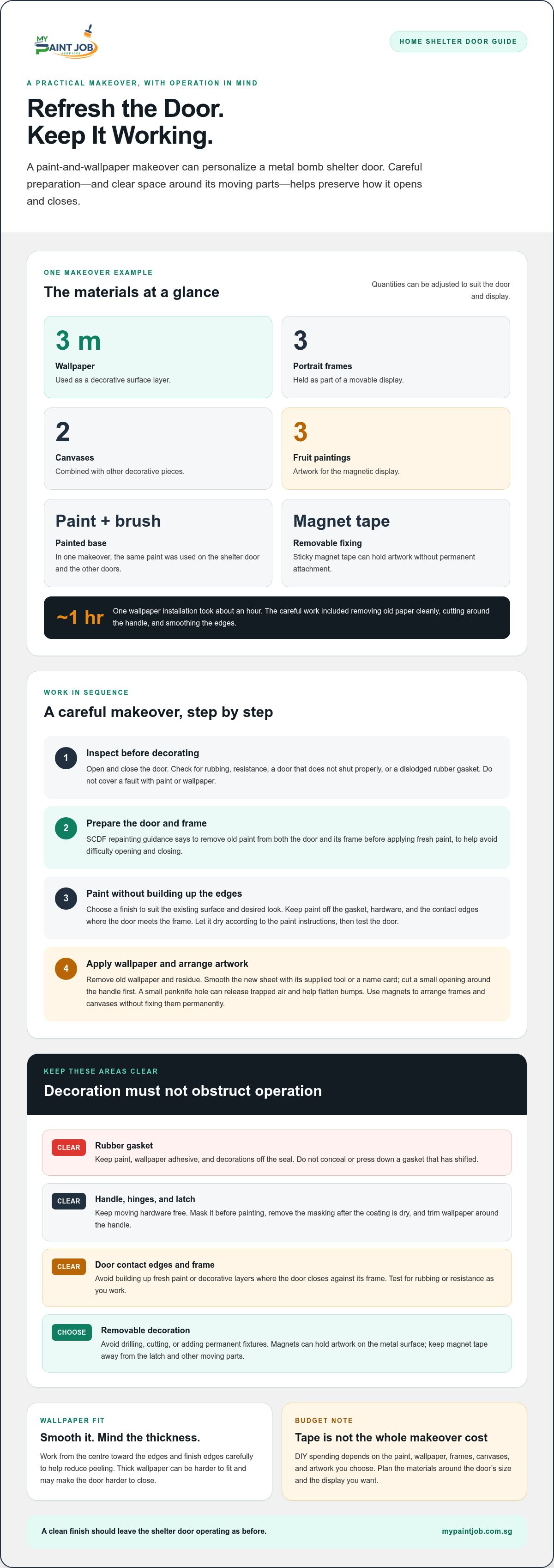
- Make a materials list before choosing a design. One Singapore bomb shelter door makeover used paint and a paintbrush, three metres of wallpaper, sticky magnet tape, three portrait frames, two canvases, and three fruit paintings. This combines a painted or wallpapered base with movable artwork. Adjust the quantities to suit your door and display.
- Set a clear budget for the magnetic display. Your DIY spend depends on your choices of paint, wallpaper, frames, canvases, and artwork. Don’t mistake the tape cost for the total cost of the makeover.
- Choose paint to match the other doors if a consistent finish is your priority. In one makeover, the bomb shelter door was painted with the same paint as the other doors. The best paint for a bomb shelter door depends on its surface and the finish you want, so consider the existing coating as well as the colour.
- Prepare the metal surface before applying wallpaper. Remove the old wallpaper and residue, then smooth the new sheet with its supplied tool or a name card. Cut a small opening around the handle before smoothing the remaining paper. A small hole made with a penknife can release trapped air and help flatten bumps.
- Finish wallpaper edges carefully, since paper may peel from a metal door. Thick wallpaper can be harder to fit and may make the door harder to close, so consider its thickness before buying. One installation took about an hour, but the careful work is removing the old paper cleanly, cutting accurately around the handle, and smoothing the edges. Use magnets to arrange frames and canvases without fixing them permanently to the door.
Can you paint an HDB household shelter door under BCA or SCDF rules?
- Use the Singapore Civil Defence Force’s repainting guidance as your starting point. Before applying fresh paint, remove the old paint from both the door and its frame. This instruction is intended to help avoid difficulty opening and closing the door. Don’t let new layers interfere with its movement.
- Limit the work to the existing painted surfaces. The guidance is about removing old paint before repainting, not changing the door’s construction or fittings. Don’t treat decoration as a reason to alter the door or frame. A new finish should leave the door operating as before.
- Inspect the door before starting. The Housing & Development Board notes that a household shelter door may not shut properly or may have a dislodged rubber gasket. Check the gasket and how the door closes. If you find either problem, don’t cover it with paint or wallpaper.
- Test the door as you work. After preparing the door and frame, open and close the door before adding further coats. Check again for rubbing or resistance once the paint is applied. This helps you spot whether the coating affects movement before adding wallpaper or artwork.
- Separate repainting from structural repair. Paint can refresh the visible finish, but it won’t fix a shelter door that fails to shut properly or a dislodged gasket. Keep paint off the gasket, and don’t use extra layers to mask gaps. The aim is a clean finish that preserves the door’s operation.
Which parts of a bomb shelter door must not be painted or modified?
- Keep the rubber gasket free from paint, wallpaper adhesive, and decorations. The Housing & Development Board notes that a household shelter door may have a dislodged gasket or may not shut properly. Inspect the seal before decorating. If it has shifted, don’t press it beneath a new coating or conceal it with wallpaper.
- Keep the hinges, handle, and latch clear. These parts need to move freely for the door to open and close. Mask them before painting, then remove the masking after the coating is dry. Don’t glue artwork over the handle or put magnet tape where it obstructs the latch.
- Keep paint and decorative layers off the door’s contact edges and the frame surfaces where it closes. The Singapore Civil Defence Force advises removing old paint from the door and frame before repainting to avoid difficulty opening and closing the door. Avoid building up fresh layers along these meeting points.
- Don’t drill, cut, or attach permanent fixtures to the door for decoration. These changes go beyond a surface makeover and may interfere with the door’s construction or use. Choose removable decorations instead. Magnets can hold artwork on the metal surface, making it easy to rearrange without drilling holes.
- Trim wallpaper around the handle and away from moving parts. A small, precise opening lets the handle work without tearing the sheet during use. Smooth the paper towards the edges, but don’t tuck it over the gasket or into the frame. Check that the door closes freely after decorating.
How should I prepare and paint a bomb shelter door without affecting its operation?
- Inspect the door before buying paint. Open and close it, then look for rubbing, resistance, or a visible gap. The Housing & Development Board notes that a household shelter door may not shut properly or may have a dislodged rubber gasket. Don’t paint over a fault or cover the gasket. Resolve any problem before decorating.
- Remove the old paint from both the door and frame before repainting. The Singapore Civil Defence Force advises this to help avoid difficulty opening and closing the door. Prepare both surfaces, not just the visible centre panel. Keep paint off the handle, hinges, latch, and gasket.
- Choose a finish that suits the existing door and surrounding woodwork. One homeowner used the same paint on the bomb shelter door as on the other doors. To choose the best paint for a bomb shelter door, consider the existing coating and the finish you want, then follow the paint’s preparation and application instructions.
- Apply paint carefully to the door’s flat surface, keeping it away from contact edges and moving hardware. Avoid building up paint where the door meets its frame. Let the coating dry according to its instructions before testing the door. A neat finish matters, but smooth opening and closing matter more.
- Test the door after painting, before adding wallpaper or artwork. Open and close it fully, checking that the latch moves and the gasket remains in place. If the door catches, stop adding layers and inspect the frame edges. For help planning a carefully prepared HDB paint finish, explore professional painting support.
My Paint Job Singapore: HDB painting services
My Paint Job Singapore provides HDB painting services for homeowners planning a coordinated refresh, including a bomb shelter door and surrounding interior surfaces. Turn to the team when careful surface preparation and a consistent finish matter, or when you’d rather have painting handled as part of a broader home refresh. Share your preferred colours and the areas you want painted so the work can be tailored to your home. My Paint Job Singapore also provides condo, landed, and commercial painting services. For an HDB home refresh, visit mypaintjob.com.sg or contact My Paint Job Singapore to discuss your project.
Make Your Next Refresh Feel Cohesive
Let the shelter door’s finish complement the room rather than compete with it. Before choosing a colour or artwork, consider how the door will look alongside nearby walls, trim, and furniture. The best paint for a bomb shelter door is part of a broader design decision: choose a finish that suits your home while keeping the door practical to use.
If you’re planning a wider refresh, My Paint Job Singapore offers HDB, condo, and landed painting services. A coordinated approach can bring the door and surrounding spaces together, with surface preparation included in the painting work. Choose the look you want, then decide whether to paint yourself or get support with your home refresh.
Contact My Paint Job Singapore to discuss painting for your home. With a considered palette and a practical plan, you can create a door that feels like it belongs in your space.
Frequently Asked Questions
What paint is suitable for a bomb shelter door in Singapore?
The best paint for a bomb shelter door is compatible with its existing finish. In one homeowner makeover, the same paint was used on the shelter door and the home’s other doors for a coordinated look. Before choosing, read the paint label for surface suitability and application guidance. Keep paint off the frame’s contact areas so the door can operate smoothly.
What paint types adhere best to a steel bomb shelter door?
Choose paint whose label says it is suitable for metal or steel, and follow its preparation instructions. Don’t assume paint intended for walls will suit a steel door. The Singapore Civil Defence Force advises removing the old paint from the door and frame before repainting. Test the paint on a small area first, then check the finish before painting the entire door.