Why does a “fresh” coat of paint in Singapore often start bubbling or showing mold spots before the three-year mark? Most homeowners expect their investment to endure, but the reality of our tropical humidity often dictates a different timeline. When you’re planning a home refresh, you need to know exactly how long should a professional paint job last to avoid the cycle of frequent, costly repainting. In our local climate, a standard finish might look tired quickly, yet a technically sound application can remain pristine for five to seven years.
You’ve likely felt the frustration of seeing persistent mold or chalking walls despite paying for a service that promised quality. It’s a common struggle for HDB and condo owners who feel caught between cheap contractors and the high cost of maintenance. We understand that your property is your pride, and you deserve results that reflect that value without the stress of constant logistical headaches.
This 2026 guide reveals the realistic lifespan of your next project and the critical preparation steps that ensure your walls stay vibrant for years. You’ll discover how new formaldehyde regulations impact your paint choices, how to identify structural issues like spalling concrete early, and the specific moisture-focused techniques that specialists use to outlast the Singapore heat.
Key Takeaways
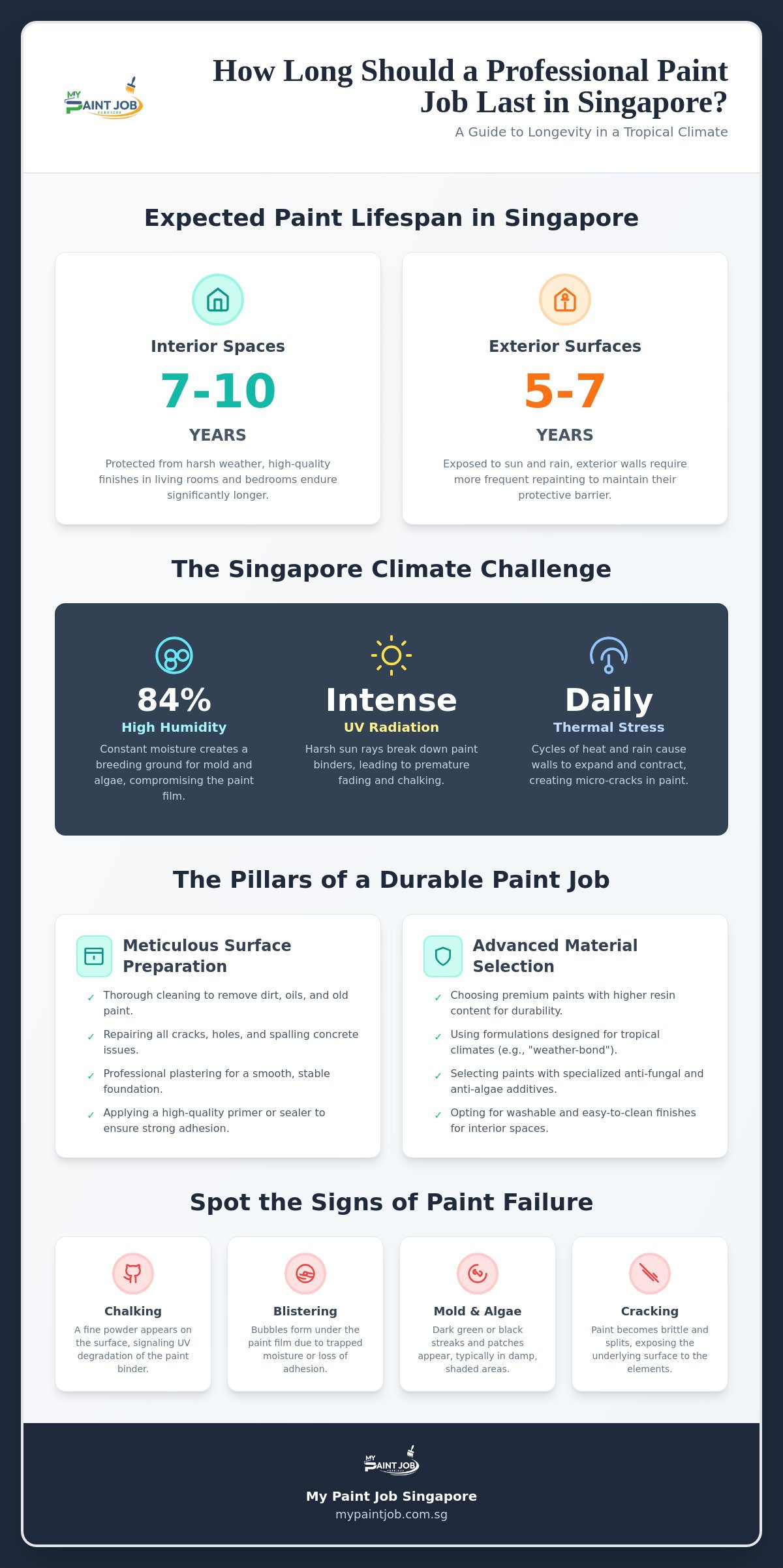
- Expect a high-quality interior finish to endure for 7 to 10 years, though exterior walls generally require a refresh every 5 to 7 years.
- Learn exactly how long should a professional paint job last when facing Singapore’s intense UV radiation and persistent 84% humidity levels.
- Prioritize meticulous surface preparation and professional plastering to ensure the bond between the paint and your walls remains unbreakable.
- Recognize the subtle signs of paint failure, like chalking or blistering, before they escalate into more expensive repairs.
The Standard Lifespan of a Professional Paint Job in Singapore
Determining how long should a professional paint job last depends heavily on whether you are looking at the protected walls of a bedroom or the exposed facade of a landed home. For most interior spaces in Singapore, a high-quality professional application typically lasts between 7 to 10 years. In contrast, exterior surfaces bear the brunt of our tropical storms and relentless sun, generally requiring a fresh coat every 5 to 7 years to maintain structural protection. In high-humidity environments, premium eco-friendly paints typically maintain their integrity and color for 6 to 8 years before requiring a refresh.
The type of property you own also dictates the timeline. HDB flats often benefit from sheltered corridors that shield walls from the worst of the rain, whereas condominiums and landed properties face direct environmental exposure on all sides. We’ve seen through years of on-site experience that the orientation of your unit can even affect specific rooms, with west-facing walls often showing signs of wear faster than those in the shade.
Interior vs. Exterior Longevity Factors
Environmental control is the greatest ally for your walls. Interior surfaces in air-conditioned rooms often remain pristine for a decade because the stable temperature prevents the paint film from expanding and contracting. Kitchen walls tell a different story. The accumulation of cooking oils and steam creates a challenging surface that may require attention sooner. For exterior walls, the primary enemy is how UV rays degrade paint, which leads to chalking and fading over time. Commercial spaces, with their high foot traffic and constant cleaning, often move to a shorter 3 to 5-year cycle to keep the brand image sharp.
The Role of Paint Quality and Brand
Investing in premium materials isn’t just about the initial look; it’s about the chemistry of the coating. Standard paints might look identical on day one, but premium “weather-bond” or “easy-wash” options contain higher resin content that resists moisture penetration. Choose reputable brands that specifically formulate for the tropics to ensure your home retains its freshness. These specialized coatings ensure your home retains its “just-painted” look long after the contractors have left, providing a durable shield against the elements. While the upfront cost for high-end brands is higher, the extended years between repainting cycles provide much better long-term value for any Singapore property owner.
Why the Singapore Climate Dictates Your Repainting Schedule
Singapore’s environment is relentless. With an average humidity level of 84%, our air is constantly saturated with moisture. This creates a perpetual breeding ground for mold and algae that can ruin a fresh coat in months if not managed correctly. When homeowners ask how long should a professional paint job last, they must account for environmental stressors that simply aren’t as aggressive in temperate climates. Our tropical weather acts as a constant test of a coating’s chemical integrity.
Intense UV radiation acts as a silent catalyst for degradation. High-energy solar rays break down the chemical bonds within the paint’s polymer structure, a process that leads to premature fading and “chalking.” Additionally, the daily cycle of intense afternoon heat followed by sudden tropical downpours causes concrete structures to expand and contract. This thermal stress creates micro-cracks in the paint film, allowing even more moisture to penetrate the masonry and weaken the bond from the inside out.
The Threat of Mold and Algae Growth
Tropical spores are highly opportunistic. They easily penetrate low-quality, porous paint films, rooting themselves into the substrate where they thrive on trapped moisture. Once established, these organisms are difficult to remove without damaging the wall surface. Professional-grade paints include specialized anti-fungal additives designed to inhibit this growth. If you notice dark streaks or green patches, your current coating has likely reached the end of its protective life and requires a technical solution rather than just a cosmetic wipe-down.
Moisture Seepage and Wall Health
Moisture is the undisputed number one enemy of paint longevity in Singaporean masonry. Water ingress often starts as subtle damp patches or bubbling near the skirting boards, signaling that the paint is no longer breathable or that the seal has failed. If left unaddressed, this moisture can reach the internal steel reinforcement bars, leading to structural issues. It’s vital to identify these spalling concrete repair singapore warning signs early to prevent a simple repainting job from turning into a major renovation.
Protecting your home starts with understanding these environmental challenges and choosing the right defensive coatings. If you’re unsure about the current state of your walls, consult with a local specialist to assess the humidity impact on your property before the next monsoon season arrives.
The Secret to Longevity: Professional Preparation and Material Selection
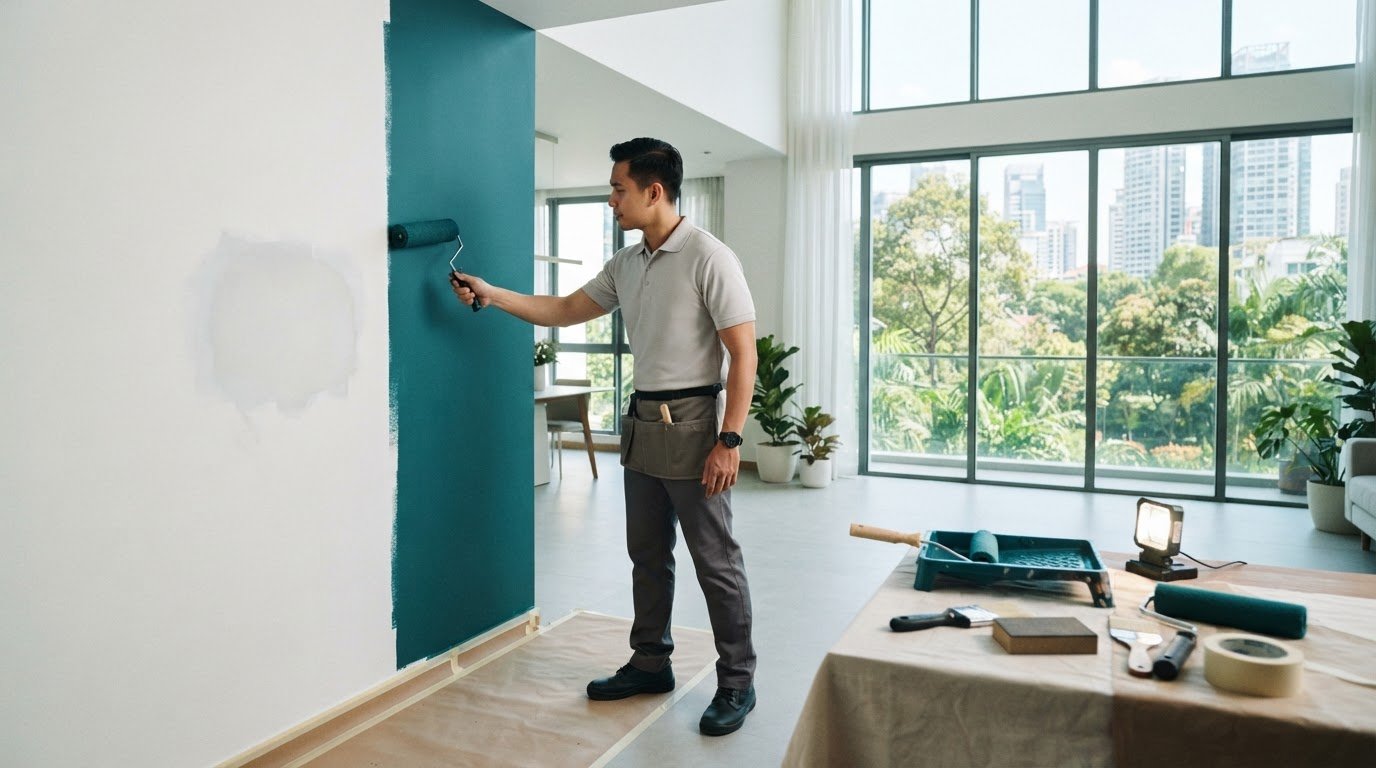
A beautiful finish is only as good as what lies beneath it. Many homeowners wonder how long should a professional paint job last, but the answer often lies in the hours spent before the first drop of color is even applied. Meticulous surface preparation accounts for roughly 70% of a paint job’s ultimate durability. Without this foundation, even the most expensive premium coatings will eventually fail. Professional furniture protection is a critical first step in this process; it prevents fine sanding dust from contaminating the wet paint film and compromising the final adhesion.
When you invest in a professional service, you’re paying for a technical process that ensures the paint becomes a part of the wall rather than just a layer on top of it. This involves assessing the substrate, removing old, flaky layers, and neutralizing any existing mold colonies. This level of detail is what separates a standard repainting from a high-end restoration that stays pristine for a decade.
Skim Coating and Surface Levelling
Repairing deep cracks and structural imperfections is essential to prevent moisture from nesting behind the paint layer. While DIY patching might temporarily cover a hole, professional plastering and skim coating restores the wall’s integrity and creates a smooth, high-adhesion base. This process ensures the paint bonds perfectly across the entire surface. If you skip this step, the uneven surface tension will eventually cause the new coat to crack along old fault lines within just a few years.
Sealers and Primers: The Invisible Shield
In our humid climate, “2-in-1” paint and primer products often fall short because they cannot handle the high alkaline nature of Singaporean masonry. A high-quality, alkaline-resistant sealer is non-negotiable for new plaster to prevent efflorescence, which is that white powdery substance that pushes paint off the wall. These sealers act as an invisible shield, locking out moisture and ensuring the topcoat remains vibrant and attached. Technical sealers provide the necessary “grip” for modern eco-friendly paints to perform at their best.
Experience the difference that meticulous preparation makes for your home. Book a professional wall assessment to ensure your next paint job is built on a foundation that lasts.
Identifying Paint Failure: When Is It Time for a Refresh?
Recognizing the early warning signs of deterioration allows you to intervene before structural damage occurs. While we have discussed how long should a professional paint job last under ideal conditions, the reality of Singapore’s environment means failures can manifest in specific, visible ways. If you notice a white, powdery residue when you touch your walls, you’re witnessing “chalking.” This occurs when UV radiation breaks down the paint’s binder, leaving behind loose pigment that no longer adheres to the surface.
Bubbling and blistering are more urgent indicators of failure. These signs suggest that moisture is trapped between the paint film and the masonry, often due to our high humidity or internal seepage. If left unaddressed, these pockets will eventually burst. This leads to peeling and flaking, which is the final stage of adhesion failure. Once the paint begins to flake away, your walls are no longer protected from the elements. Significant loss of color vibrancy, or fading, is also common on walls facing the intense afternoon sun, signaling that the protective resins have been compromised.
When to Call Professional HDB Painters
Don’t wait for your walls to start shedding layers before seeking help. Engaging hdb painting services singapore early ensures a hassle-free experience that preserves your home’s value. Waiting too long increases the cost of surface restoration because it requires more intensive scraping and plastering. Timely intervention prevents moisture from penetrating deeper into the substrate, which saves you from expensive structural repairs later.
Professional Assessment vs. Guesswork
At My Paint Job Singapore, we leverage over 10 years of local experience to diagnose the root cause of wall issues. A professional assessment removes the guesswork from your home maintenance. We’ll help you determine if you simply need minor touch-ups to high-traffic areas or if it is time for a full repaint to restore your property’s protective shield. Understanding how long should a professional paint job last for your specific unit orientation can save you money by avoiding unnecessary repaints or preventing delayed, costly repairs.
Protect Your Home with a Durable, Long-Lasting Finish
Achieving a decade of vibrant walls in Singapore requires more than just picking a color. It demands a technical understanding of how humidity and UV rays interact with your property’s specific masonry. By prioritizing meticulous surface preparation and selecting premium eco-friendly paints, you ensure that your investment remains a source of pride rather than a recurring chore. Understanding exactly how long should a professional paint job last allows you to plan your maintenance cycle with confidence and avoid the hidden costs of structural neglect.
Our skilled team brings over 10 years of industry experience to every project, specializing in tailored solutions for both HDB and Condo environments. We take immense pride in our craftsmanship, ensuring every corner of your home receives the technical accuracy it deserves to withstand our tropical climate. Get a professional quote for your Singapore home today and let us handle the technical details while you enjoy the beautiful results. Your walls deserve a specialist who treats your property with the same care and integrity as their own. We look forward to helping you transform your space into a lasting sanctuary.
Frequently Asked Questions
How often should I repaint my HDB flat in Singapore?
Repaint your HDB flat every 5 to 7 years to maintain a healthy living environment and protect the underlying masonry. While interior bedrooms might stay pristine for up to 10 years, high-traffic areas like the kitchen and living room face more wear and humidity. Timely repainting prevents moisture from penetrating the plaster, which saves you from more intensive restoration work later.
Does the colour of the paint affect how long it lasts?
Vibrant and dark colors generally show signs of aging sooner than neutral or light tones. Darker pigments absorb more heat and UV rays, which causes the chemical bonds in the paint to break down and fade over time. If your unit receives direct afternoon sun, choosing a high-quality light-colored finish will help maintain a fresh appearance for several additional years.
Can I make my paint job last longer with regular cleaning?
Regular dusting and gentle wiping can significantly extend the lifespan of your interior walls. Use a soft cloth and mild soap to remove surface oils and dust before they become embedded in the paint film. This simple habit keeps the finish looking new and is a practical way to manage how long should a professional paint job last in your home.
Why is my paint peeling even though I used an expensive brand?
Peeling usually indicates a failure in surface adhesion rather than a defect in the paint brand itself. Even premium coatings will flake if they are applied over a damp, dusty, or improperly primed surface. Professional painters focus on moisture testing and thorough scraping to ensure that your investment actually sticks to the wall for the long term.
Is it worth paying for a professional sealer?
Investing in a high-quality sealer is the most effective way to prevent premature paint failure in our tropical climate. It creates a chemical barrier that stops alkaline salts in the concrete from reacting with your topcoat. Without this invisible layer, even the best paint will eventually bubble and peel due to the natural moisture movement within Singapore’s masonry walls.