
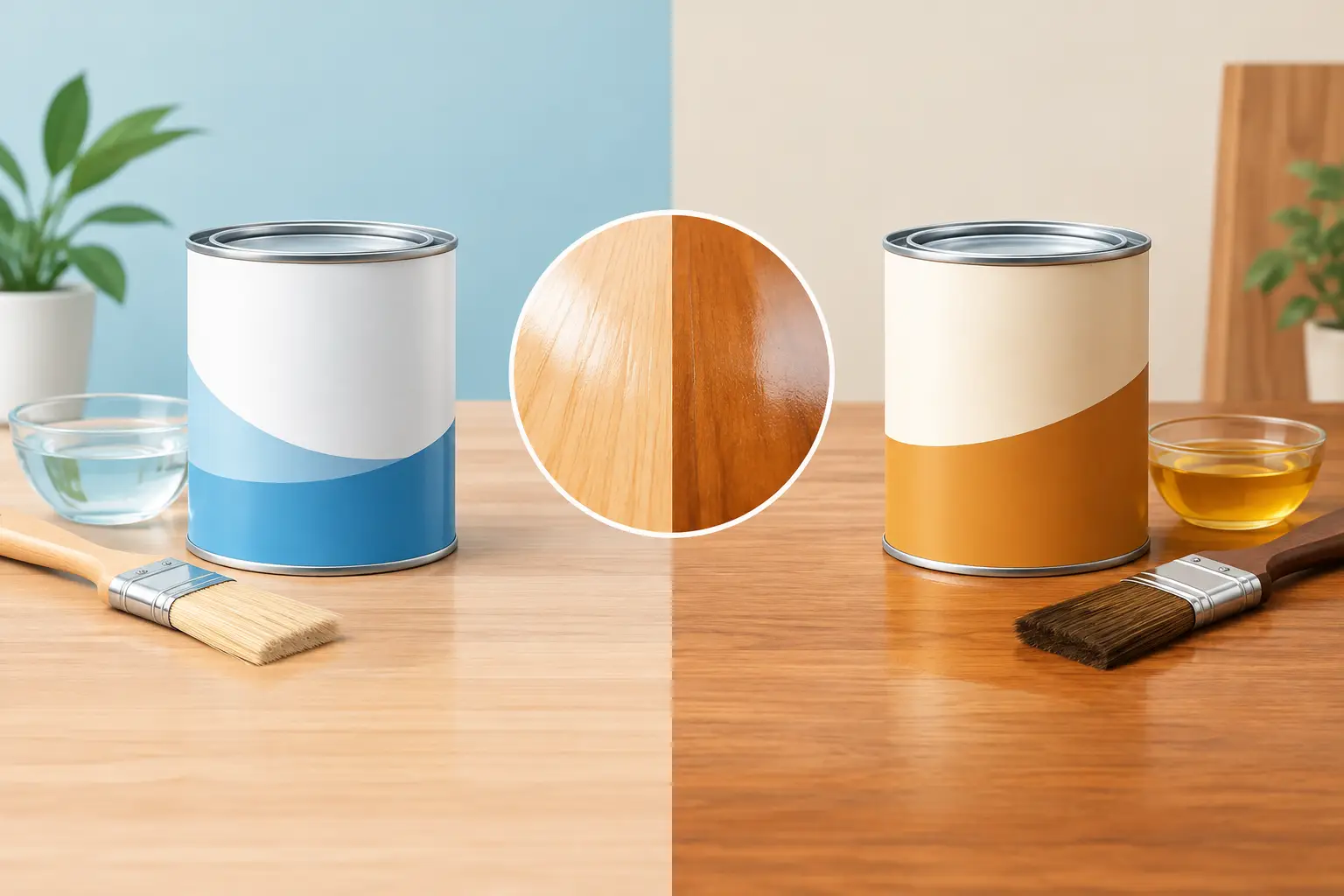
A clear finish can make timber look richer, smoother, and better protected – or leave it yellowed, streaky, and vulnerable to daily wear. The choice between acrylic versus oil based varnish affects more than the final sheen. It influences drying time, odor, color, durability, maintenance, and how long a room or business area needs to stay out of use.
For most property owners, the right answer depends on the surface, its location, and the result you expect years from now. A varnish that works beautifully on an interior cabinet may not be the best choice for an exterior gate, a busy retail counter, or wood exposed to strong sunlight and moisture.
Acrylic Versus Oil Based Varnish: The Key Difference
Acrylic varnish is generally water-based. It forms a clear protective film over wood while producing relatively low odor and drying quickly. Many modern acrylic products are designed to resist yellowing and maintain a clean, natural-looking finish, especially over pale wood or light-colored stains.
Oil-based varnish is usually made with oil-modified resins or polyurethane carried in solvent. It takes longer to dry, has a stronger smell during application, and typically gives wood a warmer, deeper tone. Its slower cure time can be inconvenient, but it often creates a hard-wearing finish with excellent resistance to repeated contact and abrasion.
Neither is automatically better. The practical decision comes down to where the wood is, how it is used, and how much disruption the project can accommodate.
When Acrylic Varnish Is the Better Choice
Acrylic varnish is often the sensible option for occupied homes, offices, and commercial spaces where a faster, cleaner job matters. Because it dries quickly, professional painters can often apply additional coats sooner, helping reduce the overall project timeline.
It is especially suitable for interior woodwork such as doors, trim, shelving, built-in cabinets, wall panels, and furniture that needs a clear protective layer without noticeably changing the wood color. If you have light oak, maple, ash, or a pale stained surface, acrylic varnish can preserve that lighter appearance more effectively than many oil-based finishes.
The lower odor is another major advantage. While any finishing work needs proper ventilation, water-based acrylic varnish is generally more comfortable for households, tenants, employees, and customers nearby. This makes it a practical choice when work must be completed with minimal interruption.
Acrylic finishes also tend to remain flexible. That can be helpful on timber that expands and contracts slightly as temperatures and humidity change. However, not every acrylic varnish is made for heavy traffic or outdoor exposure. Product quality and correct surface preparation still determine whether the finish performs as expected.
Best uses for acrylic varnish
Acrylic varnish is commonly chosen for indoor furniture, feature walls, cabinetry, interior doors, and decorative woodwork. It can also work well on exterior surfaces when the product is specifically rated for UV and weather resistance.
For a finish that looks clear, dries efficiently, and keeps indoor disruption low, acrylic is often the more convenient option.
When Oil-Based Varnish Is Worth the Extra Time
Oil-based varnish is valued for its traditional appearance and durable protective film. It penetrates and enriches the grain visually, creating the warm amber tone many people associate with well-finished timber. On darker woods such as teak, walnut, mahogany, and certain stained surfaces, that warmth can be a real advantage rather than a drawback.
It is often a strong choice for surfaces that face regular handling, rubbing, or impact. Think of heavily used doors, handrails, tables, timber frames, and selected outdoor wood features. A properly applied oil-based system can offer substantial resistance to wear, though the exact performance depends on the product and number of coats.
The trade-off is time. Oil-based varnish usually dries and cures more slowly than acrylic. It also releases stronger fumes, so rooms may need more ventilation and a longer period before normal use resumes. Dust control is especially important because a slower-drying coat has more opportunity to collect particles before it sets.
Oil-based varnish also yellows naturally over time. On deep or dark timber, this can add character and visual richness. On white paint, very light wood, or a modern pale interior, it may create an unwanted aged appearance.
Best uses for oil-based varnish
Oil-based varnish is a good fit when warmth, depth, and heavy-duty protection are the priority, and the project schedule allows sufficient drying and curing time. It is often considered for wood furniture, dark-stained doors, railings, and protected exterior timber.
For exterior wood, do not assume any oil-based varnish will handle direct sun and rain. The finish must be intended for exterior use, and it needs regular inspections to catch cracking, peeling, or loss of water resistance early.
Durability Depends on Preparation, Not Just the Can
Choosing the right varnish is only half the job. A premium finish will not adhere properly to a dirty, waxed, greasy, damp, or poorly sanded surface. Existing varnish must be assessed before a new coat is applied. If the old coating is flaking, cracking, or incompatible with the new product, applying another layer over it may only hide the issue temporarily.
Professional preparation typically includes cleaning the timber, repairing minor defects, sanding to create an even surface, removing all dust, and applying compatible coats at the correct intervals. On worn wood, stain and varnish may need to be addressed separately so the color looks consistent before protection is added.
The number of coats matters as well. One coat can refresh appearance, but multiple properly applied coats build a more reliable protective layer. Rushing that process can lead to tackiness, uneven gloss, visible brush marks, or premature failure.
Consider the Sheen Before You Decide
Both acrylic and oil-based varnishes are available in different sheen levels, commonly matte, satin, semi-gloss, and gloss. The sheen choice changes how the surface looks and how easily imperfections show.
Matte and satin finishes give a softer, more contemporary appearance and hide minor scratches or uneven grain better. They are popular for furniture, wall panels, and interior woodwork where a natural look is preferred. Semi-gloss and gloss finishes reflect more light, look more formal, and are often easier to wipe clean, but they reveal sanding marks, dents, and brush strokes more readily.
For busy homes and commercial interiors, satin is often a balanced choice: polished enough to look finished, yet forgiving enough for everyday use.
A Practical Choice for Your Property
Choose acrylic varnish when you need lower odor, faster drying, a clearer finish, and less disruption in an occupied space. Choose oil-based varnish when you want a warmer tone and a tougher traditional finish, and you can allow more time for ventilation and curing.
There are exceptions. A high-performance water-based product may outperform a basic oil-based varnish in some applications, while a specialized exterior oil varnish may be the right solution for a weather-exposed timber feature. That is why the surface condition, exposure, previous coating, and intended use should be checked before work begins.
A careful on-site assessment prevents expensive rework. Before committing to a finish, ask for a small test area or sample board that shows the varnish on your actual wood. It is the most reliable way to see the true color, sheen, and level of protection your space will receive.