

Could the finish that makes your timber look richer be the wrong choice for the room it’s in? When choosing between water-based and oil-based varnish, it’s easy to focus on colour alone, but drying time, odour, upkeep and everyday wear matter too. Oil-based varnish can add a warm, amber tone, while water-based options often preserve more of the wood’s natural colour. Neither is automatically the better finish.
A good choice should suit the timber, the look you want and how the surface is used. This guide explains the practical trade-offs, what to check on a product label and why the existing coating and surface preparation matter. You’ll also learn when professional wood or parquet varnishing can help achieve a consistent result. My Paint Job Singapore provides wood and parquet varnishing, with attention to surface preparation and the needs of the space.
Key Takeaways
- When choosing between water-based and oil-based varnish, consider the look you want alongside odour, application conditions and everyday use.
- Use common finish characteristics as a starting point, then follow the specific product’s guidance because formulations can behave differently.
- Identify the wood and existing coating, then consider foot traffic and cleaning habits before selecting a varnish.
- Careful assessment and preparation support a more even result. Professional wood or parquet varnishing can help when a surface needs skilled attention.
What is the difference between water-based and oil-based varnish?
Varnish is a clear protective finish applied over wood. It forms a surface layer that helps protect the timber while allowing its grain to show. The broad labels refer to the liquid carrying the finish’s resin: water-based products use water as the main carrier, while oil-based products commonly use drying oils or alkyd resins with a solvent. Formulations vary, so the labels don’t guarantee identical appearance or application behaviour. For a wider overview of varnish types and uses, see Varnish: Definition, Types, and Applications.
The product’s resin, additives, sheen and directions matter as much as its base. Finishes in the same category can differ in how they spread, build a film and need to be prepared. Use the label as a starting point, then consult the current product datasheet for application, drying and care instructions.
What does water-based varnish mean?
In water-based varnish, water carries the coating’s ingredients during application. It isn’t simply water, and the evaporation of water doesn’t tell you everything about the final film. These products often dry clear and are used when preserving the wood’s colour is a priority, but the result varies with the formulation, sheen and timber. Before starting, check the specified tools, coat intervals, surface preparation and cleaning instructions. Don’t assume every water-based finish can be applied or maintained in the same way.
What does oil-based varnish mean?
Oil-based varnish commonly relies on drying oils or alkyd resins, which cure into a protective film as the finish dries. It often gives wood a warmer, amber cast, though the colour change depends on the product and the timber. That warmth may suit wood you want to deepen visually, while a clearer-looking finish may better preserve a lighter appearance. Oil-based doesn’t automatically mean more durable. Compare the product’s stated use and performance guidance rather than relying on the category alone.
For choosing between water-based and oil-based varnish, start with the timber and the appearance you want. Then check that the specific product is intended for the surface and follow its directions. A careful match matters more than a blanket rule about which type is best.
Water vs Oil-based Varnishes in Everyday Use
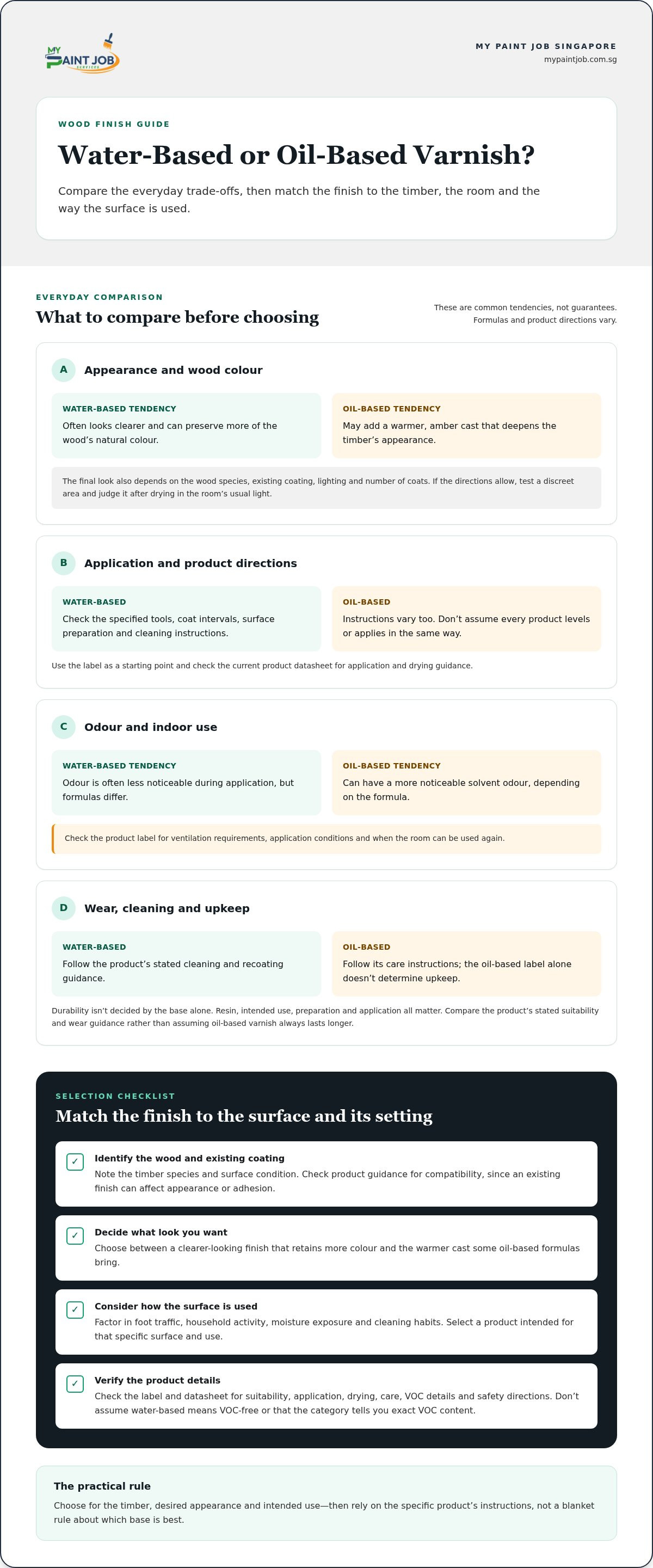
A finish’s practical performance depends on more than whether its base is water or oil. Use this comparison to narrow your options, then check the current product datasheet and label for application, drying, cleaning and care instructions.
| Consideration | Water-based tendency | Oil-based tendency |
|---|---|---|
| Appearance | Often looks clearer and can preserve the wood’s colour. | May add a warmer or amber tone. |
| Application | Product instructions specify suitable tools, coats and conditions. | Instructions vary too. Don’t assume all products level or apply in the same way. |
| Odour | Often less noticeable during application, but formulas differ. | Can have a more noticeable solvent odour, depending on the formula. |
| Maintenance | Follow the stated cleaning and recoating guidance. | Follow the product’s care instructions. The oil-based label alone doesn’t determine upkeep. |
Durability isn’t decided by the base alone. The resin, intended use, preparation and application all matter. A floor finish and a coating intended for furniture may have different performance requirements, even if both share a broad formulation type. Compare the product’s stated suitability and wear guidance instead of assuming oil-based varnish always lasts longer.
Read the VOC details on the specific product label or datasheet. Water-based doesn’t automatically mean VOC-free, and oil-based doesn’t tell you the exact VOC content. Treat the declared figure and safety directions as product facts, not assumptions based on the category. For indoor work, follow the label’s ventilation and re-entry guidance.
How do the finishes affect wood colour and appearance?
A clearer-looking finish may help retain a pale timber appearance, while some oil-based formulas add warmth. The final effect also depends on the wood species, any existing coating, lighting and number of coats. If the product instructions allow, test it on a discreet area and let it dry as directed before judging the colour. Check the test in the room’s usual lighting, since the surrounding light can affect how the finish looks.
What should you know about odour and indoor use?
Odour varies by formula, so don’t rely on a general rule about either type. Check the product label for ventilation requirements, application conditions and when the room can be used again. My Paint Job Singapore provides wood and parquet varnishing, with careful surface preparation to help create a consistent finish.
How to choose varnish for your wood, room, and routine
A reliable choice starts with the surface and its setting, not a blanket rule about one varnish type. Use this sequence to narrow the options. It’s a selection guide, not a sanding or application tutorial.
- Identify the wood and existing finish. Note the timber species, surface condition and any coating already present. An existing finish can affect how a new product looks or adheres, so check the product guidance for compatibility.
- Choose the appearance you want. Decide whether you prefer a clearer look that retains more of the wood’s colour or the warmer cast some oil-based formulas bring. Test the chosen product on a small, representative area if its instructions allow.
- Assess how the surface is used. Consider foot traffic, household activity, moisture exposure and how often you clean it. A floor and a decorative timber surface have different demands, so select a product intended for that specific use.
- Check the product directions. Review application conditions, preparation requirements, drying guidance and care instructions. The label and current datasheet should guide your final choice.
Which finish suits the wood and the look you want?
Wood species affect colour and grain, while an existing coating can change the final appearance or limit compatibility. For a pale timber look, a clearer finish may be preferable. If you want richer warmth, an oil-based formula may suit. Neither result is guaranteed by the category alone. Compare a test patch with the surrounding wood under the room’s usual lighting before coating the whole surface.
How should room conditions and daily use influence the choice?
Consider ventilation, expected activity and whether the surface is exposed to moisture. Singapore’s humid climate makes it especially important to pay attention to the substrate’s condition and the product’s stated application requirements. Don’t assume a varnish will perform well simply because it is water-based or oil-based. Follow its guidance for the intended surface and room conditions.
If the wood’s condition or existing coating complicates the choice, My Paint Job Singapore provides professional wood and parquet varnishing, with careful surface preparation and finishes suited to the project.
When professional wood varnishing can help you choose confidently
Choosing between water-based and oil-based varnish can be harder when timber has an older coating, uneven wear or marks that affect the finished look. A professional assessment considers the wood, existing finish, surface condition and how the area is used. Careful preparation supports a more consistent finish, though the result also depends on the surface and product.
What can an experienced team assess before varnishing?
Before varnishing, an experienced team can examine the timber and existing coating for wear, damage or inconsistencies that may affect preparation and finish selection. This helps identify what the surface needs before work begins, rather than treating every floor or wood feature alike. My Paint Job Singapore provides wood varnishing and parquet floor varnishing, drawing on more than 10 years of industry experience. Meticulous preparation supports a considered approach, not a blanket promise about the final result.
How does varnishing fit into a wider home project?
Timber floors and wood features contribute to the home’s overall finish. If you’re planning several updates, coordinate the varnishing choice with the surrounding colours and surfaces. The professional house painting guide offers broader context for planning a home painting project, while the HDB painting services guide is relevant to apartment painting plans. Thoughtful sequencing helps each finish complement the others.
For parquet, the existing finish and floor condition can shape the preparation required. Explore the parquet floor varnishing guide to understand the service in more detail. When planning a timber finish, consider how the product, preparation and condition of the floor work together.
Plan a Finish That Feels Right at Home
The finish you choose becomes part of how your timber looks and feels in everyday life. Before moving ahead, consider the atmosphere you want the room to have and how the surface should sit alongside its other materials. This gives you a clearer brief and makes choosing between water-based and oil-based varnish a decision based on your home, not a general rule.
If you’re planning a refresh, consider the wood finish as part of the wider design rather than an isolated detail. A considered choice can help your timber feel at home in the space, whether it’s a parquet floor or bespoke woodwork—an approach embraced by fine joinery ateliers like Eben&Or. When the existing finish or surface condition makes the next step less clear, professional assessment can help you plan the work.
Explore My Paint Job’s wood varnishing services to plan a finish suited to your timber and home.
Frequently Asked Questions
Is water-based varnish less durable than oil-based varnish?
Not necessarily. When choosing between water-based and oil-based varnish, remember that durability depends on the specific formulation, application, substrate and conditions it faces. A coating intended for furniture may not suit a busy timber floor. Compare manufacturer specifications for the intended surface, then follow its preparation and maintenance instructions. The category alone can’t tell you how long a particular finish will perform.
Can you apply water-based varnish over an oil-based finish?
It may be possible, but compatibility depends on the existing coating, its condition, preparation and the new product’s directions. Don’t coat a surface that’s dirty, loose or inadequately prepared, as this can compromise the result. Check the manufacturer’s guidance for the specific products. Where appropriate, test a discreet area first, but remember that a small test doesn’t guarantee adhesion across the entire surface.
How long does water-based varnish take to dry before another coat?
There’s no single recoat time for every water-based varnish. It varies with the product, temperature, humidity, ventilation and application conditions, so follow the timing on its label rather than relying on a general estimate. Also distinguish between dry-to-touch, ready for another coat and fully cured. These describe different stages, and a surface that feels dry may not yet be ready for normal use.
Does oil-based varnish make wood look darker or more yellow?
It can. Many oil-based formulas add warmth or an amber cast, but the colour shift varies with the product, wood species, existing finish and ageing. The same coating may look different on two timber types. Don’t assume every oil-based varnish will yellow to the same degree. Check a product sample or test a discreet area before coating a whole floor or wood surface.
Which varnish is better for a home in Singapore’s humid climate?
Neither type is automatically the better choice just because Singapore is humid. The wood’s moisture condition, room ventilation and application environment matter, as do the product’s specified conditions. Check that the substrate and room meet the label guidance before application, then allow the stated drying and curing periods. Choosing by category alone can’t guarantee how a finish will perform in a particular home.