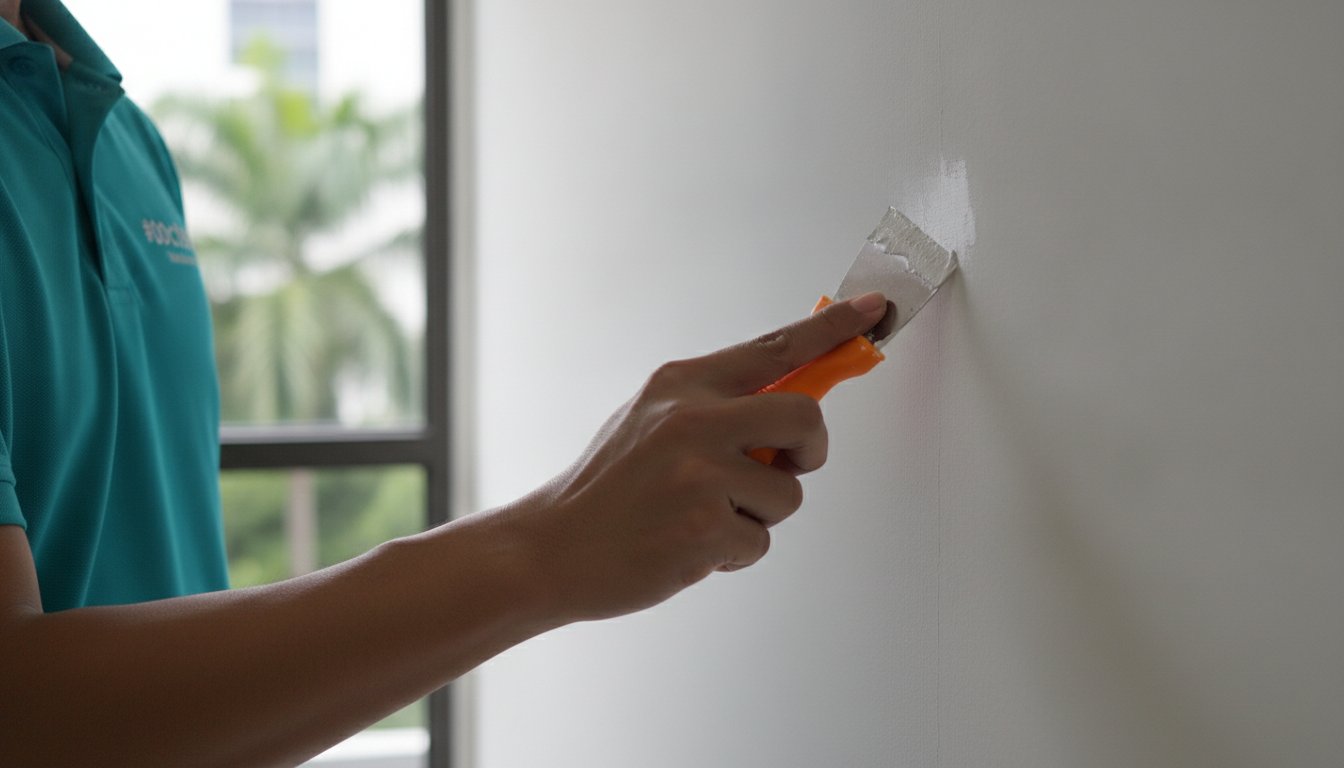
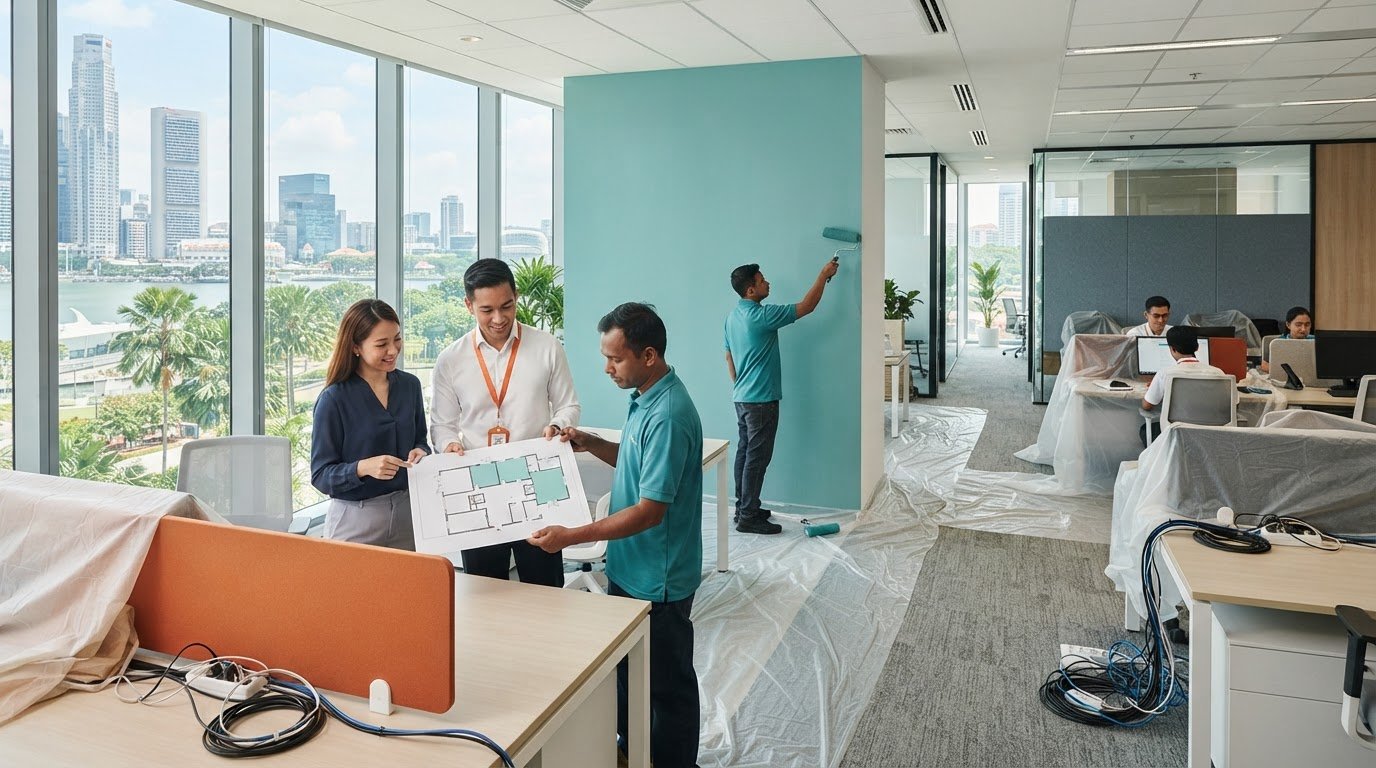
The best office painting schedule isn’t built around room boundaries; it’s built around how people work. Minimizing disruption during office painting means planning around staff routines, essential tasks and access needs, not simply closing one room after another. A meeting space may be quiet between bookings, while a smaller work area could be vital throughout the day.
It’s understandable to worry about lost productivity, blocked walkways, furniture protection, paint odour and how long rooms need to dry. Clear coordination with staff and the painting team can make these details easier to manage, without promising that every interruption can be avoided.
This practical guide explains how to map work areas, identify busy periods and set clear expectations for room access, preparation and drying time. You’ll also learn what to discuss with your contractor about phasing, paint selection and furniture protection. With over 10 years of industry experience, My Paint Job Singapore approaches commercial painting with careful preparation and post-project clean-up, helping you plan a professional refresh around the needs of your workplace.
Key Takeaways
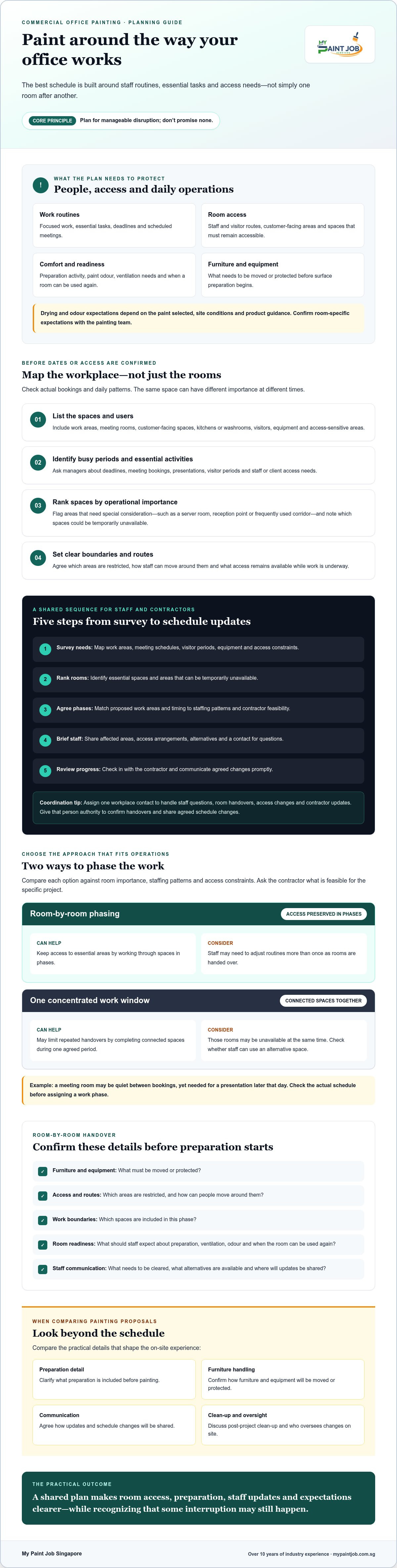
- Map painting work against meetings, busy periods and essential tasks before confirming dates or room access.
- For minimizing disruption during office painting, rank spaces by operational importance and agree which areas can be worked on in phases.
- Use a room-by-room handover checklist to clarify furniture, equipment, access routes and work boundaries before preparation starts.
- Compare painting proposals by preparation detail, furniture handling, communication and clean-up, then confirm who will oversee changes on site.
Why minimizing disruption during office painting starts with understanding the work
Minimizing disruption during office painting starts with identifying what the work could interrupt: access to rooms, regular work routines, staff comfort and day-to-day operations. The aim isn’t to promise the office will function exactly as usual. It’s to agree where and when interruption is acceptable, and protect essential activities wherever possible.
In brief: Identify critical activities and access needs, agree which areas can be temporarily restricted, and set clear expectations with staff and the painting team.
Before confirming dates, make an inventory of affected spaces, visitors, equipment and access-sensitive areas. Note which rooms are used for focused work, client visits or scheduled meetings, and flag spaces where access must remain available. A workstation may be movable, but a server room, reception point or frequently used corridor may need special consideration. Treat the project as a shared plan for scope, timing and responsibilities, drawing on project management principles to keep expectations clear.
Which office activities need protection during painting?
List essential work areas, customer-facing spaces, meeting rooms and shared facilities such as kitchens or washrooms. Ask managers about deadlines, scheduled meetings, visitor periods and access needs that affect staff or clients. If your workplace makeover also involves branding or feature walls, commercial wall printing specialists like Wall & Ink demonstrate how custom murals can be applied with minimal disruption to daily office operations. Check actual room bookings before assigning a space to a work phase. A meeting room that’s free in the morning may be needed for presentations later that day.
What can affect staff comfort and room access?
Furniture and equipment may need to be moved or protected before surface preparation begins. Preparation work can make a room unsuitable for normal use, while wet paint may restrict access until the product is ready for the next stage. Agree on clear work boundaries and routes around restricted areas so staff know where they can move.
Odour, ventilation needs and drying expectations depend on the paint selected, site conditions and product guidance. Ask the painting team what to expect in each area, including when it can be used again. Confirming these details early helps managers brief staff accurately instead of relying on assumptions about how quickly a room will be ready.
How to plan office painting around staff, rooms, and daily operations
Build the work plan around how the office runs, then confirm dates and room access with the painting team. Start by noting each room’s usual purpose and busy periods. Then use this sequence to give staff and contractors a shared reference point:
- Survey needs: Map work areas, meeting schedules, visitor periods, equipment and access constraints.
- Rank rooms: Identify essential spaces and those that can be temporarily unavailable.
- Agree phases: Match proposed work areas and timing to actual staffing patterns and contractor feasibility.
- Brief staff: Share affected areas, access arrangements and the contact for questions.
- Review progress: Check updates with the contractor and communicate any agreed changes promptly.
Assign one workplace contact to coordinate staff questions, access changes and contractor updates. Give that person authority to confirm room handovers and share agreed schedule changes. This avoids conflicting instructions and gives the painting team one clear route for raising issues. For broader project considerations, see this commercial painting services guide.
Choose between phased painting and a concentrated work window
Room-by-room phasing can preserve access to essential areas, though staff may need to adjust routines more than once. Completing connected spaces during one agreed work period can limit repeated handovers, but those rooms may be unavailable at the same time. Compare the options against room importance, staffing patterns and access constraints. For example, consider whether staff can use another meeting room while the usual one is being painted. Then ask the contractor which schedule is feasible for the specific project.
Prepare a clear staff communication plan
Tell staff which areas are affected, when access is expected to change, what alternatives are available and whom to contact. Share confirmed arrangements, but label tentative dates clearly and explain how updates will be sent if plans change. Include practical details such as which route to use and whether equipment or personal items need to be cleared before a room is handed over. This keeps expectations realistic and helps people prepare without treating a draft schedule as a guarantee.
For planning context, the PCA Industry Standards describe professional considerations such as surface preparation and job sequencing. Use them as a reference, and confirm the scope and expectations directly with your contractor. Discuss your work areas, schedule and access requirements as part of planning commercial painting services.
How to manage furniture, access, and painting work on site
A clear handover prevents uncertainty about what can be moved, covered or accessed. Before surface preparation begins, walk through each room with the workplace contact and painting team. Record who is responsible for each task, where furniture will go and which areas remain in use. A written room-by-room plan gives staff and contractors the same instructions and supports minimizing disruption during office painting.
- Furniture: Note what needs moving, what will remain in place and what requires protection.
- Equipment: Identify items to cover, relocate, disconnect or keep accessible, and confirm who is responsible for each action.
- Access routes: Agree on routes for staff and contractors, including any temporary changes.
- Work boundaries: Mark the areas included in the handover and clarify which spaces remain in use.
Protect equipment and keep agreed routes usable
Review workstations, shared devices and other equipment with the people who use them. Don’t assume the painting team can move or disconnect specialist equipment without workplace guidance. Confirm how agreed routes will be kept clear as work progresses, and ask the contractor to explain their on-site approach. The Commercial Painter Safety Protocols resource offers general context on planning safe painting work; confirm arrangements that suit your office and project.
Coordinate room handovers and return to use
Use one named contact to release each room to the painting team and confirm when it’s ready for staff to use again. Before work starts, ask about ventilation, drying, re-entry and cleaning expectations for the selected products. These details depend on the product and site conditions, so get product-specific guidance rather than relying on a standard time assumption. Make sure staff know who will confirm that the room is ready before it reopens.
If wall repairs are part of the preparation, review this wall plastering and skim coating guide to understand how surface work may fit into the handover plan. To discuss work areas, furniture protection and access needs, contact My Paint Job Singapore about commercial painting.
How to choose a painting partner and keep the office project on track
A suitable painting partner should help plan the work, not just apply paint. Compare proposals by the detail they provide on surface preparation, furniture handling, communication, clean-up and schedule coordination. Check that the scope identifies what the workplace needs to do before work begins, what the painting team will handle and how room handovers will be coordinated. Clear responsibilities make it easier to prepare staff and avoid last-minute uncertainty. If your workplace upgrade extends beyond repainting to a full commercial makeover, you can learn more about Fintouch Decor for insight into how comprehensive corporate fit-out solutions are planned and executed.
Questions to ask before confirming the project
Ask how the team will sequence rooms around your operational priorities, who will supervise the work and how schedule changes will be raised and agreed. Check that the proposal explains:
- What surface preparation is included and how paint selection will be confirmed.
- How furniture and equipment will be protected or moved, and who is responsible.
- How room access and work boundaries will be coordinated with your workplace contact.
- What clean-up covers and how completed areas will be handed back.
Compare like with like. If a proposal leaves preparation or protection unclear, ask for the details in writing before agreeing to the scope. My Paint Job Singapore provides commercial painting, meticulous surface preparation, furniture protection and movement, and post-project clean-up. Its team can discuss your work areas, schedule and access requirements as part of project planning.
Track progress and adapt the plan
Use short, regular check-ins with the contractor and workplace contact to review completed areas, upcoming access changes and unresolved concerns. If a room isn’t ready for handover or a business priority changes, discuss the options before changing the sequence. Confirm any schedule adjustment with both contacts, then share the agreed update with affected staff. This keeps decisions visible and supports minimizing disruption during office painting without treating tentative dates as guaranteed.
For a project plan shaped around your office’s needs, discuss an office painting project with My Paint Job Singapore.
Set Your Office Painting Project Up for a Smooth Run
A well-planned office repaint starts with understanding what staff need to keep doing. Map the work against daily operations, agree on room access and painting phases, then give staff one clear point of contact for updates. Before each area is handed over, confirm furniture and equipment arrangements, work boundaries, access routes and product-specific drying and re-entry guidance.
Minimizing disruption during office painting doesn’t mean expecting business to carry on untouched. It means agreeing on manageable interruptions and staying in step with the painting team as the plan unfolds. Clear preparation, communication and room handovers help keep the project organised while supporting a polished finish.
My Paint Job Singapore brings over 10 years of industry experience to commercial painting, with meticulous surface preparation, furniture protection and post-project clean-up. Share your work areas, schedule and access requirements to start a practical conversation. Discuss your office painting requirements with My Paint Job Singapore, and take the next step towards refreshing your workplace with a clear plan.
Frequently Asked Questions
Can an office stay open while it is being painted?
Yes, an office may be able to remain open if the work can be arranged around essential activities and access needs. Discuss whether separate rooms or work areas can be handed over in phases, and agree on any temporary restrictions with the painting team. Consider staff comfort, visitor access, equipment and ventilation. Some areas may still need to be unavailable during preparation, painting or drying.
How can office painting be scheduled to minimise disruption?
Map the proposed work against meetings, deadlines, visitor periods and busy work areas before confirming dates. Rank rooms by operational importance, then discuss whether a phased approach or a concentrated work window better suits your staffing and access needs. Minimizing disruption during office painting also depends on clear updates: name a workplace contact to share confirmed access changes and relay questions to the contractor.
How do you protect office furniture and equipment during painting?
Agree with the painting team which furniture will be moved, which items will stay and need protection, and who is responsible for each task. Identify equipment that may need covering, relocation or restricted access, and check with the staff who use it before anything is disconnected or moved. Clear desks and secure sensitive items according to your workplace procedures before the room is handed over.
How long should staff wait before using a freshly painted room?
There isn’t one suitable waiting time for every room. Drying and re-entry depend on the selected paint, site conditions and product guidance. Ask the contractor for the specific instructions for each area, including ventilation recommendations and when staff can resume normal use. Don’t rely only on whether paint feels dry to the touch; confirm the room handover with the painting team before reopening it.
What should I ask an office painting contractor before work begins?
Ask how the team will sequence rooms around your business priorities, what surface preparation and paint selection are included, and how furniture, equipment, access and clean-up will be handled. Confirm who supervises the work, who coordinates with your workplace contact and how schedule changes will be communicated. Request clear, written scope details so you can compare proposals and brief staff with realistic expectations.