A fresh paint job can transform a property quickly, but the disruption is rarely limited to the hours a painter is holding a roller. Furniture may need to move, walls may need repair, and newly painted rooms need time before normal use. Knowing how to estimate painting downtime helps you schedule with confidence, whether you are refreshing an HDB apartment before moving in or repainting an office without interrupting daily operations.
The right estimate is not just a paint-drying calculation. It accounts for preparation, the condition of the surfaces, the paint system, ventilation, access, and how soon the space must return to normal use. A professional inspection is the best way to turn these variables into a clear project schedule.
Start With the Type and Size of the Space
A small bedroom with sound walls may be prepared and painted in a day, then be ready for careful use after the paint has dried. A full apartment, landed home, office, or retail unit requires a wider timeline because the crew must protect more areas, move or cover furnishings, complete multiple rooms, and allow for drying between coats.
The number of rooms matters, but layout matters too. An open-plan space can allow painters to work efficiently across broad walls. A furnished home with narrow walkways, built-in cabinetry, feature walls, or many occupied rooms can take longer even when the total square footage is modest.
For an occupied property, separate two timelines: the active painting period and the period when each room is unavailable. Painters can often complete one area while residents or staff use another. That reduces overall inconvenience, but it still requires a sensible room-by-room plan.
Factor in Preparation Before You Count Paint Coats
Preparation is where accurate downtime estimates are won or lost. Painting over dirt, loose material, water stains, cracks, or damaged plaster may save a few hours at the start, but it can compromise the finish and lead to earlier repainting.
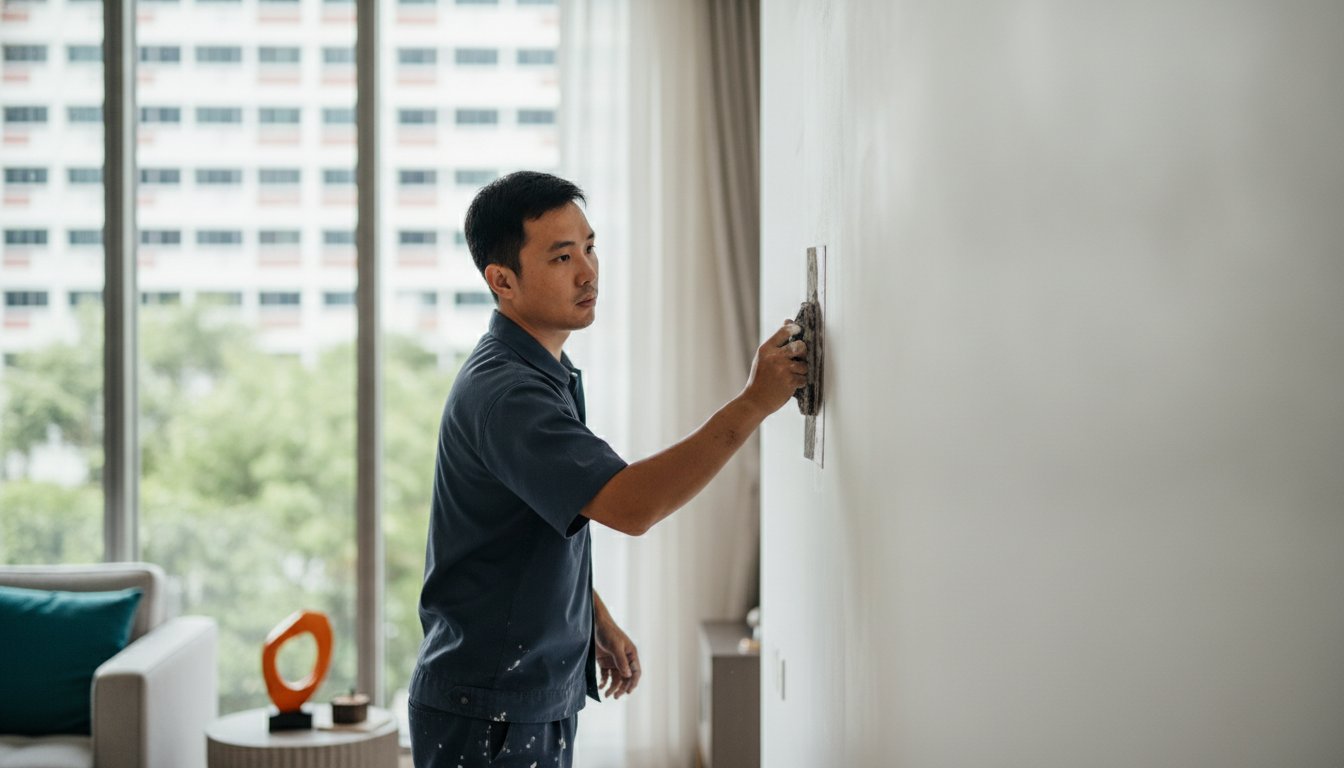
Standard preparation includes protecting floors and furniture, masking edges, cleaning surfaces, sanding rough patches, and applying primer where needed. These steps may take a significant portion of the first day, especially in a furnished home or active commercial setting. The work is necessary for crisp lines, proper adhesion, and a polished result.
Repairs Can Change the Schedule
Wall plastering, crack filling, spalling concrete repair, wallpaper removal, and water-damage treatment add downtime because the repaired surface must cure or dry before paint goes on. The exact wait depends on the repair material, depth of the damage, humidity, and ventilation.
For example, a few nail holes can usually be filled and sanded within the normal preparation period. Extensive flaking paint or a damp wall needs a more careful approach. If moisture is still present, painting too soon can cause blistering, peeling, or staining through the new finish. In these cases, a longer schedule protects the quality of the work and the value of your investment.
Estimate Drying Time and Recoat Time Separately
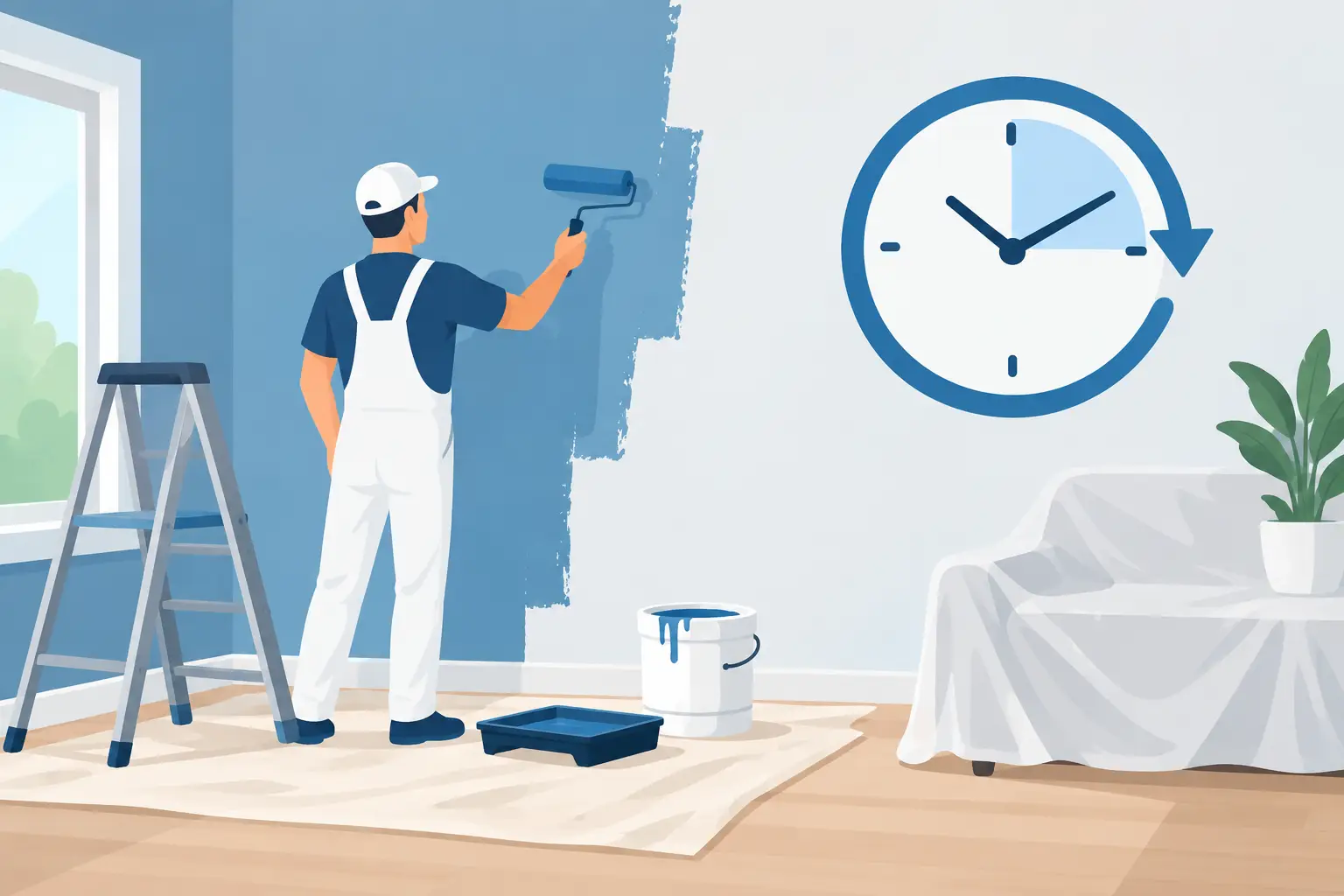
Dry to the touch does not always mean ready for a second coat, furniture, cleaning, or full use. Most interior paints dry to the touch within a few hours under normal conditions, but recoat timing can range from a few hours to overnight depending on the product and environment.
A professional painting team follows the manufacturer’s recommended recoat window rather than rushing the job. Applying a second coat too early can affect coverage, durability, and the smoothness of the final finish. Dark or rich colors may also need additional coats, particularly when covering a much lighter or darker existing color.
Full curing takes longer than surface drying. While a room may be usable after the paint has dried and the area has been ventilated, avoid scrubbing walls, pressing furniture tightly against them, or hanging heavy items immediately. Ask your painter for practical guidance based on the selected paint and the room’s conditions.
Consider Humidity, Ventilation, and Weather
Singapore’s humidity can slow drying, especially in rooms with limited airflow or during rainy periods. Air conditioning, fans, open windows, and proper ventilation can help, but they must be used appropriately. Excessive direct airflow can sometimes cause uneven drying, while closed-up rooms may hold moisture and paint odors longer.
Exterior work is more dependent on weather. Rain, wet surfaces, and high moisture levels can delay preparation and application. For exterior walls, grills, gates, and other metal surfaces, the team may need to pause work until conditions support proper adhesion and curing.
This is why an exact day-by-day schedule should include a little contingency time. For a deadline such as a move-in date, handover, reopening, or event, plan the painting work to finish ahead of the date rather than on it.
Build Downtime Around Your Property’s Use
The practical answer to how to estimate painting downtime changes based on who needs the space and when. A vacant apartment can often be completed faster because painters have clear access and can work across rooms without coordinating around residents. For an occupied home, the most efficient plan may be to paint bedrooms one at a time, keeping essential living areas available.
Offices and retail spaces need a different approach. Painting after business hours, over weekends, or in phases can keep operations running. Express painting may be suitable when the surfaces are in good condition, the scope is clearly defined, and the property needs a fast turnaround. However, speed should not mean skipping surface protection, preparation, drying time, or final cleanup.
A realistic commercial schedule also considers staff movement, customer access, sensitive equipment, stock, security requirements, and building management rules. A lobby or shopfront may need to be completed overnight, while back-of-house areas can be handled during quieter operating hours.
Use a Simple Planning Formula
A reliable estimate combines four parts: site preparation, surface repair, painting and recoat time, then return-to-use time. The first three determine how long the crew needs on site. The final part determines when you can move furniture back, resume normal activity, or welcome customers without risking damage to the fresh finish.
As a general planning approach, allow one day for a small, straightforward room, two to several days for a multi-room home depending on its condition and furnishing, and additional time for repairs or exterior work. Large offices, retail units, or properties with access restrictions should be assessed individually because staffing, work hours, and phased scheduling can significantly change the timeline.
Do not forget the final walkthrough. A proper project includes touch-ups, removal of protective coverings, cleanup, and a check that the finish meets expectations. This may not add much time, but it is part of delivering a clean, completed space rather than simply stopping after the last coat.
Questions to Ask Before You Schedule
Before confirming dates, ask whether any walls need repair, whether the property will be occupied, how many colors are planned, and whether furniture movement is required. Clarify whether the selected paint is low-odor or eco-friendly, especially if children, pets, employees, or customers will return soon after the work.
It is also wise to tell your contractor about fixed deadlines, building access hours, elevator booking rules, and areas that cannot be closed. These details allow the painting plan to match your real-life needs instead of forcing you to rearrange your schedule after work begins.
At My Paint Job, a site assessment helps identify these details early, from wall condition and color selection to furniture protection, repairs, painting, and cleanup. The result is a practical timeline built around a quality finish and minimal disruption.
The best downtime estimate leaves room for the work that makes paint last: careful preparation, proper drying, and a final check before the space returns to use. Plan early, share your deadline clearly, and give the finish the time it needs to look right for years to come.