Why do those stubborn black spots keep reappearing on your ceiling even after you have spent hours scrubbing them with bleach? It is incredibly frustrating to deal with a persistent musty smell in your bedroom or worry about your child’s allergies when the tropical climate feels like it is working against you. We understand that in a city where the average relative humidity sits at a heavy 82 percent, your home can often feel like an incubator for spores that colonize in as little as 24 hours. You deserve a living space that feels fresh and safe, not a constant battleground against dampness.
You can break this cycle permanently. This guide reveals exactly how to prevent mould on walls in singapore by moving beyond temporary fixes toward professional, long-term environmental control. We will explore the technical precision of high-performance anti-microbial coatings, the simple furniture adjustments that transform air circulation, and a maintenance routine specifically designed for our unique 2026 climate. Discover how to protect your property and your health with strategies that actually work in high-humidity environments. Follow these steps to restore your home to a pristine, healthy state.
Key Takeaways
- Understand how Singapore’s high humidity and indoor air-conditioning create the perfect dew point for mould to colonize your walls.
- Master the daily habits of cross-ventilation and exhaust fan usage to effectively lower indoor moisture levels.
- Learn how to prevent mould on walls in singapore by choosing specialized anti-microbial coatings that starve fungi of organic nutrients.
- Distinguish between simple surface cleaning and the professional restoration needed when spores have settled deep inside your wall’s plaster.
Why Mould Thrives on Singapore Walls: The Science of Humidity
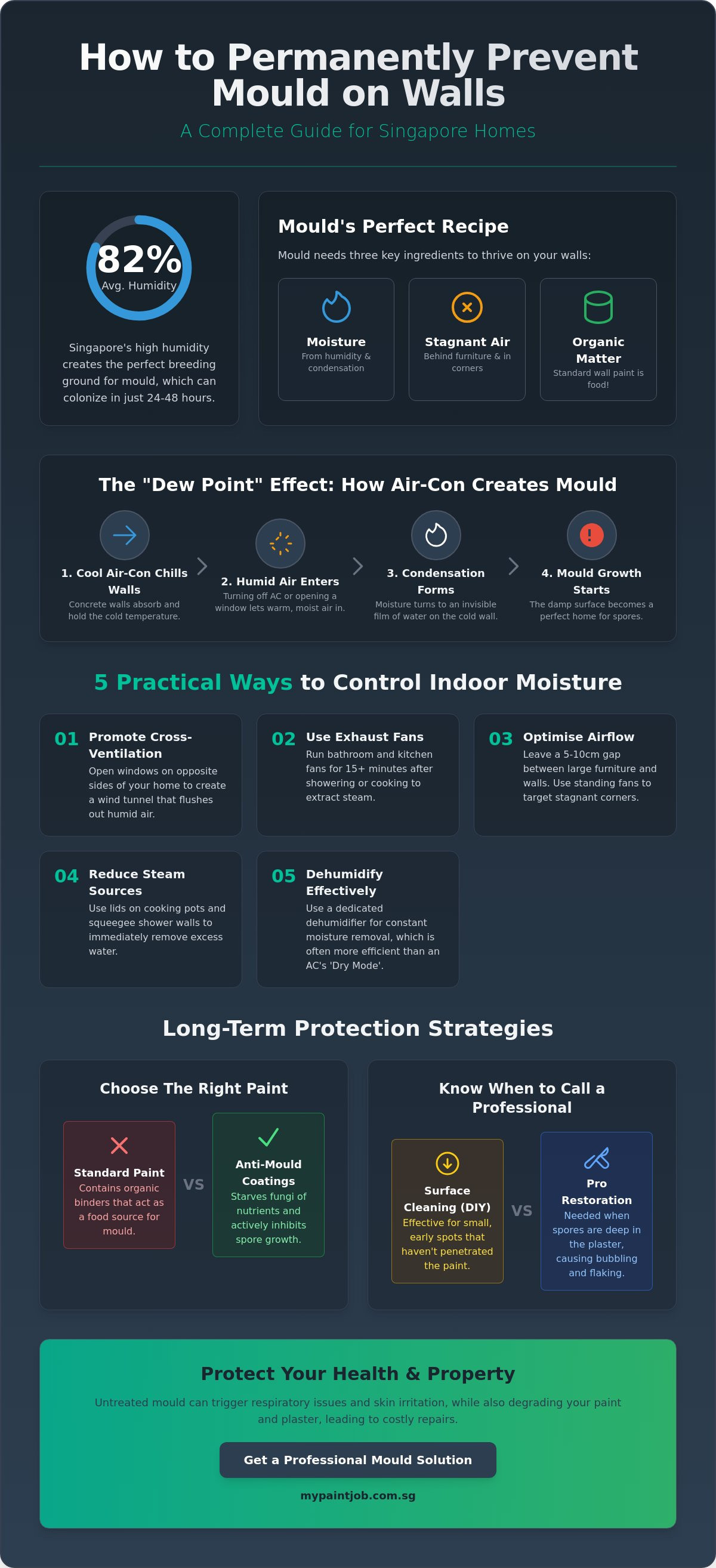
Mould isn’t just a cosmetic blemish; it’s a living fungus that feeds on your home’s surfaces. To survive, it requires three specific ingredients: moisture, stagnant air, and organic matter. Most homeowners are surprised to learn that standard wall paint actually serves as a food source for these spores. The science of mould growth shows that once these conditions are met, colonies can form in less than 48 hours. Understand these biological needs to take the first step in learning how to prevent mould on walls in singapore.
Our local architecture presents a unique challenge because of the ‘Dew Point’ effect. When you run your air-conditioning at a cool temperature, the concrete walls chill significantly. As soon as you turn off the AC or open a window, the heavy, humid Singaporean air hits that cold surface and turns into liquid water. This condensation is often invisible, yet it creates a damp film that invites fungal growth. Unlike timber-framed homes found in cooler climates, Singapore’s concrete structures have a high thermal mass. They absorb and retain this moisture for long periods, providing a steady supply of hydration for mould deep within the plaster layers.
Keep a close watch on high-risk zones where air tends to stall. Bathroom ceilings and kitchen corners are obvious targets, but the area behind your heavy wardrobe or bed frame is often where the most damage occurs. These narrow gaps trap humid air against the wall, creating a hidden breeding ground. You’ll likely only notice the infestation once the musty smell becomes unbearable or the black spots spread beyond the furniture’s edge.
The Role of Relative Humidity (RH) in Your Home
Health Risks of Ignoring Wall Mould
Leaving black spots untreated is a risk to your family’s wellbeing. Inhaling airborne spores can trigger persistent respiratory issues, skin irritation, and severe reactions in children with existing allergies. Beyond health, mould actively degrades your property. It secretes enzymes that break down the organic binders in your paint and plaster, leading to bubbling, flaking, and expensive structural repairs. Address these issues early to manage how to prevent mould on walls in singapore while maintaining the long-term value of your asset.
5 Practical Ways to Control Indoor Moisture Daily
Run your exhaust fans in the bathroom and kitchen for at least 15 minutes after you finish your shower or cooking. These fans are designed to extract steam before it has a chance to condense on your ceiling. If you’re dealing with stubborn moisture in bedrooms, compare a dedicated dehumidifier with your aircon’s ‘Dry Mode’. While ‘Dry Mode’ reduces humidity by cooling the air, a dehumidifier is often more efficient for long-term moisture removal without freezing the room. This aligns with the WHO guidelines on dampness and mould, which emphasize that consistent source control is vital for a healthy indoor climate.
Optimising Airflow in HDB and Condo Layouts
Don’t let air become trapped in “dead zones” like corners or narrow hallways. Position standing fans to push air toward these stagnant spots and keep internal doors open whenever possible. Create a clear path for air to move; even a small 5-10cm gap between your wardrobe and the exterior wall can prevent the condensation traps discussed in the previous section. If you notice early signs of staining despite these efforts, our HDB painting services can help restore your walls with professional-grade protective layers.
Daily Habits to Reduce Steam and Condensation
Small adjustments to your routine make a significant difference. Wipe down bathroom walls with a squeegee after a hot shower to remove standing water immediately. When preparing meals, always use lids on your pots. These habits are essential if you want to master how to prevent mould on walls in singapore and protect your kitchen ceiling from grease and steam buildup where fungi often hide.
Selecting Anti-Mould Paint and Sealers for Long-Term Protection
Choosing the right materials is just as vital as managing airflow. Most standard emulsion paints contain organic compounds that actually serve as a food source for fungi. In contrast, anti-microbial paints are engineered with specialized biocides that inhibit fungal growth on a microscopic level. When you are looking for how to prevent mould on walls in singapore, investing in premium brands like Nippon Paint is a technical necessity. These products are formulated specifically for high-humidity tropical climates and provide a robust barrier that standard paints simply cannot match.
Surface texture also plays a significant role in prevention. Washable paints are much less porous than traditional matte finishes, which means they don’t absorb airborne moisture as easily. This makes it far more difficult for spores to find a foothold. As noted in the EPA guide to mold and moisture, keeping surfaces clean and dry is the most effective way to stop growth. A smooth, washable topcoat allows you to wipe away dust and early spore deposits with a damp cloth before they can colonize your walls.
The Difference Between Sealer and Topcoat
A sealer is a functional base layer that creates a moisture-resistant barrier and ensures the final topcoat adheres securely to the substrate. Skipping the sealer is the most common reason mould returns shortly after a renovation. Without an oil-based sealer to lock down the surface and block residual spores, your new paint job will likely fail when the next monsoon season brings a spike in humidity.
Choosing the Right Sheen for Humid Areas
Select semi-gloss or eggshell finishes for areas prone to steam, such as bathrooms and kitchens. These sheens offer superior moisture resistance compared to matte paints, which tend to trap dampness in their textured surface. You can find more area-specific recommendations in our guide to HDB kitchen wall paint. If you want to ensure a flawless, long-lasting finish for your home, our condo painting services provide the professional expertise needed to apply these technical coatings correctly.
Professional Wall Restoration: Solving Persistent Mould Problems
Sometimes, despite your best efforts with ventilation and premium paints, the black spots return. This usually happens because mould isn’t just sitting on your wall; it’s living inside it. In older properties or homes with poor initial finishes, spores penetrate deep into the porous plaster layers. Cleaning the surface with vinegar or bleach won’t reach these roots. To truly master how to prevent mould on walls in singapore, you must address the integrity of the substrate itself.
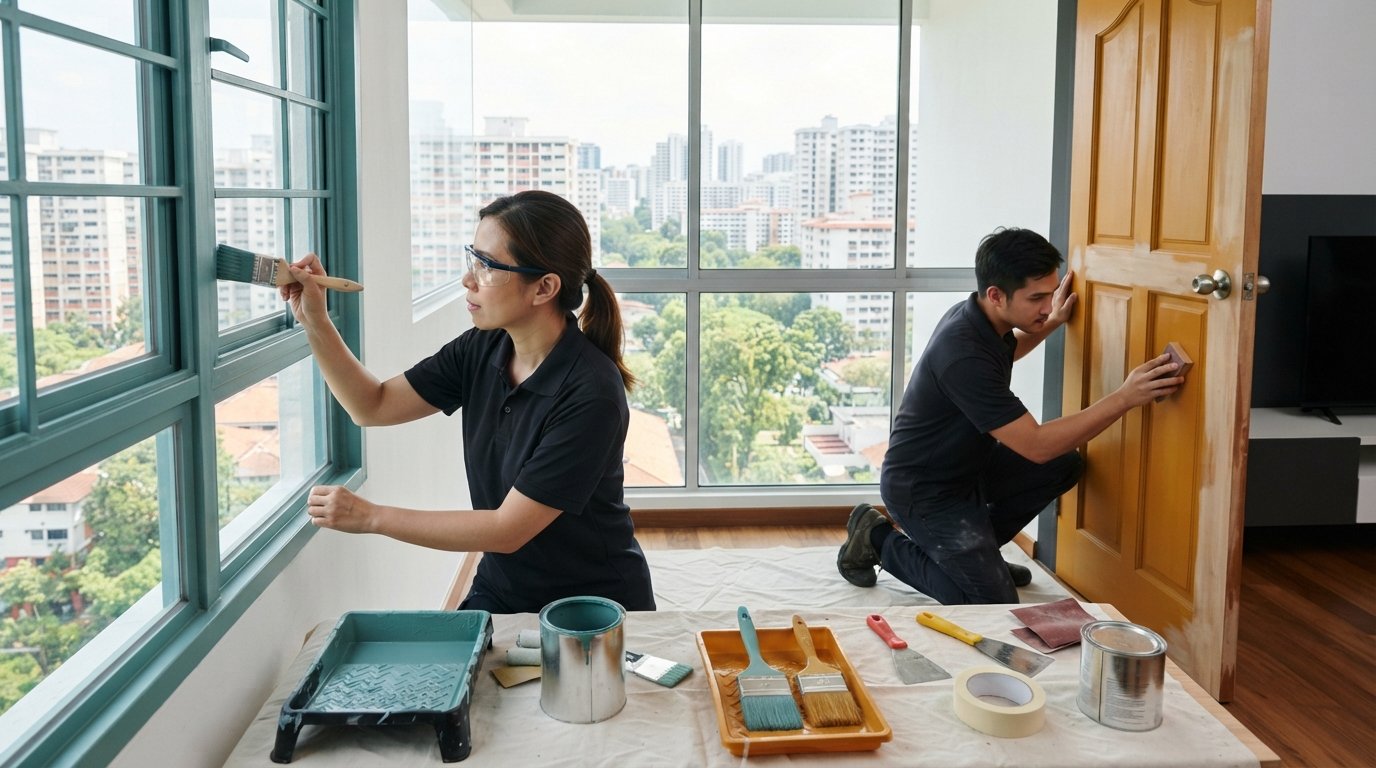
The professional restoration process is meticulous. We start with a heavy-duty anti-fungal wash to neutralize spores at a cellular level. After this, we scrape away flaking paint and compromised masonry. Applying a fresh layer of plastering and skim coating is often the next vital step. This creates a dense, non-porous surface that denies mould the organic pockets it needs to thrive. We also check for signs of spalling concrete, as internal moisture seepage from structural defects can keep walls damp from the inside out regardless of how much you clean.
When DIY Cleaning Isn’t Enough
If you see paint bubbling or feel the plaster crumbling beneath your touch, the infestation has moved beyond a simple surface issue. These are clear indicators that the masonry is saturated. DIY solutions like household sprays are insufficient here. You need professional-grade anti-fungal treatments that penetrate the wall to ensure the colony is completely eradicated before any new paint is applied. Ignoring these signs only allows the damage to spread deeper into your home’s structure.
The Value of Professional Painting Services
Engaging a professional house painting service provides more than just a fresh look. It guarantees that the technical preparation, from moisture testing to specialized sealing, is handled with precision. This comprehensive approach is the only way to achieve a long-term solution for how to prevent mould on walls in singapore. Our team takes pride in this craftsmanship, ensuring your home remains a clean, healthy environment for your family. It’s about the certainty that your property is in safe, capable hands.
Secure a Healthier, Mould-Free Home Today
Protecting your property from the relentless tropical humidity is a continuous process. You now understand that moisture control and consistent cross-ventilation are your first lines of defence. For a truly permanent solution, you must address the surface integrity of your walls with high-performance materials rather than standard paints. Mastering how to prevent mould on walls in singapore is about moving from temporary cleaning to technical prevention that addresses the root of the problem.
If you’re dealing with persistent black spots or want to ensure your upcoming renovation stands the test of time, our team is ready to assist. We bring over 10 years of experience in Singapore’s unique climate to every project. We specialise in HDB, Condo, and Landed property restoration, using only premium anti-mould sealers and paints that are proven to perform in our high-humidity environment. Get a free quote for professional anti-mould painting from My Paint Job Singapore to see how we can restore your home’s beauty and safety.
Your home should be a healthy sanctuary for your family. By applying these professional strategies, you can enjoy a clean, fresh environment without the stress of recurring fungal growth. Let’s work together to create a space you can take pride in for years to come.
Frequently Asked Questions
Can I just paint over mould to kill it?
No, painting over mould will not kill the fungi; it will only hide the problem temporarily. The spores will continue to grow beneath the new layer, eventually causing the paint to bubble, crack, and peel away. You must always treat the underlying infestation with a professional-grade anti-fungal wash before applying any new coatings to ensure a lasting result.
Is vinegar or bleach better for removing mould from Singapore walls?
White vinegar is generally more effective than bleach for treating porous surfaces like plaster. While bleach kills surface spores, it cannot reach the roots embedded deep within the wall. Vinegar penetrates the material to neutralise the colony at its source. For a long-term strategy on how to prevent mould on walls in singapore, use a 70 percent vinegar solution before applying a high-quality sealer.
How often should I repaint my HDB flat to prevent mould?
We recommend repainting your HDB flat every five to seven years to maintain the protective properties of the paint. However, high-moisture areas like bathrooms and kitchens may require a refresh every three years. Regular maintenance ensures that the anti-microbial barriers remain effective against our local 82 percent average humidity, keeping your living environment fresh and safe for your family.
Does air conditioning prevent or cause mould in Singapore?
Air conditioning can do both depending on your habits and maintenance schedule. The “Dry Mode” is excellent for removing excess moisture from the air, which helps inhibit growth. However, cooling your walls excessively can lead to condensation when the unit is turned off and warm air enters the room. Clean your AC filters every three months to prevent the unit from spreading spores throughout your home.
What is the best anti-mould paint available in Singapore for 2026?
Nippon Paint Odour-less Anti-Mould Ceiling White and Raffles Paint R.ANTIMOULD are currently the most reliable options for our tropical climate. These products are specifically formulated to resist the heavy moisture levels found in local homes. Choosing these premium brands is a vital step in learning how to prevent mould on walls in singapore while ensuring your property maintains a beautiful, professional finish for years.