Premium paint isn’t automatically the better choice. Whether premium paint is worth the cost depends on the room, the finish you want and how much wear the surfaces face. It may offer richer colour, smoother application or better resistance to everyday marks. Trade paint can be a practical option for a straightforward repaint.
The price of the tin is only part of the comparison. Coverage, the number of coats and how well the finish holds up also affect value. Lower-cost paint may need extra coats, while premium paint may justify its higher upfront cost in busy rooms or where colour and finish matter most.
This comparison looks at differences in coverage, application, colour and performance over time. Neither label guarantees the right result: surface preparation, room use and the chosen finish all matter. Use the decision guide to weigh these factors for a Singapore home or commercial space, then decide where premium paint makes sense and where trade paint may be sufficient.
Key Takeaways
- Compare coverage and the number of coats, not just the tin price, to judge the paint’s overall value.
- Consider how easily each paint applies and the finish it can achieve on your walls.
- Match paint quality and colour choice to the look you want and the room’s everyday use.
- Use the decision guide to identify where premium paint may be worthwhile and where trade paint can suit the job.
Coverage and number of coats
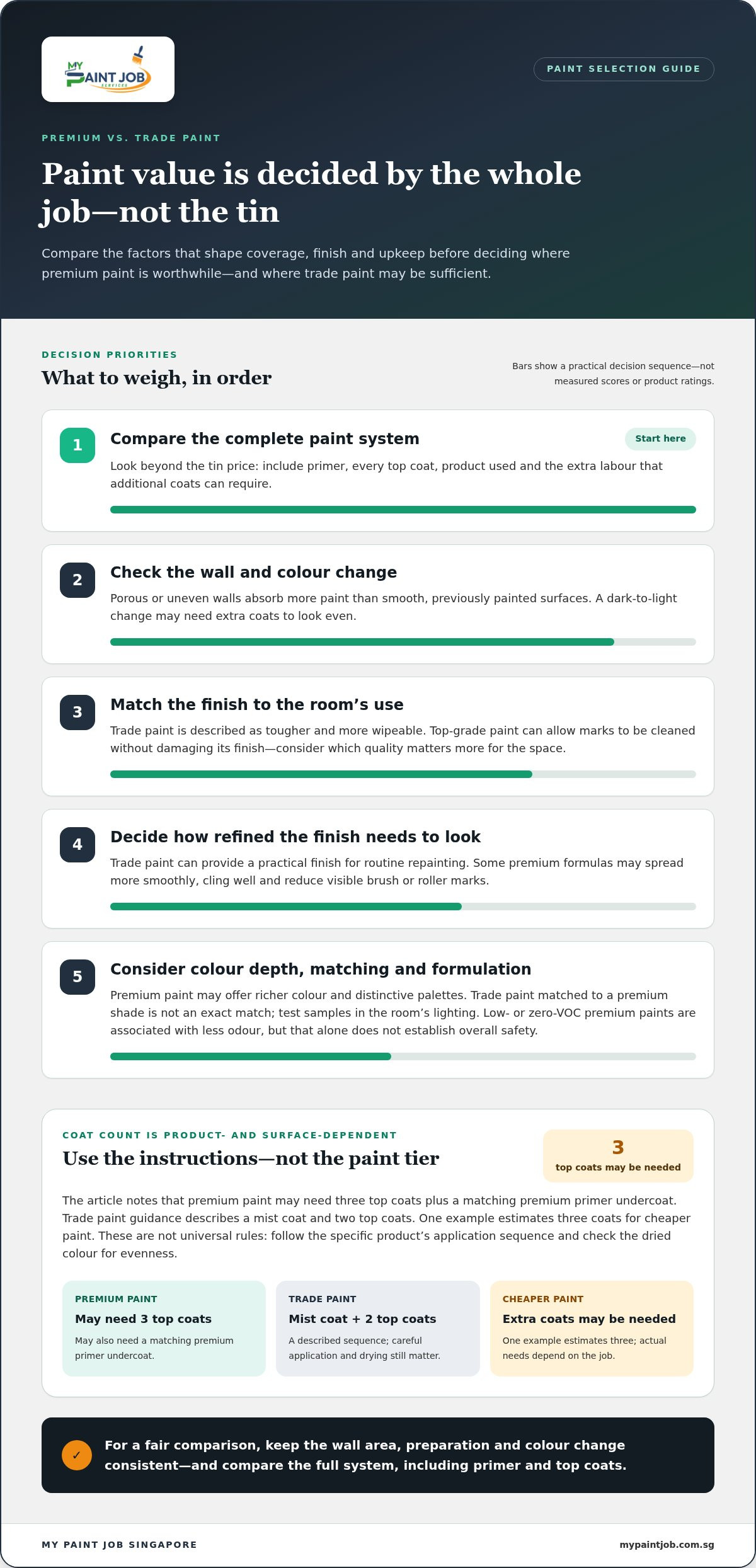
Coverage depends on the paint and the surface, not just the label on the tin. A porous or uneven wall can absorb more paint than a smooth, previously painted surface. A sharp colour change, such as dark blue to pale cream, may also need extra coats for an even finish. Lower-cost paint may require additional coats; one example estimates three.
Premium paint doesn’t automatically mean fewer coats. It may need three top coats plus a matching premium primer undercoat, and sometimes requires more coats than trade paint. Follow the product’s application instructions, then check whether the colour looks even after each coat dries. Don’t choose the number of coats based on the paint tier alone.
| Option or surface | Coverage and coat considerations | Best suited to |
|---|---|---|
| Premium paint | May need three top coats and matching primer | Projects prioritising a premium finish |
| Trade paint | Coat count depends on surface and colour change | Routine repainting |
| Cheaper paint | May need extra coats; one example estimates three | Jobs where upfront product cost matters |
| Porous wall | Absorbs more paint than a smooth surface | Walls needing careful preparation |
| Smooth painted wall | Existing finish affects coverage | Like-for-like repainting |
| Dark-to-light change | May take extra coats for even colour | Major colour changes |
| Primer undercoat | Supports the chosen paint system | Surfaces needing an undercoat |
To compare coverage fairly, keep the wall area, colour change and preparation consistent. First, identify whether the surface is porous, damaged or already painted. Check the recommended primer and coat sequence for each paint. Then compare the amount of product used for the complete system, including primer and top coats, rather than judging one tin in isolation.
This matters because extra coats add material and labour. A cheaper tin may not be the cheaper overall option if it takes more coats, while a premium system may still need several layers. Choose based on the full application system and the finish the wall needs.
Is trade paint as good as designer?
Trade paint can give a clean, practical finish, but application and finish quality vary by formulation. Compare how each paint performs on the wall, not just the label.
Ease of Application
Trade paint is made for consistent application across larger jobs, and it can handle differently from designer paint. Some premium formulas spread more evenly and cling well, making them easier to apply. Lower-cost paint may feel thin or drag under a brush, leaving streaks that need extra work.
For a good finish, trade paint requires a mist coat and two top coats. Apply each layer evenly and let it dry as directed before adding the next. This sequence helps create a consistent surface, but careful technique still matters. Paints vary in how they flow, so follow the guidance for the specific product.
Finish Quality
Trade paint can give a dependable finish for routine repainting, while designer paint may spread more smoothly and reduce visible brush or roller marks. Premium paint may also cling better, helping the coating look more even. These differences can stand out more on a feature wall than on a less prominent surface.
Lower-cost paint may leave uneven texture or visible streaks if it drags during application. Use a consistent rolling pattern and maintain a wet edge to help prevent patchiness. Good preparation supports either paint type: remove loose material and create a sound, even surface before coating.
Durability depends on the paint’s intended use and finish. Trade paint is described as tougher and more wipeable than premium paint, while top-grade paint can allow marks to be cleaned without damaging its finish. These are different strengths, not a simple ranking. Consider whether frequent wiping or a refined appearance after cleaning matters more.
Match the product to the job: choose trade paint for a practical, robust finish, or consider designer paint where smoother application and a refined look matter most. With either option, follow the specified coat sequence and allow each layer to dry as directed.
How did the premium and trade compare?
Low- or zero-VOC premium paints are associated with less odour and a healthier indoor environment, but that alone doesn’t establish overall safety. VOCs are volatile organic compounds. For a Singapore home, consider the product’s stated formulation and the room where it will be used.
Premium paint uses higher-quality pigments and resins, which can improve opacity and colour consistency. These ingredients can create rich colour in one or two passes. Trade paint can suit a practical repaint, while some lower-cost formulas may look flatter or shift in tone. Ask yourself, “Is premium paint worth the cost for this feature wall?” It depends on how much colour depth matters to your design.
Premium brands invest in colour technology and may offer distinctive palettes. Before choosing a shade, compare samples with the room’s flooring, cabinetry and natural light. A coordinated palette can carry a colour through connected spaces, while a trade range may be enough for a simpler scheme. In an open-plan living and dining area, test samples in both parts of the room.
Colour can vary between paint batches, making later touch-ups difficult. Keep the product and batch details after painting, especially for a prominent wall. If touch-up paint looks different, repainting the full wall may create a more even appearance. Ask, “Is premium paint worth the cost if matching this shade later is important?” That priority can influence your choice.
Trade paint matched to a premium shade isn’t an exact match, so test it on the intended surface before committing. View the sample beside fixed finishes and in the room’s lighting. Choose premium paint for the depth or palette you want; choose trade paint when a close colour match meets the design goal.
Premium versus trade paint performance
Performance becomes clear once the room is back in use. Premium paint is designed to resist stains and marks, tolerate regular cleaning and maintain its colour over time. Lower-cost paint can fade, mark more easily and wear sooner. A family hallway, where bags and hands often brush the walls, puts these differences to a practical test.
Premium paint may spread evenly, level smoothly and reduce brush or roller marks. It may be less prone to dripping and splattering, helping create a neater finish. Some top-grade paints offer a two-hour recoat time, though that may matter less for a typical home project than durability or appearance. Follow the tin’s directions for drying and recoating.
Solids content can help when comparing durability: one recommendation is to look for paint with 20-25% solids. But this indicator isn’t the whole decision. The room’s use, paint finish and cleaning demands also matter. A kitchen wall exposed to everyday splashes, or an exterior surface exposed to weather, may benefit more from a durable coating than a low-use bedroom wall.
Trade paint can be tougher and more wipeable than some premium paints, so “premium” doesn’t automatically mean better for every task. Compare the specific paint’s intended use and cleaning performance. For fingerprints and scuffs in a busy corridor, stain resistance may matter most. In a rarely used room, finish and colour may matter more than frequent washability.
- Prioritise premium paint for high-traffic areas, kitchens, bathrooms, feature walls or weather-exposed exteriors where stain resistance, colour retention or a refined finish matters.
- Consider trade paint where a tougher, wipeable surface is the main priority and the desired finish is straightforward.
Choose by matching the paint’s strengths to the room, not by its label alone. For help planning a finish around your space and its daily use, get advice on your painting project.
My Paint Job Singapore: HDB painting services
My Paint Job Singapore provides HDB painting services for homeowners planning a repaint or choosing a finish for their flat. When weighing premium against trade paint, consider the room’s use, desired appearance and wall condition before settling on a paint system.
The same approach applies to condo, landed and commercial painting projects, where different spaces may call for different finishes. If walls need attention before painting, plastering services can address the surface as part of the wider project. Good preparation creates a sound base for the chosen paint.
Bring your priorities into the discussion, whether that’s colour, ease of cleaning or a refined finish. Contact My Paint Job Singapore to discuss your painting project.
Make the next paint choice with confidence
Let the paint choice support how you want each room to look and function. Before planning a repaint, identify the spaces that need a practical refresh and those where the finish is part of the design. This gives you a clear brief for choosing materials and planning the work.
Whether premium paint is worth the cost depends on how its qualities serve your priorities in each space. You don’t need to make the same choice throughout your home. A considered plan can balance appearance, everyday use and the finish you want, room by room.
For properties across Singapore, My Paint Job Singapore offers HDB, condo and landed painting services. Share the look and practical needs you have in mind, then discuss a suitable approach for your project.
Contact My Paint Job Singapore to take the next step toward a refreshed space.
Frequently Asked Questions
Is expensive paint worth it?
Paying more can be worthwhile when a room needs particular colour depth, a refined finish or stronger resistance to everyday marks. For a low-use storeroom or a simple repaint, trade paint may meet your needs without premium features. Start with the room’s purpose, then consider whether the added performance or appearance will make a practical difference.
The Verdict: What Should You Use?
Choose paint to suit each room rather than using one grade throughout the property. For example, a child’s play area may need a finish suited to regular cleaning, while a quiet study may call for a particular colour or sheen. Decide what matters most in each space, then choose paint formulated for that priority.
The right decision?
The right choice starts with the wall’s condition and the result you want. A repaired patch, a strong colour change and an existing smooth finish can each affect the suitable paint system. Make a room-by-room list of priorities, such as appearance, cleaning needs and touch-up plans. This brief makes it easier to compare options consistently.
What’s the Difference?
Premium paint is generally positioned around refined colour, application and performance features, while trade paint is designed for practical use across painting jobs. The label alone doesn’t tell you how a specific tin will behave. Compare the product’s intended use, finish and application instructions. In a home office, for instance, colour appearance may matter more than frequent wiping.
Why the extra cost?
A higher-priced paint may reflect its pigments, resins, colour development or performance characteristics. Those qualities can matter if you want a specific shade or expect the surface to be cleaned regularly. The added expense is less useful if the room has modest demands and a standard finish meets your needs. Judge the product by the features your project will actually use.
What is the price difference between premium and standard paint in Singapore?
There isn’t one fixed price difference in Singapore. The gap depends on the paint line, finish and tin size, so compare prices in S$ for equivalent quantities and uses. For a painting project, the price depends on its scope and is provided after a quote request; wall area, surface preparation and paint choice all play a part. Don’t treat product prices as the full project cost.