
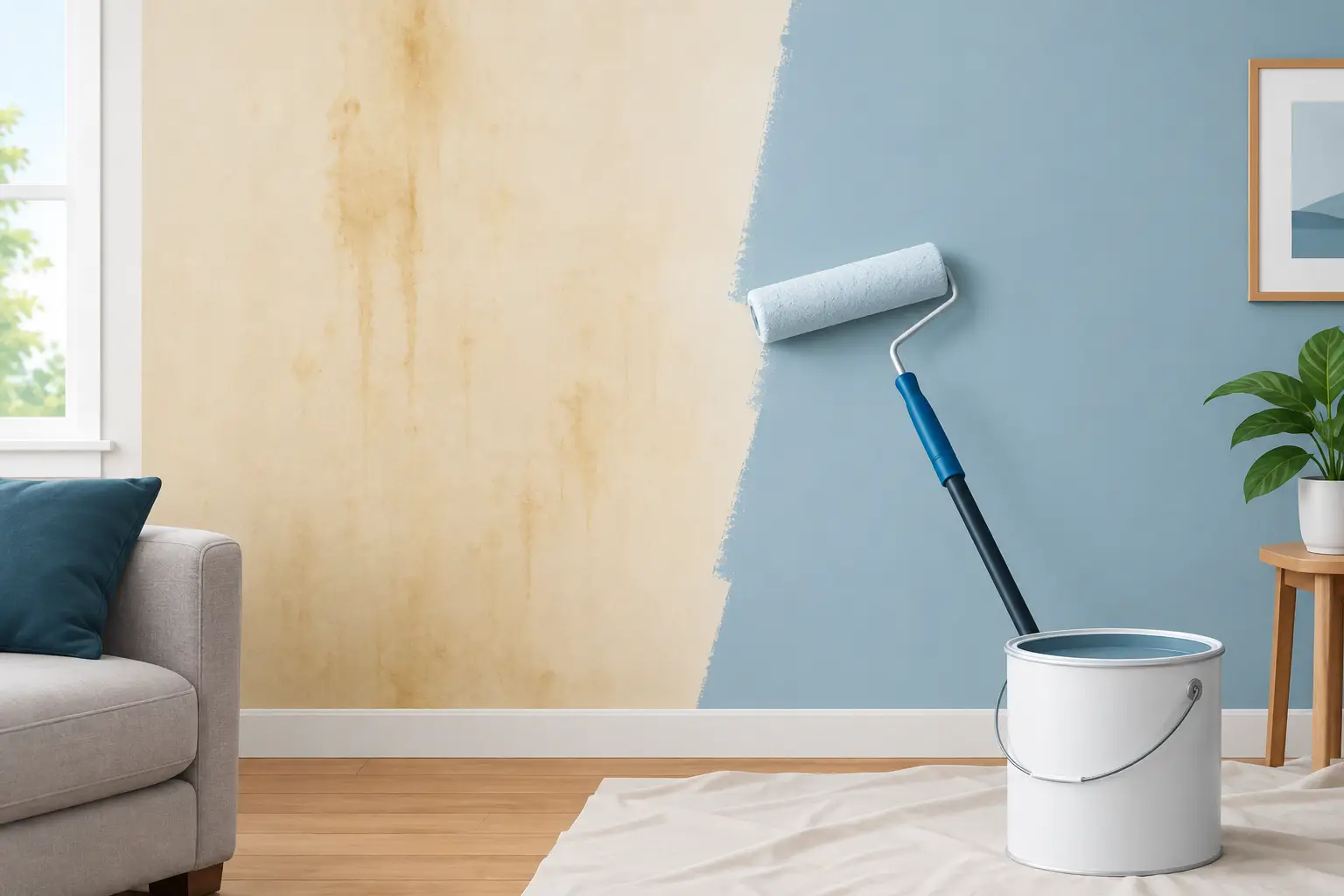
A freshly painted wall can look clean for a few weeks, then yellow-brown marks begin to creep back through the finish. So, can painting cover nicotine stains? Yes, but only when the surface is cleaned properly and sealed with the right primer before the finish coats go on. Painting directly over smoke residue may hide the staining temporarily, but it rarely delivers the clean, durable result property owners expect.
Nicotine stains are more than a color problem. Cigarette smoke leaves behind a sticky film of nicotine, tar, and other residues that cling to walls, ceilings, doors, trim, and even air-conditioning vents. That film can discolor new paint, affect adhesion, and continue to release unpleasant odors long after a room has been repainted.
For a home, rental unit, office, or retail space, the right preparation makes the difference between a short-lived cover-up and a properly restored interior.
Why Nicotine Stains Come Back Through Paint
Smoke residue is oily. Standard wall paint is designed to create an attractive finish, not to lock in heavy contaminants. When paint is applied over an unwashed nicotine-stained surface, the residue can interfere with bonding. The new coating may dry unevenly, look dull in patches, or peel earlier than it should.
Even when the paint initially appears to cover the stain, nicotine can migrate through the coating over time. This is often called stain bleed-through. It is especially common on ceilings, around light fixtures, above door frames, and in rooms with limited ventilation, where smoke has collected for years.
Odor is another concern. A fresh paint smell may briefly mask stale smoke, but it does not remove the source. On humid days or after air-conditioning has been off for a while, trapped odors can become noticeable again. For landlords preparing a unit for a new tenant or businesses refreshing a customer-facing space, that is a frustrating and avoidable outcome.
Can Painting Cover Nicotine Stains Without Primer?
It depends on how light and recent the staining is, but skipping primer is a gamble. A single small mark on a washable wall may respond well to cleaning and a touch-up. Widespread yellowing, brown drip marks, persistent odor, or years of indoor smoking require a more disciplined process.
Regular paint should not be treated as a stain blocker. Even high-quality interior paint has limits when nicotine and tar are present. Applying extra finish coats can improve coverage, but it does not necessarily seal the contaminant beneath. It may also increase labor and material cost without solving the real problem.
A dedicated stain-blocking primer is designed to create a barrier between the affected surface and the new topcoat. Depending on the severity of staining, a professional painter may recommend an oil-based, shellac-based, or specialty water-based stain-blocking primer. The right choice depends on the substrate, odor level, existing coating condition, and whether the room needs a low-odor solution.
The Right Process for Nicotine-Stained Walls and Ceilings
A reliable paint job begins with inspection, not a paint roller. The extent of staining is not always obvious under poor lighting or behind furniture. Ceilings and upper walls deserve particular attention because warm smoke rises and settles there.
1. Inspect the surface and identify the source
Before any work begins, the smoking source should be removed. If smoking continues inside the room, new nicotine deposits will eventually affect the fresh finish as well. Painters should also check for unrelated issues, such as water stains, mold, peeling paint, cracks, or spalling concrete. These problems need their own repair methods and should not simply be painted over.
2. Clean away smoke residue
Cleaning is essential. A suitable degreasing cleaner helps remove the sticky nicotine film that ordinary dusting cannot handle. Walls, ceilings, doors, baseboards, and trim may all need attention, particularly in enclosed rooms.
The surface must then dry completely. Painting over damp walls can lead to poor adhesion and may trap moisture beneath the coating. For heavily contaminated properties, cleaning may need to be repeated before the surface is ready for primer.
3. Repair flaws and prepare the surface
Once the surface is clean, damaged areas should be addressed. Loose paint is scraped away, small cracks and dents are filled, and repaired patches are sanded smooth. This stage matters because nicotine stains often draw attention to every uneven patch under a new coat of paint.
Furniture should be protected or moved, and floors, fittings, and fixtures should be covered carefully. Good preparation keeps the project tidy and reduces disruption, whether the work is happening in an occupied home or an active office.
4. Apply a stain-blocking primer
Primer is the key barrier. It should be applied evenly across affected surfaces rather than only over the darkest visible marks. Spot priming can work for isolated stains, but it may create uneven sheen or leave lighter residue in surrounding areas.
Severe stains may require a second primer coat after the first has dried. This is not unnecessary upselling. It is often the practical way to prevent discoloration and odor from returning through the final paint finish.
5. Finish with quality interior paint
After the primer has cured, quality interior paint provides the final color, washability, and polished appearance. Two finish coats are commonly used for an even result, especially when changing from yellowed walls to a lighter color such as white, cream, or soft gray.
For occupied properties, low-VOC paint options can help reduce paint odor during and after the project. The best sheen also depends on the room. A washable eggshell or satin finish is often practical for busy living areas, while ceilings usually benefit from a flatter finish that minimizes visible imperfections.
When Repainting Is Not Enough
Painting can transform nicotine-stained surfaces, but it cannot solve every smoke-related issue on its own. If odor remains strong after cleaning and priming, soft materials may be holding the smell. Carpets, curtains, upholstered furniture, blinds, mattresses, and air-conditioning filters can all retain smoke residue.
In more severe cases, odor can also be present inside cabinets, behind wall-mounted fixtures, or within ventilation systems. A complete restoration plan may involve deep cleaning, replacing affected porous materials, and servicing the air-conditioning system alongside repainting.
There is also a safety consideration. Properties built before modern paint standards may have older coatings that require careful assessment before sanding or scraping. A professional team can evaluate the condition of existing paint and use appropriate surface-preparation methods instead of creating unnecessary dust.
DIY Touch-Up or Professional Painting Service?
A DIY approach may be reasonable when staining is limited to one small, accessible area and the original paint color is known. The work still requires proper cleaning, a compatible stain-blocking primer, and enough drying time between coats. Rushing any of these steps often produces visible patches or recurring stains.
For whole rooms, yellowed ceilings, move-out restoration, or commercial spaces, professional painting is usually the more efficient choice. The challenge is not simply rolling paint onto the wall. It is selecting compatible products, protecting the property, managing repairs, controlling odors, and achieving an even finish across every surface.
My Paint Job handles the process from surface inspection and furniture protection to stain-blocking preparation, precise painting, and cleanup. This provides homeowners, landlords, and business owners with a clear scope of work and a finish that looks properly renewed, not quickly covered.
How to Keep Freshly Painted Walls Looking Clean
Once nicotine staining has been treated, prevention is much easier than restoration. Keep indoor smoking outside whenever possible, clean ventilation filters regularly, and maintain good airflow in enclosed rooms. If a property is being prepared for handover or sale, addressing smoke residue before the final paint job protects both the appearance of the space and the value of the work.
A clean wall is not just about choosing a brighter color. It starts with removing what is beneath the old finish, sealing what cannot be removed, and applying paint with care. If yellowing, brown marks, or smoke odor are affecting your property, request a detailed assessment before repainting so the next finish has every chance to stay fresh.


