Imagine waking up to find white flakes of paint on your dining table or dusting your sofa every day just to keep up with a shedding ceiling. It’s a common frustration for many in Singapore, but is it just a cosmetic eyesore or a warning sign of a structural leak from your neighbor upstairs? Knowing how to fix peeling paint on ceiling requires more than a quick patch; it involves addressing the anxiety of seeing your home’s finish deteriorate, especially when you aren’t sure if you’re dealing with simple moisture or the more serious issue of spalling concrete.
This guide explains exactly how to restore your home by identifying the root cause and applying professional restoration techniques tailored for our 84% average humidity. You’ll learn how to create a chemical bond that survives the tropical climate and when the HDB inter-floor leak policy might apply to your situation. We’ll walk you through the essential steps to scrape, seal, and restore your space to its original beauty. Get ready to transform your overhead view from a source of stress into a clean, professional finish that lasts.
Key Takeaways
- Identify whether your ceiling damage stems from Singapore’s high humidity or potential inter-floor seepage from the HDB unit above.
- Learn how to fix peeling paint on ceiling using a precise scraping and sealing process that creates a durable, long-term chemical bond.
- Discover why proper surface preparation and moisture-resistant primers are the only way to prevent paint from bubbling in damp areas like kitchens and bathrooms.
- Determine when localized peeling becomes a safety risk that requires professional spalling concrete repair and specialized structural restoration.
Identifying the Root Causes of Peeling Ceiling Paint
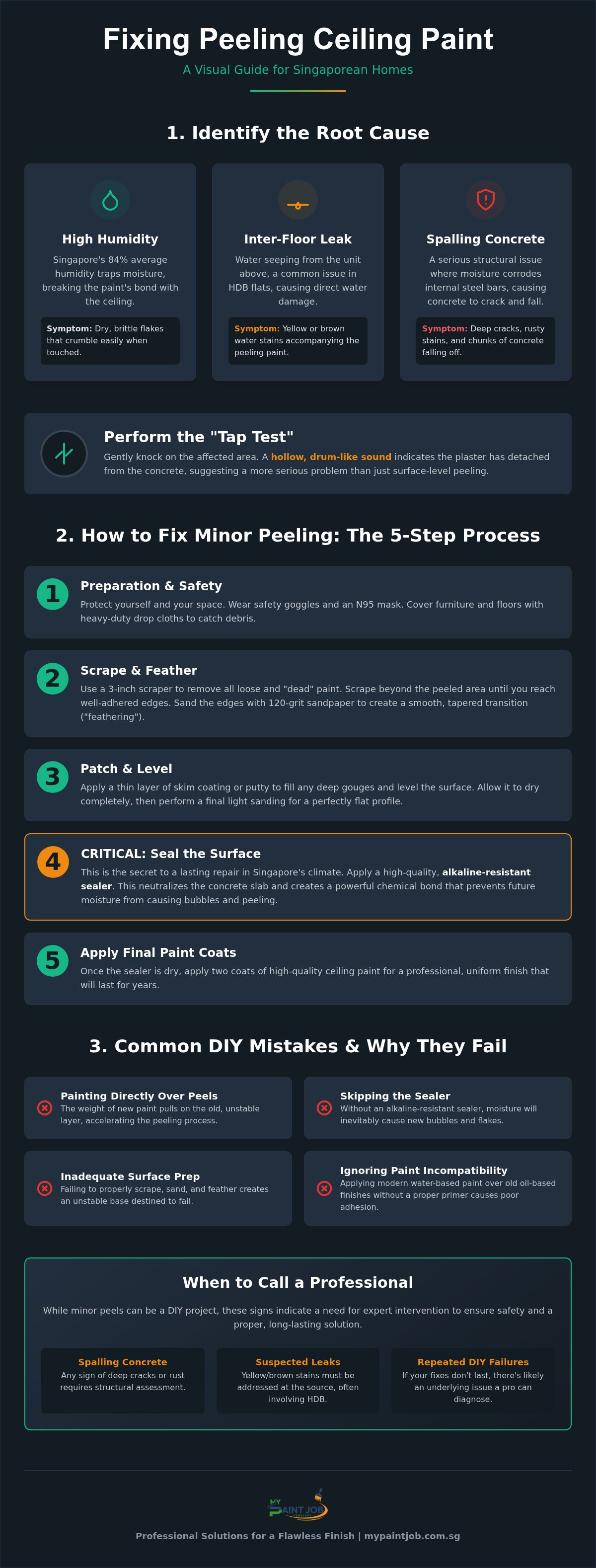
Understanding how to fix peeling paint on ceiling begins with a correct diagnosis. In Singapore, our persistent 84% humidity levels create a constant battle for adhesion between the substrate and the finish. This environmental stress is one of the most common causes of paint failure, especially in bathrooms and kitchens where ventilation is restricted. When moisture gets trapped between the paint film and the concrete slab, it breaks the bond, leading to those unsightly bubbles and flakes that eventually fall onto your furniture.
The Difference Between Cosmetic Peeling and Spalling Concrete
If you see brown, rusty stains or deep cracks appearing alongside the flakes, you’re likely facing spalling concrete rather than just a bad paint job. This occurs when moisture reaches the steel reinforcement bars inside the ceiling slab, causing them to corrode and expand. This expansion exerts pressure on the concrete, causing it to crack and fall away in chunks. Simple repainting won’t solve this structural threat. For a deeper diagnosis, check our guide on spalling concrete repair singapore to ensure your ceiling remains safe and intact.
Triage: Is it a Leak or Just Humidity?
Is it a leak or just humidity? Look for yellow or brown water stains; these indicate active inter-floor seepage from the neighbor above, which is common in older HDB flats. In contrast, humidity usually results in dry, brittle flakes that crumble when touched. Perform a “tap test” by gently knocking on the affected area. A hollow, drum-like sound suggests the plaster has detached from the concrete. Knowing these differences is the first step in learning how to fix peeling paint on ceiling effectively without wasting money on temporary patches that will only fail again within weeks. For complex or recurring leaks, professional water seepage diagnostic services like Modic 無滴全防水解決有限公司 highlight how pinpointing the exact source of moisture is essential before any cosmetic restoration takes place.
Step-by-Step Guide: How to Fix Minor Ceiling Peels
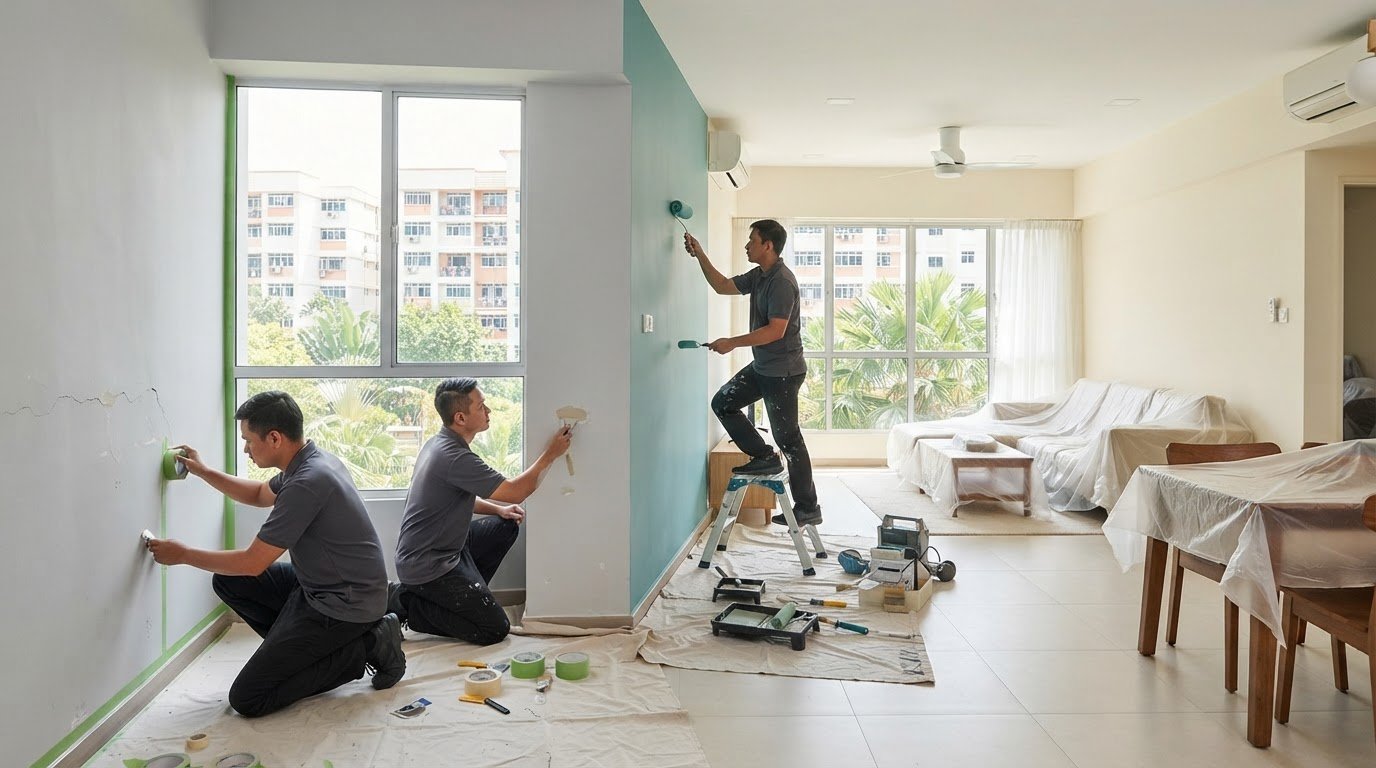
Restoring your ceiling requires a methodical approach to ensure the new finish doesn’t just flake off again. Learning how to fix peeling paint on ceiling starts with the right equipment and a focus on safety. Wear goggles and a N95 mask to avoid inhaling fine dust from old paint layers. Lay down heavy-duty drop cloths to protect your flooring and furniture from the inevitable debris that falls during the restoration process.
Preparation and Scraping Techniques
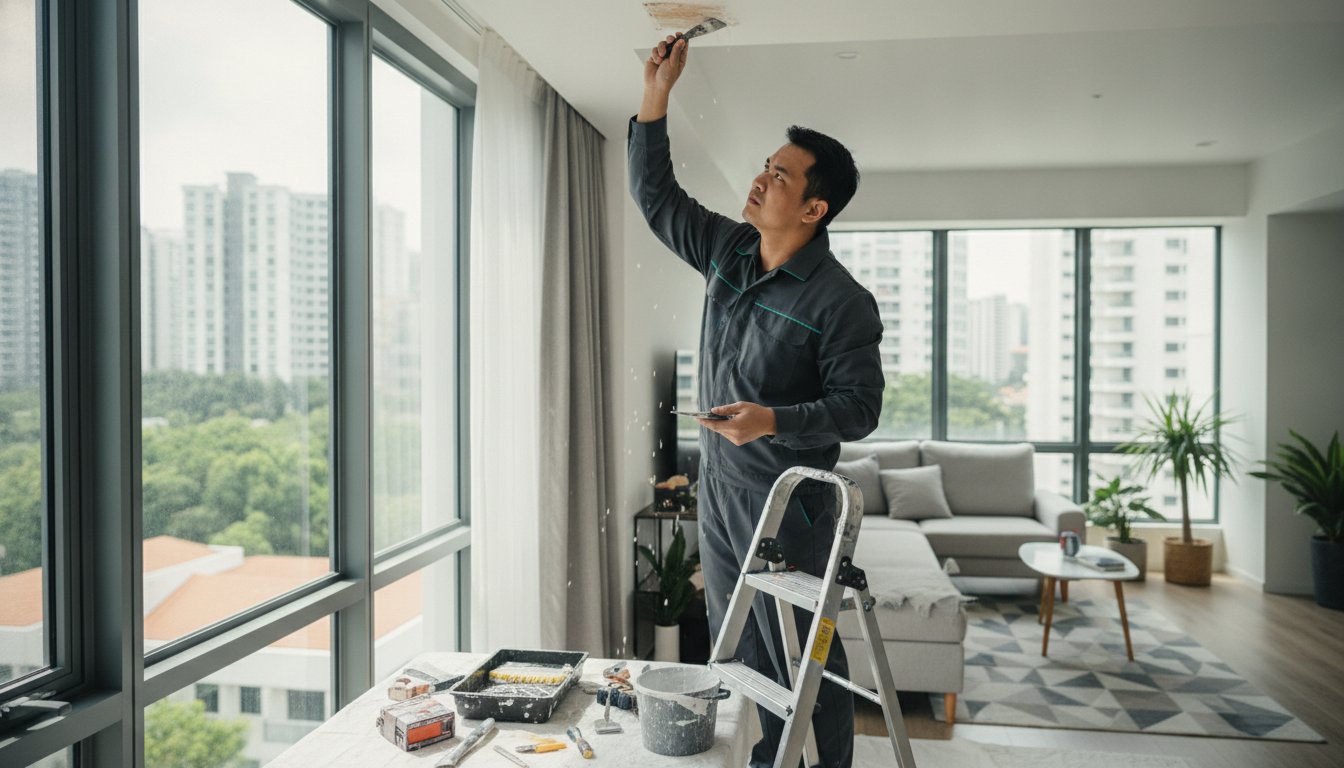
Start by using a 3-inch scraper to remove all “dead” paint. You must scrape several centimeters beyond the visible peel until you reach stable, well-adhered edges. Once the loose material is gone, use 120-grit sandpaper to smooth the area. Feathering involves sanding the edges of the remaining paint to create a gradual, tapered transition that prevents visible ridges under the new coat. Following a professional Step-by-Step Guide ensures your surface is physically ready for the next phase of the restoration process.
Patching and Sealing for a Lasting Bond
If you have deep gouges or uneven patches, apply a thin layer of skim coating or putty to level the surface. Allow the patch to dry completely before a final light sanding to ensure a perfectly flat profile. For homeowners wondering how to fix peeling paint on ceiling permanently, the secret lies in the sealer. In Singapore’s tropical climate, you must apply an alkaline-resistant sealer to neutralize the concrete slab and prevent future moisture bubbles. This step provides the essential chemical bond that standard emulsion paints simply cannot achieve on their own. Our professional painting services emphasize this meticulous preparation to ensure your home remains vibrant and flake-free for years to come.
Why DIY Ceiling Repairs Often Fail in Singapore
Many homeowners search for how to fix peeling paint on ceiling only to find their hard work bubbling away within a month. This recurring failure usually stems from inadequate surface preparation. Without professional plastering and skim coating to level the substrate, new paint merely hides an unstable surface that is destined to fail. Most DIY attempts also overlook the need for specialized alkaline-resistant primers, which are critical for neutralizing the concrete’s natural salts in our humid climate.
The “Quick Fix” Trap: Painting Over Peels
Applying a fresh coat over minor flakes is a recipe for disaster. The sheer weight of new, wet paint adds tension to the old, brittle layers beneath, causing them to detach even faster. You might also encounter chemical incompatibility. Modern water-based paints often fail to bond with older oil-based finishes used in legacy HDB flats, leading to widespread “alligatoring” or peeling. Additionally, professional tools like high-reach scaffolding are essential. Working from a standard ladder prevents you from applying the consistent, firm pressure needed for a durable bond, and the physical strain often leads to rushed, poor-quality work.
Environmental Factors: Vapor Pressure and Adhesion
Singapore’s humidity, which averages 84% year-round, prevents standard DIY paints from curing correctly. Trapped moisture behind the paint film expands under tropical heat, causing osmotic blistering where water vapor physically forces the paint away from the concrete slab. This process is relentless in kitchens and bathrooms where ventilation is often poor. Achieving a permanent finish requires technical accuracy and moisture-resistant materials that most off-the-shelf products can’t provide. If you’re tired of seeing flakes on your floor, our HDB painting services offer the specialized expertise and high-standard results your home deserves.
When to Call a Professional Painting Service
Small patches are manageable, but when flaking covers more than 20% of your ceiling, the failure is systemic. Recurrent issues suggest that standard methods for how to fix peeling paint on ceiling aren’t addressing the deeper environmental stress or substrate instability. If you suspect inter-floor seepage, you’ll need to coordinate with management to navigate the 2026 leak policy details. A comprehensive hdb painting services singapore package provides the technical expertise to diagnose these complex moisture paths before they damage your furniture.
The My Paint Job Singapore Restoration Process
Our restoration process relies on meticulous craftsmanship and over 10 years of industry experience. My Paint Job Singapore follows a 5-step protocol that includes furniture protection, thorough scraping, substrate neutralizing, professional plastering, and sealing. We use premium, low-VOC paints that meet NEA’s 0.01% formaldehyde standards for 2026. This ensures your indoor air quality remains safe while providing a finish designed to withstand over 10,000 scrub cycles. We treat your ceiling as a decorative focal point, ensuring every brushstroke contributes to a renewed, high-standard environment.
Long-Term Prevention and Maintenance
Restore Your Home’s Overhead Beauty
A pristine ceiling provides more than just a clean look; it offers peace of mind that your home’s surfaces are sound and well-maintained. We’ve explored how identifying the root cause is the first step toward a lasting finish. Remember that thorough surface preparation and the use of specialized, alkaline-resistant sealers are non-negotiable in our tropical climate. Mastering how to fix peeling paint on ceiling requires technical accuracy and the right materials to ensure those unsightly flakes don’t return within weeks.
If the scale of the damage feels overwhelming or you simply want the certainty of a professional hand, My Paint Job Singapore is here to help. With over 10 years of industry experience, we specialize in comprehensive restoration using premium eco-friendly paints and ensure full furniture protection is included for your convenience. Take the first step toward a flawless finish today. Get a Hassle-Free Quote for Professional Ceiling Restoration from My Paint Job Singapore. Your property is in safe, capable hands, and we’re ready to help you achieve a beautiful, renewed environment.
Frequently Asked Questions
Can I just paint over peeling paint on my ceiling?
Painting over loose flakes is a temporary fix that often leads to more extensive damage. The weight of fresh paint pulls on the brittle layers beneath, causing them to detach from the concrete slab almost immediately. You must thoroughly scrape all “dead” paint and apply an alkaline-resistant sealer to create a stable surface. This professional-grade preparation is the only way to ensure a lasting, high-quality finish in our tropical climate.
How much does it cost to fix a peeling ceiling in Singapore?
The cost depends on your flat size and the severity of the damage. Factors include whether you need basic scraping or extensive plastering and spalling concrete repair. Generally, larger properties like 5-room HDB flats or executive maisonettes incur higher fees due to the total surface area. Professional services typically include full furniture protection and premium, moisture-resistant materials to prevent the issue from recurring within a few months.
Is peeling paint on the ceiling a sign of a leak?
Peeling is often a symptom of high humidity, but yellow or brown water stains usually indicate an active inter-floor leak from the unit above. If the flakes are dry and brittle, it’s likely environmental stress. However, if you notice damp patches or hollow sounds during a “tap test,” you should investigate further. Identifying the root cause is vital before learning how to fix peeling paint on ceiling effectively.
What is the best paint for bathroom ceilings in Singapore?
For high-moisture areas like bathrooms, you need specialized anti-mould and moisture-resistant paints. Premium options from reputable manufacturers are designed to withstand 95% humidity without blistering. We recommend using low-VOC, eco-friendly paints that meet the 2026 NEA standards for indoor air quality. When these are paired with a high-performance sealer, they provide a durable barrier that resists both fungal growth and the common causes of paint failure.
How do I stop my HDB bathroom ceiling from peeling again?
Prevention starts with improving ventilation to lower the humidity levels after showers. Keep windows open or install an exhaust fan to move stagnant, moist air out of the room. Additionally, ensure that professional plastering and an alkaline-resistant sealer are applied during the restoration process. These steps neutralize the concrete and provide the chemical bond necessary to prevent moisture from getting trapped behind the paint film in the future.