A small crack in the ceiling can look harmless until paint starts flaking, chunks loosen, and rust stains appear around the damaged area. If you are wondering what causes concrete ceiling spalling, the short answer is usually moisture reaching the steel reinforcement inside the slab. Once that steel begins to corrode, it expands, pushes against the surrounding concrete, and causes the surface to crack and break away.
For homeowners, landlords, and property managers, this is more than a cosmetic issue. Ceiling spalling can affect safety, indoor appearance, and the long-term condition of the property. It also tends to worsen if left untreated, especially in spaces with ongoing moisture exposure.
What causes concrete ceiling spalling in the first place?
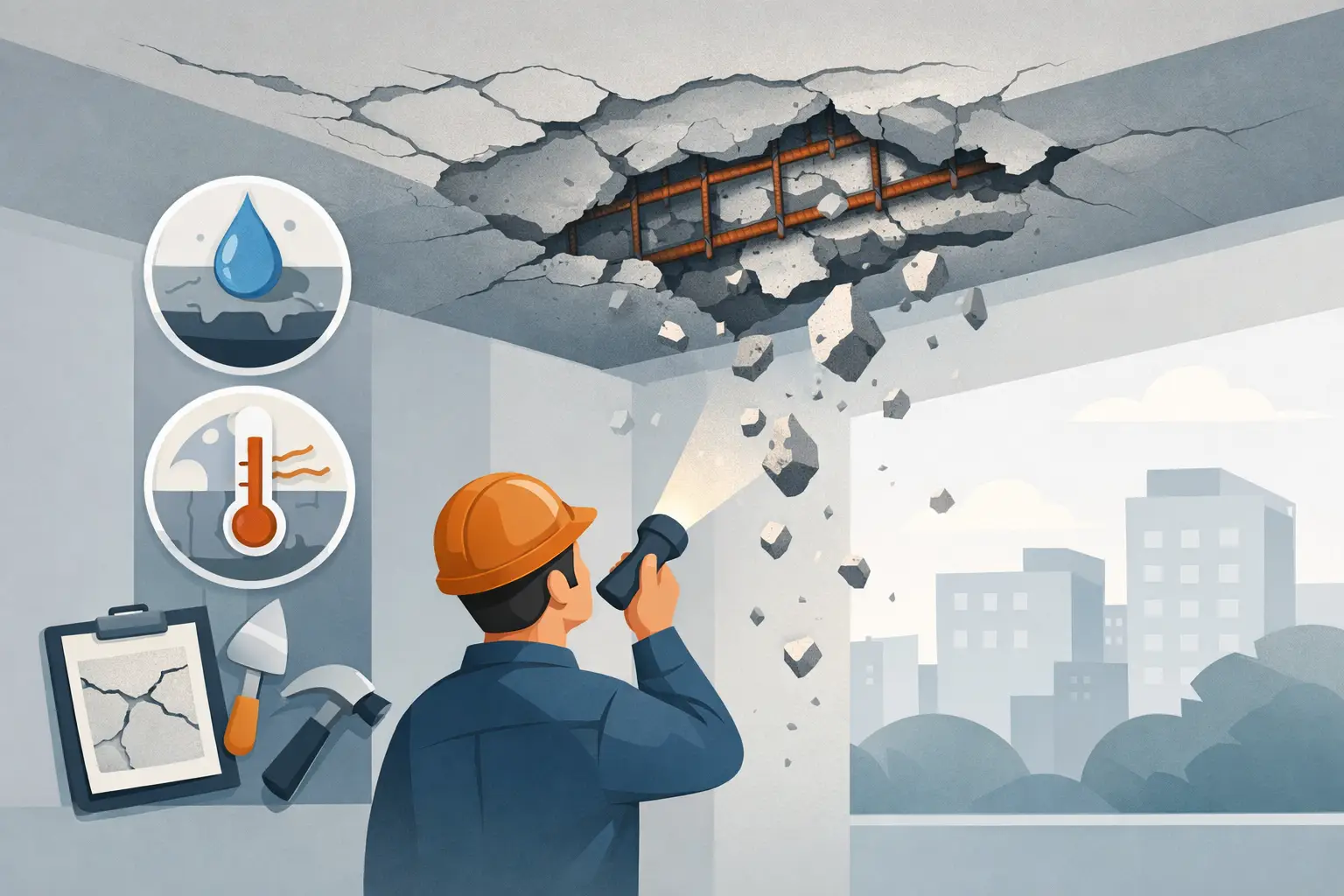
Concrete may look solid and permanent, but it is not immune to wear. Inside many concrete ceilings are steel reinforcement bars, often called rebars, which help the structure carry load. When water seeps through the concrete over time, it can reach the steel. That is where the trouble starts.
Steel rusts when exposed to moisture and oxygen. Rust takes up more space than the original steel, so it expands inside the concrete. This internal pressure causes cracking, bulging, and eventually pieces of concrete to detach from the ceiling surface. That process is what people commonly call concrete spalling.
The reason moisture gets in can vary. In some homes, the source is water leakage from the floor above, a bathroom, a kitchen, or an exterior wall. In commercial spaces, it may come from roof issues, plumbing lines, or air-conditioning condensation. In older buildings, natural aging and repeated temperature changes can gradually weaken the concrete and make it easier for moisture to penetrate.
The most common causes behind ceiling spalling
Moisture intrusion is the main driver, but the full picture usually involves several factors working together.
Water leakage from above
This is one of the most common causes. If a ceiling slab sits below a wet area such as a bathroom, balcony, or service yard, long-term leakage can slowly soak into the concrete. The same applies to roof slabs exposed to rainwater. Even minor leakage that seems manageable can become serious when it continues for months.
What makes this tricky is that the visible spalling may appear far from the original leak path. Water travels, so the damaged ceiling area is not always the exact source of the problem.
Corrosion of reinforcement steel
Once water reaches the embedded steel, corrosion can begin. Concrete usually protects steel because of its alkaline environment, but that protection breaks down when cracks form or when water repeatedly enters the slab. As corrosion grows, it forces the concrete outward. That is why spalling often comes with hollow patches, swollen surfaces, or long hairline cracks before pieces fall off.
Poor waterproofing or failed protective layers
Bathrooms, kitchens, rooftops, and exterior slabs rely on waterproofing systems to keep moisture out. When waterproofing fails or was poorly installed from the start, water can migrate into the concrete. Paint alone will not stop this. In fact, repainting over a damp ceiling may temporarily improve appearance while the hidden damage continues underneath.
Aging concrete and surface wear
Over time, concrete naturally develops micro-cracks and becomes more vulnerable to water penetration. Older buildings are more likely to show spalling because the slab has gone through years of humidity, movement, and exposure. In some cases, previous patch repairs may also fail if the original cause was never properly addressed.
Construction defects or low-quality materials
Not every spalling case is caused only by age. If the original concrete cover over the steel was too thin, moisture can reach the reinforcement more easily. If the concrete was poorly mixed, inadequately cured, or applied with workmanship issues, it may have less resistance to cracking and water entry.
This does not mean every old ceiling is defective, but it does mean build quality can affect how soon problems show up.
Early signs you should not ignore
Spalling rarely appears without warning. Most ceilings show smaller symptoms first. Paint blistering, peeling patches, discoloration, rust marks, fine cracks, and damp spots are all signs that moisture may already be affecting the slab.
A hollow sound when tapping the ceiling can also suggest that the concrete surface is separating from the base material. In more advanced cases, you may see exposed steel, deeper cracks, or loose fragments. Once concrete starts falling, repair should move quickly.
For property owners, the practical point is simple. The earlier you address the warning signs, the easier and more affordable the repair usually is.
Why spalling gets worse over time
Concrete spalling is not the kind of defect that resolves on its own. Once corrosion begins, the pressure inside the slab increases. Cracks widen, more water enters, and the damage spreads. A small patch can become a larger repair area if the root cause is ignored.
There is also a safety issue. Loose concrete overhead can fall without much warning. In homes, that creates risk in bedrooms, kitchens, or bathrooms. In offices, shops, or shared spaces, it can affect occupants, customers, and daily operations.
Beyond safety, there is the cost factor. Delaying repair can lead to more extensive hacking, more steel treatment, larger patching work, and repainting across a wider ceiling area.
Can you just patch and paint over it?
Sometimes owners hope a quick filler and fresh coat of paint will solve the issue. That may improve appearance for a short while, but it will not stop active corrosion inside the slab. If moisture is still entering the concrete, the problem will likely return.
A proper repair approach usually includes removing loose concrete, cleaning and treating the rusted steel, applying suitable repair materials, restoring the damaged area, and repainting after the surface is sound and dry. If leakage is involved, the water source must be dealt with too. Otherwise, the repair is only half done.
This is where professional assessment matters. The visible damage on the ceiling is often just the surface expression of a deeper issue.
What causes concrete ceiling spalling in apartments and commercial units?
In apartments, the most frequent trigger is leakage from the unit above. Bathrooms are a common culprit because constant water use, floor trap issues, failed grout lines, or damaged waterproofing can allow water into the slab. Kitchens, air-conditioning drainage points, and window perimeters can also contribute.
In commercial units, the pattern depends on the property type. Offices may experience condensation or plumbing-related issues, while retail spaces may be affected by roof leaks, shared service lines, or high-humidity environments. In both cases, ongoing operations can make fast, organized repairs especially important.
The exact cause depends on the building, the age of the structure, and where the ceiling is located. That is why a reliable inspection should focus on both the damaged area and the likely moisture path.
How professional repair usually works
A good repair process is straightforward but should not be rushed. First, the damaged concrete is carefully removed until all loose and weak material is gone. Then the exposed steel is cleaned and treated to reduce further corrosion. After that, a repair mortar or patching compound is applied to rebuild the area and restore a smooth finish.
Once the repair has cured properly, the ceiling can be prepared and repainted. If staining or moisture marks are present, suitable primers may be needed before the final paint system goes on. In some cases, the leak source also needs coordination with plumbing, waterproofing, or the neighboring unit above.
For customers, the biggest difference is not just the final appearance. It is the confidence that the repair has addressed the cause, protected the surface, and reduced the chance of repeat damage.
When to call for help
If you see ceiling cracks, flaking paint, rust stains, damp spots, or broken concrete, it is worth arranging an inspection sooner rather than later. The same applies if a previous ceiling repair keeps failing. Repeated patching is often a sign that the underlying moisture issue was never fully solved.
A professional team can assess the condition, identify whether the damage is superficial or more advanced, and recommend the right repair scope. For many property owners, that saves time, avoids guesswork, and prevents a small defect from turning into a larger disruption.
At My Paint Job, this kind of work matters because surface improvement is not only about making a space look better. It is about restoring safety, durability, and peace of mind with careful workmanship from preparation through cleanup.
If your ceiling is starting to show the early signs of spalling, the best next step is simple. Treat it early, fix it properly, and give the space the attention it needs before the damage has a chance to spread.